About Pongal
Last updated:
Pongal is one of the most important and ancient harvest festivals of South India, celebrated with great joy and devotion primarily in Tamil Nadu and among Tamil communities worldwide. Falling on the first day of the Tamil month of Thai (mid-January), Pongal marks the end of the winter solstice and the beginning of the sun's northward journey (Uttarayan). The festival spans four days, each with its own rituals, significance, and charm, weaving together gratitude for the sun, the earth, rain, and the hardworking cattle that support agricultural life.
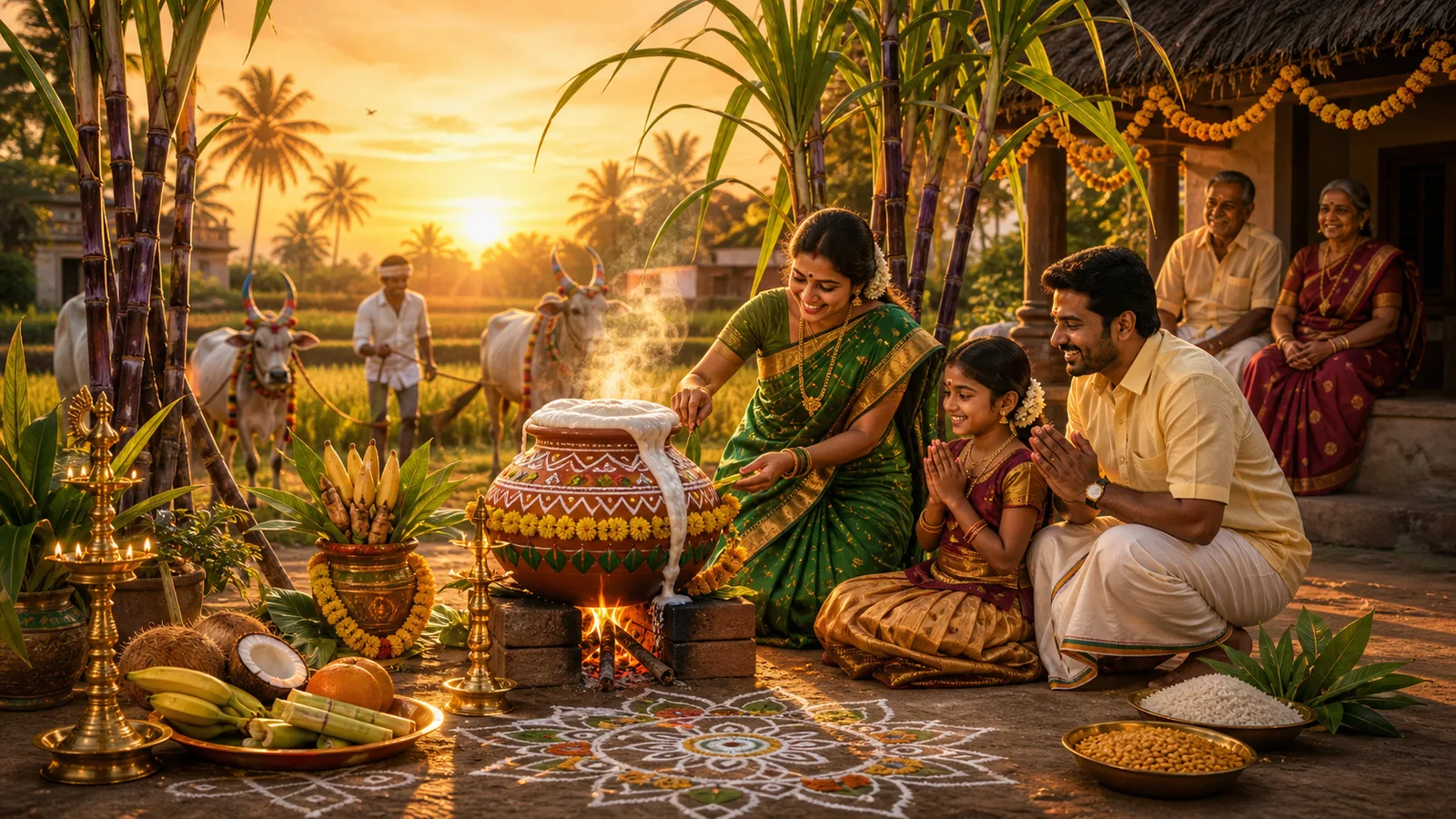
The word "Pongal" literally means "to boil" or "overflow" in Tamil, referring to the ceremonial boiling of the first rice of the new harvest season in a clay pot until it overflows — a deeply auspicious omen symbolising abundance, prosperity, and the overflowing grace of the Sun God Surya. Families gather in freshly cleaned courtyards decorated with kolam (rangoli) designs, dress in new traditional attire, and cook the sacred Pongal dish made of newly harvested rice, jaggery, milk, and cardamom. The moment the pot overflows, everyone shouts "Pongalo Pongal!" in joyful unison.
The four days of Pongal are Bhogi Pongal (day one), Thai Pongal (day two, the main day), Mattu Pongal (day three, honouring cattle), and Kaanum Pongal (day four, a day for family outings and reunions). Each day carries distinct traditions that connect the community — burning old household items on Bhogi to welcome new beginnings, offering the freshly cooked Pongal to Surya on Thai Pongal, adorning bulls and cows with garlands on Mattu Pongal, and visiting relatives and scenic spots on Kaanum Pongal. Together these four days represent a holistic celebration of nature, family, gratitude, and renewal that has been observed for over a thousand years.
Significance of Pongal
Spiritual and Cultural Significance of Pongal
Pongal holds deep spiritual, agricultural, and cultural significance for Tamil Hindus:
- Gratitude to Surya (Sun God): The primary theme of Pongal is thanksgiving to Surya Bhagavan, whose energy drives the agricultural cycle, ripens crops, and sustains all life on earth.
- Harvest Thanksgiving: Pongal marks the end of the Karthigai-Margazhi winter season and celebrates the successful harvest of paddy, sugarcane, and turmeric — staple crops of Tamil Nadu.
- Uttarayan (Northward Journey of the Sun): Pongal coincides with the sun's entry into the zodiac sign Capricorn (Makara), beginning its six-month northward journey (Uttarayan), considered an auspicious period for spiritual practices and new beginnings.
- Celebration of Agriculture: Mattu Pongal specifically honours the cattle — bulls and cows — that are essential to farming, acknowledging the animal kingdom's partnership in human sustenance.
- Community and Family Bonds: Kaanum Pongal strengthens social ties as families gather, share meals, and visit temples and nature spots together.
- Renewal and Purification: Bhogi Pongal, with its ritual bonfire of old items, symbolises the burning away of the old and stagnant to welcome fresh energy and abundance.
- Ancient Dravidian Heritage: Pongal has Dravidian roots dating back over 2,000 years, mentioned in Sangam literature, making it a living link to Tamil civilisation's deep agricultural and spiritual traditions.
Deities & divine forms
Surya — The Presiding Deity of Pongal
Surya, the Sun God, is the central deity worshipped during Pongal, particularly on Thai Pongal (day two). In Hindu tradition, Surya is regarded as the visible, tangible form of the Divine — the source of all light, heat, life, and consciousness on Earth. Surya is depicted riding a golden chariot drawn by seven horses (representing the seven colours of the spectrum and seven days of the week), holding a lotus in each hand, radiating brilliant golden light.
Surya is celebrated as Annadaata (the giver of food) because his energy drives photosynthesis, ripens crops, and enables the agricultural cycle that feeds humanity. On Thai Pongal day, the freshly cooked rice dish is placed in the open courtyard facing the sun, and offered to Surya with prayers of gratitude and hymns from the Vedas.
Additionally, Indra (god of rain and thunder) is acknowledged during Bhogi Pongal for sending the monsoon rains that water the crops. Bhumi Devi (Mother Earth) and Go Mata (the sacred cow) are also honoured, especially on Mattu Pongal, recognising the complete ecosystem that sustains human life.
How to celebrate Pongal 2026
How to Celebrate Pongal — Day-by-Day Puja Guide
Day 1 — Bhogi Pongal:
1. Wake up early before sunrise and clean the entire house thoroughly.
2. Collect old, worn-out items — mats, clothes, broken vessels — and add them to the community bonfire (Bhogi Mantalu) at dawn to symbolise discarding the old and welcoming the new.
3. Children are bathed and have dried turmeric, flowers, and coins (Bhogi Pallu) showered over their heads as a blessing for good health.
4. Light the traditional lamp (kuthu vilakku) and offer prayers.
Day 2 — Thai Pongal (Main Day):
1. Wake before sunrise, bathe, and wear new traditional clothes.
2. Clean the courtyard and draw elaborate kolam (rangoli) patterns using rice flour.
3. Set up a mud or clay pot (Pongal pot) decorated with turmeric plant and tied with sugarcane.
4. Light a fire in the open courtyard under the morning sun.
5. Add milk to the pot and let it boil until it overflows — when it does, shout "Pongalo Pongal!" with joy.
6. Add newly harvested rice, jaggery, cardamom, cashews, and raisins to make the sweet Pongal dish.
7. Offer the Pongal to Surya Bhagavan, placing it facing the sun along with sugarcane, bananas, turmeric, and flowers.
8. Chant Surya mantras and Aditya Hridayam.
9. Break the fast and share Pongal with family, neighbours, and the poor.
Day 3 — Mattu Pongal:
1. Bathe the household cattle (bulls and cows) early in the morning.
2. Paint their horns with bright colours and decorate with flower garlands, bells, and beads.
3. Apply kumkum on their foreheads and feed them the sweet Pongal as an offering.
4. Offer prayers to the cattle and seek their blessings for prosperity.
5. In some regions, Jallikattu (bull-taming sport) is held as part of the celebration.
Day 4 — Kaanum Pongal:
1. Young people seek blessings from elders by touching their feet.
2. Sisters perform a ritual for the well-being of their brothers.
3. Families visit rivers, temples, parks, and relatives.
4. Share leftover Pongal and sweets with extended family and friends.
Rituals & regional traditions
Regional Traditions and Practices of Pongal
- Tamil Nadu (Heartland): Grand kolam competitions at entrances, traditional Pongal cooking in clay pots in open courtyards, Jallikattu bull-taming events in Madurai and Thanjavur districts, cultural programmes with folk music and Bharatanatyam performances.
- Sri Lanka (Tamil Community): Tamil communities in Jaffna celebrate Pongal with equal fervour, with special temple pujas at Murugan and Shiva temples and community feasts.
- Malaysian and Singaporean Tamils: Large public celebrations with Pongal cooking competitions, cultural shows, and temple processions.
- Andhra Pradesh and Telangana: Known as Sankranti, celebrated alongside kite flying and special sweets like Ariselu.
- Karnataka Tamils: Celebrate with Pongal and also observe Sankranti traditions simultaneously.
- Kolam (Rangoli) Tradition: Every Tamil home draws intricate rice-flour kolam patterns on Pongal days — some households spend days creating elaborate designs as an art form.
- Sugarcane Offering: Sugarcane is tied to the Pongal pot and offered to the sun as it is considered a blessed crop representing sweetness and prosperity.
- New Clothes: Wearing brand-new traditional clothes (saree for women, dhoti and shirt for men) is considered auspicious and celebratory.
- Community Feeding: Preparing and distributing Pongal to neighbours, the poor, and temple devotees is considered a meritorious act.
Spiritual benefits
Spiritual Benefits of Celebrating Pongal
- Surya's Blessings: Sincere worship of Surya during Pongal is believed to bestow good health, vitality, clarity of mind, and freedom from diseases, particularly skin disorders and eye problems.
- Prosperity and Abundance: The overflowing Pongal pot is a living symbol — performing this ritual with faith is believed to attract abundance and overflow of prosperity into the household.
- Agricultural and Financial Blessings: Farmers who perform Pongal rituals devoutly are believed to be blessed with good harvests, favourable weather, and financial stability in the coming year.
- Purification of Negative Energy: The Bhogi bonfire is believed to burn away negative karma, old grudges, and stagnant energies, purifying the home and mind.
- Family Harmony: Celebrating together strengthens family bonds and invites the blessings of ancestors and divine forces for unity and happiness.
- Gratitude Consciousness: Pongal cultivates the spiritual virtue of gratitude — the foundation of all dharmic living — keeping devotees connected to the divine generosity underlying all of nature.
- Cow Protection Merit: Honouring cattle on Mattu Pongal accrues spiritual merit (punya) associated with Go Seva (service to cows), considered highly auspicious in Hinduism.
- New Beginnings: Starting the Tamil month of Thai with Pongal rituals is believed to set a positive, blessed tone for the entire year ahead.
Mantras & sacred chants
Mantras and Chants for Pongal
1. Surya Gayatri Mantra
Sanskrit: ॐ भास्कराय विद्महे महाद्युतिकराय धीमहि। तन्नो आदित्यः प्रचोदयात्।।
Transliteration: Om Bhaskaraya Vidmahe Mahadyuteekaraya Dheemahi. Tanno Adityah Prachodayat.
Meaning: We meditate on the Sun (Bhaskara), the great illuminator. May that Aditya inspire and enlighten us.
2. Aditya Hridayam (Key Verse)
Sanskrit: आदित्यं हृदयं पुण्यं सर्वशत्रुविनाशनम्। जयावहं जपेन्नित्यं अक्षयं परमं शिवम्।।
Transliteration: Adityam Hridayam Punyam Sarvashatruvinashanam. Jayavaham Japenityam Akshayam Paramam Shivam.
Meaning: The Aditya Hridayam is sacred, destroys all enemies, grants victory when chanted daily, and leads to eternal auspiciousness.
3. Pongal Prayer (Tamil)
Tamil: பொங்கலோ பொங்கல்! சூரியனே வா! இன்பம் தா! வளம் தா!
Transliteration: Pongalo Pongal! Suriyane Va! Inbam Tha! Valam Tha!
Meaning: Let it overflow and prosper! O Sun God, come! Grant us joy! Grant us abundance!
Pongal 2026 — FAQs
Pongal 2026 begins on January 14 (Thai Pongal, the main day). The four days are: Bhogi Pongal on January 13, Thai Pongal on January 14, Mattu Pongal on January 15, and Kaanum Pongal on January 16.
Thai Pongal is the main day of the festival when freshly harvested rice is boiled in a clay pot until it overflows — a highly auspicious sign symbolising abundance and prosperity. It is a thanksgiving to Surya (the Sun God) for enabling a bountiful harvest.
Pongal is a sweet rice dish made from newly harvested rice boiled with milk, jaggery (unrefined sugar), cardamom, cashews, and raisins. It is first offered to Surya Bhagavan and then shared among family members and neighbours.
Bhogi Pongal (day one) involves a ritual bonfire where old and worn-out household items are burned at dawn. This symbolises discarding the old and welcoming fresh beginnings. Children are also blessed by having dried turmeric, flowers, and coins showered over their heads.
Mattu Pongal is the third day dedicated to honouring cattle — bulls and cows — whose contribution to agriculture is celebrated. Cattle are bathed, their horns painted with bright colours and decorated with garlands. In Madurai and Thanjavur, Jallikattu (bull-taming) is a traditional highlight.
While Tamil Nadu is the heartland of Pongal celebrations, the festival is also celebrated with great enthusiasm by Tamil communities in Sri Lanka, Malaysia, Singapore, Mauritius, and Tamil diaspora worldwide. Andhra Pradesh and Telangana celebrate a parallel festival called Sankranti on the same dates.
Kolam designs for Pongal are drawn at the entrance of homes using rice flour. Common motifs include the sun, lotus flowers, birds, and geometric patterns. Pongal kolams are typically larger and more elaborate than everyday designs and are considered an auspicious welcome for Surya and Lakshmi.
The Surya Gayatri Mantra (Om Bhaskaraya Vidmahe Mahadyuteekaraya Dheemahi, Tanno Adityah Prachodayat) and verses from the Aditya Hridayam are the most auspicious chants during Pongal. Chanting 108 times while facing the rising sun on Thai Pongal morning is especially meritorious.