Temples in Alwar, Rajasthan

Rajasthan pilgrimage guide

Temples in Alwar — Famous Temples & Complete Darshan Guide

Plan a practical Alwar temple trip with 4 important temples, darshan-friendly routing, local travel tips and the best season for a peaceful pilgrimage.

4 curated temples Rajasthan View map & route →

Last updated July 2026 · Curated by the Temples.bio editorial team

Quick answers

Which is the most famous temple in Alwar?
Banke Bihari Temple is the most prominent temple in Alwar. This guide covers 4 notable temples in and around Alwar with timings, distances and a darshan route.
What are the famous temples in Alwar?
The most famous temples in Alwar include Banke Bihari Temple, Shri Krishna Janmabhoomi Temple, Nidhivan Temple and Trinetra Ganesh Temple, Ranthambore Fort. See the table below for the primary deity, location and darshan timings of all 4 temples.
How many days do you need to visit Alwar temples?
You can cover the main temples of Alwar in about 1 day. Use the 1-day essential circuit for the key shrines, or the 2-day plan to include temples within 100 km.
What is the best time to visit Alwar temples?
October to March is the most comfortable season for temple visits in Alwar. Summer afternoons can be tiring, so plan early morning darshan and keep a lighter second half of the day. Festival days are spiritually rewarding but busier; confirm timings, parking and local transport b
How do you reach Alwar?
Reach Alwar by the nearest major railway station or state highway links, then keep the temple circuit local for the first day. For families and senior citizens, a hired cab or auto-rickshaw is easier than changing transport repeatedly. Start with the main temple before the crowd builds, pause for lu

Temples in Alwar at a glance

Primary deity, location or distance, and darshan timings for the key temples — see full details with photos below.

# Temple Primary deity Location / distance Darshan timings
1 Banke Bihari Temple Banke Bihari (Lord Krishna) 112 km from Alwar 7:45 AM – 9:30 PM
2 Shri Krishna Janmabhoomi Temple Lord Krishna (Bal Gopal) 128 km from Alwar 5:00 AM – 9:30 PM
3 Nidhivan Temple Lord Krishna and Radha Rani 134 km from Alwar 8:00 AM – 6:00 PM
4 Trinetra Ganesh Temple, Ranthambore Fort Lord Ganesha, worshipped as Trinetra Ganesh (three-eyed form) 187 km from Alwar 6:00 AM – 5:00 PM

Why Alwar is a major temple destination

Alwar is one of Rajasthan's useful temple bases, combining well-known shrines with smaller neighbourhood temples that locals still visit for daily worship. The guide below is arranged for real travel: start with the most important temple, then add nearby shrines in an order that keeps the route simple.

Even when a city is not marketed only as a pilgrimage destination, its temples often hold the memory of older neighbourhoods, local festivals and family vows. Devotees usually come here for blessings of Lord Krishna and Goddess Amba, family welfare, ancestral prayers and a quieter connection with the region's sacred geography. The city also works well as a base for first-time visitors who want a balanced mix of famous temples and reachable local shrines.
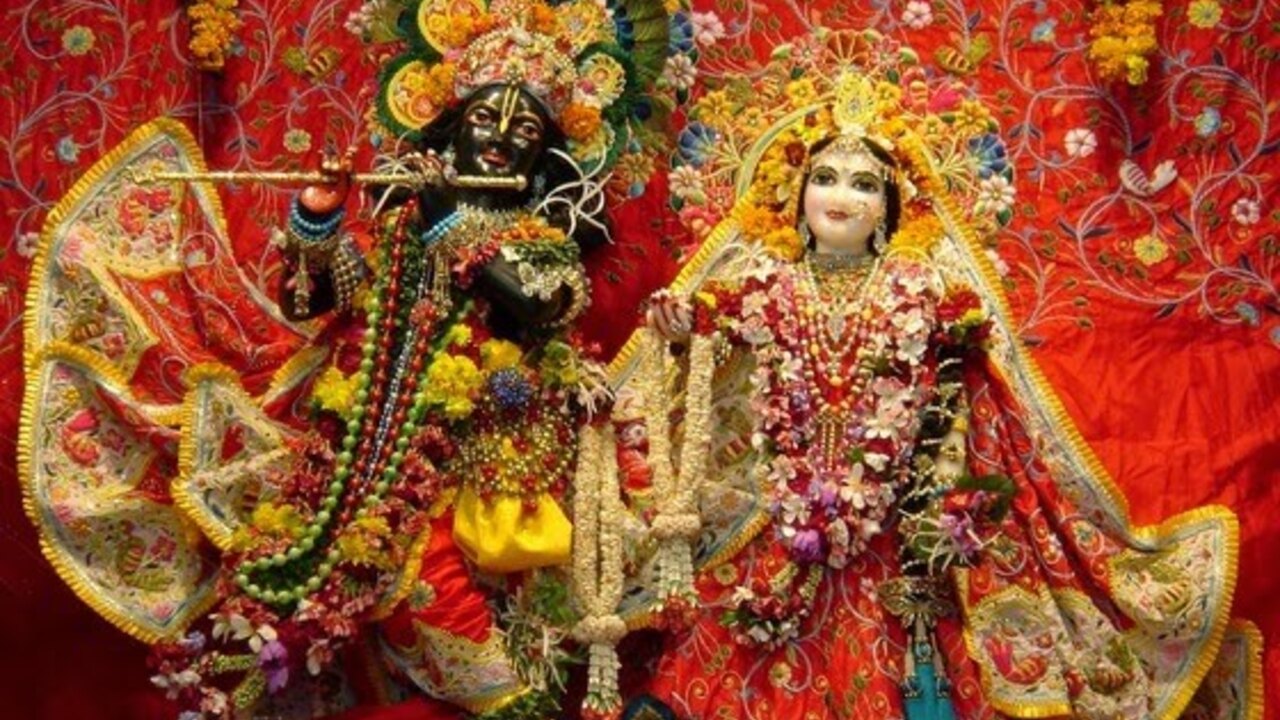
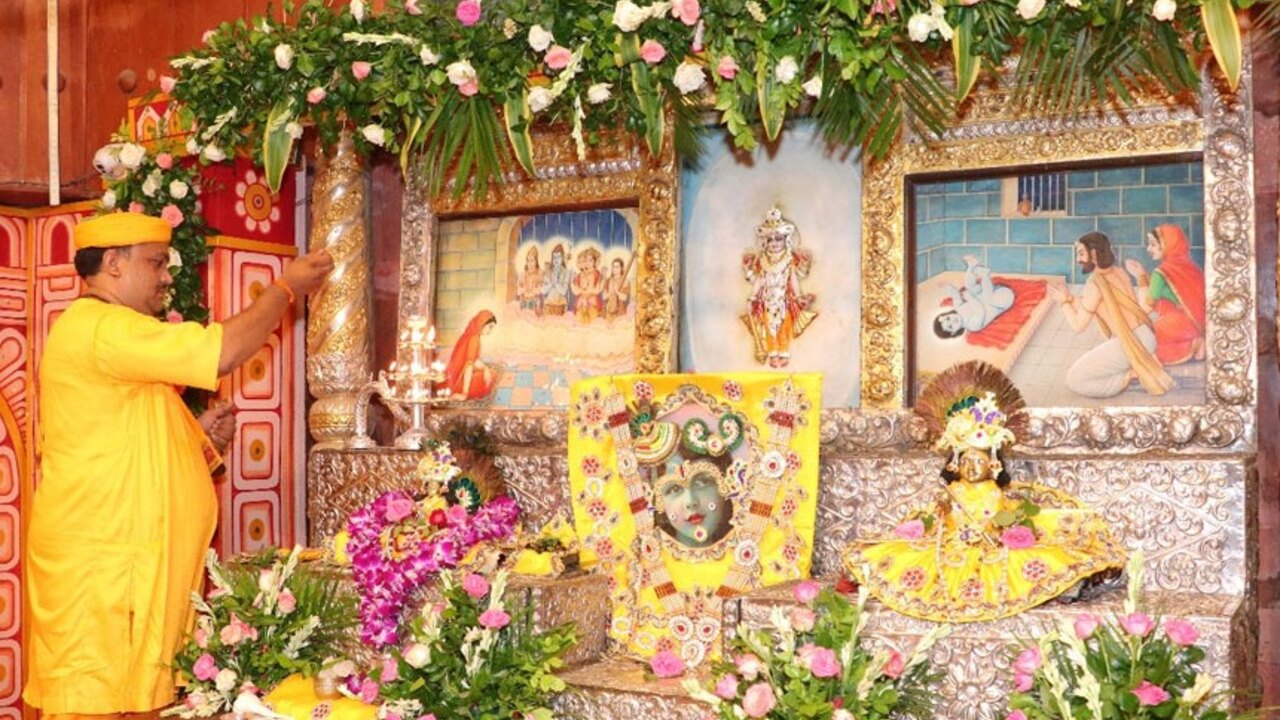
Curated pilgrimage circuit

Temples to Visit Near Alwar

Ordered by pilgrimage importance and practical travel distance from Alwar.

Banke Bihari Temple — Banke Bihari (Lord Krishna) temple in Alwar Same Day

Banke Bihari (Lord Krishna)

  • Vrindavan, Uttar Pradesh
  • 112.6 km from Alwar
  • 7:45 AM - 9:30 PM (Vrindavan, Mathura, UP. Most beloved Krishna temple in Vrindavan. Lord Banke Bihari (Krishna in tribhanga pose) discovered by saint Swami Haridas. Unique darshan style — curtain drawn frequently to 'protect' devotees from Lord's intense gaze. Managed by Goswami family descendants.)

Banke Bihari Temple

Banke Bihari Temple, located in the ancient town of Vrindavan in Uttar Pradesh, is one of the most sacred and visited Krishna temples in India. The temple is dedicated to Banke Bihari Ji, a combined form of Radha and Krishna standing in the iconic tribhanga (thrice-bent) posture. The deity was discovered and installed by Swami Haridas, the renowned devotional singer and saint, in 1864 CE. According to legend, Swami Haridas was singing devotional songs with his disciples at Nidhivan when Lord Krishna appeared in his enchanting Banke Bihari form. The disciples requested the Lord to stay permanently in Vrindavan, and thus the deity was manifested and installed in the temple. The name "Banke Bihari" means "the one who is bent in three places" (tribhanga posture) and "the Supreme enjoyer" (Bihari). The temple is unique in many ways - there are no bells in the temple as Swami Haridas believed Krishna should rest peacefully; the deity's darshan is given through a curtain (called Jhanki) that opens and closes frequently to break the intense eye contact that can overwhelm devotees; and the deity's feet are never shown as devotees found it difficult to leave after seeing them. The temple experiences massive crowds, especially during festivals, and the atmosphere is filled with continuous devotional singing and chanting.

Travel Tip: By Road: Well connected from Delhi (150 km), Agra (60 km), and Mathura (10 km). By Train: Mathura Junction is major station, Vrindavan station is small. By Air: Agra or Delhi airports. Best time: October-March. Visit early morning or late evening to avoid extreme crowds. Be prepared for intense crowds during festivals. Keep valuables secure in crowded areas. Wear comfortable shoes for walking. Plan 2-3 days to cover Vrindavan temples. Combine with Mathura visit (10 km).

Shri Krishna Janmabhoomi Temple — Lord Krishna (Bal Gopal) temple in Alwar Same Day

Lord Krishna (Bal Gopal)

  • Mathura, Uttar Pradesh
  • 128.9 km from Alwar
  • 5:00 AM - 9:30 PM (Mathura, Uttar Pradesh. The exact birthplace of Lord Krishna — the prison cell (Garbha Griha) where Vasudeva and Devaki were imprisoned by Kansa is preserved. One of the most sacred sites in Hinduism. Managed by Sri Krishna Janmasthan Seva Sansthan.)

Shri Krishna Janmabhoomi Temple

Shri Krishna Janmabhoomi Temple, located in the heart of Mathura city in Uttar Pradesh, marks the exact birthplace of Lord Krishna. According to Hindu scriptures and the Bhagavata Purana, Lord Krishna was born in a prison cell where his parents Devaki and Vasudeva were imprisoned by the tyrannical King Kansa around 5,200 years ago (3228 BCE). The temple complex is built around the sacred prison cell (Garbha Griha) where Krishna took birth at midnight on the eighth day (Ashtami) of the dark fortnight in the month of Bhadrapada. The original temple was destroyed multiple times by foreign invaders, including by Mahmud of Ghazni in 1017 CE and later by Aurangzeb in 1670 CE, who built the Shahi Idgah mosque adjacent to it. The current temple complex was rebuilt and renovated in the 20th century. The temple houses beautiful idols of infant Krishna (Bal Gopal), Radha Krishna, and deities of Krishna's parents Devaki and Vasudeva. The prison cell is preserved and protected within the temple complex. Mathura, being Krishna's birthplace, is considered one of the seven sacred cities (Sapta Puri) in Hinduism. The temple attracts millions of devotees annually, especially during Janmashtami celebrations.

Travel Tip: By Road: Well connected via NH-2 from Delhi (145 km) and Agra (60 km). By Train: Mathura Junction is a major railway station with excellent connectivity. By Air: Agra or Delhi airports are nearest. Best time to visit: October to March. Visit during Janmashtami for grand celebrations. Combine with Vrindavan temples (10 km). Expect security checks and crowds. Plan 2-3 days to cover Mathura-Vrindavan region.

Nidhivan Temple — Lord Krishna and Radha Rani temple in Alwar Same Day

Lord Krishna and Radha Rani

  • Vrindavan, Uttar Pradesh
  • 134.4 km from Alwar
  • 8:00 AM - 6:00 PM (Vrindavan, Mathura, UP. Ancient sacred forest where Lord Krishna and Radha are believed to perform Raas Leela every night. STRICTLY closed after sunset — locals say those who stay witness events they cannot describe. Trees grow in twisted dancing forms. Managed by hereditary Goswamis.)

Nidhivan Temple

Nidhivan, meaning "Treasure Forest" or "Secret Forest," is one of the most mystical and sacred sites in Vrindavan, Uttar Pradesh. Located near the Banke Bihari Temple, this dense grove of ancient Tulsi (holy basil) trees is believed to be the place where Lord Krishna performs the divine Raas Leela with Radha Rani and the gopis every single night, even today. The grove was established by Swami Haridas, the guru of the legendary musician Tansen and the saint who manifested the Banke Bihari deity. The most striking feature of Nidhivan is its unique trees - twisted, intertwined tulsi and kadamba trees that grow in pairs resembling dancing gopis. The trees have an unusual characteristic of having their branches bent downward, never growing upward. The most mysterious aspect of Nidhivan is the strict prohibition against anyone remaining in the grove after sunset. According to tradition, the gates are locked at dusk because Lord Krishna arrives to perform his divine dance, and no human is permitted to witness this celestial event. Local beliefs hold that anyone who has tried to stay or witness the night-time leelas has either gone mad, become mute, or disappeared. The grove contains several sacred sites including Rang Mahal (where a bed, clothes, food, and water are prepared every night for Radha-Krishna), the Banki Bihari temple within the complex, and various meditation spots used by saints. Despite being in a crowded area of Vrindavan, the forest maintains an otherworldly atmosphere with its dense canopy creating perpetual twilight. The trees are said to transform into gopis at night. Devotees report experiencing intense spiritual energy, hearing divine music and ankle bells at night, and finding fresh flower petals in the morning despite the gates being locked. Nidhivan represents the most esoteric and mystical aspect of Radha-Krishna leela, where the eternal divine dance continues beyond time and space.

Travel Tip: By Road: Well connected from Delhi (150 km), Agra (60 km), and Mathura (10 km). Walking distance from Banke Bihari Temple. Best time: October to March. MUST visit before sunset - plan to leave by 5:30 PM to be safe. Visit early morning for peaceful atmosphere and to see Rang Mahal after the "night activities." Maintain strict silence and reverence. Do not attempt to stay after closing under any circumstances. Combine with other Vrindavan temples - Banke Bihari (5 min walk), Radha Vallabh, ISKCON. Respect the mystical traditions even if skeptical. Local guides can share stories but the experience is personal.

Trinetra Ganesh Temple, Ranthambore Fort — Lord Ganesha, worshipped as Trinetra Ganesh (three-eyed form) temple in Alwar Same Day

Lord Ganesha, worshipped as Trinetra Ganesh (three-eyed form)

  • Ranthambore Fort, Sawai Madhopur, Rajasthan
  • 187.0 km from Alwar
  • 6:00 AM - 5:00 PM

Trinetra Ganesh Temple, Ranthambore Fort

Historical tradition dates the temple to 1299 AD, during a prolonged siege of Ranthambore Fort by Alauddin Khilji against the Chauhan ruler King Hammeer, a devout Ganesha worshipper. As the fort's food and supplies dwindled, Lord Ganesha is said to have appeared in Hammeer's dream, assuring him that all shortages would be resolved. The next morning, an idol of Ganesha with three eyes was found to have emerged on a fort wall, and the depleted storehouses were miraculously replenished; the siege ended in Hammeer's favor. In gratitude, Hammeer built the temple around 1300 AD using red Karauli stone, installing the three-eyed Ganesha idol alongside Riddhi and Siddhi and sons Shubh and Labh. The temple is popularly regarded as "Pratham Ganesha" (the first/foremost Ganesha) in Hindu tradition and is famously the recipient of postal wedding invitations sent by devotees seeking the deity's blessings for auspicious new beginnings.

Travel Tip: Access is via Ranthambore National Park; most of the fort's other attractions are restricted to Project Tiger protected zones and viewable only on authorized safari vehicles

How to Reach Alwar

Reach Alwar by the nearest major railway station or state highway links, then keep the temple circuit local for the first day. For families and senior citizens, a hired cab or auto-rickshaw is easier than changing transport repeatedly. Start with the main temple before the crowd builds, pause for lunch near the city centre, and keep outer temples for the afternoon.

Best Time to Visit Alwar Temples

October to March is the most comfortable season for temple visits in Alwar. Summer afternoons can be tiring, so plan early morning darshan and keep a lighter second half of the day. Festival days are spiritually rewarding but busier; confirm timings, parking and local transport before starting.

Suggested trip plan

Alwar Temple Darshan Itinerary

A curated day-wise route designed for optimal travel times and darshan timings. Adjust around your bookings.

Day 2 Darshan Route

1 shrine

Alwar Temple FAQs

How many temples can I visit in Alwar in one day?
Most visitors can cover 4 to 6 temples in one day if they start early and keep the route within the city or nearby areas.
What is the best time to visit Alwar temples?
The cooler months from October to March are best. For daily darshan, early morning and evening are usually more comfortable than afternoon.
Is Alwar suitable for a family temple trip?
Yes. Keep the first day focused on the main city temples, use local transport, and avoid packing too many distant temples into one day.

Interactive Route Planner

Alwar Temple Locations

Tap any temple to center the map, view driving routes, and get key details.

1

Banke Bihari Temple

Day 1 · 112 km

2

Shri Krishna Janmabhoomi Temple

Day 1 · 128 km

3

Nidhivan Temple

Day 2 · 134 km

4

Trinetra Ganesh Temple, Ranthambore Fort

Day 1 · 187 km

Day 1 Day 2 Day 3