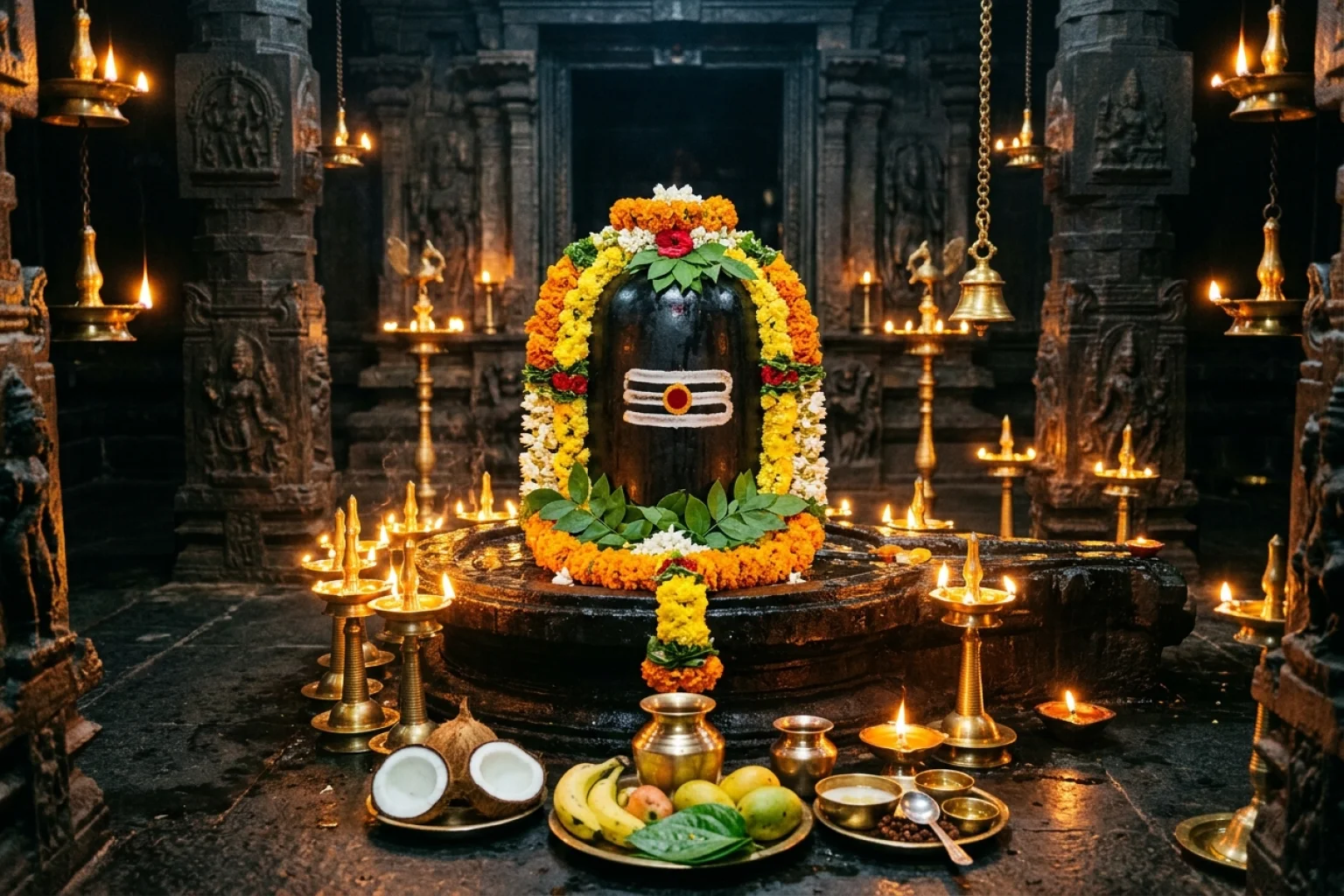
Hanumangarhi
📍 Ayodhya, Uttar Pradesh
National SignificanceHanumangarhi is one of the most sacred and ancient Hanuman temples in India, situated atop a hillock in the heart of Ayodhya. Believed to be the residence of Lord Hanuman himself, this fortress-temple guards the holy city and is considered an essential first stop for every pilgrim visiting Ram Janmabhoomi.

🕒 Practical Information
🕉️ Spiritual Details
Regional
Bal Hanuman (Child Hanuman), Anjaneya, Guardian of Ayodhya
🕉️ Divine Snapshot
Regional
Hanumangarhi Temple, Ramkot, Ayodhya, Uttar Pradesh 224123, India

Hanuman Chalisa
Access the complete 40 verses of Hanuman Chalisa with authentic lyrics in Sanskrit, Hindi, and English. Perform daily prayers with word-by-word translations, listen to high-quality audio chants, and download the free PDF to practice offline.
Read NowSpiritual Highlights
Hanumangarhi is believed to be the living residence of Lord Hanuman, making it one of the most charged and powerful Hanuman shrines in existence. The deity here is regarded as the supreme protector of Ayodhya and all who visit the holy city — pilgrims believe they are under Hanuman's direct personal protection from the moment they offer prayers here. Worship at Hanumangarhi is considered especially efficacious for removing obstacles before any important undertaking, granting courage and mental strength, and ensuring safe passage and successful completion of the Ayodhya pilgrimage. The temple is also believed to be particularly powerful for those seeking relief from fear, enemies, and malefic planetary influences.
Devotees across centuries have believed that Hanumangarhi is Hanuman's actual living abode — that the deity is not merely symbolically present but genuinely resides here in a subtle divine form. Many pilgrims report experiencing a palpable divine presence upon ascending the 76 steps and entering the sanctum, describing it as a feeling of being directly seen and known by the deity. It is widely believed that no sincere devotee who seeks Hanuman's protection at Hanumangarhi returns without receiving it. The hilltop temple is also believed to have been miraculously preserved through all invasions and adversities that Ayodhya has faced across centuries, standing as an indestructible symbol of Hanuman's eternal guardianship.
The most iconic devotional practice at Hanumangarhi is the ascent of the 76 steps — each step accompanied by the mental or vocal chanting of "Jai Bajrang Bali" or a verse from the Hanuman Chalisa. Offerings of sindoor, mustard oil, jasmine garlands, laddoos, and coconuts are made to the deity. Recitation of the Hanuman Chalisa, Sundarkand, and Bajrang Baan is practiced daily by large numbers of devotees. Pradakshina around the sanctum is performed with devotion. Virtually every pilgrim visiting Ram Janmabhoomi begins their Ayodhya yatra at Hanumangarhi, making the sequence of Hanumangarhi followed by Ram Janmabhoomi the defining pilgrimage route of the sacred city.
Worship at Hanumangarhi is believed to remove all obstacles from the path of devotees, grant protection from enemies and evil forces, and ensure the success of important undertakings. Pilgrims seek Hanuman's blessing here specifically to make their Ram Janmabhoomi darshan spiritually complete and maximally fruitful. Devotees also pray for courage, physical health, mental strength, family protection, and relief from the malefic effects of Saturn and Mars. The combined spiritual merit of Hanumangarhi darshan and the Ayodhya pilgrimage is considered among the highest attainable in the Hindu tradition.
About Hanumangarhi
Hanumangarhi — literally meaning "the fort of Hanuman" — is among the most revered and spiritually powerful temples in all of Ayodhya, the birthplace of Lord Rama and one of the seven sacred cities (Sapta Puri) of Hinduism. Situated atop a prominent hillock in the Ramkot area, the temple is accessed by a grand flight of 76 steps, each one considered a step closer to the divine presence of Hanuman. The temple is believed to occupy the very spot where Lord Hanuman resided during his eternal vigil to protect Ayodhya and guard the birthplace of Lord Rama — Ram Janmabhoomi — which lies in close proximity. According to tradition, Hanuman continues to live here even today in a subtle divine form, making Hanumangarhi not merely a temple but the actual residence (garhi — fort or abode) of Hanuman himself. The main sanctum enshrines a powerful idol of Lord Hanuman in the Bal Hanuman form — the child Hanuman — seated in the lap of his divine mother Anjana Devi, a deeply beloved and uniquely tender iconographic representation. The temple complex is built in a fortress-like architectural style, with thick walls, a central courtyard, and subsidiary shrines within the compound. The hilltop location provides a commanding view of the sacred cityscape of Ayodhya, with the newly constructed Ram Mandir visible on the horizon. Hanumangarhi is managed by the Nirvani Akhara and has been a site of continuous worship for many centuries. It is a deeply held tradition in Ayodhya that no pilgrim visits Ram Janmabhoomi without first paying obeisance to Hanumangarhi — Hanuman is regarded as the doorkeeper of Ram's abode, and his blessings are sought before approaching the Lord himself. The temple draws an unceasing flow of devotees from across India and the world, particularly during Ram Navami, Hanuman Jayanti, and Diwali, when Ayodhya transforms into a city of light, song, and extraordinary devotion.
Architecture & Heritage
Fort Temple Architecture (Garhi Style), North Indian (Ancient (believed to be over 300 years old in current structure; site considered eternal))
Hanumangarhi is built in a distinctive fort-temple style — its thick, fortress-like outer walls give it the character of a medieval garhi (fort), reflecting its spiritual identity as Hanuman's stronghold and watchtower over Ayodhya. The grand 76-step staircase leading to the main gate is flanked by subsidiary shrines and decorated with religious motifs. The main sanctum is enclosed within a central courtyard surrounded by smaller shrines to various deities. The hilltop position provides a 360-degree view of Ayodhya's sacred skyline, including the Ram Mandir. The walls of the sanctum are richly adorned with sindoor from generations of devotional offerings.
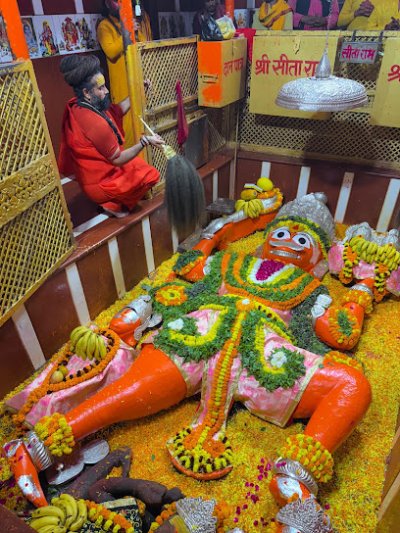
The central Bal Hanuman idol depicting the divine child Hanuman in Mata Anjana Devi's lap, richly adorned with sindoor, garlands, and sacred garments. Sacred idols of Lord Rama, Goddess Sita, and Lord Lakshmana in subsidiary shrines. Traditional aarti lamps and bells used in daily rituals. The 76 sacred steps themselves, each considered holy ground.
Festivals & Celebrations
Ram Navami is the supreme festival of Ayodhya and Hanumangarhi — the city receives millions of pilgrims and the temple sees extraordinary crowds with special abhishekam, mass Hanuman Chalisa recitation, and around-the-clock darshan. Hanuman Jayanti is celebrated with grand puja, Sundarkand recitation, and devotional music programs. Diwali in Ayodhya — the Deepotsav — is a nationally significant event in which hundreds of thousands of diyas are lit along the Saryu River banks and the entire city glows; Hanumangarhi is illuminated spectacularly as part of the celebrations. Vivah Panchami marks Ram and Sita's divine wedding anniversary and is observed with great joy across Ayodhya including at Hanumangarhi.
The months of Chaitra (March–April) are the peak festival season in Ayodhya coinciding with Ram Navami and Hanuman Jayanti, drawing the largest pilgrim gatherings. The Kartik month (October–November) is considered extremely auspicious for Ayodhya pilgrimage and culminates in the spectacular Diwali Deepotsav. Winter (November–February) offers pleasant weather ideal for the complete Ayodhya pilgrimage circuit. The Shravan month (July–August) sees enhanced devotional activity at all Shiva and Hanuman temples in the city.
Rituals & Traditions
Daily Mangala Aarti at 4 AM, Shringar puja (adornment of the deity), Bhog offering, afternoon and evening aartis, Hanuman Chalisa and Bajrang Baan recitation, special sindoor abhishekam on Tuesdays and Saturdays, Sundarkand path on auspicious days, and large-scale ritual programs during Ram Navami and Hanuman Jayanti.
The most sacred tradition of Hanumangarhi is the universal Ayodhya practice of visiting Hanumangarhi before Ram Janmabhoomi — pilgrims seek Hanuman's permission and blessings as the guardian doorkeeper before approaching Lord Ram. The ascent of the 76 steps with continuous chanting is itself a beloved devotional tradition. Offering sindoor and laddoos to the Bal Hanuman idol and carrying the prasad home is considered auspicious. The Nirvani Akhara's management of the temple preserves ancient ritual traditions that have been maintained unbroken for centuries.
Prasad includes boondi laddoos, besan laddoos, fruits, and sacred food offerings distributed after daily aartis. Sindoor prasad is also distributed after the abhishekam. Panchamrit is offered during special rituals. Prasad stalls are available near the base of the steps and within the temple complex.
Visitor Guidelines
Traditional and modest Indian attire is recommended. Remove footwear before ascending the steps to the temple. Avoid sleeveless, shorts, or casual Western clothing out of respect for Ayodhya's deeply sacred character. Wet or soiled clothing should be changed before entering the sanctum.
The temple is accessed via a flight of 76 steps from the base. There is no ropeway; however, palanquin (doli) services are available for elderly and differently-abled devotees who cannot climb the steps. The surrounding Ramkot area is well connected by auto-rickshaws, e-rickshaws, and on foot from the main pilgrimage circuit of Ayodhya. Parking is available near the base of the hill.
Nearby Temples (3)
Within about 200 km driving distance from Hanumangarhi. Plan a yatra and cover as many of these as you can.
Frequently Asked Questions
🕉️ Divine Snapshot
Lord Rama, Goddess Sita, Lord Lakshmana, Mata Anjana Devi
Regional
Hanumangarhi Temple, Ramkot, Ayodhya, Uttar Pradesh 224123, India
How to Reach
Maharishi Valmiki International Airport, Ayodhya (Ayodhya Airport) — approximately 12 km from the temple
Ayodhya Junction Railway Station (Ayodhya Cantt) — approximately 1.5 km from the temple
Ayodhya Bus Stand — approximately 1 km from the temple; e-rickshaws and auto-rickshaws available directly to Hanumangarhi