Salasar Balaji Temple (Shree Salasar Balaji Mandir)
📍 Salasar, Churu, Rajasthan
National (one of India's most-visited Hanuman shri SignificanceSalasar Balaji Temple, or Salasar Dham, is one of India's most visited Hanuman shrines, uniquely depicting Balaji with a round face, beard, and moustache. Considered Swayambhu (self-manifested) and a Shakti Sthal, it draws millions of devotees seeking protection, career success, and wish fulfillment, and is part of Rajasthan's popular religious circuit with Khatu Shyamji and Rani Sati Dadi temples.

🕒 Practical Information
🕉️ Spiritual Details
Lord Hanuman (Salasar Balaji)
Hanuman Temple
Salasar Balaji, Swayambhu Hanuman
🕉️ Divine Snapshot
Lord Hanuman (Salasar Balaji)
Hanuman Temple
Salasar, Churu, Rajasthan
Shree Balaji Bhandhar, Ishardas ji ka Trust, Balaji Temple Rd, near Hanuman Sewa Samiti, Salasar, Rajasthan 331506
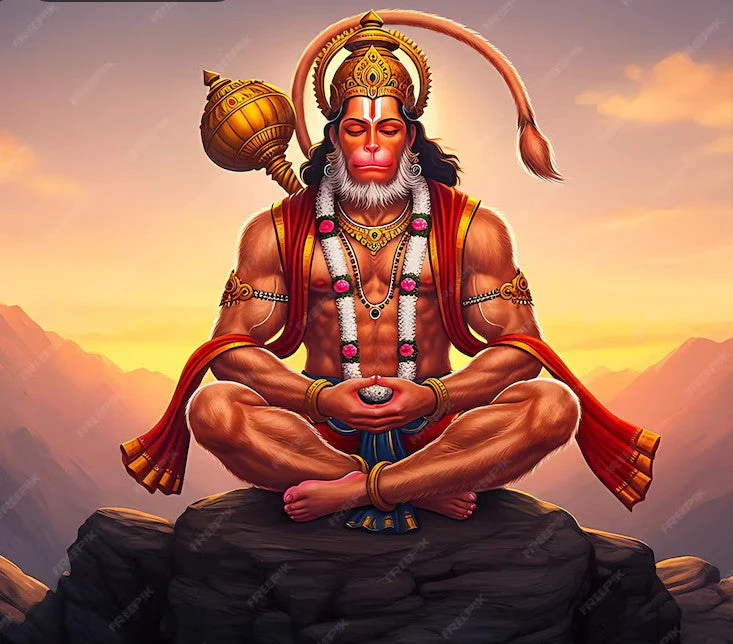
Hanuman Chalisa
Access the complete 40 verses of Hanuman Chalisa with authentic lyrics in Sanskrit, Hindi, and English. Perform daily prayers with word-by-word translations, listen to high-quality audio chants, and download the free PDF to practice offline.
Read NowSpiritual Highlights
Belief in swift wish-fulfillment ("Mannat"); protection from evil and negative energies.
The self-manifestation of the idol from the earth, and the enduring sacred flame (Dhuni) lit over 250 years ago.
Tying a coconut with a red thread (moli) within the temple as a vow (Mannat); taking home sacred ash (Bhasma) from the eternal Dhuni; the Savamani ritual offering.
Protection, prosperity, career/business success, wish fulfillment, relief from evil influences.
About Salasar Balaji Temple (Shree Salasar Balaji Mandir)
According to legend, in Samvat 1811 (1754 AD), on a Saturday of Shravan Shukla Navami, a Jat farmer named Ginthala ploughing his field in Asota village (Nagaur) unearthed a stone idol of Hanuman. The same night, a devotee named Mohandas Maharaj in Salasar dreamt of Balaji's arrival. The idol was sent from Asota to Salasar, where Mohandas installed it, giving it a distinctive round face with beard and moustache — the form he had seen in his dream. The temple was built in 1759 (Samvat 1815); Mohandas passed the priesthood to his disciple Udairam, whose descendants continue temple service. The sacred Dhuni (fire) lit by Mohandas over two centuries ago is still kept burning.
Architecture & Heritage
Rajasthani temple architecture with marble structure, silver gates, and gold-plated doors (18th century (idol found 1754 AD; temple built 1759 AD))
Intricate mosaic work, silver and gold-plated gates, marble temple complex renovated over time
The eternal Dhuni (sacred fire) lit by Mohandas Maharaj; the original Swayambhu idol
Festivals & Celebrations
Continuous chanting of "Jai Balaji Maharaj" and "Sankat Mochan Hanuman Ki Jai" during fairs
Rituals & Traditions
Savamani ritual offering; daily aarti
Coconut-tying vow (Mannat) ritual unique to this temple's courtyard
Visitor Guidelines
Modest attire; leather items (belts, wallets) should not be carried inside
Well-developed pilgrim infrastructure given very high visitor volume
Frequently Asked Questions
🕉️ Divine Snapshot
Lord Hanuman (Salasar Balaji)
Shri Ram
Hanuman Temple
Salasar, Churu, Rajasthan
Shree Balaji Bhandhar, Ishardas ji ka Trust, Balaji Temple Rd, near Hanuman Sewa Samiti, Salasar, Rajasthan 331506
How to Reach
Jaipur International Airport (~170 km)
Sujangarh Railway Station (nearest major station; Salasar itself has limited rail connectivity)
Salasar Bus Stand
Commonly visited together with Khatu Shyamji and Mehandipur Balaji; photography restricted inside the sanctum; expect very heavy crowds during the two annual fairs