Temples in Kasaragod, Kerala

Kerala pilgrimage guide

Temples in Kasaragod — Famous Temples & Complete Darshan Guide

Plan a practical Kasaragod temple trip with 10 important temples, darshan-friendly routing, local travel tips and the best season for a peaceful pilgrimage.

10 curated temples Kerala View map & route →

Last updated July 2026 · Curated by the Temples.bio editorial team

Quick answers

Which is the most famous temple in Kasaragod?
Madhur Mahaganapathy Temple is the most prominent temple in Kasaragod. This guide covers 10 notable temples in and around Kasaragod with timings, distances and a darshan route.
How many days do you need to visit Kasaragod temples?
You can cover the main temples of Kasaragod in about 2 days. Use the 1-day essential circuit for the key shrines, or the 2-day plan to include temples within 100 km.
What is the best time to visit Kasaragod temples?
October to March is the most comfortable season for temple visits in Kasaragod. Summer afternoons can be tiring, so plan early morning darshan and keep a lighter second half of the day. Festival days are spiritually rewarding but busier; confirm timings, parking and local transpo

Why Kasaragod is a major temple destination

Kasaragod is one of Kerala's useful temple bases, combining well-known shrines with smaller neighbourhood temples that locals still visit for daily worship. The guide below is arranged for real travel: start with the most important temple, then add nearby shrines in an order that keeps the route simple.

Even when a city is not marketed only as a pilgrimage destination, its temples often hold the memory of older neighbourhoods, local festivals and family vows. Devotees usually come here for blessings of Lord Vishnu and Bhagavathy, family welfare, ancestral prayers and a quieter connection with the region's sacred geography. The city also works well as a base for first-time visitors who want a balanced mix of famous temples and reachable local shrines.
Curated pilgrimage circuit

Temples to Visit Near Kasaragod

Ordered by pilgrimage importance and practical travel distance from Kasaragod.

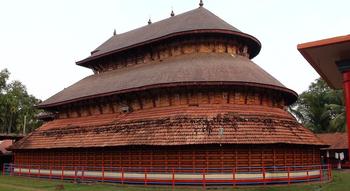
Madhur Mahaganapathy Temple — Lord Mahaganapathy (Ganesha) temple in Kasaragod Same Day

Lord Mahaganapathy (Ganesha)

  • Madhur, Kasargod, Kerala
  • 37.8 km from Kasaragod
  • 4:30 AM - 8:30 PM (Madhur, Kasaragod district, Kerala. 800+ year old Ganesha temple. Self-manifested Ganesha idol on moonstone (chandrakanta shila) foundation — unique. Classic Kerala Thachu Shastra architecture.)

Madhur Mahaganapathy Temple

Madhur Mahaganapathy Temple in Kasargod is one of the most important and powerful Ganesha temples in Kerala, renowned for its ability to remove obstacles and grant devotees' wishes. The temple is dedicated to Lord Mahaganapathy (Ganesha) and is believed to be over 1000 years old. The temple is famous for its beautiful traditional Kerala architecture with intricate wood carvings and copper roof. The deity is considered extremely powerful for removing all types of obstacles, whether personal, professional, or spiritual. The temple attracts devotees from Kerala, Karnataka, and other neighboring states who come seeking Ganesha's blessings for success in their endeavors. The temple also has a unique tradition of offering modaka (sweet) prasadam.

Travel Tip: By Road: Connected from Kasargod and Mangalore. Traditional Kerala Ganesha temple with Karnataka border accessibility.

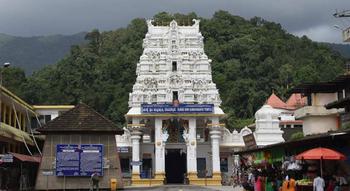
Kukke Subramanya Temple — Lord Subramanya (Murugan) temple in Kasaragod Same Day

Lord Subramanya (Murugan)

  • Kukke, Karnataka
  • 84.7 km from Kasaragod
  • 5:00 AM - 9:00 PM (Kukke Subramanya, Sullia taluk, Karnataka. Famous for Sarpa Dosha remedies. Surrounded by Western Ghats forest. TTD Devasthanam.)

Kukke Subramanya Temple

Kukke Subramanya Temple, located in the Western Ghats of Karnataka, is one of the most significant temples dedicated to Lord Subramanya (Murugan) and is particularly renowned for Sarpa Dosha (serpent affliction) remedies. The temple is situated in a picturesque valley surrounded by lush green hills and is believed to be the place where Lord Subramanya performed penance after killing the serpent demon Tarakasura. The temple is famous for its powerful Sarpa Samskara ritual that helps devotees overcome serpent-related astrological afflictions. The temple attracts pilgrims from across South India seeking relief from Naga Dosha and other serpent-related problems. The natural beauty combined with spiritual power makes this a unique pilgrimage destination.

Travel Tip: By Road: Scenic Western Ghats route from Mangalore and Bangalore. Serpent worship temple with mountain location.

Kateel Durgaparameshwari Temple — Goddess Durga temple in Kasaragod Same Day

Goddess Durga

  • Kateel, Dakshina Kannada, Karnataka
  • 107.0 km from Kasaragod
  • 5:00 AM - 9:00 PM (Kateel, Mangaluru district, Karnataka. Island temple on Nandini river. Very popular in Karnataka.)

Kateel Durgaparameshwari Temple

Kateel Durgaparameshwari Temple, located on the banks of the Nandini River in Dakshina Kannada, is one of the most powerful Shakti temples in Karnataka. The temple is dedicated to Goddess Durgaparameshwari, believed to be a Shakti Peetha where the back portion of Sati fell. The temple is renowned for its miraculous powers in granting wishes, protecting devotees from evil forces, and providing relief from various problems. The river location adds to the temple's spiritual significance, and devotees often take holy dips in the Nandini River. The temple is particularly famous for its grand Navarathri celebrations and the powerful energy of the goddess that attracts devotees from across South India.

Travel Tip: By Road: Connected from Mangalore and Udupi. Powerful goddess temple with river proximity and coastal access.

Dharmasthala Manjunatha Temple — Lord Manjunatha (Shiva) temple in Kasaragod Same Day

Lord Manjunatha (Shiva)

  • Dharmasthala, Dakshina Kannada, Karnataka
  • 109.2 km from Kasaragod
  • 5:30 AM - 9:00 PM (Dharmasthala, Dakshina Kannada. Famous for free meals (Annadana) — serves over 10,000 pilgrims daily. Managed by Heggade family (Hindu-Jain joint management).)

Dharmasthala Manjunatha Temple

Dharmasthala Manjunatha Temple is a unique and remarkable temple located in Dakshina Kannada, Karnataka, where Jain Heggade family trustees have been serving Lord Manjunatha (Shiva) for over 800 years. This temple represents an extraordinary example of religious harmony where Jain administrators serve a Shaivite deity. The temple is world-famous for its Annadana (free food service) that feeds thousands of pilgrims daily without discrimination. Dharmasthala means "abode of dharma" and the temple upholds the highest principles of dharma, charity, and social service. The temple also houses a museum, several charitable institutions, and promotes education and healthcare. Lord Manjunatha here is considered especially powerful for justice, dharma, and social welfare.

Travel Tip: By Road: Well connected from Mangalore and Bangalore. Unique dharmic destination with excellent pilgrim facilities.

Udupi Sri Krishna Temple — Lord Krishna (Bala Krishna) temple in Kasaragod Same Day

Lord Krishna (Bala Krishna)

  • Udupi, Karnataka
  • 139.7 km from Kasaragod
  • 5:30 AM - 9:00 PM (Udupi, Karnataka. The Kanakana Kindi (Kanaka's window) is iconic — devotee Kanaka Das was denied entry and the wall cracked open for him to see Lord Krishna. Managed by 8 Ashta Mathas in rotation (Paryaya system every 2 years).)

Udupi Sri Krishna Temple

Udupi Sri Krishna Temple, also known as Udupi Sri Krishna Matha, is a historic Hindu temple dedicated to Lord Krishna located in the coastal town of Udupi, Karnataka. Founded by the saint and philosopher Madhvacharya in the 13th century (1250 CE), this temple is the epicenter of the Dvaita (dualistic) school of Vedanta philosophy. According to legend, Madhvacharya discovered the idol of Lord Krishna embedded in a large ball of gopichandana (sacred clay) which was being used as ballast in a ship. The temple is unique because devotees worship Lord Krishna through a silver-plated window with nine holes called the Navagraha Kindi, and the deity faces west instead of the traditional east direction. The temple complex is managed by eight mathas (monasteries) through a unique Paryaya system where each matha takes turns managing the temple for two years. The temple is renowned for its elaborate daily rituals, classical music performances, and the world-famous Udupi cuisine that originated here. The temple architecture combines Kerala and Dravidian styles, with beautiful wooden carvings and a sacred temple tank called Madhva Sarovara.

Travel Tip: By Road: Well connected via NH-66 from Mangalore and Bangalore. By Train: Udupi railway station connects to major cities. By Air: Mangalore airport is the nearest. Best time to visit: October to March. Visit during Paryaya festival for special experience. Try the famous Udupi prasadam.

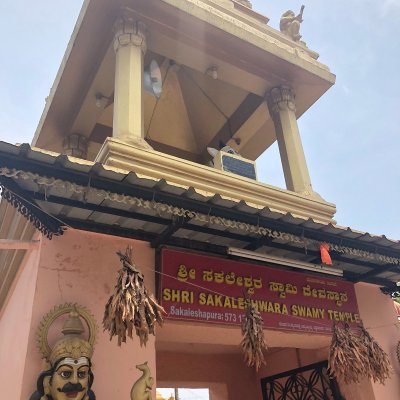
Sakleshwara Swamy Temple — Lord Sakleshwara (Shiva) temple in Kasaragod Same Day

Lord Sakleshwara (Shiva)

  • Sakleshpur, Hassan District, Karnataka
  • 147.4 km from Kasaragod
  • 6:00 AM - 8:00 PM (No afternoon closure. Opens through the day.)

Sakleshwara Swamy Temple

Sakleshpur is coffee-country — you drive through green plantation after plantation to reach it — and the Sakleshwara Temple at its centre feels like the still point around which the whole valley turns. The temple sits on the Hemavathy River bank, and the annual Rath Yatra in February transforms the otherwise quiet town into a vivid, crowded festival that spills through every street. The rest of the year, it is wonderfully calm.

Travel Tip: October–February when the coffee estates are harvesting and the post-monsoon hills are at their greenest. Dawn visits (6–7 AM) combine the temple's quiet opening puja with the cool mist off the Hemavathi river.

Chennakeshava Temple (Belur) — Lord Chennakeshava (Vishnu) temple in Kasaragod Same Day

Lord Chennakeshava (Vishnu)

  • Belur, Hassan District, Karnataka
  • 183.1 km from Kasaragod
  • 7:30 AM - 8:00 PM (ASI protected monument; no afternoon closure.)

Chennakeshava Temple (Belur)

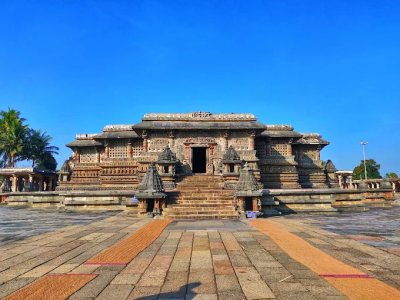
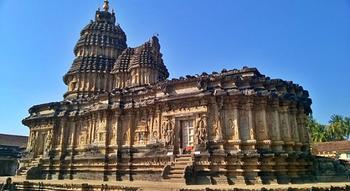
The sculptors who built Belur and Halebidu in the 12th century were not carving temples so much as writing encyclopaedias in stone. Every surface of the Chennakeshava Temple at Belur and the Hoysaleswara Temple at Halebidu is covered in figures from mythology, daily life, armies, elephants, and love poetry — all rendered with a precision that defies explanation given the tools available. Spend a full day here. You will not see everything.

Travel Tip: October–March for cool weather and the best light on the carvings. Hire a government-approved guide at the entrance — the stories behind the 42 Madanikas alone are worth an hour. Combine with Halebidu (16 km) in the same day.

Sringeri Sharada Peetham — Goddess Sharada temple in Kasaragod Same Day

Goddess Sharada

  • Sringeri, Karnataka
  • 186.1 km from Kasaragod
  • 6:00 AM - 8:30 PM (Sringeri, Karnataka. One of the 4 Adi Shankaracharya peethas. Sharada Devi temple on banks of Tunga river. Very peaceful.)

Sringeri Sharada Peetham

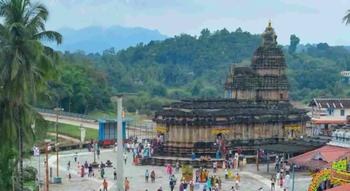
Sringeri sits in a forested valley in the Western Ghats where the Tunga River runs clear and cold, and the entire town exists in the quiet orbit of the Sharada Peetham — one of the four great monasteries established by Adi Shankaracharya in the 8th century. The Sharadamba Temple and the older Vidyashankara Temple beside it are architecturally extraordinary, but the deeper draw is the quality of silence here, which is different from ordinary quiet.

Travel Tip: By Road: Scenic Western Ghats route from Bangalore and Mangalore. Sacred learning center with peaceful riverside location.

Mahalakshmi Temple Sringeri — Goddess Mahalakshmi (Lakshmi) temple in Kasaragod Same Day

Goddess Mahalakshmi (Lakshmi)

  • Sringeri, Karnataka
  • 186.2 km from Kasaragod
  • 6:00 AM - 8:00 PM (Sringeri, Chikmagalur district, Karnataka. Sharada Peetham temple near Adi Shakaracharya's monastery.)

Mahalakshmi Temple Sringeri

Mahalakshmi Temple in Sringeri, Karnataka, is a significant Shakti temple located within the renowned Sringeri Sharada Peetham complex, one of the four Advaita Vedanta mathas established by Adi Shankaracharya. The temple is dedicated to Goddess Mahalakshmi, worshipped here for both material prosperity and spiritual wealth. The temple's association with the Sharada Peetham adds immense scholarly and spiritual significance, making it a center where devotees seek both learning and prosperity. The serene location on the banks of the Tunga River enhances the spiritual atmosphere.

Travel Tip: By Road: Connected from Bangalore, Mangalore via scenic Western Ghats routes. Regular buses to Sringeri.

Hornadu Annapoorneshwari Temple — Goddess Annapoorneshwari temple in Kasaragod Same Day

Goddess Annapoorneshwari

  • Hornadu, Chikkamagaluru, Karnataka
  • 187.8 km from Kasaragod
  • 6:00 AM - 8:00 PM (Hornadu, Chikmagalur, Karnataka. Deep in Western Ghats. Famous for Annapoorneshwari — Goddess of food abundance.)

Hornadu Annapoorneshwari Temple

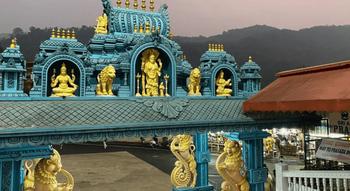
Hornadu Annapoorneshwari Temple, located in the lush Western Ghats of Chikkamagaluru district, is dedicated to Goddess Annapoorneshwari, the divine provider of food and nourishment. The temple is situated in a picturesque valley surrounded by mountains and is one of the most powerful temples for seeking food security, prosperity, and material abundance. Goddess Annapoorneshwari is believed to ensure that no devotee goes hungry and provides for all material needs. The temple is particularly famous for its gold-covered deity and the belief that the goddess fulfills all desires related to food, shelter, and basic necessities. The natural beauty of the Western Ghats location adds to the spiritual atmosphere, making it a popular pilgrimage destination for those seeking the goddess's abundant blessings.

Travel Tip: By Road: Scenic Western Ghats route from Mangalore and Shimoga. Mountain temple with food security significance.

How to Reach Kasaragod

Reach Kasaragod by the nearest major railway station or state highway links, then keep the temple circuit local for the first day. For families and senior citizens, a hired cab or auto-rickshaw is easier than changing transport repeatedly. Start with the main temple before the crowd builds, pause for lunch near the city centre, and keep outer temples for the afternoon.

Best Time to Visit Kasaragod Temples

October to March is the most comfortable season for temple visits in Kasaragod. Summer afternoons can be tiring, so plan early morning darshan and keep a lighter second half of the day. Festival days are spiritually rewarding but busier; confirm timings, parking and local transport before starting.

Suggested trip plan

Kasaragod Temple Darshan Itinerary

A curated day-wise route designed for optimal travel times and darshan timings. Adjust around your bookings.

Kasaragod Temple FAQs

How many temples can I visit in Kasaragod in one day?
Most visitors can cover 4 to 6 temples in one day if they start early and keep the route within the city or nearby areas.
What is the best time to visit Kasaragod temples?
The cooler months from October to March are best. For daily darshan, early morning and evening are usually more comfortable than afternoon.
Is Kasaragod suitable for a family temple trip?
Yes. Keep the first day focused on the main city temples, use local transport, and avoid packing too many distant temples into one day.

Interactive Route Planner

Kasaragod Temple Locations

Tap any temple to center the map, view driving routes, and get key details.

1

Madhur Mahaganapathy Temple

Day 1 · 37 km

2

Kukke Subramanya Temple

Day 2 · 84 km

3

Kateel Durgaparameshwari Temple

Day 2 · 107 km

4

Dharmasthala Manjunatha Temple

Day 3 · 109 km

5

Udupi Sri Krishna Temple

Day 3 · 139 km

6

Sakleshwara Swamy Temple

Day 4 · 147 km

7

Chennakeshava Temple (Belur)

Day 5 · 183 km

8

Sringeri Sharada Peetham

Day 5 · 186 km

9

Mahalakshmi Temple Sringeri

Day 6 · 186 km

10

Hornadu Annapoorneshwari Temple

Day 6 · 187 km

Day 1 Day 2 Day 3