Book Tomorrow Wednesday Vinayaka Abhishekam
Temples in Rameswaram, Tamil Nadu

Tamil Nadu pilgrimage guide

Temples in Rameswaram — Famous Temples & Complete Darshan Guide

Plan a practical Rameswaram temple trip with 5 important temples, darshan-friendly routing, local travel tips and the best season for a peaceful pilgrimage.

5 curated temples Tamil Nadu View map & route →

Last updated July 2026 · Curated by the Temples.bio editorial team

Quick answers

Which is the most famous temple in Rameswaram?
Rameshwaram Jyotirlinga is the most prominent temple in Rameswaram. This guide covers 5 notable temples in and around Rameswaram with timings, distances and a darshan route.
How many days do you need to visit Rameswaram temples?
You can cover the main temples of Rameswaram in about 1 day. Use the 1-day essential circuit for the key shrines, or the 2-day plan to include temples within 100 km.
What is the best time to visit Rameswaram temples?
October to March is the most comfortable season for temple visits in Rameswaram. Summer afternoons can be tiring, so plan early morning darshan and keep a lighter second half of the day. Festival days are spiritually rewarding but busier; confirm timings, parking and local transp

Why Rameswaram is a major temple destination

Rameswaram is one of Tamil Nadu's useful temple bases, combining well-known shrines with smaller neighbourhood temples that locals still visit for daily worship. The guide below is arranged for real travel: start with the most important temple, then add nearby shrines in an order that keeps the route simple.

The city carries a strong pilgrimage identity, so the best temple plan should not feel like a checklist. Devotees usually come here for blessings of Lord Shiva and Lord Murugan, family welfare, ancestral prayers and a quieter connection with the region's sacred geography. The city also works well as a base for first-time visitors who want a balanced mix of famous temples and reachable local shrines.
Curated pilgrimage circuit

Temples to Visit Near Rameswaram

Ordered by pilgrimage importance and practical travel distance from Rameswaram.

Rameshwaram Jyotirlinga — Lord Shiva temple in Rameswaram Within City

Lord Shiva

  • Rameshwaram, Tamil Nadu
  • Within Rameswaram (Rameshwaram, Tamil Nadu)
  • 5:00 AM - 9:00 PM (One of 4 Dhams. Ramanathaswamy Temple Devasthanam. Famous 22 sacred theerthas. Two sessions.)

Rameshwaram Jyotirlinga

Ramanathaswamy Temple in Rameshwaram, Tamil Nadu, is one of the twelve Jyotirlingas and also one of the four Char Dhams, making it doubly sacred. Located on Pamban Island, the temple is associated with the Ramayana, where Lord Rama worshipped Lord Shiva seeking forgiveness for killing Ravana (a Brahmin) and blessings for victory. The temple is famous for its magnificent corridors, 22 sacred wells (theerthams) with different healing properties, and being the southernmost Jyotirlinga. The temple represents the unity of Shaivism and Vaishnavism and is considered essential for completing both Char Dham and Jyotirlinga pilgrimages.

Travel Tip: By Road: Connected via Pamban Bridge from mainland. By Train: Rameshwaram is connected by rail via Pamban Bridge. Scenic island journey.

Panchamukhi Hanuman Temple — Lord Hanuman temple in Rameswaram Within City

Lord Hanuman

  • Rameshwaram, Tamil Nadu
  • Within Rameswaram (Rameshwaram, Tamil Nadu)
  • 6:00 AM - 10:00 PM (Thiruvallur / Chennai, Tamil Nadu. Lord Hanuman in his rare Panchamukhi (5-faced) form: Hanuman (East), Narasimha (South), Garuda (West), Varaha (North), Hayagriva (above). This form is believed to be the ultimate protective form. Associated with the site where Hanuman assumed this form to defeat Ahiravana in the Ramayana.)

Panchamukhi Hanuman Temple

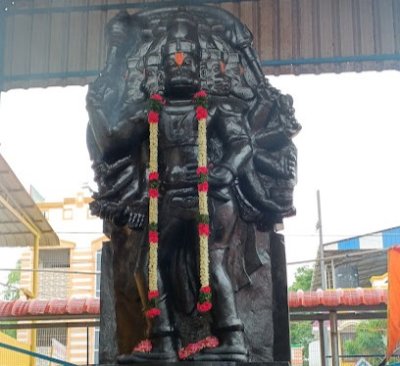
Panchamukhi Hanuman Temple, also known as Panchamukha Anjaneya Temple, is situated about two kilometers from the sacred Ramanathaswamy Temple in Rameshwaram, Tamil Nadu. This revered temple is dedicated to Lord Hanuman in his rare five-faced form, symbolizing supreme protection and divine strength. The idol of Hanuman is uniquely depicted with five faces and is traditionally covered with senthooram, a sacred vermilion applied by saints and devotees over many generations. The temple is an important stop for pilgrims undertaking the Rameshwaram yatra and is visited by almost every devotee who comes to the holy town.

Travel Tip: The temple is close to the seashore, light cotton clothing, drinking water, and sun protection are recommended. Visiting it along with the nearby Ramanathaswamy Temple and other Rameshwaram attractions will help you make the most of your pilgrimage.

Madurai Meenakshi Amman Temple — Goddess Meenakshi and Lord Sundareshwarar temple in Rameswaram Same Day

Goddess Meenakshi and Lord Sundareshwarar

  • Madurai, Tamil Nadu
  • 173.9 km from Rameswaram
  • 5:00 AM - 10:00 PM (Madurai. One of the largest temple complexes in India. HR&CE manages. 14 gopurams. Two sessions.)

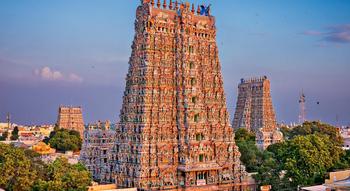
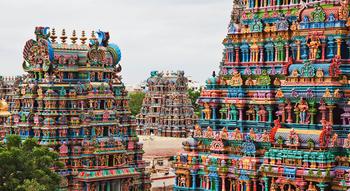
Madurai Meenakshi Amman Temple

Madurai Meenakshi Amman Temple, located in the heart of Madurai city, is one of the most spectacular and historically significant temples in Tamil Nadu. Dedicated to Goddess Meenakshi (an avatar of Parvati) and her consort Lord Sundareshwarar (Shiva), this temple is a masterpiece of Dravidian architecture. The temple complex covers 14 acres and features 14 magnificent gopurams (towers), with the tallest being 52 meters high. The temple has a rich history dating back to the 6th century CE, with the current structure largely built during the Nayak period (16th-18th centuries). The temple is famous for its intricate sculptures, vibrant paintings, and the Hall of Thousand Pillars. The annual Chithirai Festival celebrating the divine marriage of Meenakshi and Sundareshwarar attracts millions of devotees.

Travel Tip: By Road: Central Madurai location. By Train: Major railway junction. Cultural heritage site with excellent connectivity.

Thirupparankundram Murugan Temple — Lord Subramanya (Murugan) temple in Rameswaram Same Day

Lord Subramanya (Murugan)

  • Thirupparankundram, Tamil Nadu
  • 181.3 km from Rameswaram
  • 6:00 AM - 8:30 PM (Thirupparankundram, Madurai district. Cave temple in hill. One of 6 Arupadai Veedu. Lord Murugan's wedding place.)

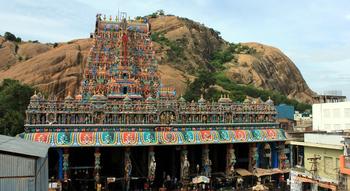
Thirupparankundram Murugan Temple

Thirupparankundram Murugan Temple, located near Madurai, Tamil Nadu, holds the distinction of being the first among the six main abodes (Arupadai Veedu) of Lord Murugan. This ancient rock-cut temple is where Lord Murugan married Devasena, the daughter of Indra, making it a significant site for marriage and relationship blessings. The entire temple is carved out of a single rock hill, showcasing ancient Tamil architectural skills. The temple represents the establishment of Murugan's divine authority and his role as a married deity. The temple has unique sculptures and ancient inscriptions that date back to the 8th century, making it an important archaeological site as well.

Travel Tip: By Road: Connected from Madurai city. By Train: Madurai is major junction. Ancient rock-cut temple site.

Pazhamudircholai Murugan Temple — Lord Subramanya (Murugan) temple in Rameswaram Same Day

Lord Subramanya (Murugan)

  • Pazhamudircholai, Tamil Nadu
  • 198.9 km from Rameswaram
  • 6:00 AM - 8:00 PM (Pazhamudircholai, near Madurai. Forest hill temple — only Arupadai Veedu in a forest (Cholai). Two sessions.)

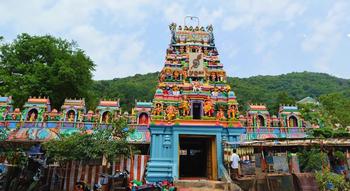
Pazhamudircholai Murugan Temple

Pazhamudircholai Murugan Temple, located on the Solaimalai Hills near Madurai, Tamil Nadu, is known as the "Garden of Fruits" and represents the pastoral and romantic aspect of Lord Murugan. This is where Murugan is believed to reside with his beloved Valli amidst lush green surroundings and fruit-bearing trees. The temple is surrounded by natural beauty and is famous for its connection to fertility, love, and nature. The name "Pazhamudircholai" literally means "the garden where fruits mature," symbolizing abundance and fertility. The temple attracts couples seeking love, fertility, and harmony in their relationships, as well as those seeking connection with nature and divine love.

Travel Tip: By Road: Hill route from Madurai. Natural setting with fruit gardens. Scenic drive through hills.

How to Reach Rameswaram

Reach Rameswaram by the nearest major railway station or state highway links, then keep the temple circuit local for the first day. For families and senior citizens, a hired cab or auto-rickshaw is easier than changing transport repeatedly. Start with the main temple before the crowd builds, pause for lunch near the city centre, and keep outer temples for the afternoon.

Best Time to Visit Rameswaram Temples

October to March is the most comfortable season for temple visits in Rameswaram. Summer afternoons can be tiring, so plan early morning darshan and keep a lighter second half of the day. Festival days are spiritually rewarding but busier; confirm timings, parking and local transport before starting.

Suggested trip plan

Rameswaram Temple Darshan Itinerary

A curated day-wise route designed for optimal travel times and darshan timings. Adjust around your bookings.

Rameswaram Temple FAQs

How many temples can I visit in Rameswaram in one day?
Most visitors can cover 4 to 6 temples in one day if they start early and keep the route within the city or nearby areas.
What is the best time to visit Rameswaram temples?
The cooler months from October to March are best. For daily darshan, early morning and evening are usually more comfortable than afternoon.
Is Rameswaram suitable for a family temple trip?
Yes. Keep the first day focused on the main city temples, use local transport, and avoid packing too many distant temples into one day.

Interactive Route Planner

Rameswaram Temple Locations

Tap any temple to center the map, view driving routes, and get key details.

1

Rameshwaram Jyotirlinga

Day 1 · 1 km

2

Panchamukhi Hanuman Temple

Day 1 · 1 km

3

Madurai Meenakshi Amman Temple

Day 2 · 173 km

4

Thirupparankundram Murugan Temple

Day 2 · 181 km

5

Pazhamudircholai Murugan Temple

Day 3 · 198 km

Day 1 Day 2 Day 3