🪷 Book Tomorrow Friday Kamakshi Amma Abhishekam
Attukal Pongala 2026

Hindu Festival Guide · 2026

Attukal Pongala 2026

Attukal Pongala is the world's largest annual gathering of women, recognized by the Guinness World Record, where millions cook sweet rice Pongala as offering to the Attukal Bhagavathy goddess in Thiruvananthapuram.

📅 Attukal Pongala 2026:

Quick Answer

When is Attukal Pongala 2026?

📅

Attukal Pongala is the world's largest annual gathering of women, recognized by the Guinness World Record, where millions cook sweet rice Pongala as offering to the Attukal Bhagavathy goddess in Thiruvananthapuram.

Year Date
2025
2026 This year
2027

Deity

Attukal Bhagavathy (Kannaki, Bhadrakali, Devi)

Lunar month

Karkidakam / Makara (February-March)

Paksha

Shukla Paksha

Tithi

Karthika nakshatra day

Duration

1 day (Pongala) + 10-day festival

Regions

Thiruvananthapuram, Kerala; women attend from across India and worldwide

Attukal Pongala dates by year

2025

2026 Current

2027

About Attukal Pongala

Last updated:

  • 🙏 Deity: Attukal Bhagavathy (Kannaki, Bhadrakali, Devi)
  • 📅 Attukal Pongala 2026 date:
  • Duration: 1 day (Pongala) + 10-day festival
  • 🌙 Lunar month: Karkidakam / Makara (February-March)
  • 🗺️ Celebrated in: Thiruvananthapuram, Kerala; women attend from across India and worldwide

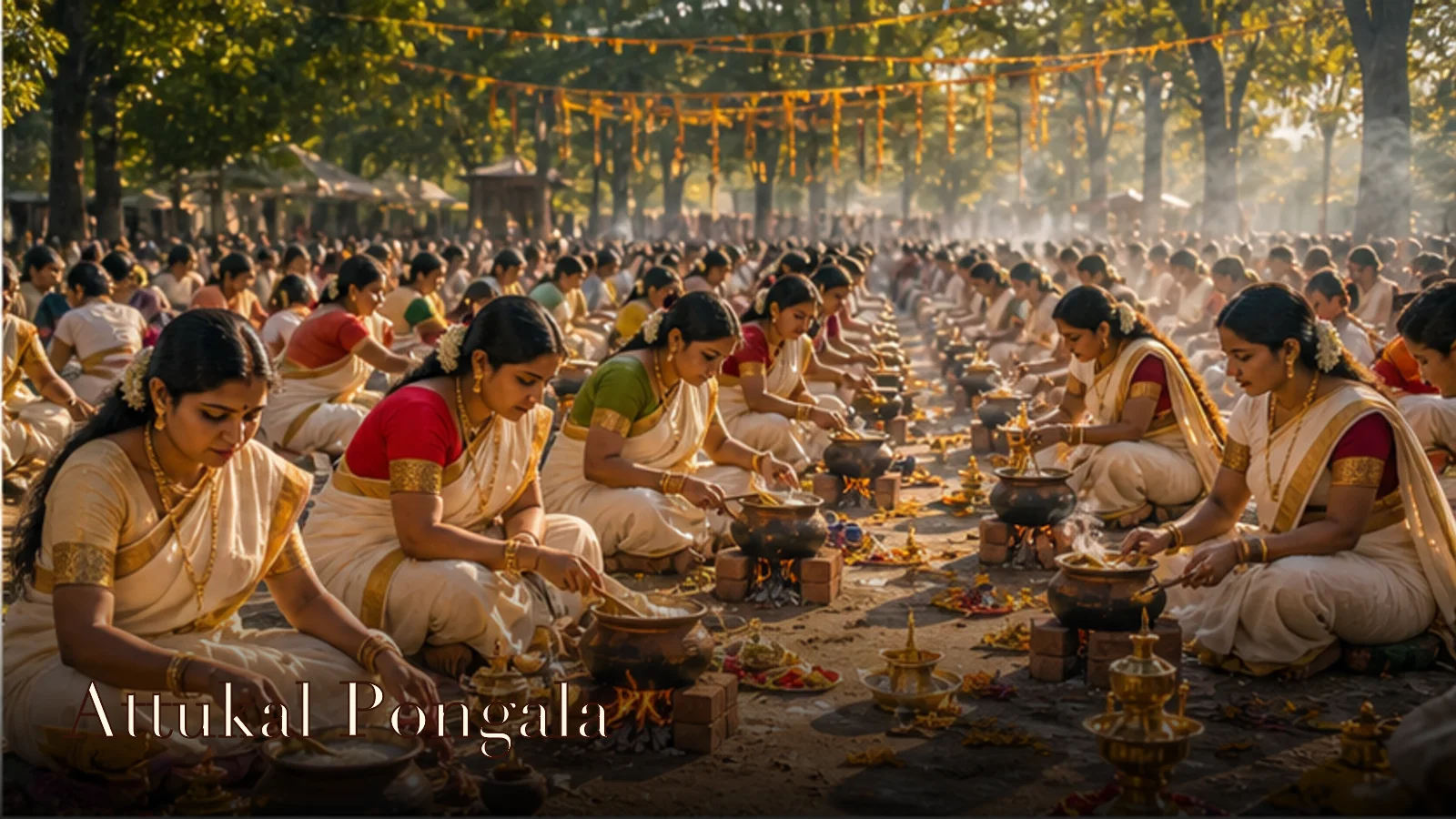
Attukal Pongala is one of the most extraordinary religious gatherings on earth — a festival where millions of women converge on the streets of Thiruvananthapuram, Kerala, to cook a sacred sweet rice offering called Pongala on makeshift earthen stoves. The festival, held at the Attukal Bhagavathy temple, holds the Guinness World Record as the largest annual gathering of women in the world, with over 3.5 million women participating in a single day.

The word Pongala means "to boil over" in Malayalam — the sweet rice preparation of rice, jaggery, coconut, and banana boils and overflows the pot as an auspicious sign of abundance. On the day of Karthika star in the Malayalam month of Karkidakam (February–March), women from all communities — Hindu, Christian, Muslim — set up small clay pots and makeshift brick stoves on every street, lane, and open space radiating outward from the Attukal temple for kilometers. The collective cooking becomes a city-wide act of worship, with fire and smoke rising from hundreds of thousands of stoves in a sight utterly unique in the world of religion.

The presiding deity, Attukal Bhagavathy, is identified with Kannaki, the heroine of the Tamil epic Silappadikaram, who burned the city of Madurai with the power of her chastity and righteousness. The goddess is revered as a fierce protector of women, and Pongala is believed to be the most powerful form of worship to please her, bringing blessings of health, protection, prosperity, and the fulfillment of deeply held wishes.

Significance of Attukal Pongala

Attukal Pongala's significance is multilayered — spiritual, social, and uniquely feminist in its essence:

  • Power of Women's Collective Devotion: The festival embodies the belief that the collective prayer of millions of women has immeasurable power — more potent than any individual ritual.
  • Bhagavathy's Demand: The goddess Attukal Bhagavathy specifically accepts Pongala from women as her most beloved offering, making this her primary form of worship.
  • Kannaki's Justice: The goddess is Kannaki, who represents the power of righteousness and a woman's righteous wrath — her worship affirms the divine strength of women.
  • Transcending Religion: The fact that women of all faiths participate makes Attukal Pongala a remarkable symbol of Kerala's inclusive spiritual culture.
  • Community as Ritual: The transformation of entire city streets into a sacred space demonstrates how devotion can dissolve the boundary between temple and world.
  • Fire and Transformation: The cooking fire (Agni) is sacred in Hindu tradition; Pongala is literally an offering through fire, transforming raw ingredients into prasad.
  • Guinness Recognition: The world record reinforces the unique scale and power of women's collective religious expression at Attukal.

Deities worshipped on Attukal Pongala

Follow the links to explore each deity’s mantras, stories, and temples on Temples.bio.
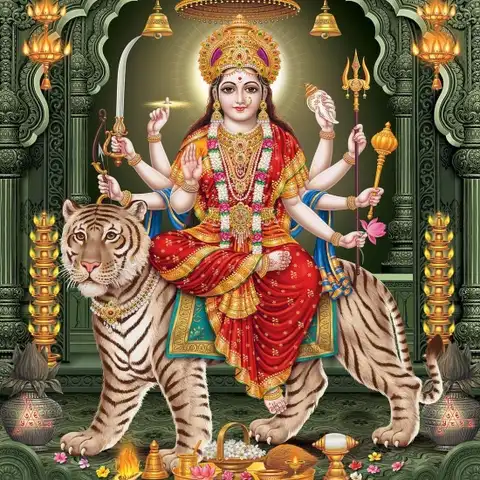
Attukal Bhagavathy is the supreme deity of the Attukal Pongala festival. She is identified with Kannaki, the central heroine of the 2nd-century Tamil epic Silappadikaram (The Tale of the Anklet) by Ilanko Atikal. In the epic, Kannaki's husband Kovalan is wrongly executed; in her grief and righteous fury, Kannaki tears off her left breast and throws it at the city of Madurai, which is consumed by flames. The goddess embodies this supreme power of feminine righteousness and the divine force that protects women from injustice. She is also identified with Bhadrakali and Parvati in local traditions, representing the complete spectrum of the divine feminine — from nurturing mother to fierce protectress. The Attukal temple tradition holds that the goddess, while traveling from Tamil Nadu to Kerala, rested at this spot and chose to reside here permanently. Men are restricted from the innermost areas during Pongala, as the festival belongs entirely to women in the goddess's honor.

How to celebrate Attukal Pongala 2026

1. Register for Pongala (optional but increasingly common for designated spots) or arrive very early — at pre-dawn if possible — to claim a cooking spot on the streets near Attukal temple.

2. Bring the required materials: a new clay pot (chutty), earthen stove bricks or an iron stand, firewood or coconut shells, raw rice, jaggery, coconut pieces, banana, and ghee.

3. Set up your stove on the designated street; street space is traditionally first-come basis and neighbors share space generously.

4. Prepare the Pongala mixture: wash rice, add water and jaggery to the pot, light the fire.

5. As the mixture boils and overflows the pot, it is considered auspicious — this is the Pongala moment, and women cheer and celebrate.

6. Once cooked, offer the Pongala to the goddess by raising the pot toward the temple direction and chanting prayers to Bhagavathy.

7. Temple priests circulate through the streets to offer prasad (holy ash, kumkum, flowers) to the Pongala pots.

8. After the official puja signal from the temple, the Pongala is distributed as prasad among family and neighbors.

9. Observe silence and focus your mind in prayer throughout the cooking process; it is an act of meditation through action (karma yoga).

Rituals & regional traditions

  • Clay Pot Cooking: A new, unglazed clay pot must be used for Pongala — it is never reused for ordinary cooking after being sanctified.
  • Makeshift Stoves: Women build small stoves from three bricks directly on the street, using firewood, coconut shells, or sometimes gas stoves in designated areas.
  • Pongala Recipe: Sweet rice cooked with jaggery, coconut, banana, cardamom, and ghee — regional variations exist in the proportions.
  • Temple Signal: The official start and end of Pongala cooking is signaled from the Attukal temple; all women begin and end cooking simultaneously.
  • Nivedyam Procession: Temple priests walk through streets distributing sacred ash (vibhuti) and flowers to bless each Pongala pot.
  • Women Only: Men traditionally do not participate in cooking Pongala; they may assist with setup but withdraw during the offering.
  • Multi-Faith Participation: Women of all faiths cook Pongala as a mark of respect for Bhagavathy and Kerala's syncretic tradition.
  • Urban Transformation: Streets for a 5–6 km radius around the temple are closed to traffic and transformed into a sacred cooking ground.

Spiritual benefits

  • Blessings of Attukal Bhagavathy are said to fulfill the deepest wishes of women who cook Pongala with sincere devotion.
  • Protection from illness, enemies, and misfortune is believed to be granted to the families of women who participate.
  • The collective merit (punya) of millions of women praying together is considered extraordinarily powerful.
  • Women seeking children, marital harmony, or resolution of family problems believe Pongala brings the goddess's direct intervention.
  • Participation is said to purify the home and bring prosperity and peace to the entire family for the coming year.
  • The cooking fire (Agni) purifies the devotee spiritually, and offering food through fire is among the highest forms of yajna (sacred sacrifice).
  • Transcending religious boundaries, participation fosters communal harmony and collective blessing for the entire city.

Mantras & sacred chants

ഓം ഭദ്രകാള്യൈ നമഃ (Om Bhadrakalyai Namaha) — Salutation to Bhadrakali, the fierce form of Devi identified with Attukal Bhagavathy, invoking her protection and blessings for devotees.

ഓം ശക്തി രൂപിണ്യൈ നമഃ (Om Shakti Rupinyai Namaha) — Salutation to the goddess as the embodiment of Shakti (divine power), honoring the supreme feminine energy that Attukal Bhagavathy represents.

ഓം ഐം ഹ്രീം ശ്രീം ത്രിപുര സുന്ദര്യൈ നമഃ (Om Aim Hreem Shreem Tripura Sundaryai Namaha) — The mantra of Tripura Sundari, the supreme goddess, chanted by devotees to invoke the full grace of the divine feminine during Pongala.

Attukal Pongala 2026 — FAQs

Attukal Pongala 2026 is expected around March 5, 2026. The exact date falls on the Karthika nakshatra day during the Malayalam month of Makara/Kumbha (February–March).

Attukal Pongala is an annual festival at the Attukal Bhagavathy temple in Thiruvananthapuram where millions of women cook a sweet rice offering called Pongala on streets across the city as worship to the goddess Bhagavathy.

Attukal Pongala holds the Guinness World Record as the largest annual gathering of women in the world, with over 3.5 million women participating in a single day of cooking and prayer.

Pongala is a sweet rice preparation made with raw rice, jaggery, coconut pieces, banana, cardamom, and ghee, cooked in a new clay pot over an open fire on the street.

Men can witness the festival and attend the Attukal temple, but traditionally do not participate in cooking Pongala — the cooking ritual belongs to women as the goddess specifically accepts this offering from women.

Attukal Bhagavathy is identified with Kannaki, the heroine of the Tamil epic Silappadikaram, who burned Madurai with her righteous power. She is also identified with Bhadrakali and is worshipped as the supreme protectress of women.

Plan at least 3–6 months in advance. Thiruvananthapuram fills completely; book accommodation very early, note that major roads are closed for the day, and traffic is redirected across the city.

Yes, one of the unique aspects of Attukal Pongala is that women of all faiths — Hindu, Christian, and Muslim — cook Pongala as a mark of devotion and respect, reflecting Kerala's inclusive spiritual tradition.

Temples celebrating Attukal Pongala

These temples are linked to Attukal Pongala in our directory — ideal for darshan, special pujas, and festival-season visits.

Explore all temples on Temples.bio →