About Bhai Dooj
Last updated:
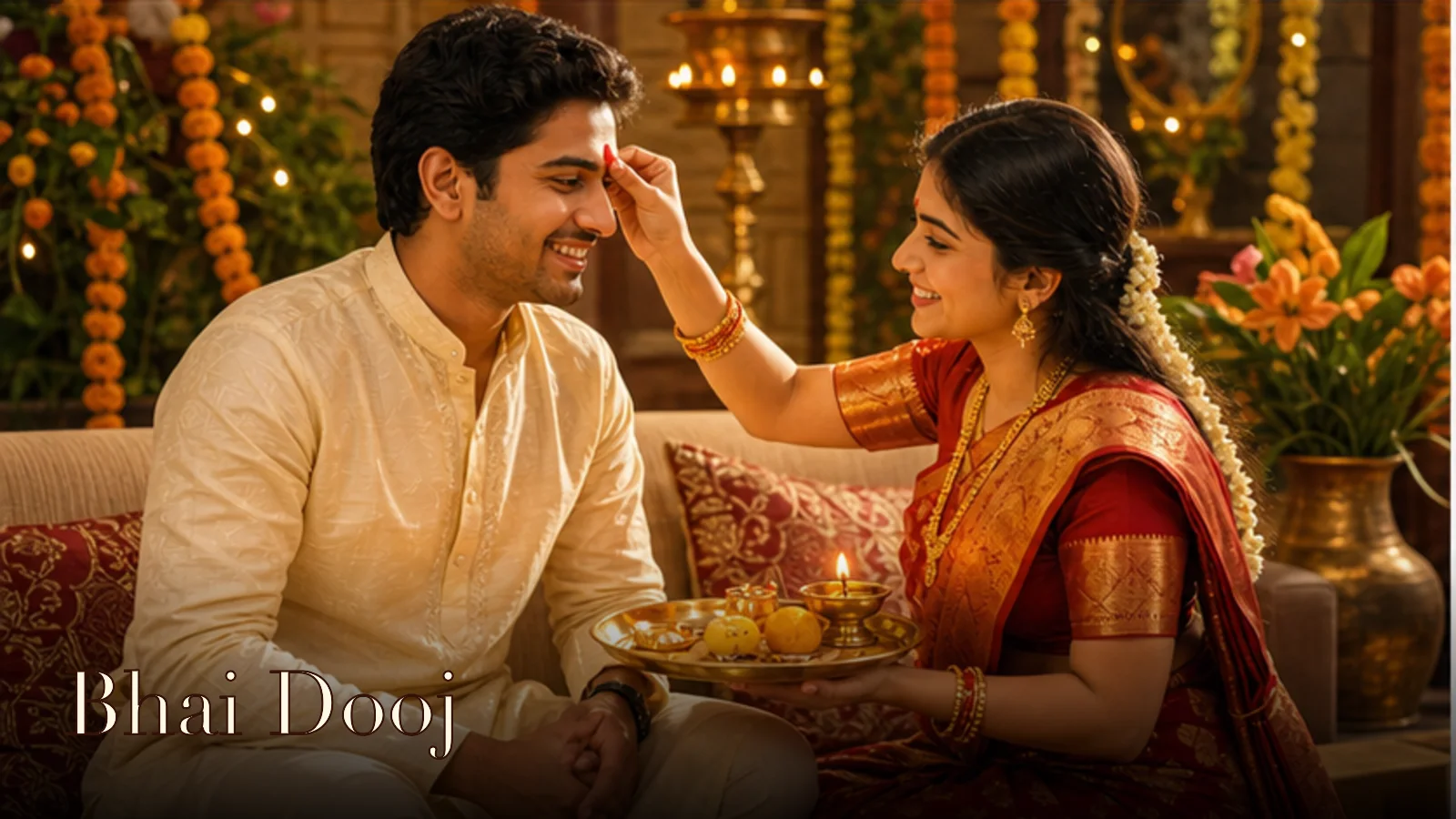
According to the Hindu Panchang, Bhai Dooj is celebrated on the Shukla Paksha Dwitiya Tithi of the Kartika month. On this auspicious occasion, sisters apply a ceremonial Tilak on their brothers' foreheads and pray for their long, happy and prosperous lives. In return, brothers express their love and appreciation by offering gifts to their sisters. Bhaiya Dooj is also known as Bhau Beej, Bhai Dooj, Bhatra Dwitiya, Bhai Dwitiya and Bhathru Dwithiya. On the day of Bhai Dooj, sisters apply a Tilak on their brothers' foreheads and pray for their long life, happiness, prosperity and wellbeing. On this day, sisters take an early morning bath, take a vow to observe fast and invite their brothers to home. Sisters prepare a decorated Puja Thali, tie a sacred thread on their brother's wrist after applying Tilak and perform Aarti. After the rituals, sisters offer their brothers sweets and a festive meal with love and devotion. In return, brothers present their sisters with gifts such as clothes, money or other tokens of appreciation, according to their capacity. Bhai Dooj is also called Yama Dwitiya, owing to the reunion of Yamaraja and His sister Goddess Yamuna on this day. Bathing in the Yamuna River holds special significance on Bhai Dooj, as it is believed to cleanse all sins and bring blessings of longevity and wealth. Scriptures state that those who bathe in sacred rivers on this day are spared from the torment of Yama's messengers at the of death.
Deities worshipped on Bhai Dooj
Follow the links to explore each deity’s mantras, stories, and temples on Temples.bio.
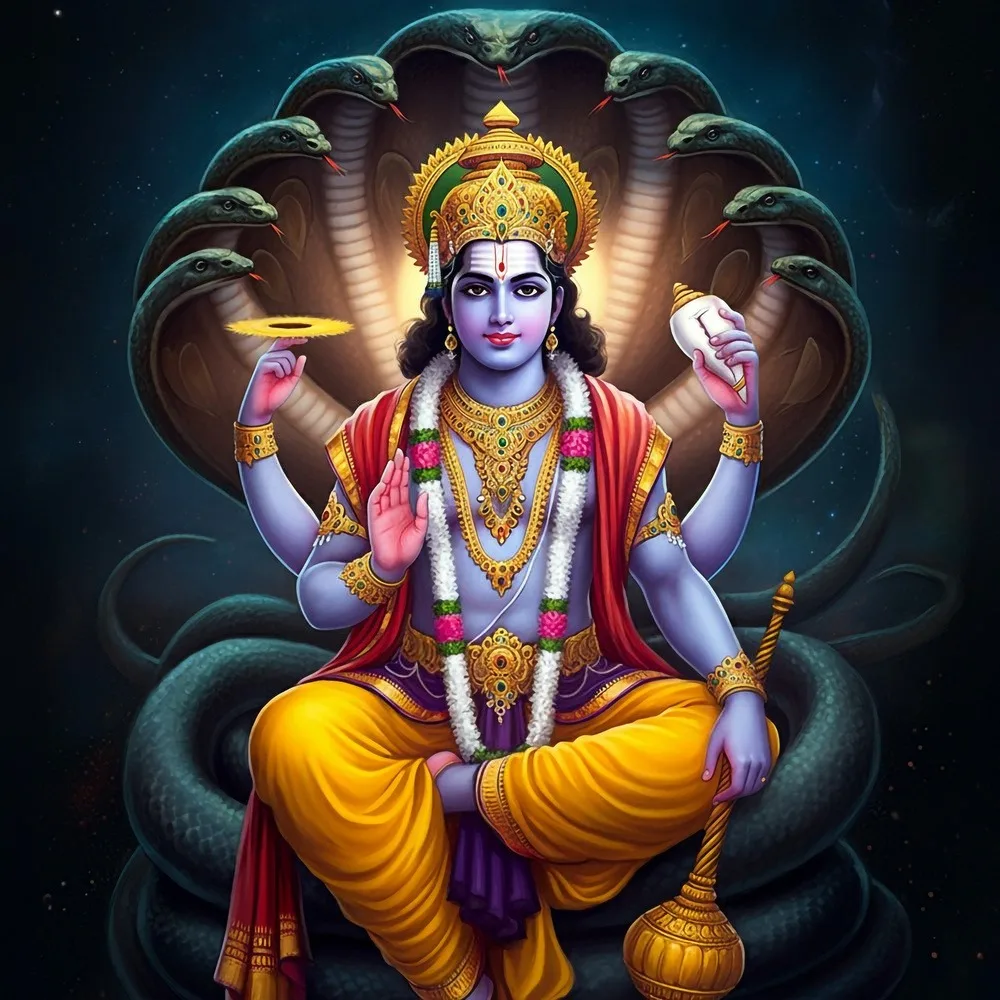
Lord Vishnu
Yama is the son of Surya and upholds Vishnu's cosmic dharmic order
The Preserver of the Universe — the all-pervading Supreme Being who descends to Earth in divine avatars whenever righteousness declines and evil rises.
View deity →
Lord Krishna
Yamuna Devi is the sacred river of Krishna's Vrindavan, intimately linked to Krishna's pastimes
The Preserver of the Universe — the all-pervading Supreme Being who descends to Earth in divine avatars whenever righteousness declines and evil rises.
View deity →Bhai Dooj centers on the mythological relationship between two of Hinduism's most revered divine siblings:
Yama (Yamraj) — God of Death and Dharma: Yama is the son of the Sun god Surya and is one of the eight Dikpalas (guardians of directions) in Hindu cosmology. He is the lord of the southern direction, the keeper of dharmic records, and the judge of souls after death. Far from being merely a fearsome deity, Yama is also a devoted and loving brother who cherishes his relationship with his twin sister Yamuna. His blessing on Bhai Dooj — that those protected by their sister's tilak shall not fear untimely death — is the divine warranty that makes this festival so spiritually potent. The festival is therefore also called Yama Dwitiya in his honor.
Yamuna Devi — Sacred River Goddess: Yamuna, twin sister of Yama, is worshipped as one of the holiest rivers in India. She flows through the sacred land of Vrindavan and Mathura, the birthplace and playground of Lord Krishna. Yamuna is celebrated as a mother goddess who nourishes millions and purifies sins. Her joyful reception of her brother Yama on this day and her loving tilak ceremony established the template for all sisters and brothers to follow. Bathing in the Yamuna River on Bhai Dooj is considered especially auspicious.
How to celebrate Bhai Dooj 2026
On the day of Bhai Dooj, sisters apply a Tilak on their brothers' foreheads and pray for their long life, happiness, prosperity and wellbeing. On this day, sisters take an early morning bath, take a vow to observe fast and invite their brothers to home. Sisters prepare a decorated Puja Thali, tie a sacred thread on their brother's wrist after applying Tilak and perform Aarti. After the rituals, sisters offer their brothers sweets and a festive meal with love and devotion. In return, brothers present their sisters with gifts such as clothes, money or other tokens of appreciation, according to their capacity. Bhai Dooj is also called Yama Dwitiya, owing to the reunion of Yamaraja and His sister Goddess Yamuna on this day. Bathing in the Yamuna River holds special significance on Bhai Dooj, as it is believed to cleanse all sins and bring blessings of longevity and wealth. Scriptures state that those who bathe in sacred rivers on this day are spared from the torment of Yama's messengers at the of death. Religious texts highlight the spiritual merit and significance of the rituals performed on Bhai Dooj. It is said that a brother who visits his sister and receives a Tilak on this day is freed from the fear of Yama Loka and is blessed with a long life. For sisters, observing this fast brings good fortune, marital bliss and prosperity. Thus, Bhai Dooj is not just a celebration of familial bonds, but also a sacred ritual prescribed in Hindu scriptures. It's a beautiful expression of love, duty and affection between brothers and sisters. The festival is rooted in the ancient legend of Yama & Yamuna and their divine bond continues to inspire the celebration of Bhai Dooj with religious reverence and social enthusiasm to this day.
Spiritual benefits
- Brothers who receive the tilak and blessings of their sisters on Bhai Dooj are believed to receive the protective grace of Yamraj himself, safeguarding them from untimely death and serious illness.
- Sisters who perform the tilak ceremony with full devotion are freed from all sorrows, and Yamuna Devi blesses them with a life of happiness, longevity for their family, and fulfillment of wishes.
- The sibling bond strengthened through Bhai Dooj creates a protective spiritual shield of love around the family unit, drawing divine blessings for household harmony.
- Offering food and gifts to siblings on this day is equivalent to making offerings at sacred tirthas — it accrues immense spiritual merit (punya).
- Brothers who eat the meal prepared by their sisters at her home on Bhai Dooj are believed to prosper greatly throughout the coming year.
- Observing Bhai Dooj maintains the memory of the cosmic Yama-Yamuna bond, connecting the family to the divine and reminding devotees that death and time (Yama) can be pacified by love and pure devotion.
- The festival reinforces the Hindu value of family as the first and most sacred social institution, deepening the karmic bond between siblings across lifetimes.
Mantras & sacred chants
यमाय धर्मराजाय मृत्यवे चान्तकाय च।
वैवस्वताय कालाय सर्वभूतक्षयाय च॥
(Yamaya Dharmarajaya Mrityave Chantakaya Cha / Vaivaswataya Kalaya Sarvabhutakshayaya Cha)
Meaning: Salutations to Yama, the lord of dharma, to death, to the destroyer, to the son of Vivaswat (Surya), to time, and to the absorber of all beings. This mantra is chanted by sisters while applying tilak, invoking Yama's protective blessings for their brothers.
भ्रातृद्वितीया प्रसाद लक्ष्मीः सिद्धिर्भवेन्नृणाम्।
यमुना यमराजश्च पूज्येते यत्र भक्तितः॥
(Bhratrudwitiya Prasada Lakshmih Siddhirbhavenrunam / Yamuna Yamarajascha Pujyete Yatra Bhaktitah)
Meaning: Through the grace of Bhai Dooj, Lakshmi and success come to those men where Yamuna and Yama are worshipped with devotion. This shloka is recited after the tilak ceremony.
ॐ यमाय नमः
(Om Yamaya Namah)
Meaning: Salutations to Lord Yama, the divine lord of dharma and death. This short mantra is chanted by sisters while lighting the diya and performing aarti for their brothers, seeking Yama's blessing that their brothers enjoy long life.
Bhai Dooj 2026 — FAQs
Bhai Dooj 2026 falls on November 10, on Kartik Shukla Dwitiya — two days after Diwali.
According to Hindu mythology, Yama (god of death) visited his twin sister Yamuna on Kartik Shukla Dwitiya. She applied tilak on his forehead and fed him lovingly. Touched, Yama declared that any brother who receives his sister's tilak on this day will be freed from fear of untimely death — giving this festival its divine significance.
Both festivals celebrate sibling bonds but in reverse directions. On Raksha Bandhan, the brother ties a protective thread (rakhi) for his sister and vows to protect her. On Bhai Dooj, the sister applies tilak and prays for her brother's long life — the sister becomes the protector.
In Nepal it is called Bhai Tika and is a national holiday. Sisters apply a five-colored tika (made of curd, turmeric, oil, sindoor, and charcoal) on brothers' foreheads. Brothers reciprocate with flower garlands and gifts. The ceremony is elaborate and may last several hours.
Bhau Beej is the Maharashtrian name for Bhai Dooj. Sisters apply a five-colored tilak (ovalani) on brothers' foreheads, perform aarti with a diya, flowers, kunku, and rice near a Tulsi plant, and share a family meal.
Bhai Phonta is the Bengali name for Bhai Dooj. Sisters fast until they apply the phonta (dot mark) on brothers' foreheads, chant Bengali blessings, and feed brothers their favorite meals. Brothers give sisters new clothes and jewelry.
Traditionally, a tilak of roli (vermillion) is applied on the brother's forehead followed by raw rice grains (chawal). In Nepal and some regions, a five-colored tika using curd, turmeric, oil, sindoor, and charcoal is used. The sister lights a diya and performs aarti as well.
Bhai Dooj is called Yama Dwitiya because the festival commemorates the visit of Yama (god of death) to his sister Yamuna on the Dwitiya (second day) of Kartik Shukla Paksha. Yama's blessing on this day — that brothers protected by their sisters' tilak will not fear death — is the basis of the festival.