About Narak Chaturdashi
Last updated:
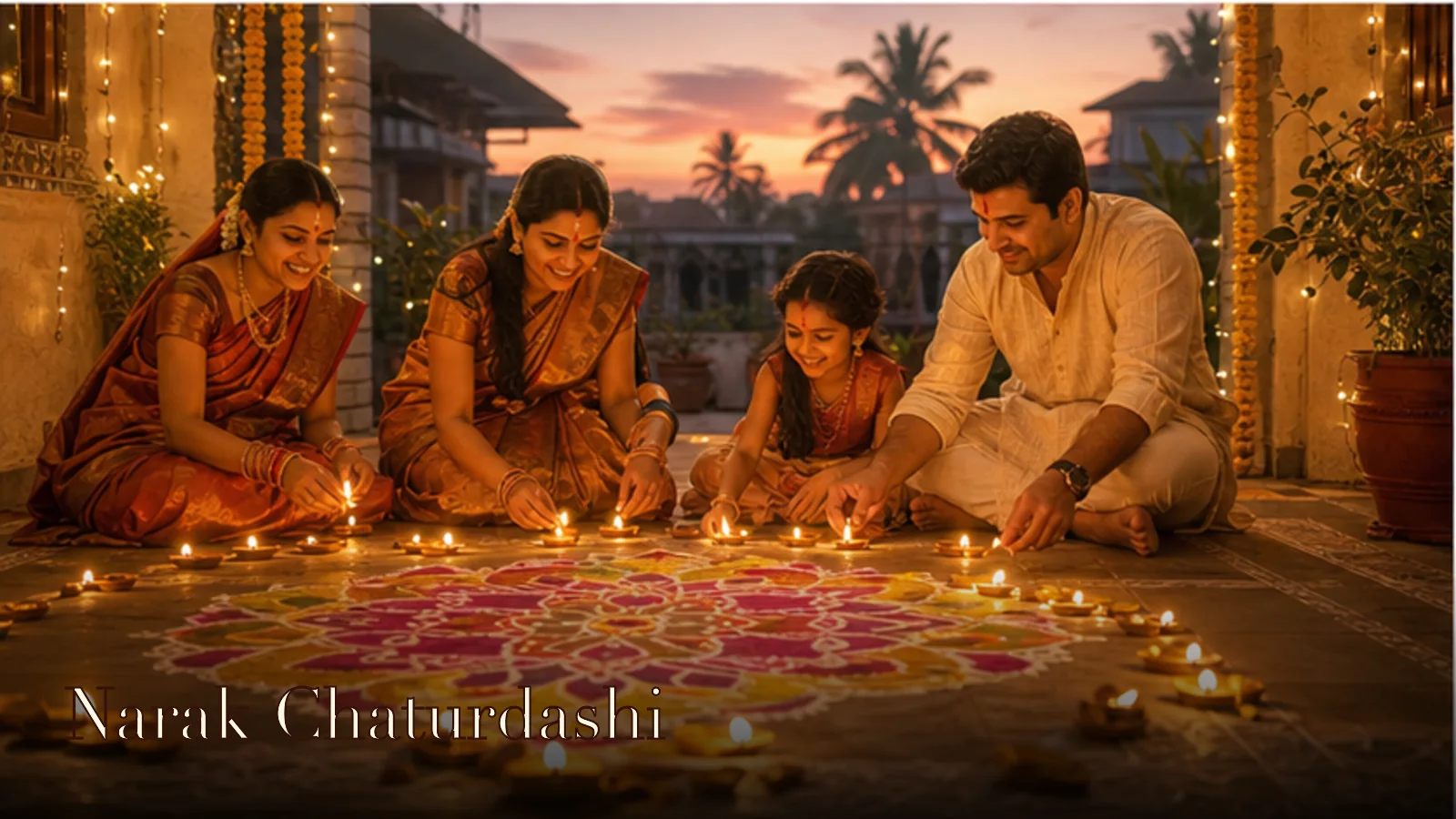
Narak Chaturdashi, also known as Choti Diwali or Roop Chaturdashi, is observed on the fourteenth day (Chaturdashi) of the dark fortnight (Krishna Paksha) of the Hindu month of Kartik — one day before the main Diwali. In , Narak Chaturdashi falls on November 7. This festival celebrates Lord Krishna's (along with Satyabhama) defeat and killing of the demon Narakasura, who had imprisoned 16,000 women in his palace and terrorized the celestial and earthly realms. The most distinctive ritual of Narak Chaturdashi is the Abhyanga Snanam — a ritual bath with sesame oil (til oil) performed before sunrise. This bath is considered mandatory for removing the touch of Narakasura's impurity, and the muhurta (auspicious time) for this bath is in the Chandrodaya (moonrise) period before dawn. Fourteen earthen diyas (lamps) are lit facing southward to ward off the forces of Yama (the god of death) and Narakasura's lingering negative energy. In South — particularly in Andhra Pradesh, Telangana, Karnataka, and Tamil Nadu — Narak Chaturdashi is actually the primary Diwali celebration, often eclipsing the importance of the main Diwali day. Elaborate fireworks, community celebrations, and family gatherings mark the day. The Abhyanga Snanam is performed collectively by families before sunrise with great festivity. In Maharashtra, the day is celebrated as Narak Chaturdashi with the victory of Krishna honored through prayers and sweets. In North , it is treated as a preliminary day of Diwali celebrations, with the main emphasis on the following Amavasya (Diwali night).
Significance of Narak Chaturdashi
Narak Chaturdashi carries rich mythological and spiritual significance across : - Victory over Evil: The killing of Narakasura by Lord Krishna and Satyabhama symbolizes the eternal triumph of righteousness and divine power over demonic evil, tyranny, and the imprisonment of the innocent. - Liberation of the Captives: After killing Narakasura, Krishna freed 16,000 women imprisoned by the demon — this act of liberation is celebrated as the release of souls from bondage and suffering. - Abhyanga Snanam Significance: The pre-dawn oil bath removes the metaphorical impurity of Narakasura's touch and is believed to purify the body and soul, granting beauty, health, and longevity — hence the alternate name Roop Chaturdashi (Chaturdashi of beauty). - Fourteen Diyas: Lighting 14 diyas facing south on this night is a specific protective ritual — the south is the direction of Yama (death god), and the lamps are lit to ward off untimely death and propitiate Yama. - South 's Main Diwali: In Andhra Pradesh, Telangana, Karnataka, and Tamil Nadu, Narak Chaturdashi is considered the actual Diwali — the day Krishna's victory is celebrated most vigorously. - Cosmic Purification: The specific Chaturdashi tithi combined with the Krishna Paksha and Kartik month creates a powerful window for removing sin, darkness, and negativity from one's life.
Deities worshipped on Narak Chaturdashi
Follow the links to explore each deity’s mantras, stories, and temples on Temples.bio.
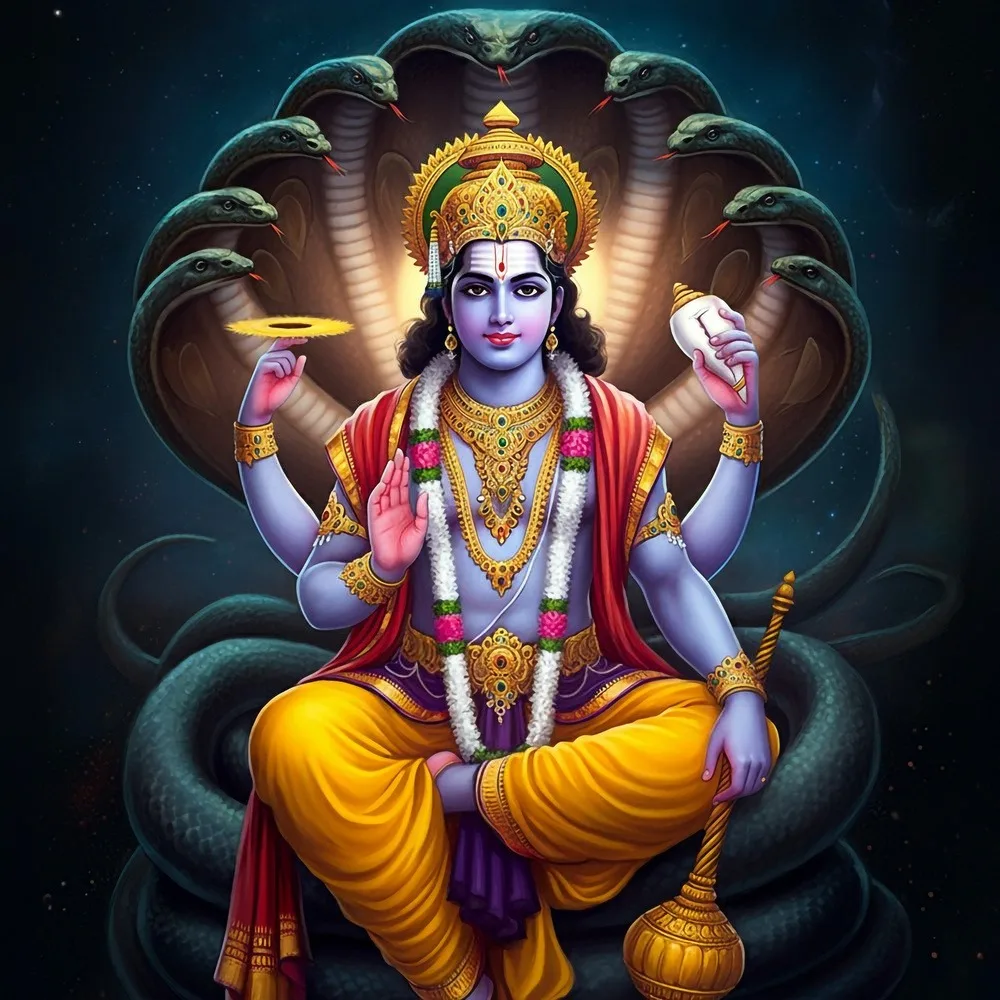
Lord Krishna is the central deity of Narak Chaturdashi worship. It is Krishna who, accompanied by his queen Satyabhama and riding his mighty Garuda, fought the demon Narakasura in a fierce battle. When Narakasura's arrow wounded Krishna, Satyabhama took up arms herself and delivered the killing blow. Krishna then honored Satyabhama's valor — this story is particularly celebrated in South India, where Satyabhama's role is highlighted. Krishna is worshipped in his Vijayee (victorious) form on this day.
Goddess Satyabhama, Krishna's wife, is specially worshipped in South Indian traditions as the heroine who killed Narakasura. Women pray to her for courage, marital happiness, and the blessings of a heroic spirit. Kali or Durga in her fierce form is also associated with this day in some Bengali and South Indian traditions — the day before Diwali is considered auspicious for the fierce goddess who destroys demonic forces. Yama, the god of death, is propitiated through the lighting of 14 southward-facing diyas to seek protection from untimely death.
How to celebrate Narak Chaturdashi 2026
1. Identify the correct Abhyanga Snanam muhurta — this is the period before sunrise when the Chaturdashi tithi is active, typically 1-2 hours before dawn. Check the local panchang for the exact time.
2. Prepare sesame (til) oil mixed with perfumed substances — some traditions use kumkum (vermilion), turmeric, and herbs in the oil.
3. Perform the Abhyanga Snanam — apply sesame oil all over the body before bathing. This is ideally done in the open air or in the bathing area while the stars are still visible.
4. Bathe thoroughly with water, washing off the oil. This bath before sunrise on Narak Chaturdashi is believed to be equivalent to bathing in the Ganga.
5. After the bath, wear new or clean clothes — traditionally festive attire is worn.
6. Apply kumkum (vermilion) tilak on the forehead.
7. Prepare or procure 14 earthen diyas (lamps).
8. At dusk, light all 14 diyas with sesame oil or ghee, placing them facing southward near the entrance of the home or in front of the house.
9. Offer prayers to Krishna for his victory over Narakasura — chant Krishna mantras and offer sweets.
10. Light fireworks as part of the Diwali festivity (especially important in South India where this is the main Diwali night).
11. Prepare traditional sweets and festive food — share with family and neighbors.
12. Apply ubtan (turmeric and sandalwood paste) as part of the beauty ritual (Roop Chaturdashi tradition).
Rituals & regional traditions
- Abhyanga Snanam: The mandatory pre-sunrise oil bath is the defining ritual of this day — applied sesame oil is left on the body for a period before bathing. The timing (Chandrodaya muhurta before dawn) is considered critical for maximum spiritual benefit.
- 14 Diyas Facing South: Fourteen earthen lamps are lit facing the south direction (Yama's direction) at dusk on Narak Chaturdashi night — a specific apotropaic ritual found almost universally across Hindu communities.
- South India (AP/Telangana/Karnataka) Traditions: This is the main Diwali — elaborate fireworks from midnight through morning, community gatherings, Abhyanga Snanam performed by entire families before 4 AM, and special Krishna puja at temples.
- Narakasura Effigy Burning: In some regions of Goa and Karnataka, effigies of Narakasura are burned at dawn after the Abhyanga Snanam — symbolically reenacting Krishna's victory.
- Roop Chaturdashi (Beauty Ritual): Application of ubtan (turmeric, sandalwood, and gram flour paste) as a beauty treatment on this morning — associated with the tradition of adorning oneself after the ritual bath following Krishna's victory.
- North India Traditions: Treated as Choti Diwali — preliminary diyas are lit in anticipation of the main Diwali the following day; sweets are exchanged and Lakshmi puja preparations begin.
- Maharashtra: Narakasura's burning is prominent; the Abhyanga Snanam is performed with a specific scrub of fragrant herbs.
Spiritual benefits
- Purification of body, mind, and soul through the sacred Abhyanga Snanam before sunrise — equivalent to bathing in all holy rivers
- Protection from untimely death and Yama's messengers through the lighting of 14 southward-facing diyas
- Receiving Lord Krishna's blessings for victory over personal demons — anger, greed, lust, and ego
- Attainment of beauty, radiance, and good health through the Roop Chaturdashi tradition
- Liberation from the karmic cycle — Narakasura's story represents the soul's release from the prison of ignorance
- Marital bliss and spousal harmony through the example of Krishna and Satyabhama's partnership
- Protection of family from negative forces and evil spirits through the lamp-lighting ritual
- Accumulation of spiritual merit through charitable acts and sharing of sweets on this auspicious Diwali eve
Mantras & sacred chants
Om Namo Bhagavate Vasudevaya — ॐ नमो भगवते वासुदेवाय
Meaning: "I bow to Lord Vasudeva (Krishna/Vishnu)" — the principal mantra chanted to honor Lord Krishna on Narak Chaturdashi for his victory over the demon Narakasura.
Yama Deepam Mantra — मृत्युना पाशदण्डाभ्यां कालेन श्यामया सह | त्रयोदश्यां दीपदानात् सूर्यजः प्रीयतामिति ||
Meaning: "May the son of the Sun (Yama), along with his rope, staff, Time, and dark companion, be pleased by the offering of these lamps on the Chaturdashi" — chanted while lighting the 14 diyas facing south as an offering to Yama for protection.
Krishna Vijaya Mantra — ॐ क्लीं कृष्णाय नमः
Meaning: "Om, salutations to Krishna with the Kleem beeja mantra" — the powerful Krishna mantra invoking his victorious energy, especially potent on Narak Chaturdashi when his conquest over Narakasura is celebrated.
Narak Chaturdashi 2026 — FAQs
Narak Chaturdashi 2026 falls on November 7 (Saturday), one day before the main Diwali night. It is observed on Kartik Krishna Chaturdashi — the 14th day of the dark fortnight of Kartik month. In 2025, it was on October 19.
Abhyanga Snanam is the sacred ritual oil bath performed before sunrise on Narak Chaturdashi. Sesame (til) oil is applied to the body and then one bathes in the Chandrodaya muhurta — typically 1-2 hours before sunrise. In 2026, on November 7, the Abhyanga Snanam should be performed between approximately 4:00-5:00 AM (check local panchang for exact muhurta). This bath is considered equivalent to bathing in the Ganges.
Narakasura was a powerful demon king who terrorized both heaven and earth. He stole the earrings of Aditi (mother of the gods), captured 16,000 women in his palace, and threatened the entire cosmic order. Lord Krishna, accompanied by his queen Satyabhama riding the divine eagle Garuda, fought Narakasura in battle. When an arrow from Narakasura wounded Krishna, Satyabhama took up arms and killed the demon. Krishna then freed the 16,000 imprisoned women and restored cosmic order.
In Andhra Pradesh, Telangana, Karnataka, and Tamil Nadu, Narak Chaturdashi is celebrated as the primary Diwali because the legend of Krishna's victory over Narakasura is especially prominent in South Indian tradition. Fireworks are burst from midnight onwards, the Abhyanga Snanam is performed by entire families before dawn, and Krishna temples hold special puja. In some South Indian traditions, this day is considered more significant than the main Diwali (Kartik Amavasya) day.
14 earthen diyas are lit on Narak Chaturdashi facing the south direction — the direction of Yama (the god of death). The number 14 corresponds to the Chaturdashi tithi (14th day). These southward-facing lamps are lit as an offering to Yama to seek protection from untimely death and to dispel the negative energy associated with the Chaturdashi night. This ritual is one of the most distinctive of the entire Diwali period.
Narak Chaturdashi (also called Choti Diwali) falls one day before the main Diwali (Kartik Amavasya/Lakshmi Puja night). Narak Chaturdashi celebrates Krishna's victory over Narakasura and focuses on the Abhyanga Snanam oil bath and 14 diyas. The main Diwali focuses on Goddess Lakshmi's puja and welcoming of prosperity. In North India, Narak Chaturdashi is a preliminary celebration, while in South India it is the main Diwali event.
Roop Chaturdashi is another name for Narak Chaturdashi, emphasizing the beauty and radiance aspect of this day. After the Abhyanga Snanam (oil bath), devotees apply ubtan — a paste of turmeric, sandalwood, and gram flour — to enhance beauty and glow. This tradition comes from the belief that after Krishna freed the 16,000 imprisoned women, they were adorned with beauty and vitality. Performing the oil bath and ubtan on this day is believed to grant lifelong radiance and good health.
To observe Narak Chaturdashi at home: (1) Wake up 2 hours before sunrise on November 7, 2026; (2) Apply sesame oil all over the body and bathe before sunrise (Abhyanga Snanam); (3) Wear festive clothes after bathing; (4) At dusk, light 14 earthen diyas facing south near the home entrance; (5) Offer prayers to Lord Krishna for his victory over evil; (6) Perform aarti; (7) Prepare traditional sweets and share with family; (8) Light fireworks as part of the Diwali celebration (especially in South India).