About Varalakshmi Vratam and Puja
Last updated:
Varalakshmi Puja day is one of the significant days to worship the goddess of wealth and prosperity. Varalakshmi, who is the consort of Lord Vishnu, is one of the forms of Goddess Mahalakshmi. Varalakshmi was incarnated from the milky ocean, popularly known as Kshir Sagar. She is described as having the complexion of milky ocean and adorns similar color clothes. It is believed that the Varalakshmi form of the goddess bestows boons and fulfills all desires of her devotees. Hence this form of the goddess is known as Vara + Lakshmi i.e. Goddess Lakshmi who bestows boons. The Varalakshmi fasting is observed on the last Friday during Shravana Shukla Paksha and falls just few days ahead of Rakhi and Shravana Purnima.
Deities worshipped on Varalakshmi Vratam and Puja
Follow the links to explore each deity’s mantras, stories, and temples on Temples.bio.
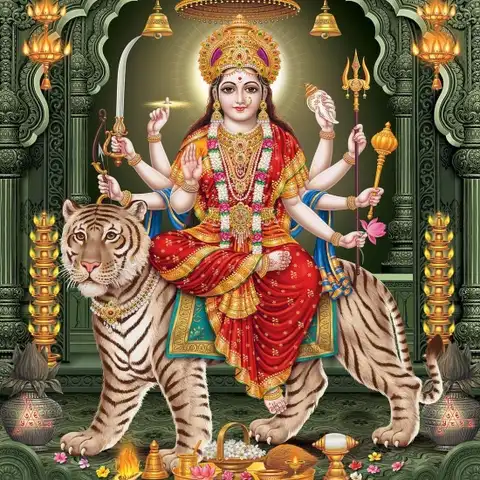
Goddess Lakshmi
Principal deity — Goddess Varalakshmi, the boon-giving form of Lakshmi, is the central object of worship
The Invincible Mother Goddess — Supreme Feminine Power who destroys evil, protects the righteous, and embodies the divine energy of the entire universe.
View deity →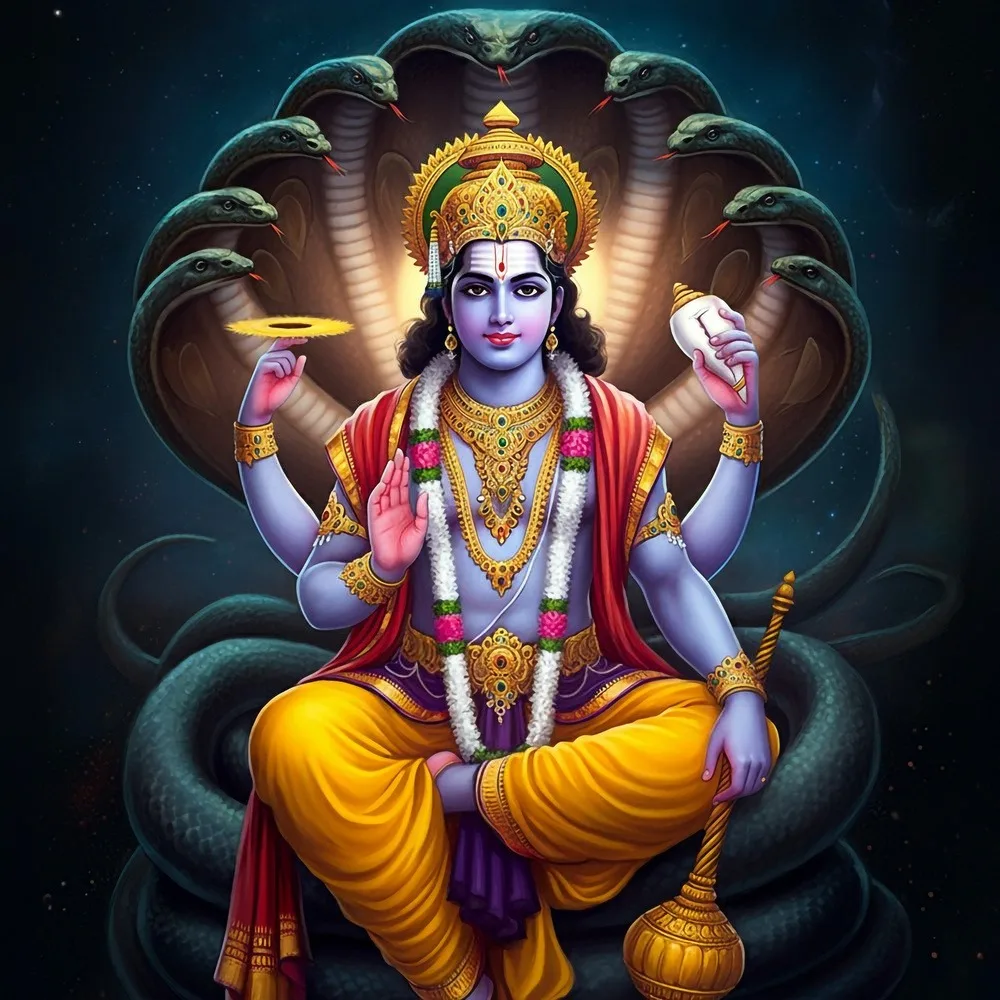
Lord Vishnu
Consort of Lakshmi, implicitly honored as families pray for all-round prosperity and husband's longevity
The Preserver of the Universe — the all-pervading Supreme Being who descends to Earth in divine avatars whenever righteousness declines and evil rises.
View deity →Goddess Varalakshmi is the central deity of this festival — she is Goddess Lakshmi in her most compassionate, boon-giving aspect. Varalakshmi is depicted as a radiant golden goddess seated on a lotus, holding a pot of gold and a sugarcane in her four arms, adorned with the finest jewels and silk. The "vara" in her name explicitly means "boon" — she is the goddess who willingly and generously grants the sincere prayers of her devotees.
As a form of Maha Lakshmi, she embodies Adi Shakti's power of preservation and abundance. She is the consort of Lord Vishnu and the divine source of all material and spiritual wealth. The festival's origin story from the Skanda Purana describes how Varalakshmi appeared to the devoted woman Charumathi in a dream, instructed her on the vrat, and blessed her and her community with abundant grace. Through this festival, Goddess Lakshmi in her Varalakshmi form becomes intimately accessible to every devoted householder woman who worships with a pure heart.
How to celebrate Varalakshmi Vratam and Puja 2026
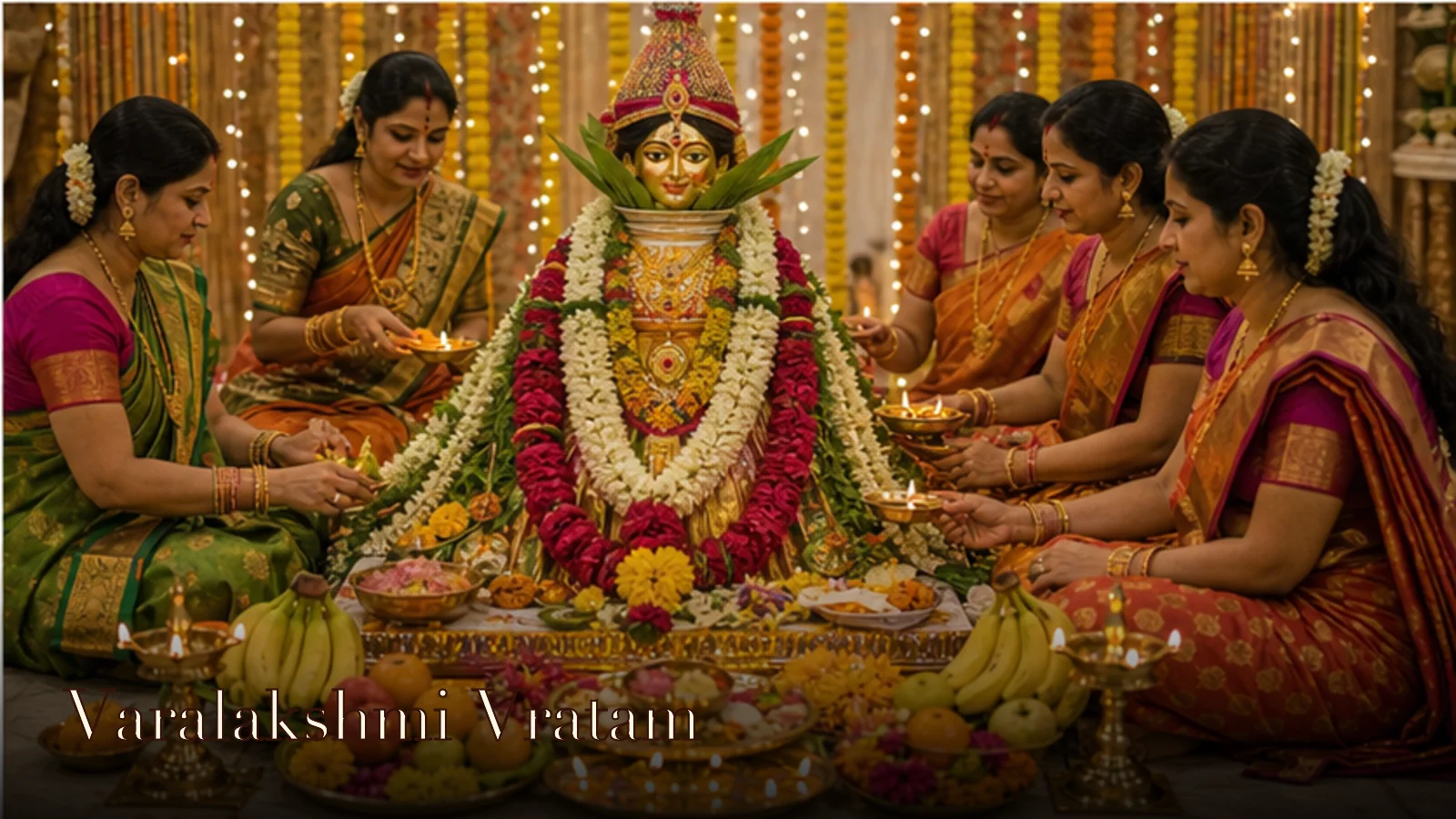
The Varalakshmi fasting is observed on the last Friday during Shravana Shukla Paksha and falls just few days ahead of Rakhi and Shravana Purnima. Varalakshmi Vrat is suggested not only for women but also for men. However, in Andhra, Telangana and Maharashtra regions, Varalakshmi fasting in mainly performed by married women only. The Varalakshmi fasting is performed with the desire of worldly pleasures and it includes children, spouse, luxury and all sorts of earthly pleasures. Varalakshmi Vratam is very popular fasting and Puja day in Andhra Pradesh, Telangana, Karnataka, Tamil Nadu and Maharashtra. In these states, Varalakshmi Puja is performed mostly by married women for the wellbeing of husband and the other family members. It is believed that worshipping Goddess VaraLakshmi on this day is equivalent to worshipping Ashtalakshmi i.e. the eight Goddesses of Wealth (Sri), Earth (Bhu), Learning (Saraswati), Love (Priti), Fame (Kirti), Peace (Shanti), Pleasure (Tushti) and Strength (Pushti). However, in North Indian states Varalakshmi Puja is not as popular as those of South Indian states. Varalakshmi Vratam is one of the most appropriate days to propitiate and to seek blessings of the Goddess Lakshmi.
Spiritual benefits
- Blessings of good health, longevity, and well-being for the husband and all family members
- Fulfillment of specific prayers for children, prosperity, and material comforts
- Protection of the household from illness, poverty, and misfortune
- Strengthening of marital bonds and family harmony through divine grace
- Accumulation of spiritual merit equivalent to worshipping all eight forms of Lakshmi
- Bestowing of wisdom, education, and success upon the children of the family
- Upliftment of ancestors through the merit generated by sincere vrat observance
- Inner peace, contentment, and spiritual progress for the observing woman
Mantras & sacred chants
1. Varalakshmi Mula Mantra
Sanskrit: ॐ श्रीं ह्रीं क्लीं महालक्ष्म्यै नमः
Transliteration: Om Shreem Hreem Kleem Mahalakshmyai Namaha
Meaning: Salutations to the great Lakshmi — invoking abundance (Shreem), maya-power (Hreem), and magnetic attraction (Kleem) of the goddess.
2. Varalakshmi Dhyana Shloka
Sanskrit: वरलक्ष्मी नमस्तुभ्यं वरदे वरदायिनी। सुवर्णे सर्वदा देवि वरं देहि नमोऽस्तु ते॥
Transliteration: Varalakshmi Namastubhyam Varade Varadayini, Suvarne Sarvada Devi Varam Dehi Namo'stu Te
Meaning: O Varalakshmi, I bow to you, the goddess who grants boons, the ever-golden one — please bestow your boons upon me, I offer you my salutations.
3. Lakshmi Ashtakam verse
Sanskrit: नमस्तेऽस्तु महामाये श्रीपीठे सुरपूजिते। शङ्खचक्रगदाहस्ते महालक्ष्मि नमोऽस्तु ते॥
Transliteration: Namaste'stu Mahamaye Shripeethe Surapujite, Shankhachakragadahaste Mahalakshmi Namo'stu Te
Meaning: Salutations to the great cosmic illusion, worshipped by the gods on the sacred seat, holding conch, discus, and mace — O Mahalakshmi, I bow to you.
Varalakshmi Vratam and Puja 2026 — FAQs
Varalakshmi Vratam 2026 falls on Friday, August 14, 2026, which is the Friday before the Shravana Purnima (full moon) of the Hindu month of Shravana.
Varalakshmi Vratam is a sacred vow observed by married Hindu women (sumangalis) to worship Goddess Varalakshmi, the boon-giving form of Lakshmi, praying for their family's health, prosperity, and longevity of their husbands.
Set up a Kalasam (pot with mango leaves and coconut) as the goddess, adorn it with silk and jewelry, perform Shodasopachara puja with flowers and naivedya, recite the Vrata Katha, tie the sacred thread on your wrist, and distribute tamboolam to married women.
Tamboolam is a gift packet containing betel leaves, areca nut, coconut, kumkum, turmeric, bangles, and small presents that married women exchange as mutual blessings during Varalakshmi Vratam.
Varalakshmi Vratam is considered equivalent to worshipping all eight forms of Lakshmi (Ashtalakshmi). It is the most powerful day to seek Goddess Lakshmi's blessings for family prosperity, husband's health, children's success, and household well-being.
According to the Skanda Purana, Goddess Varalakshmi appeared in a dream to a devoted woman named Charumathi in the city of Kundina, instructed her on the vrat procedure, and blessed her and her community with abundant grace and prosperity.
Traditional prasadam includes Sundal (boiled chickpeas with coconut), Panakam (jaggery drink), Pulihora (tamarind rice), Payasam (sweet milk pudding), Vada Pappu (soaked lentils), and seasonal fruits.
Traditionally it is observed by sumangalis (married women with living husbands). However, unmarried women may also observe it with prayers for a good marriage, and widows can participate in some regional traditions with modified customs.