Hindu Deity
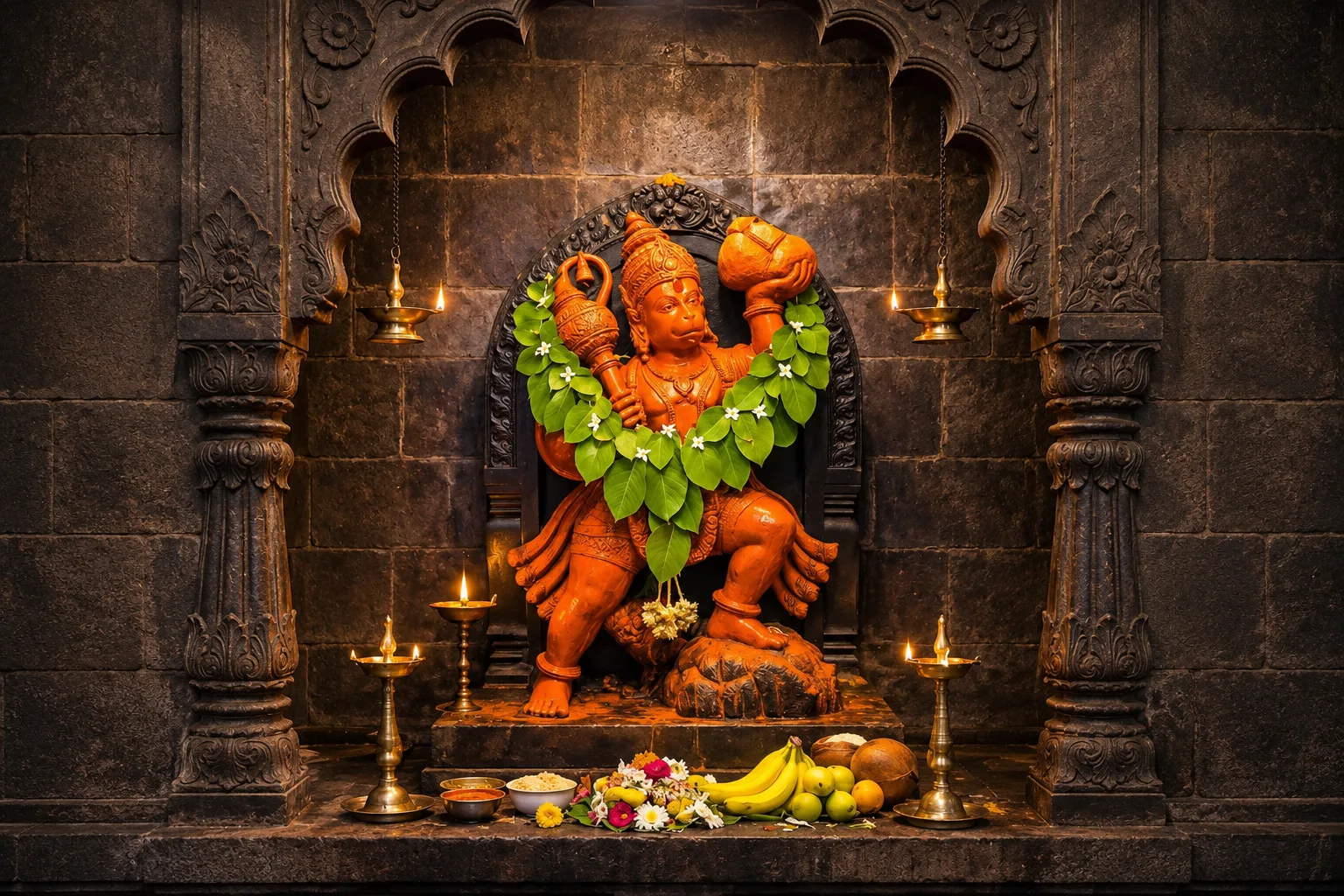
Lord Hanuman
The Eternal Devotee of Lord Rama — Embodiment of Strength, Courage and Selfless Service.
"Om Hanumate Namah — I bow to Lord Hanuman, the embodiment of devotion and divine strength."
Learn Lord Hanuman Chalisa →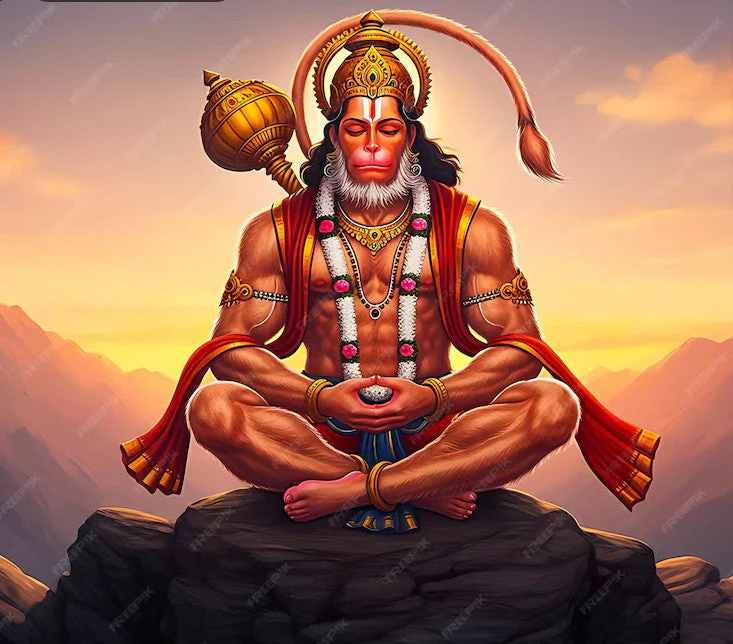
Overview
Lord Hanuman, revered across India and beyond, is one of the most worshipped deities in Hinduism. Known as the divine son of the Wind God Vayu, Hanuman embodies strength, devotion, courage, and selfless service. He is a central figure in the epic Ramayana and is considered a Chiranjeevi — an immortal being who continues to live among us. Millions of devotees turn to Hanuman for protection, strength, and the removal of fear and obstacles.
Origin & History
Hanuman was born to Anjana, an apsara (celestial nymph) cursed to live on Earth, and Kesari, a powerful vanara king. The Wind God Vayu is his divine father — which is why Hanuman is also called Vayuputra (Son of Wind) and Anjaneya (Son of Anjana). From birth, Hanuman displayed extraordinary powers. As an infant, he mistook the rising sun for a ripe fruit and leaped toward it — the very first mark of his legendary story. He received blessings from all major devas at birth, making him virtually invincible and immune to most weapons. He studied under Surya Dev, the Sun God, and mastered all scriptures — earning the title Navanavyakarana, master of nine grammars. Hanuman is one of the seven Chiranjeevis — immortal beings blessed to live until the end of the current cosmic age. It is believed he is present wherever the name of Rama is chanted with pure devotion.
Legends & Famous Stories
The Leap to Lanka
When Sita was abducted by Ravana, Hanuman crossed the vast ocean with a single leap to reach Lanka. This legendary feat symbolizes how absolute faith can overcome all boundaries and impossibilities.
Burning of Lanka
After finding Sita, Hanuman allowed himself to be captured to warn Ravana. When his tail was set on fire, he used it to burn Lanka — turning a punishment into the most powerful act of divine justice.
Carrying the Sanjeevani
When Lakshmana was fatally wounded in battle, Hanuman flew to the Himalayas for the Sanjeevani herb. Unable to identify it, he lifted the entire mountain and brought it back — the ultimate act of unconditional service.
Meeting Bhima
In the Mahabharata, Hanuman met Bhima (his half-brother through Vayu) disguised as an old monkey. He humbled the proud Bhima with his wisdom and strength, teaching the importance of humility before true greatness.
The Sindoor Story
When Sita applied sindoor for Rama s long life, Hanuman covered his entire body with it — declaring his devotion to Rama surpassed all limits. This is why devotees offer sindoor to Hanuman to this day.
Worship & Rituals
Daily Worship
Visit Hanuman temples daily and offer sindoor, jasmine oil, betel leaves, bananas, and jaggery. Most auspicious on Tuesdays and Saturdays.
Hanuman Chalisa
40 sacred verses composed by saint Tulsidas. Reciting daily removes fear, brings strength, and invokes divine protection. The most important prayer.
Sunderkand Path
Recitation of the fifth chapter of Ramayana dedicated to Hanuman s journey to Lanka. Performed at home or temple for blessings and removal of obstacles.
Panchamukhi Puja
Worship of Hanuman s five-faced form. Performed for removing evil energies, granting divine protection, and fulfilling heartfelt desires.
Mantras & Prayers
Moola Mantra
Om Hanumate Namah
The simplest and most powerful mantra. Chanted daily for strength, courage, and divine protection from all negative forces.
Hanuman Chalisa
Shri Guru Charan Saroj Raj Nij Manu Mukuru Sudhari
40 verses by Tulsidas. Reciting all chaupais wards off negative energies and fulfils sincere prayers of devotees.
Bajrang Baan
Nishchay Prem Prateet Te
Recited during times of fear, illness, or spiritual distress. Believed to invoke Hanuman s immediate and powerful protection.
Sankat Mochan Mantra
Om Aim Hreem Hanumate Ramadootaya Namah
Chanted for relief from life s hardships and obstacles. Invokes Hanuman as the divine remover of all suffering and problems.
Festivals & Celebrations
Hanuman Jayanti
Full Moon of Chaitra · March–April
The most important festival marking Hanuman s birth. Temples are decorated, special pujas performed, and devotees observe sacred fasts throughout the day.
Tuesdays
Every Tuesday · Year Round
Ruled by Mars — the planet of strength and courage, perfectly mirroring Hanuman s nature. Devotees fast, offer prayers, and chant the Hanuman Chalisa.
Saturdays
Every Saturday · Year Round
Worshipped to overcome Saturn s (Shani) influence. Devotees offer oil lamps and sincere prayers for protection from misfortune and hardship.
Ram Navami
Navami of Chaitra · March–April
The birth of Lord Rama is deeply connected to Hanuman worship. Devotees chant the Hanuman Chalisa and visit temples to celebrate Rama s glory alongside Hanuman.
Best Days to Worship
Tuesday
Most Auspicious Day
Why This Day?
Tuesday is ruled by Mars (Mangal) — the planet of strength, energy, and courage. These are the very qualities that define Hanuman, making Tuesday the most auspicious day for his worship.
🌸 Offerings
Sindoor, jasmine oil, jaggery, bananas, betel leaves, orange garland
🪔 Rituals
Fast from sunrise to sunset, visit temple, chant Hanuman Chalisa 5 or 11 times, light a ghee lamp
✨ Benefits
Courage, strength, victory over enemies, removal of obstacles and fear
Saturday
Most Auspicious Day
Why This Day?
Shani Dev (Saturn) once tried to afflict Hanuman but was overpowered by him. Out of respect, Shani Dev agreed not to trouble Hanuman s devotees — making Saturday powerful for Hanuman worship to seek protection from Saturn s influence.
🌸 Offerings
Mustard oil lamp, black sesame, orange garland, sindoor, coconut
🪔 Rituals
Light mustard oil lamp, recite Bajrang Baan, offer black sesame to Shani idol, visit Hanuman temple
✨ Benefits
Relief from Shani dosha, removal of bad luck, peace, prosperity, and protection from misfortune
Benefits of Worship
Protection from evil spirits and negative energies
Courage and mental strength during difficult times
Relief from Saturn s malefic influence (Shani dosha)
Success in overcoming enemies and legal disputes
Good health and physical vitality for body and mind
Academic success and sharp intellect for students
Removal of fear, anxiety, and depression from life
Spiritual growth and progress on the path of devotion
Famous Temples of Lord Hanuman
Sankat Mochan Hanuman Temple
📍 Varanasi, Uttar Pradesh, India
Sankat Mochan Hanuman Temple is one of the most revered Hanuman temples in India, located in Varanasi. It is believed to relieve devotees from troubles, fears, and obstacles.
Read More →Jakhu Hanuman Temple
📍 Shimla, Himachal Pradesh
Jakhu Hanuman Temple is an ancient and highly revered Hanuman temple located atop Jakhu Hill in Shimla. It is famous for its towering 108-foot Hanuman statue and offers panoramic views of the Himalayas.
Read More →Mahavir Mandir
📍 Patna, Bihar
Mahavir Mandir is one of the most revered and powerful Hanuman temples in India, located adjacent to Patna Junction in Bihar. Renowned for fulfilling devotees' wishes and removing obstacles, it attracts millions of pilgrims every year.
Read More →Bala Hanuman Temple
📍 Jamnagar, Gujarat
Bala Hanuman Temple is a celebrated Hanuman shrine in Jamnagar, Gujarat, renowned worldwide for its uninterrupted continuous chanting of Ram Naam since August 1, 1964 — a feat recognized by the Guinness World Records.
Read More →Bade Hanuman Ji Temple
📍 Prayagraj, Uttar Pradesh, India
Bade Hanuman Ji Temple is a famous Hanuman shrine in Prayagraj, known for its unique reclining idol of Lord Hanuman near the Sangam.
Read More →Namakkal Anjaneyar Temple
📍 Hanumar Koil Street, Kottai Road
The image of Anjaneyar is 18 ft (5.5 m) tall, making it one of the tallest images of Hanuman in India. The Agamam is followed by “Sri Vaikhanasam”. The temple has a pillared hall leading to the sanctum.
Read More →Hanumangarhi
📍 Ayodhya, Uttar Pradesh
Hanumangarhi is one of the most sacred and ancient Hanuman temples in India, situated atop a hillock in the heart of Ayodhya. Believed to be the residence of Lord Hanuman himself, this fortress-temple guards the holy city and is considered an essential first stop for every pilgrim visiting Ram Janmabhoomi.
Read More →Panchamukhi Hanuman Temple
📍 Rameshwaram, Tamil Nadu
Believed to be the place where Hanuman revealed his Panchamukhi form to kill Mayil Ravana.
Read More →Anjanadri Hill Temple
📍 Hanumanahalli, near Hampi
Anjanadri Hill near Hampi is believed to be Hanuman’s birthplace. It sits a top AnjanadriHill, and getting there requires a bit of a climb. But once you’re up, the panoramic views of the ancient ruins are absolutely stunning. The peaceful, spiritual atmosphere makes it a great spot for reflection and connecting with nature.
Read More →Sri Bedi Anjaneya Swamy Temple, Tirumala
📍 Tirumala, Tirupati, Andhra Pradesh
The Sri Bedi Anjaneya Swamy Temple is located directly opposite the main entrance (Maha Dwaram) of the Lord Venkateswara Temple in Tirumala. It is famous for its unique idol of Lord Hanuman with handcuffed (Bedi) hands, a form chosen to represent devotion and humility.
Read More →Regional Variations
North India
Bajrangbali
The Hanuman Chalisa is central to worship. Tuesdays observed with fasting, oil lamp offerings and communal recitation of prayers.
South India
Anjaneya / Anjaneyar
Temples depict him in the standing Veera Anjaneya posture symbolising valour. Very popular across Tamil Nadu and Karnataka.
Maharashtra
Maruti
Known as Maruti, Tuesday worship is deeply embedded in Maharashtrian culture. Temples found in almost every village and town.
Rajasthan
Balaji
Known as Balaji in Rajasthan. The Salasar Balaji temple is one of the most visited pilgrimage sites in the entire state.
Indonesia (Bali)
Anoman
A revered figure in Balinese Hindu tradition. Featured prominently in the Kecak dance and local Ramayana performances.
Thailand
Hanuman (Ramakien)
Featured in the Thai Ramakien epic as a white monkey deity — a symbol of loyalty and power in Thai art, dance, and royal symbolism.
Frequently Asked Questions
Lord Hanuman Stotrams & Chalisas
Read the lyrics and meaning of Lord Hanuman hymns, with audio and free PDF downloads.
Related Pages
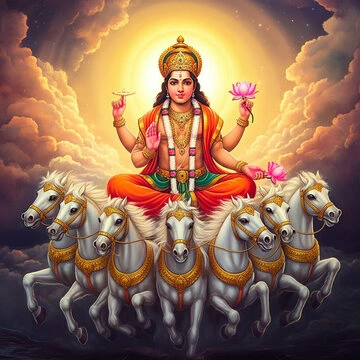
Surya Deva
The God of the Sun, Source of All Light and Life — the visible form of the divine that sustains every living being on Earth every single day.
Learn more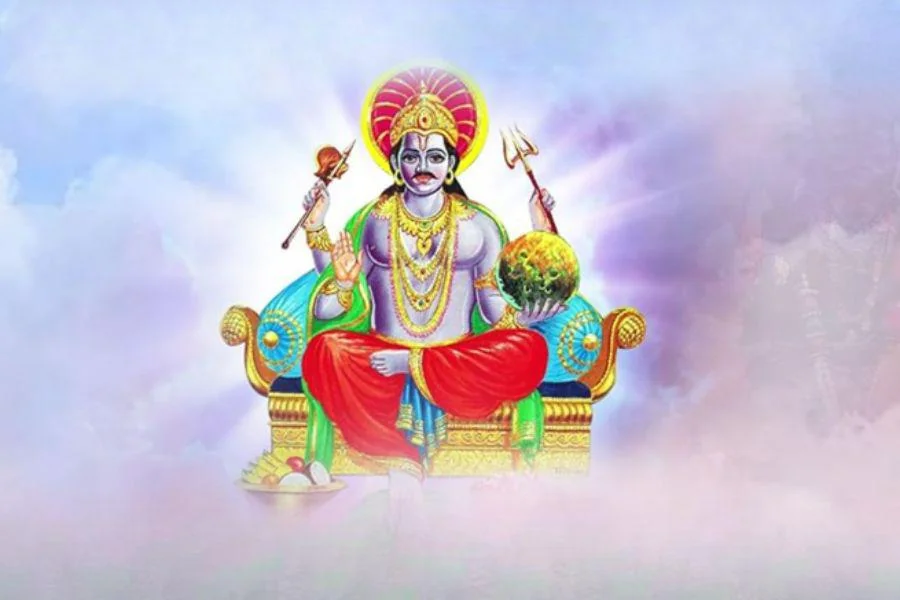
Navagraha
The God of Justice and Karma — Lord of Saturn who rewards the righteous and teaches life lessons through trials, time, and discipline.
Learn more
Shani Dev
The God of Justice and Karma — Lord of Saturn who rewards the righteous and teaches life lessons through trials, time, and discipline.
Learn more