About Hanuman Jayanti
Last updated:
Hanuman Jayanti is the sacred festival celebrating the birth of Lord Hanuman — the greatest devotee of Lord Rama, the embodiment of strength, courage, selfless service, and unwavering devotion. Observed on the full moon day (Purnima) of the Chaitra month in North India, and on Margashirsha or Kartik Purnima in parts of South India, Hanuman Jayanti 2026 falls on April 17. The festival is observed by millions of devotees across India, especially those seeking courage, protection, good health, and relief from malefic planetary effects.
Lord Hanuman, also called Anjaneya, Maruti, Bajrangbali, and Pavanputra, is venerated as the son of Vayu (the wind god) and Anjana, and is considered a manifestation of Lord Shiva himself. Born on the Purnima tithi in the Treta Yuga, Hanuman was gifted with extraordinary powers — immense physical strength, the ability to fly, intelligence, and knowledge of all scriptures. As the devoted servant of Lord Rama, he played a pivotal role in the Ramayana — carrying Ram's message to Sita in Lanka, leading the Vanara army, lifting the Sanjeevani mountain to save Lakshmana, and ultimately helping Rama defeat the demon king Ravana.
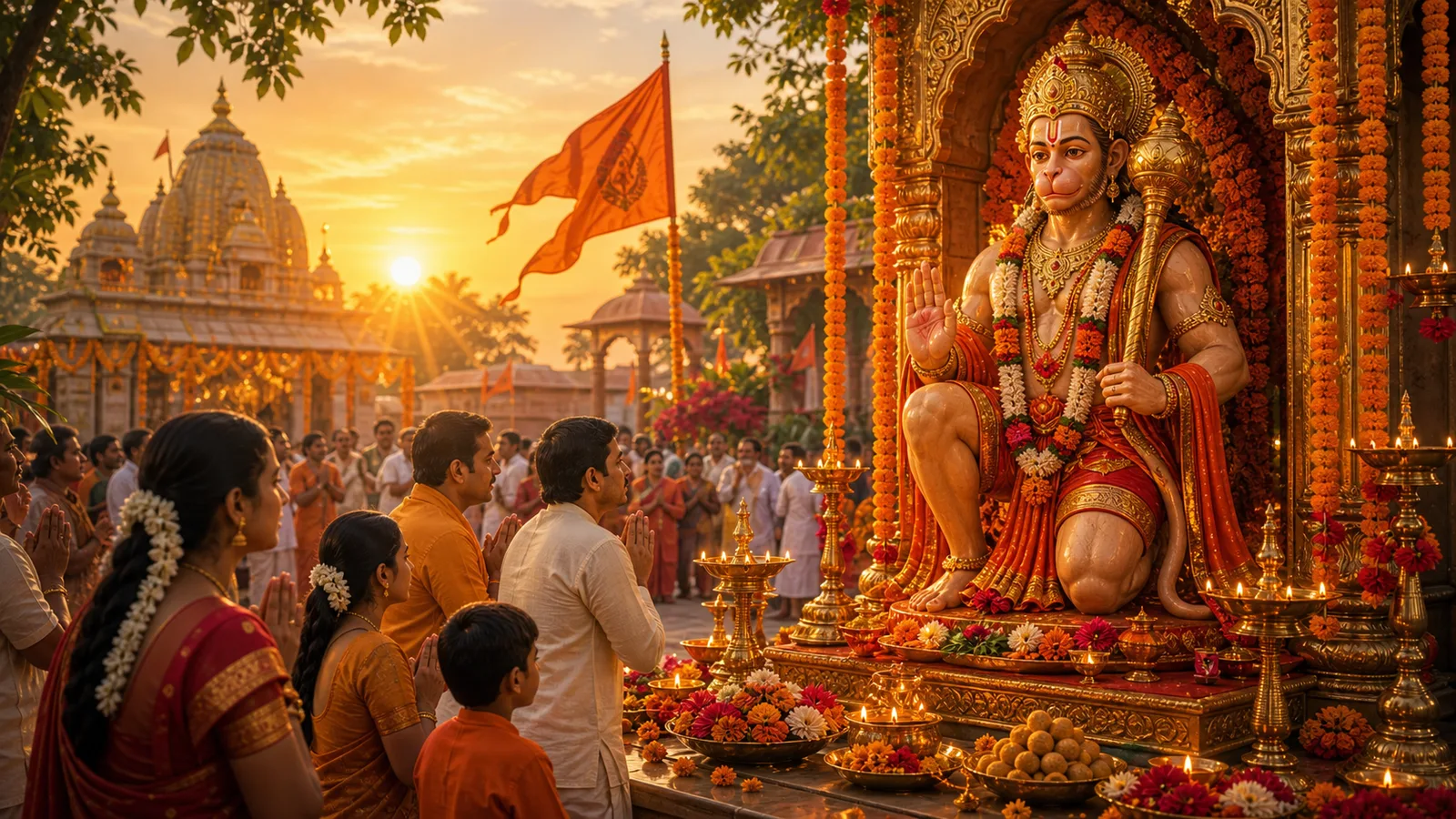
On Hanuman Jayanti, temples dedicated to Hanuman — particularly the famous Sankat Mochan temple in Varanasi, the Connaught Place Hanuman Mandir in New Delhi, and the Japali Anjaneya shrine at Tirumala — are thronged by lakhs of devotees. The day begins before sunrise with special abhishekas using sindoor (vermilion) and sesame oil, symbolising Hanuman's legendary anointing with sindoor — a tradition that began when he smeared sindoor all over his body declaring it would protect Rama's life. Recitation of Hanuman Chalisa, Sundara Kanda, and Hanuman Ashtakam continues throughout the day and night, filling the air with devotional energy.
Significance of Hanuman Jayanti
The significance of Hanuman Jayanti extends far beyond a birthday celebration — it is a day of deep spiritual renewal and invocation of divine strength:
Celebration of Supreme Devotion (Bhakti): Hanuman represents the pinnacle of bhakti — completely selfless, ego-free, and totally surrendered to the Lord. His worship on Jayanti inspires devotees to cultivate the same quality of pure devotion in their own lives.
Symbol of Strength and Courage: Bajrangbali (Hanuman) is the god of strength, physical vitality, and fearlessness. Hanuman Jayanti is an auspicious day for invoking his blessings for courage in facing life's challenges.
Removal of Obstacles and Fear: Hanuman is known as Sankat Mochan — the remover of troubles. His Jayanti is considered especially powerful for seeking relief from chronic problems, illness, fear, enemies, and negative energies.
Protection from Saturn and Malefic Planets: Hanuman is believed to have defeated the planet Shani (Saturn) and is worshipped to mitigate the adverse effects of Shani Sade Sati and Shani Dhaiya. Tuesdays and Saturdays are especially sacred to Hanuman, and his Jayanti is regarded as supremely auspicious.
Victory of Dharma: The Ramayana's central theme — the triumph of dharma over adharma — is embodied in Hanuman's tireless service to Rama. His Jayanti reminds devotees of their duty to stand for truth and righteousness.
Celibacy and Brahmacharya: Hanuman is the eternal brahmachari (celibate). His worship is believed to bestow mental purity, celibacy, and control over the senses.
Avatar of Shiva: Many traditions hold Hanuman to be the 11th Rudra — a direct manifestation of Lord Shiva. His Jayanti thus carries Shaivite significance as well.
Deities worshipped on Hanuman Jayanti
Follow the links to explore each deity’s mantras, stories, and temples on Temples.bio.
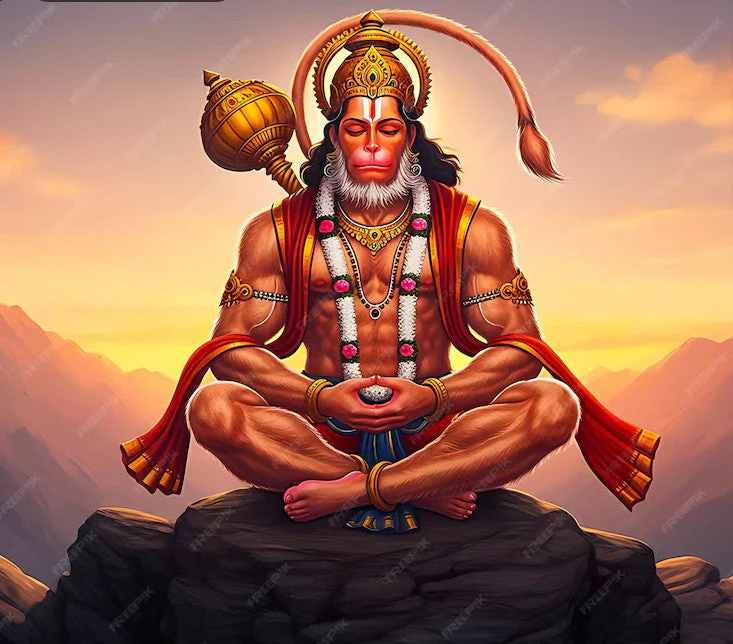
Lord Hanuman
Central deity — Lord Hanuman, whose divine birth is celebrated on this day
The Eternal Devotee of Lord Rama — Embodiment of Strength, Courage and Selfless Service.
View deity →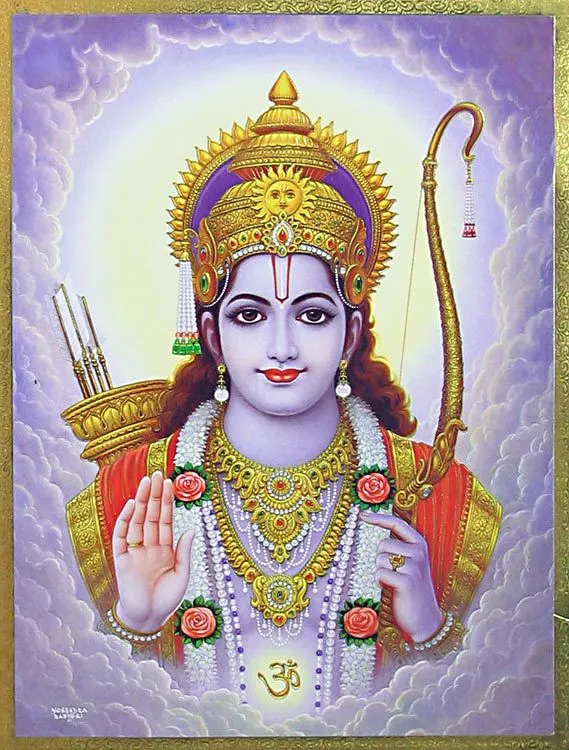
Lord Rama
Supreme Lord — Hanuman is the eternal devotee and messenger of Lord Rama, inseparable from him
The Ideal Man, Perfect King, and Seventh Avatar of Vishnu — whose life is the eternal standard of righteousness, duty, and devotion to dharma.
View deity →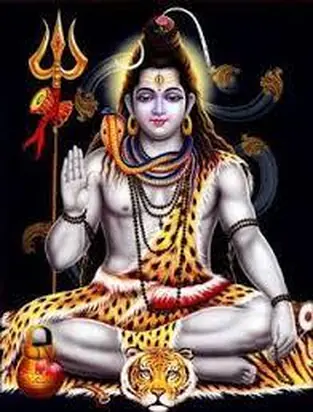
Lord Shiva
Divine source — Hanuman is revered as the 11th Rudra, a direct manifestation of Lord Shiva
The Supreme Destroyer and Transformer of the Universe — The Adiyogi, Lord of Lords, and the First Yogi.
View deity →Lord Hanuman is the undisputed hero of Hanuman Jayanti and one of the most widely worshipped deities in the Hindu tradition. He is referred to by dozens of names reflecting his many attributes:
Anjaneya / Anjanisuta: Son of Anjana, the apsara who was reborn as a vanara and performed intense tapasya to beget this divine child.
Pavanputra / Vayu Putra: Son of Vayu, the wind god — Hanuman inherited his father's speed, power, and omnipresence.
Bajrangbali: The one with a body as strong as vajra (thunderbolt). This name reflects his indestructible strength.
Sankat Mochan: Remover of all troubles and calamities. This is perhaps his most beloved epithet among common devotees.
Rama Duta: The divine messenger of Lord Rama — this is his most sacred role in the Ramayana.
Role of Lord Rama: Since Hanuman is inseparable from Rama, Lord Rama is also venerated on Hanuman Jayanti. No Hanuman puja is complete without chanting the name of Rama, as Hanuman himself declares: "Where Rama's name is chanted, I am always present."
Role of Sita Mata: Sita represents the soul (jivatma) that Hanuman (the devotee) seeks and finds through total surrender to Rama (Paramatma). Her blessings are sought alongside Hanuman's on this day.
How to celebrate Hanuman Jayanti 2026
A complete, step-by-step guide to performing Hanuman Jayanti puja at home or at a temple:
1. Wake Up Before Sunrise: Take a ritual bath and wear clean clothes — preferably saffron or red, colours sacred to Hanuman.
2. Prepare the Puja Space: Place an image or idol of Lord Hanuman (preferably the Panchamukhi or the seated or standing form holding Rama in his heart). Place a small image or photo of Rama-Sita alongside.
3. Light a Lamp and Incense: Light a ghee diya (lamp) and dhoop (incense) — jasmine or sandalwood. The flame should be kept burning throughout the puja.
4. Offer Sindoor (Vermilion) Abhisheka: Mix sindoor with sesame oil (til ka tel) and apply it to the Hanuman idol. This is the most important offering for Hanuman — it is said he wears sindoor to please Lord Rama, and this ritual is considered supremely auspicious.
5. Offer Flowers and Garlands: Offer red or orange flowers (marigold and red hibiscus are especially preferred). A garland made of jasmine or marigold placed around Hanuman's neck is traditional.
6. Offer Bhog (Prasad): Offer banana, jaggery, besan laddu (boondi laddus are Hanuman's favourite), and coconut. Panchamrita can also be offered.
7. Recite Hanuman Chalisa: Chant the full Hanuman Chalisa — 40 verses composed by Tulsidas — at least once. On Jayanti, reciting it 7, 11, or 108 times is considered especially meritorious.
8. Read or Listen to Sundara Kanda: The fifth chapter of Valmiki Ramayana (Sundara Kanda), which narrates Hanuman's search for Sita in Lanka, is recited in full on Hanuman Jayanti. A full Sundara Kanda path takes several hours and is often done in community gatherings.
9. Perform Aarti: Conclude the puja with Hanuman aarti — "Aarti Kije Hanuman Lala Ki" — swinging the diya in a circular motion before the idol.
10. Distribute Prasad: Share the prasad (especially laddus and banana) with family, neighbours, and the needy. Feeding monkeys (considered sacred as symbols of Hanuman's Vanara clan) on this day is a traditional act of devotion.
Rituals & regional traditions
North India (Uttar Pradesh, Rajasthan, Delhi, Bihar):
- Hanuman temples conduct special pujas from 4 AM onwards. Sindoor abhisheka is performed, and the idol is anointed with oil and vermilion by thousands of devotees.
- Mass recitation of Hanuman Chalisa — sometimes 108 rounds — runs continuously at major temples like Sankat Mochan Mandir, Varanasi and Connaught Place Hanuman Mandir, New Delhi.
- Langars (free community meals) and prasad distribution runs throughout the day.
Maharashtra and Gujarat:
- Maruticha Jayanti (as Hanuman is called Maruti here) is celebrated with kirtans, bhajans, and recitation of Ramayana. Temples in Nasik, Pune, and Kolhapur see large gatherings.
- Coconut and jaggery offerings are common alongside the traditional sindoor.
South India (Andhra Pradesh, Telangana, Karnataka, Tamil Nadu):
- In the south, Hanuman is often called Anjaneya and Vayuputra. A separate celebration occurs during Karthika Purnima (Nov-Dec) in some southern states.
- Tirumala (near Tirupati) houses the famous Japali Anjaneya shrine — one of the holiest Hanuman shrines in India — and draws massive crowds on Jayanti.
- Recitation of Sundara Kanda in Telugu and Kannada versions is popular.
Common Pan-India Traditions:
- Fasting on Hanuman Jayanti (especially observed by those under Shani's adverse influence)
- Oil and sindoor offerings at Hanuman shrines
- Feeding monkeys near temples
- All-night Rama Katha and Hanuman Chalisa recitation sessions
- Visiting 5 or 11 Hanuman temples on the Jayanti day (pancha or ekadasha kshetra pradakshina)
Spiritual benefits
Sincere worship of Lord Hanuman on his Jayanti day is said to bestow the following blessings:
- Fearlessness and courage: Hanuman's direct blessing removes deep-seated fears, anxiety, and mental weakness, replacing them with confidence and inner fortitude.
- Protection from evil: Hanuman is the supreme protector against negative energies, black magic (tantric drishti), evil spirits, and harmful intentions of enemies.
- Relief from Saturn's afflictions: Hanuman worship is especially recommended for those undergoing Shani Sade Sati, Shani Dhaiya, or other Saturn-related hardships. His Jayanti is considered one of the most powerful days to seek this relief.
- Physical health and vitality: As Bajrangbali, Hanuman blesses devotees with physical strength, immunity, and recovery from long-standing illnesses.
- Success in challenges: Just as Hanuman overcame seemingly impossible tasks for Rama, his blessings help devotees succeed in difficult endeavours, competitive exams, legal battles, and business challenges.
- Devotion to God: Worshipping the supreme devotee Hanuman is said to awaken one's own capacity for bhakti and draw one closer to Lord Rama (the Supreme).
- Longevity and protection for children: Mothers often pray to Hanuman for the health, longevity, and protection of their children.
- Liberation: The Ramayana and Hanuman Chalisa declare that those who worship Hanuman with sincerity ultimately attain Rama's divine abode.
Mantras & sacred chants
1. Hanuman Gayatri Mantra:
ॐ आञ्जनेयाय विद्महे वायुपुत्राय धीमहि | तन्नो हनुमत् प्रचोदयात् ||
Om Anjaneyaya Vidmahe Vayuputraya Dhimahi | Tanno Hanumat Prachodayat ||
Meaning: "We meditate on Anjaneya, the son of Vayu. May Hanuman inspire and illuminate our minds." Chanted at the beginning of puja, this Gayatri mantra invokes Hanuman's blessings for wisdom and strength.
2. Hanuman Mula Mantra:
ॐ नमो हनुमते रुद्रावताराय सर्वशत्रुसंहाराय सर्वरोगहराय सर्ववशीकरणाय रामदूताय स्वाहा
Om Namo Hanumate Rudravatarayа Sarvashatrusanharayа Sarvarogaharayа Sarvavashikaranayа Ramadutataya Svaha
Meaning: "Salutations to Hanuman, the avatar of Rudra, destroyer of all enemies, remover of all diseases, controller of all, the messenger of Rama." Chanted 108 times with a rudraksha mala for maximum effect.
3. Opening Verse of Hanuman Chalisa:
श्रीगुरु चरन सरोज रज, निजमन मुकुरु सुधारि। बरनउं रघुबर बिमल जसु, जो दायकु फल चारि।
Shri Guru Charan Saroj Raj, Nijaman Mukuru Sudhari | Barnau Raghubar Bimal Jasu, Jo Dayaku Phal Chari ||
Meaning: "Cleaning the mirror of my mind with the dust of the Guru's lotus feet, I narrate the pure glory of Raghuvara (Rama), which bestows the four fruits of life (dharma, artha, kama, moksha)." This opening verse of Hanuman Chalisa is recited at the start of every Hanuman puja.
Hanuman Jayanti 2026 — FAQs
Hanuman Jayanti 2026 falls on April 17, 2026 (Chaitra Purnima). In South India, some communities also celebrate Hanuman Jayanti on Karthika Purnima, which falls in November.
Sindoor (vermilion) is Lord Hanuman's most beloved offering. The tradition originates from the story where Hanuman saw Sita applying sindoor in her hair parting and asked its purpose. When she said it was for the long life of Rama, Hanuman smeared sindoor all over his body to ensure Rama's immortality. Applying sindoor mixed with sesame oil to Hanuman's idol on Jayanti is considered supremely auspicious.
Fasting on Hanuman Jayanti is optional but considered highly beneficial, especially for those under Saturn's adverse influence (Sade Sati or Shani Dhaiya). Devotees typically observe a fruit-only or one-meal fast and break it after the evening puja.
Sundara Kanda is the fifth chapter of Valmiki Ramayana, narrating Hanuman's flight to Lanka, his search for Sita, his meeting with her, and his burning of Lanka. It is considered the most auspicious chapter of the Ramayana and is believed to remove obstacles and bring divine blessings. Its recitation on Hanuman Jayanti is a central tradition, especially in North Indian households.
Reciting Hanuman Chalisa at least once is the minimum. On Hanuman Jayanti, reciting it 7, 11, 21, or 108 times is considered especially meritorious. Many devotees stay awake all night reciting it continuously at Hanuman temples.
The most celebrated venues include: Sankat Mochan Hanuman Temple in Varanasi, Connaught Place Hanuman Mandir in New Delhi, Salasar Balaji Temple in Rajasthan, Japali Anjaneya Temple at Tirumala (near Tirupati), Hanumangarhi in Ayodhya, and Mahavir Mandir in Patna.
Not always. In North India, Hanuman Jayanti is observed on Chaitra Purnima (full moon of Chaitra month, March-April). In some South Indian states like Tamil Nadu, Karnataka, and Andhra Pradesh, it is celebrated on Margashirsha or Karthika Purnima (November-December). The 2026 North Indian date is April 17.
Hanuman Jayanti 2025 falls on April 12, 2025. Hanuman Jayanti 2027 falls on April 6, 2027. The date shifts each year based on the Chaitra Purnima tithi in the Hindu lunar calendar.