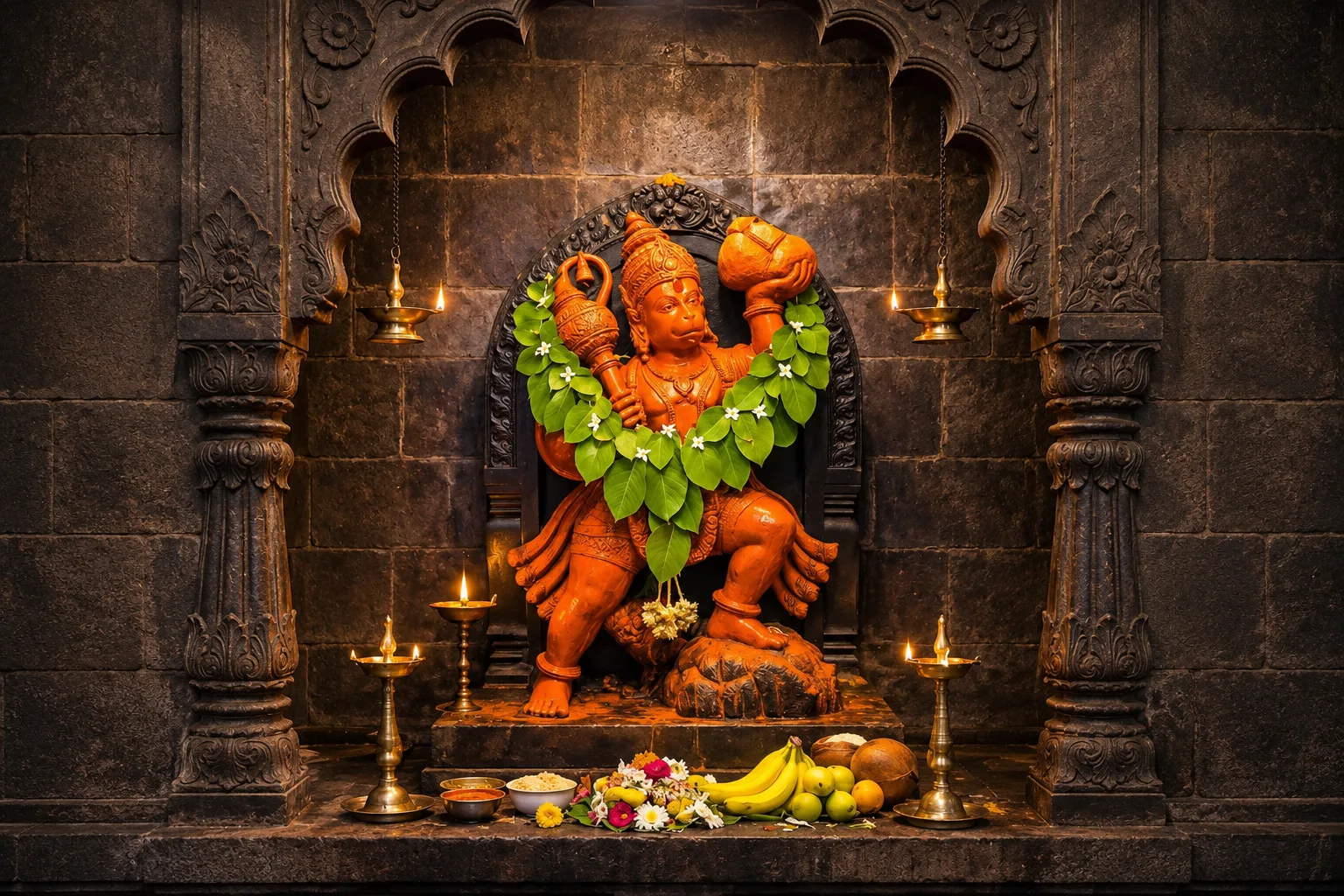
Hindu Deity
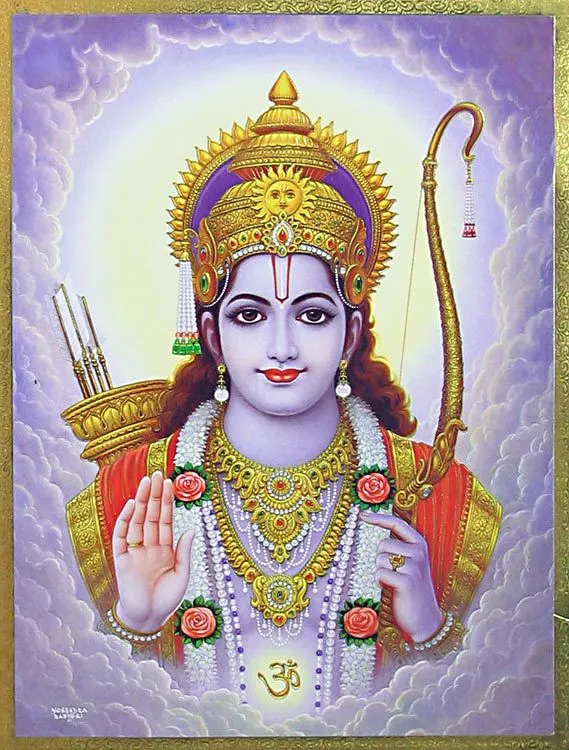
Lord Rama
The Ideal Man, Perfect King, and Seventh Avatar of Vishnu — whose life is the eternal standard of righteousness, duty, and devotion to dharma.
"Om Sri Ramaya Namah — I bow to Lord Rama, the embodiment of virtue, truth, and the perfect human ideal."
Overview
Lord Rama is the seventh avatar of Lord Vishnu and is revered as Maryada Purushottam — the supreme example of a perfect human being. Unlike Krishna who revealed his divinity openly, Rama lived as a man bound by human constraints, choosing duty over personal desire at every turn. His life as narrated in the Valmiki Ramayana and Tulsidas s Ramcharitmanas is the most beloved epic in all of Hinduism — a story that has shaped the moral, cultural, and spiritual fabric of the Indian subcontinent for thousands of years. Rama is the ideal son who obeyed his father s command without question, the ideal husband who never took a second wife, the ideal king who placed his subjects above his own happiness, and the ideal warrior who defeated the greatest evil of his age. His name — Rama — is considered the most powerful two-syllable mantra in existence. The phrase Ram Ram is the traditional greeting across North India, and Rama Nama is the last word whispered to the dying in the holy city of Varanasi. His kingdom, Ram Rajya, remains the ultimate ideal of a just and prosperous society in Indian political and spiritual thought.
Origin & History
Lord Rama was born in Ayodhya — the most sacred city on the banks of the Sarayu river — as the eldest son of King Dasharatha and Queen Kaushalya. He was born on the ninth day (Navami) of the bright fortnight of Chaitra month — celebrated worldwide as Ram Navami. Dasharatha had performed the Putrakameshti yajna guided by the sage Rishyashringa, after which a divine being emerged from the fire and gave a bowl of sacred payasam. This was divided among the three queens — Kaushalya received Rama, Kaikeyi received Bharata, and Sumitra received the twins Lakshmana and Shatrughna. Rama studied under the great sage Vishwamitra, who took him into the forest to protect yajnas from demons. During this journey Rama liberated the cursed Ahalya, killed the demoness Tadaka, and at King Janaka s court strung the legendary Shiva Dhanush — a feat no one else could accomplish — winning the hand of Princess Sita. His exile at age 14 was caused by his stepmother Kaikeyi who demanded two boons from Dasharatha — the throne for her son Bharata and 14 years of forest exile for Rama. Rama accepted without protest, Sita insisted on accompanying him, and Lakshmana followed out of brotherly devotion. The 14 years of Vanavasa, the abduction of Sita by Ravana, the building of the Ram Setu, the great war, the rescue of Sita, and the triumphant return to Ayodhya form the greatest epic journey in human history.
Legends & Famous Stories
The Exile of Rama
On the eve of his coronation, Rama was exiled for 14 years to the forest by his father Dasharatha, compelled by boons demanded by his stepmother Kaikeyi. Rama accepted this unjust exile without a word of protest, choosing obedience to his father and dharma over his rightful throne — the defining act that established him as Maryada Purushottam.
Liberation of Ahalya
The sage Gautama s wife Ahalya had been cursed to become a stone for thousands of years. When Rama s foot touched the stone during his journey, Ahalya was instantly liberated. This legend symbolises that the grace of God can undo even the most ancient and severe karmic bondages instantly.
Breaking the Shiva Dhanush
King Janaka declared that only one who could string the bow of Lord Shiva would win Sita s hand. Hundreds of kings had tried and failed. Rama not only strung it effortlessly but broke it in half — the sound heard across the three worlds. He was then united with Sita in the most celebrated divine marriage in Hindu tradition.
Building Ram Setu
After Sita was abducted by Ravana to Lanka, the vanara army built a miraculous bridge of floating stones — each inscribed with Rama s name — across the ocean. This bridge, Ram Setu (Adam s Bridge), still exists as a geological formation between India and Sri Lanka, a physical reminder of the greatest rescue mission in human history.
The War with Ravana
The great war between Rama s vanara army and Ravana s forces saw the fall of Kumbhakarna, Indrajit, and finally the ten-headed Ravana himself to Rama s divine arrows. The killing of Ravana on Vijayadashami is celebrated across India as the eternal triumph of righteousness over evil.
Return to Ayodhya — Origin of Diwali
After 14 years of exile and the defeat of Ravana, Rama returned to Ayodhya on the new moon night of Kartika. The entire city lit thousands of diyas to welcome their beloved king home — this is the origin of Diwali. Rama s coronation marked the beginning of Ram Rajya — the legendary ideal kingdom of justice and prosperity.
Worship & Rituals
Ram Naam Japa
Chanting the name of Rama — Ram Ram, Jai Shri Ram, or Om Sri Ramaya Namah — is the simplest and most powerful form of Rama worship. The Taraka mantra carries the soul across the ocean of existence. Even one sincere repetition of Rama s name is said to be equal to chanting 1000 names of Vishnu.
Ramcharitmanas Path
Reading or listening to the Ramcharitmanas by Tulsidas is the most beloved devotional practice in North India. Akhand Path (unbroken recitation) and Saptah Path (seven-day recitation) are performed in homes and temples for blessings, peace, and removal of all difficulties.
Ram Navami Puja
On Ram Navami, elaborate pujas are performed at noon — the exact time of Rama s birth. The idol of Bal Rama is bathed and placed in a cradle. Panchamrit abhishekam, offerings of fruits, and recitation of the Ramayana mark this most auspicious day.
Sunderkand & Ramayan Path
The Sunderkand — describing Hanuman s journey to Lanka — is recited for removing obstacles and invoking Rama s grace. A complete Ramayan path (all seven Kandas) is performed for blessings, fulfilment of wishes, and removal of suffering from the family.
Mantras & Prayers
Taraka Mantra
Ram Ram Jai Raja Ram, Ram Ram Jai Sita Ram
The most sacred Rama mantra — called the Taraka mantra, believed to carry the soul across the ocean of birth and death. Lord Shiva himself whispers this into the ears of those dying in Kashi (Varanasi) to grant liberation.
Rama Ashtakshara
Om Sri Ramaya Namah
The eight-syllable mantra of Lord Rama. Chanted for protection, righteousness, grace, and blessings of the ideal divine king. Simple, powerful, and universally recited across all Rama traditions.
Rama Raksha Stotra
Charitam Raghunathasya Shatakoti Pravistaram
A powerful protective hymn to Rama — shielding the devotee from all harm, evil forces, and dangers. Recited daily for divine protection, it is one of the most sacred Rama stotras in the tradition.
Jai Shri Ram Mantra
Jai Shri Ram, Jai Jai Shri Ram
The most widely chanted Rama invocation — Victory to Lord Rama. Simple yet immensely powerful. Chanted during prayer, processions, and as a daily greeting across North India. Said to remove fear and invoke divine courage instantly.
Festivals & Celebrations
Ram Navami
Navami of Chaitra Shukla · March–April
The birthday of Lord Rama celebrated at noon. Temples are decorated, special abhishekams performed, the Ramayana is recited, and devotees fast until noon. The grandest celebration is in Ayodhya where the entire city transforms into a spiritual festival of light and devotion.
Vijayadashami (Dussehra)
Dashami of Ashwin Shukla · Sept–Oct
Celebrates Rama s victory over Ravana on the tenth day. Massive effigies of Ravana, Kumbhakarna, and Indrajit are burned across India. The Ramlila — theatrical enactment of the Ramayana — is performed for 10 days culminating in this grand celebration.
Diwali
Amavasya of Kartika · Oct–Nov
The festival of lights originated from Rama s return to Ayodhya after 14 years of exile. The people of Ayodhya lit diyas to welcome him home. Today Diwali is the biggest festival in India — the victory of light over darkness, knowledge over ignorance.
Ramlila
10 days before Dussehra · Sept–Oct
Theatrical enactment of the Ramayana performed across North India for ten days. The Ramlila of Varanasi (Ramnagar) lasts a full month with thousands of participants. UNESCO has recognised Ramlila as an Intangible Cultural Heritage of Humanity.
Best Days to Worship
Sunday
Most Auspicious Day
Why This Day?
Sunday (Ravivar) is the day of the Sun (Surya), and Rama belongs to the Suryavansha — the Solar dynasty. As a descendant of the Sun, Rama is naturally connected to Sunday. Ram Navami often falls on a Sunday, and the solar energy of Sunday aligns perfectly with Rama s royal, righteous, and illuminating nature.
🌸 Offerings
Red or yellow flowers, Tulsi leaves, panchamrit, sindoor, sandalwood paste, fruits, ghee lamp
🪔 Rituals
Wake up before sunrise, bathe and wear clean clothes, perform Ram puja with Tulsi and flowers, recite Ram Raksha Stotra or Ramcharitmanas, chant Om Sri Ramaya Namah 108 times, read one chapter of Ramayana
✨ Benefits
Blessings for health, leadership, righteous conduct, family harmony, and divine protection in all endeavours
Ram Navami & Navami Tithi
Most Auspicious Day
Why This Day?
The Navami tithi (ninth lunar day) is the most sacred day for Rama as he was born on Chaitra Shukla Navami. Every Navami throughout the year carries Rama s energy. The annual Ram Navami is the most important, but observing any Navami with Rama worship brings special grace and blessings.
🌸 Offerings
Yellow and red flowers, Tulsi, panchamrit for abhishekam, fruits, kheer (sweetened rice), sandalwood paste, new yellow cloth
🪔 Rituals
Fast until noon (time of Rama s birth), perform full puja at noon, rock Bal Rama in a cradle, recite Ramayana or Ramcharitmanas, perform aarti, break fast with sattvic food
✨ Benefits
Fulfilment of heartfelt wishes, removal of obstacles, blessings for children and family, spiritual merit equal to a pilgrimage to Ayodhya
Benefits of Worship
Righteousness and clarity in fulfilling one s duties and responsibilities
Divine protection from all enemies, evil forces, and injustice
Leadership qualities, wisdom in governance, and fair decision-making
Ideal family relationships — between parents, siblings, spouses, and children
Liberation (moksha) through the power of Rama Nama — the Taraka mantra
Courage and strength to face and overcome any adversity with grace
Peace of mind, contentment, and a life of truth and integrity
Blessed household — harmony, prosperity, and wellbeing in the entire family
Famous Temples of Lord Rama
Regional Variations
Ayodhya, Uttar Pradesh
Ram Lalla / Raghunath
Ayodhya — Rama s birthplace on the Sarayu — is the most sacred Rama pilgrimage site in the world. The newly consecrated Ram Mandir (2024) at the exact birthplace draws tens of millions of pilgrims. Ram Navami and Diwali in Ayodhya are the grandest celebrations in all of India.
North India (Ramanandi)
Maryada Purushottam Ram
The Ramanandi Sampradaya is the largest Hindu monastic order in the world — entirely devoted to Rama. Ram Naam is the supreme mantra in this tradition. Tulsidas composed the Ramcharitmanas in Varanasi which transformed Ram bhakti across all of North India for centuries.
South India
Kodanda Rama / Ramar
Rama is worshipped in his warrior form (Kodanda Rama — with bow) across South India. The Bhadrachalam Rama temple in Telangana is one of the most sacred, associated with the devotee Ramadas. Ram Navami sees elaborate rathotsavams (chariot processions) in Tamil Nadu and Andhra Pradesh.
Maharashtra
Rama / Ramchandra
Ramayana recitation and Ramlila are central to Maharashtrian culture. The Rama temple at Nashik (near the Godavari — which Rama is said to have visited during exile) is a major pilgrimage site. Diwali and Dussehra are celebrated with great connection to Rama s story.
Rajasthan & Himachal
Raghunathji
The Raghunathji temple in Kullu (Himachal Pradesh) is one of the most unique — Kullu Dussehra is a week-long state festival that begins after Dussehra ends everywhere else, celebrated as Rama s own festival with hundreds of local deities processing together.
Southeast Asia
Phra Ram / Rama
The Ramayana is the foundational epic of Southeast Asia. In Thailand the Ramakien is the national epic and Thai kings take the title Rama. Ramayana ballet is performed at Angkor Wat in Cambodia. Rama s story is woven into the art, dance, architecture, and kingship ideals of Bali, Java, Myanmar, and Laos.
Frequently Asked Questions
Lord Rama Stotrams & Chalisas
Read the lyrics and meaning of Lord Rama hymns, with audio and free PDF downloads.
Related Pages
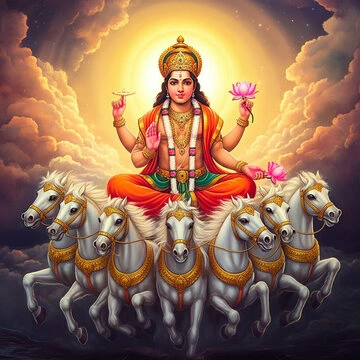
Surya Deva
The God of the Sun, Source of All Light and Life — the visible form of the divine that sustains every living being on Earth every single day.
Learn more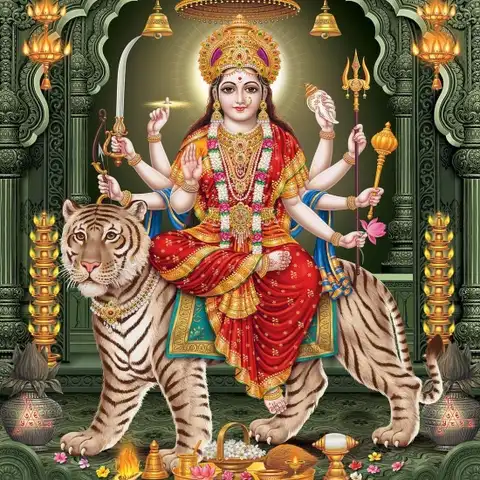
Goddess Durga
The Invincible Mother Goddess — Supreme Feminine Power who destroys evil, protects the righteous, and embodies the divine energy of the entire universe.
Learn more
Lord Krishna
The Preserver of the Universe — the all-pervading Supreme Being who descends to Earth in divine avatars whenever righteousness declines and evil rises.
Learn more