Hindu Deity
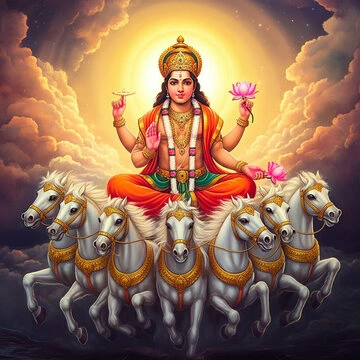
Surya Deva
The God of the Sun, Source of All Light and Life — the visible form of the divine that sustains every living being on Earth every single day.
"Om Suryaya Namah — I bow to Surya Dev, the radiant lord of light, the eye of the universe, and the source of all life."
Overview
Surya Dev is the God of the Sun — one of the oldest, most universally worshipped, and most directly perceptible deities in all of Hinduism. Unlike most deities who are worshipped through idols and symbols, Surya is worshipped in his actual physical form — the sun itself — making him unique among all the major deities of the Hindu tradition. He is one of the Navagrahas (nine celestial bodies) and the most powerful among them, serving as the king of all planets in Vedic astrology. Surya is the father of many of the most important figures in Hindu mythology — Karna (Mahabharata), Yama (god of death), Yami, Ashwini Kumaras (divine physicians), and Shani Dev (god of Saturn) are all his children. He is part of the Trideva alongside Brahma and Vishnu in some Shaiva texts, and in the Saura tradition he is worshipped as the Supreme Being. The Rig Veda — the oldest scripture in the world — contains some of the most sublime hymns ever composed in any language in his honour, including the Gayatri Mantra which is addressed to the solar deity Savitr. Every day without exception, Surya rises and illuminates the world — he is the most democratic of all deities, his light and warmth freely given to all living beings without distinction of caste, religion, wealth, or status.
Origin & History
Surya is described in the Vedas as Savitr — the vivifier, the one who generates and sustains life. In the Puranas he is born as the son of the sage Kashyapa and Aditi — making him one of the Adityas, the twelve solar deities who together represent different aspects and seasons of the sun through the year. His wife is Saranyu (also called Sanjna or Chhaya), the daughter of the divine craftsman Vishwakarma. The marriage of Surya and Saranyu produced several of the most important figures in Hindu tradition — Yama (god of death and justice), Yami (goddess of the Yamuna river), and the Ashwini Kumaras (twin divine physicians). However Saranyu found Surya s radiance too intense to bear and secretly replaced herself with her own shadow (Chhaya — shade) before departing. Chhaya lived with Surya in Saranyu s place and from this union was born Shani Dev (Saturn) — whose dark nature contrasted sharply with his blazing father. When Surya eventually discovered the deception he pursued Saranyu to the forest where she had taken the form of a mare. He took the form of a horse and from their union as horses were born the Ashwini Kumaras. Surya is the teacher of Hanuman — who flew to the sun to receive education — and the guru of Sugriva (king of the vanaras). He is also the divine father of Karna in the Mahabharata — the greatest tragic hero of the epic — having granted him divine armour (Kavacha) and earrings (Kundala) at birth that made him effectively invincible. In the Ramayana, Rama belongs to the Suryavansha — the Solar dynasty — and Surya is the ancestor of Rama himself. He is thus connected to virtually every major narrative thread in Hindu sacred literature.
Legends & Famous Stories
Hanuman Mistakes Sun for a Fruit
As an infant, Hanuman saw the rising sun and mistook it for a ripe fruit. He leaped into the sky to eat it. Surya Dev, charmed by the child s innocence and divine nature, did not resist. Indra intervened with his thunderbolt, but Surya later interceded for Hanuman and allowed him to become his student — teaching him all the Vedas and scriptures. This is why Hanuman is known as a master of knowledge as well as strength.
Karna — Surya s Greatest Son
When the young princess Kunti tested a mantra given to her by the sage Durvasa by calling upon Surya Dev, he appeared before her and granted her a son. This child — born with divine golden armour (Kavacha) and earrings (Kundala) fused to his body — was Karna, the greatest archer of the Mahabharata era. Surya appeared to Karna in a dream before the war to warn him not to give away his armour to Indra — but Karna, bound by his code of generosity, gave it away anyway. Surya s connection with Karna is one of the most poignant father-son relationships in all of Indian literature.
Saranyu and the Shadow Wife
Surya s wife Saranyu found his blazing radiance unbearable. Unable to endure it, she secretly created a shadow replica of herself (Chhaya) to live in her place and fled to the forest. Chhaya bore Surya the son Shani Dev, whose dark nature was believed to reflect the shadow origin of his mother. When Surya discovered the truth and found Saranyu in her mare form in the forest, he transformed himself into a horse to approach her — from this union the divine twin physicians Ashwini Kumaras were born.
Surya Restores Samba — Origin of Konark
Krishna s son Samba was afflicted with leprosy as a curse from the sage Durvasa. On the advice of Narada, Samba performed 12 years of intense penance to Surya Dev on the banks of the Chandrabhaga river. Surya was pleased and appeared before him, healing his leprosy completely. In gratitude, Samba built a magnificent sun temple on that exact site — this is said to be the origin of the Konark Sun Temple in Odisha, one of the greatest architectural achievements in all of Indian history.
The Gayatri Mantra — Surya as Savitr
The Gayatri Mantra — the most sacred verse in all of the Vedas, recited by hundreds of millions of Hindus every day for thousands of years — is addressed to Savitr, the solar deity. The mantra asks Savitr to illuminate the mind with divine wisdom. The Gayatri is not merely a prayer but a precise spiritual technology — the rays of the morning sun, when received with this mantra at dawn, are said to carry a specific frequency that awakens higher consciousness in the meditating devotee.
Worship & Rituals
Surya Arghya at Sunrise
The most fundamental and ancient Surya ritual — offering water (arghya) to the rising sun while standing facing east. Copper vessel water is poured slowly while the sun s rays pass through it and fall on the devotee. The water refracts the early morning sunlight through the spectrum and when combined with Sanskrit mantras, this act is considered both a spiritual offering and a scientifically beneficial practice for eyes, skin, and energy.
Surya Namaskar
The twelve-posture Sun Salutation — Surya Namaskar — is the most widely practised physical form of Surya worship. Each of the twelve postures corresponds to one of the twelve names (dwadasha nama) of Surya, chanted as each posture is performed. Traditionally done facing the rising sun at dawn, it is simultaneously a complete physical exercise, a breathing practice, and a devotional offering to the sun.
Aditya Hridayam Recitation
The Aditya Hridayam is a powerful hymn to Surya from the Valmiki Ramayana — it was taught to Rama by the sage Agastya on the battlefield of Lanka when Rama was exhausted and uncertain of victory. Reciting this hymn daily (especially on Sundays at sunrise) invokes Surya s energy for health, vitality, courage, and success. It is one of the most practically effective Vedic hymns in regular use today.
Sunday Surya Puja
On Sundays, devotees perform a dedicated Surya puja — offering red flowers (especially red lotus if available), red sandalwood paste, wheat, jaggery, and copper vessel water. A ghee lamp is lit facing east. The Surya Chalisa or Aditya Hridayam is recited. Fasting on Sundays (consuming only one meal without salt) is a widely observed vrata for Surya s blessings for health and success.
Mantras & Prayers
Gayatri Mantra
Om Bhur Bhuvah Swah Tat Savitur Varenyam Bhargo Devasya Dhimahi Dhiyo Yo Nah Prachodayat
The most sacred mantra in all of the Vedas — addressed to Savitr, the solar deity. It asks the divine solar light to illuminate and awaken the intellect. Recited at sunrise and sunset, it is the single most universally practised mantra in Hinduism, chanted by hundreds of millions of people daily for thousands of years.
Surya Moola Mantra
Om Suryaya Namah
The root mantra of Surya Dev. Simple, direct, and powerful — chanted 108 times at sunrise while facing the sun. Used for health, vitality, mental clarity, removal of obstacles, and invoking the sun s energy for all endeavours.
Dwadasha Aditya Mantra
Om Mitraya Namah, Om Ravaye Namah, Om Suryaya Namah, Om Bhanave Namah, Om Khagaya Namah, Om Pushne Namah, Om Hiranyagarbhaya Namah, Om Marichaye Namah, Om Adityaya Namah, Om Savitre Namah, Om Arkaya Namah, Om Bhaskaraya Namah
The twelve names of Surya — each corresponding to one of the twelve months of the year and one posture of Surya Namaskar. Chanting all twelve names daily invokes the complete spectrum of solar energy — from health and strength to wisdom and liberation.
Aditya Hridayam (opening)
Tato Yuddha Parishrantam Samare Chintaya Sthitam, Raavanam Chaagrato Drishtva Yuddhaaya Samupasthitam
The opening verse of the Aditya Hridayam — taught by sage Agastya to Rama on the battlefield. The full 31-verse hymn is one of the most potent Surya texts — recited for energy, courage, health, and ultimate victory over adversity.
Festivals & Celebrations
Chhath Puja
Kartika Shukla Shashthi · Oct–Nov
The most ancient and arguably most demanding sun worship festival in the world — performed over four days. Devotees observe rigorous fasting, stand waist-deep in rivers at sunset and sunrise, and offer arghya (water) to the setting and rising sun. Chhath has no priest — worshippers face the sun directly. It is especially sacred in Bihar, Jharkhand, and Uttar Pradesh and is one of the few ancient Vedic rituals still practised in its original form.
Makar Sankranti
January 14 (fixed solar date)
The most astronomically precise Hindu festival — marking the sun s transition (Sankranti) into Makar Rashi (Capricorn) on January 14 each year. It marks the beginning of Uttarayana — the sun s northward journey — which is considered the most auspicious six-month period. Celebrated across India as Pongal (Tamil Nadu), Uttarayan (Gujarat), Lohri (Punjab), and Bihu (Assam).
Ratha Saptami
Saptami of Magha Shukla · Jan–Feb
Celebrated as the birthday of Surya Dev — the day his chariot (ratha) driven by seven horses begins its northward journey. Devotees wake before sunrise, bathe, and offer arghya to the sun. Visiting Surya temples and reciting the Aditya Hridayam on this day is believed to bring extraordinary health, longevity, and freedom from disease for the entire year.
Sunday Surya Vrat
Every Sunday · Year Round
Every Sunday (Ravivar — Ravi is another name for Surya) is dedicated to Surya Dev. Devotees offer water at sunrise, recite the Surya Chalisa or Aditya Hridayam, fast or eat only one salt-free meal, and wear red or orange. This weekly vrat is among the most effective remedies in Vedic astrology for strengthening the Sun (Surya) in one s birth chart.
Best Days to Worship
Sunday
Most Auspicious Day
Why This Day?
Sunday — Ravivar in Sanskrit (Ravi meaning Sun) — is named directly after Surya Dev across virtually every language and culture in the world (Sun-day in English, Dimanche from Dominica in French, Sonntag in German). It is the most universally acknowledged solar day and the primary weekly day for all Surya worship, remedies, and vrats in the Vedic tradition.
🌸 Offerings
Red flowers (especially red lotus or red hibiscus), red sandalwood paste, wheat, jaggery, copper vessel water, red cloth, ruby gemstone (for darshan only), ghee lamp
🪔 Rituals
Wake before sunrise, face east, offer arghya (copper vessel water poured slowly toward the sun) while chanting Surya mantras, perform Surya Namaskar (12 rounds minimum), recite Aditya Hridayam or Surya Chalisa, fast or eat one salt-free meal, wear red or copper-coloured clothing
✨ Benefits
Strengthening of Surya in birth chart, excellent physical health and eye health, mental clarity and confidence, success in career and public life, and relief from Surya Dasha difficulties in Vedic astrology
Saptami Tithi (7th lunar day)
Most Auspicious Day
Why This Day?
The seventh day (Saptami) of both lunar fortnights is considered the most auspicious tithi for Surya Dev — as Surya s chariot is pulled by seven horses, seven is his sacred number. Ratha Saptami (the most important Surya festival) falls on Magha Shukla Saptami. Any Saptami tithi throughout the year is considered a powerful day for Surya worship.
🌸 Offerings
Wheat, jaggery, red flowers, copper vessel water poured at sunrise, sesame seeds, coconut
🪔 Rituals
Wake before sunrise, offer arghya with copper vessel, recite Aditya Hridayam all 31 verses, perform Surya Namaskar, visit Surya temple if nearby, donate wheat and jaggery to the poor
✨ Benefits
Health and healing especially of skin and eye conditions, longevity, freedom from chronic illness, vitality and energy, and blessings for leadership and recognition
Benefits of Worship
Robust physical health, strong immunity, and healing from chronic illness
Good eyesight — Surya Namaskar and arghya are specifically beneficial for eye health
Vitality, physical energy, and stamina that sustains through the entire day
Mental clarity, sharp intellect, and enhanced powers of concentration and focus
Authority, leadership, recognition, and success in career and public life
Strengthening of Sun (Surya) in the birth chart — relief from Surya Dasha difficulties
Confidence, courage, and a radiant, magnetic personality
Spiritual awakening — Surya is called the eye of the universe and the gateway to higher consciousness
Regional Variations
Bihar, Jharkhand & UP
Chhathi Maiya (Surya)
The Chhath Puja tradition of Bihar and Jharkhand is the world s most intense direct sun worship practice still alive today. Devotees stand waist-deep in rivers for hours, fasting without water, offering arghya to both the setting and rising sun. The festival draws tens of millions of participants and is considered one of the last surviving intact Vedic sun worship traditions.
Tamil Nadu
Suryan / Adityan
Makar Sankranti is celebrated as Pongal in Tamil Nadu — a four-day harvest festival thanking Surya for the harvest. The Suryanar Kovil near Kumbakonam is one of the Navagraha temples dedicated to Surya and is an important pilgrimage site. The Gayatri Mantra tradition is especially strong in Tamil Brahmin households.
Odisha
Biranchinarayan / Surya
The Konark Sun Temple in Odisha — a UNESCO World Heritage Site and one of the greatest architectural achievements in human history — was built in the 13th century in the form of a colossal chariot of Surya with 24 carved wheels and seven horses. Though no longer an active place of worship, it remains the most spectacular physical monument to Surya Dev in existence.
Rajasthan & Gujarat
Surya Narayana
Makar Sankranti (Uttarayan) is one of the most celebrated festivals in Gujarat — the sky is filled with kites on this day as the sun begins its northward journey. Rajasthan has several important Surya temples. The Surya Narayana form — merging Surya with Vishnu — is widely worshipped across these states.
Kashmir & North India
Martanda / Surya
The Martanda Sun Temple in Kashmir — built by the Karkota dynasty in the 8th century — was one of the most magnificent sun temples in ancient India before its destruction. The Surya tradition in Kashmir Shaivism connects solar worship with the highest non-dual philosophy. Surya Namaskar performed at the Ganga ghats of Varanasi at dawn is one of the most sacred sunrise rituals in North India.
Vedic / Pan-India
Savitr / Aditya
Surya is the most universally worshipped deity across all of India in the most daily and direct sense — every practising Hindu who recites the Gayatri Mantra at sunrise is worshipping Surya. Surya Namaskar is practised by millions across every state every morning. He is present in every home in India through the simple daily act of facing the rising sun with folded hands.
Frequently Asked Questions
Surya Deva Stotrams & Chalisas
Read the lyrics and meaning of Surya Deva hymns, with audio and free PDF downloads.
Related Pages
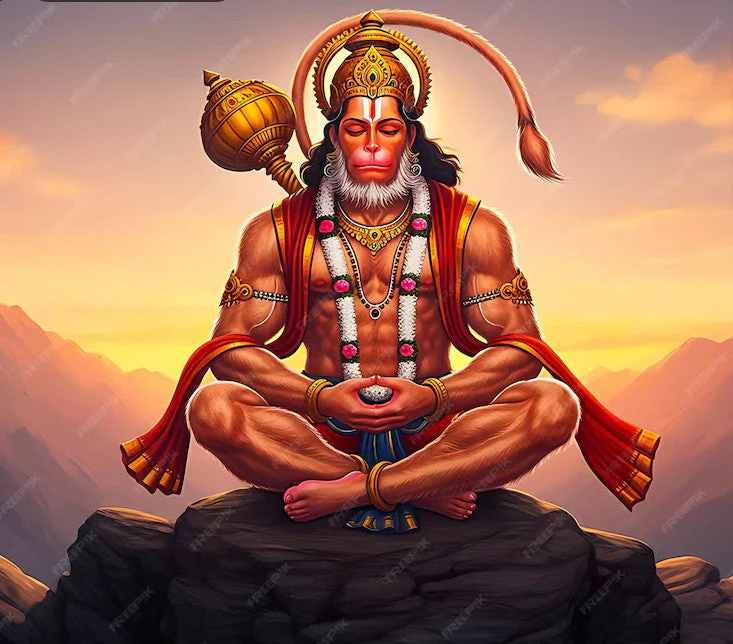
Lord Hanuman
The Eternal Devotee of Lord Rama — Embodiment of Strength, Courage and Selfless Service.
Learn more
Goddess Lakshmi
The Invincible Mother Goddess — Supreme Feminine Power who destroys evil, protects the righteous, and embodies the divine energy of the entire universe.
Learn more
Goddess Saraswati
The Invincible Mother Goddess — Supreme Feminine Power who destroys evil, protects the righteous, and embodies the divine energy of the entire universe.
Learn more