About Ambubachi Mela
Last updated:
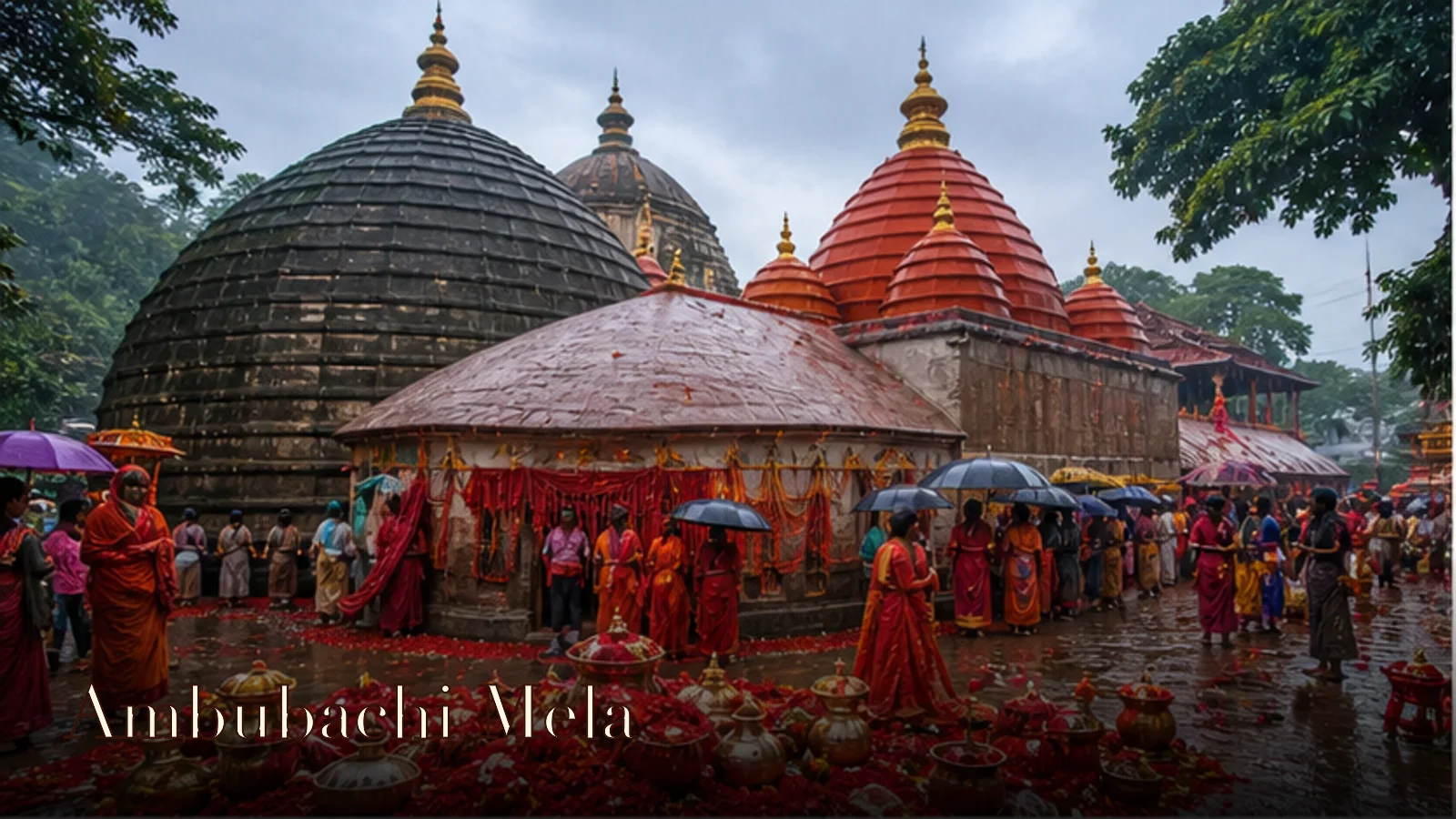
Ambubachi Mela is one of the most unique and spiritually charged festivals in all of , observed annually at the sacred Kamakhya Temple atop Nilachal Hill in Guwahati, Assam. The festival celebrates the annual menstruation of Goddess Kamakhya, the supreme Shakti deity and one of the 51 Shakti Peethas of the Hindu tradition. This four-day event, occurring in the Hindu month of Ashadha (June-July), draws hundreds of thousands of pilgrims, sadhus, tantric practitioners, and devotees from across and the world. The central ritual of Ambubachi Mela is the temporary closure of the Kamakhya Temple for three days, symbolizing the period of the goddess's menstruation. During this time, the earth is believed to be menstruating — a concept deeply embedded in tantric philosophy that views menstruation not as impurity but as a supremely powerful and sacred manifestation of feminine creative energy. The Brahmaputra river near the temple is said to turn red during this period, and the red cloth and vermilion-stained prasad distributed after the temple reopens are considered extraordinarily sacred and potent. On the fourth day, the temple reopens to a flood of devotees eager to receive the special prasad — a piece of red cloth (representing the menstrual cloth of the goddess) that is believed to grant fertility, remove illness, and fulfill desires. The Mela is particularly significant for tantric practitioners, ascetics, and those following the left-hand path (Vama Marga) of Shakta Tantra, as Kamakhya is considered the greatest seat of tantric power in the world. The gathering of Naga sadhus, Aghori saints, and various tantric sects makes Ambubachi one of 's most mystically intense spiritual gatherings.
Significance of Ambubachi Mela
Ambubachi Mela holds extraordinary spiritual, tantric, and cosmic significance that sets it apart from virtually every other Hindu festival. - Supreme Shakti Peetha: Kamakhya is considered the most powerful of all 51 Shakti Peethas, the site where the yoni (womb) of Goddess Sati fell after Lord Vishnu dismembered her body to stop Shiva's grief. The yoni is the source of all creation, making this site uniquely sacred. - Sacred Menstruation: Unlike most traditions that treat menstruation as impure, tantric philosophy reverses this entirely — the goddess's menstruation is celebrated as the most potent outpouring of creative cosmic energy, a time when the earth herself is fertile with divine power. - Tantric Powerhouse: Ambubachi is the single most important gathering . The convergence of thousands of tantrics, Aghori sadhus, and Naga saints during this period creates an atmosphere of intense spiritual energy. - Agricultural Blessing: The festival coincides with the monsoon's onset and is associated with the earth's fertility. Farmers across Assam observe this period as sacred, refraining from plowing to honor the earth's menstrual rest. - Cosmic Renewal: The three-day closure and reopening of the temple symbolizes cosmic death and rebirth, parallel to the menstrual cycle as a metaphor for universal regeneration. - Red Prasad Power: The red-stained cloth distributed as prasad after the temple reopens is believed to possess extraordinary tantric energy, capable of fulfilling material and spiritual desires.
Deities worshipped on Ambubachi Mela
Follow the links to explore each deity’s mantras, stories, and temples on Temples.bio.
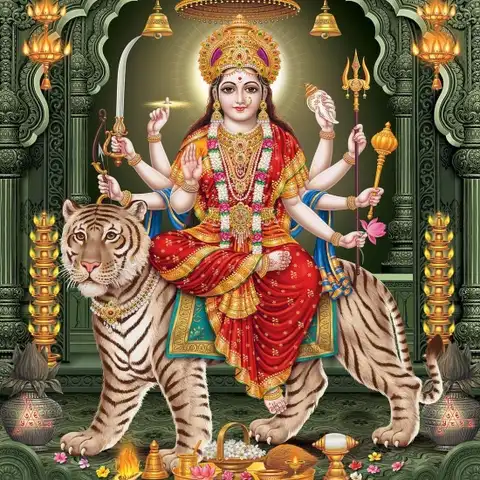
Goddess Durga
Kamakhya as the supreme Shakti-Kali form, the cosmic creative power being celebrated
The Invincible Mother Goddess — Supreme Feminine Power who destroys evil, protects the righteous, and embodies the divine energy of the entire universe.
View deity →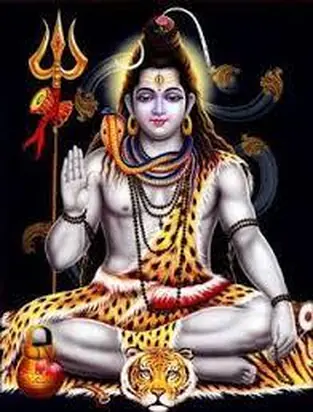
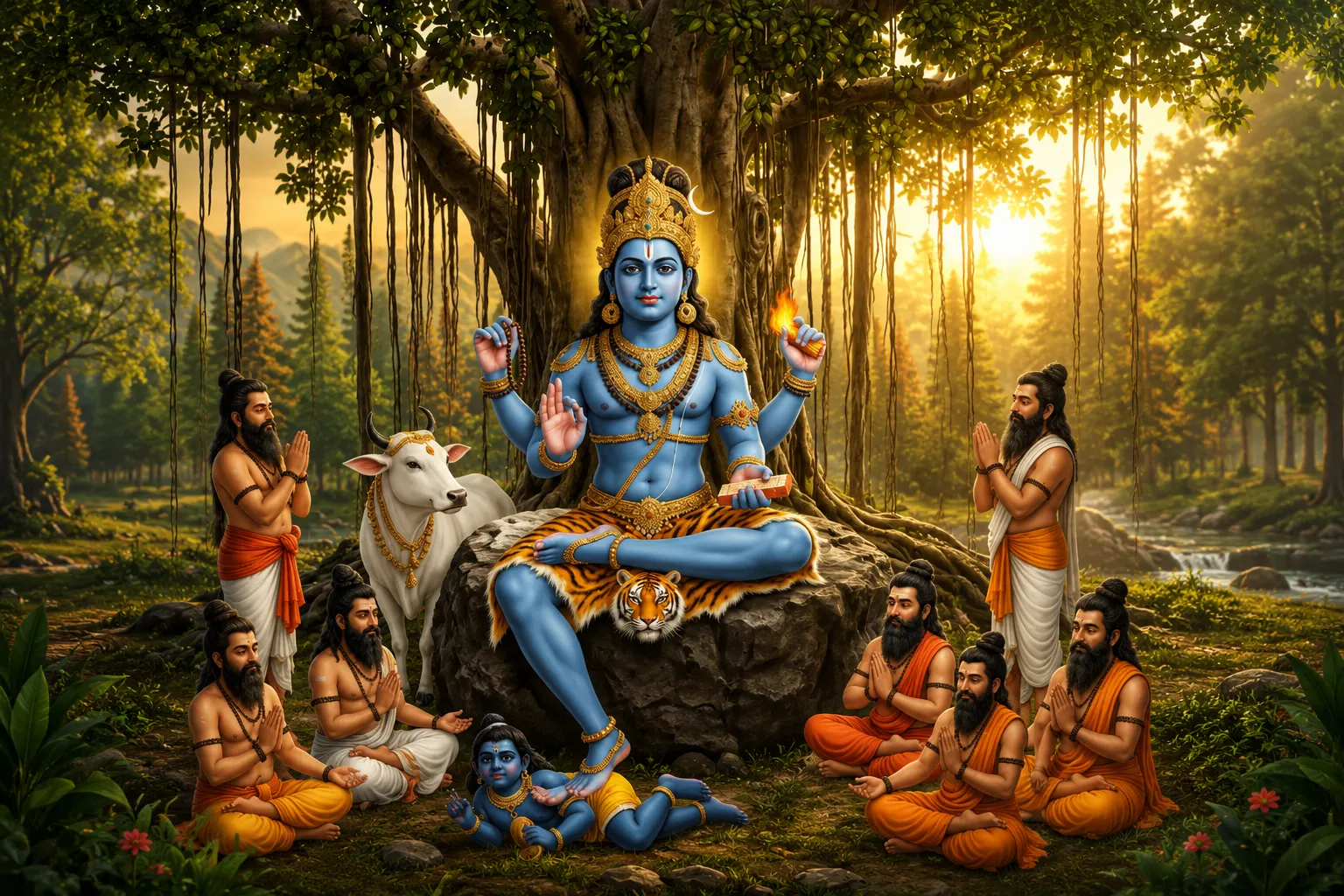
Lord Shiva
Bhairava, the consort of Kamakhya, venerated by tantric practitioners at the temple
The Supreme Destroyer and Transformer of the Universe — The Adiyogi, Lord of Lords, and the First Yogi.
View deity →Goddess Kamakhya is the supreme deity of the Ambubachi Mela — she is the primordial Shakti, the source of all creation, and the most powerful form of the Divine Mother in the tantric tradition. Kamakhya is a form of Goddess Kali-Durga representing the yoni (cosmic womb), the creative principle of the universe. She is one of the Mahavidyas (ten tantric goddesses) and is associated with fertility, desire, regeneration, and liberation.
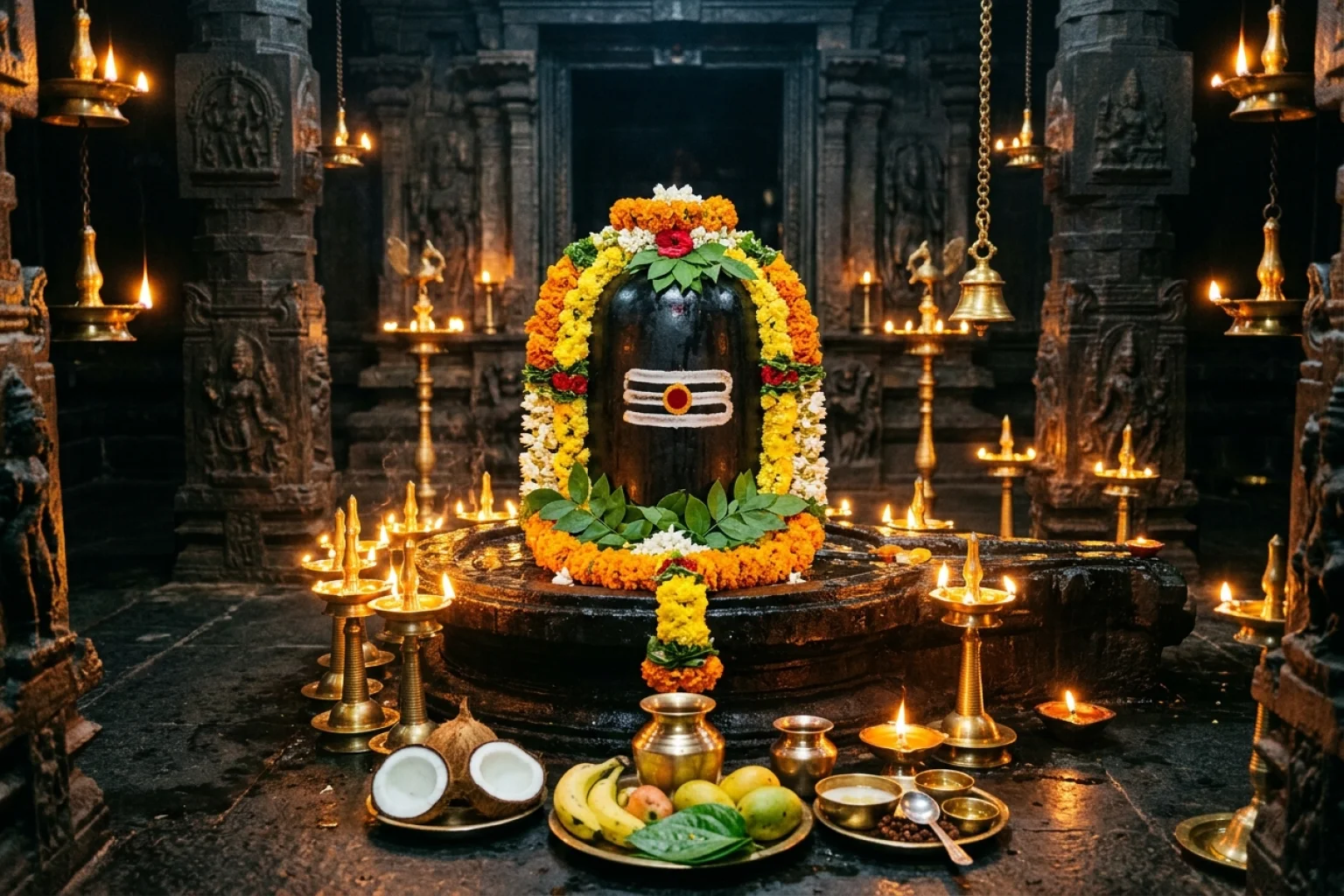
According to the Kalika Purana, after Goddess Sati immolated herself and Shiva wandered the universe carrying her body in grief, Lord Vishnu used his Sudarshana Chakra to dismember Sati's body into 51 pieces. The yoni fell at Nilachal Hill, making it the Kamakhya Peetha. The goddess is worshipped here not through an anthropomorphic idol but through a natural rock formation in the shape of a yoni, covered with flowers and vermilion, with a natural spring flowing through it.
During Ambubachi, all the Mahavidyas — Kali, Tara, Tripura Sundari, Bhuvaneshvari, Bhairavi, Chhinnamasta, Dhumavati, Bagalamukhi, Matangi, and Kamala — are believed to be especially accessible to devotees. The male consort of Kamakhya is Lord Shiva in his form as Bhairava, and his presence at Kamakhya is equally venerated by tantric practitioners.
How to celebrate Ambubachi Mela 2026
How to Participate in Ambubachi Mela:
1. Plan your visit to Kamakhya Temple, Guwahati, Assam during the four days of Ambubachi, which fall in the third week of Ashadha (typically June 22-26 in 2026).
2. On Day 1 (Ambubachi start), attend prayers before the temple closes at the prescribed time. Observe fasting or light sattvic diet during the three days the temple remains closed.
3. During the three-day closure, visit the subsidiary shrines on Nilachal Hill, attend satsangs with visiting saints and sadhus, and participate in devotional singing.
4. On Day 4 (Ambubachi Nivritti), join the enormous queue of devotees to enter the temple as it reopens. This is the most auspicious time to receive darshan of Goddess Kamakhya.
5. Receive the sacred prasad — the red-stained cloth (Angabastra) that is the primary prasad of Ambubachi — with reverence and keep it in your puja room.
6. Offer red hibiscus flowers, red sindoor, and red cloth to the goddess as these are her most beloved offerings.
7. Chant the Kamakhya Mantra and Dasa Mahavidya stotras during your time at the temple or in preparation at home.
8. If possible, take a holy dip in the Brahmaputra river near Nilachal Hill before proceeding to the temple.
9. Approach any visiting sadhus or tantric practitioners with respect; receiving blessings from ascetics at Ambubachi is considered extremely auspicious.
10. Avoid non-vegetarian food and alcohol during the festival period if you seek spiritual merit from the pilgrimage.
Rituals & regional traditions
- Temple Closure: The Kamakhya Temple remains closed for three days (Ambubachi), during which even regular puja is suspended — a rare event at any major Indian temple.
- Red Cloth Prasad (Angabastra): After the temple reopens, devotees receive a small piece of red cloth believed to be imbued with the goddess's menstrual power — highly sought after and considered the most sacred prasad.
- Tantric Rituals: Aghori sadhus, Naga saints, and tantric practitioners perform intensive Shakti sadhana, fire rituals, and secret tantric ceremonies during the three days of closure.
- Earth Rest: Farmers in Assam refrain from plowing or tilling the earth during Ambubachi, believing the earth is menstruating and must be given rest.
- Brahmaputra Ritual: Devotees take holy dips in the Brahmaputra river, which is believed to turn reddish during this period, before visiting the temple.
- Mass Feeding: Large-scale bhandaras (community meals) are organized by various religious organizations for the lakhs of pilgrims attending the mela.
- Sadhu Congregations: The Mela is notable for the extraordinary gathering of Naga Sadhus, Aghoris, Vaishnavas, and tantric practitioners from all sects who arrive specifically for Ambubachi.
- Hibiscus Offerings: Red hibiscus flowers are the goddess's most favored offering and are presented in enormous quantities during the festival.
Spiritual benefits
- Fertility blessings: Devotees seeking children pray fervently at Kamakhya during Ambubachi, as the goddess in her menstrual power is believed to grant the boon of fertility.
- Wish fulfillment: The red cloth prasad from Ambubachi is traditionally believed to fulfill deep desires when kept with reverence.
- Removal of disease: Many pilgrims attend Ambubachi seeking cure from chronic illnesses, as the goddess's power is considered especially potent during this period.
- Tantric Siddhi: For serious spiritual practitioners, Ambubachi is considered the most powerful time to initiate tantric sadhana and receive accelerated spiritual progress.
- Liberation from negative karma: Darshan of Kamakhya during Ambubachi is said to dissolve accumulated negative karma accumulated over lifetimes.
- Protection: The red cloth prasad is kept in homes as a protective talisman against evil eye, black magic, and misfortune.
- Abundance and prosperity: The goddess as the cosmic womb is the source of all abundance; seeking her blessings during Ambubachi is believed to bring material and spiritual prosperity.
Mantras & sacred chants
Mantra 1 — Kamakhya Moola Mantra:
Sanskrit: ॐ क्रीं कामाक्ष्यै नमः
Transliteration: Om Krim Kamakhyai Namah
Meaning: Salutation to Goddess Kamakhya with the bija Krim — this mantra invokes her transformative power (Krim is Kali's bija) to awaken divine energy and fulfill desires.
Mantra 2 — Dasa Mahavidya Mantra:
Sanskrit: ॐ ह्रीं श्रीं क्रीं परमेश्वरि स्वाहा
Transliteration: Om Hrim Shrim Krim Parameshwari Svaha
Meaning: This mantra invokes the supreme goddess with three primal energies — Hrim (Shakti), Shrim (Lakshmi's abundance), and Krim (Kali's transformation) — offering everything to the Parameshwari (supreme Goddess).
Mantra 3 — Kamakhya Gayatri:
Sanskrit: ॐ कामाख्यायै विद्महे। योनि रूपायै धीमहि। तन्नो देवी प्रचोदयात्।।
Transliteration: Om Kamakhyayai Vidmahe, Yoni Rupayai Dhimahi, Tanno Devi Prachodayat
Meaning: We meditate upon Goddess Kamakhya in her form as the cosmic yoni; may that goddess inspire and illuminate our consciousness.
Ambubachi Mela 2026 — FAQs
Ambubachi Mela 2026 at Kamakhya Temple, Guwahati falls from June 22 to June 26, 2026. The temple closes on June 22 for three days and reopens on June 25-26 (Ambubachi Nivritti) for devotees to receive prasad.
Ambubachi Mela is the annual festival at Kamakhya Temple, Assam, celebrating the menstruation of Goddess Kamakhya. The temple closes for three days symbolizing the goddess's menstrual period, then reopens amid massive celebrations with red cloth prasad distribution.
The primary prasad of Ambubachi is a small piece of red cloth (Angabastra) believed to be stained with the goddess's menstrual power. It is considered extraordinarily sacred, capable of granting fertility, wish fulfillment, and protection from evil.
Kamakhya Temple closes for three days during Ambubachi to honor the menstruation of Goddess Kamakhya. In tantric philosophy, this is not impurity but a supreme outpouring of divine creative energy. The earth herself is believed to be menstruating during this period.
Ambubachi draws lakhs of devotees, pilgrims, and tourists, but is especially significant for tantric practitioners, Aghori sadhus, Naga saints, and followers of Shakta Tantra who come from across India. Thousands of sadhus camp on Nilachal Hill during the mela.
Kamakhya Temple is one of the 51 Shakti Peethas, where the yoni of Goddess Sati fell. It is considered the most powerful tantric shrine in India and the seat of the Dasa Mahavidyas (ten tantric goddesses). The goddess is worshipped through a natural rock formation rather than an idol.
Pilgrims observe fasting or sattvic diet during the three days the temple is closed, visit subsidiary shrines on Nilachal Hill, participate in satsangs with visiting saints, take a dip in the Brahmaputra river, and most importantly, receive the red cloth prasad when the temple reopens on day four.
No, Ambubachi Mela is distinct from Durga Puja. Ambubachi is a uniquely tantric festival at Kamakhya Temple celebrating the goddess's menstruation in Ashadha month, while Durga Puja is a pan-India festival celebrating Durga's victory over Mahishasura in Ashwin month.