About Bihu
Last updated:
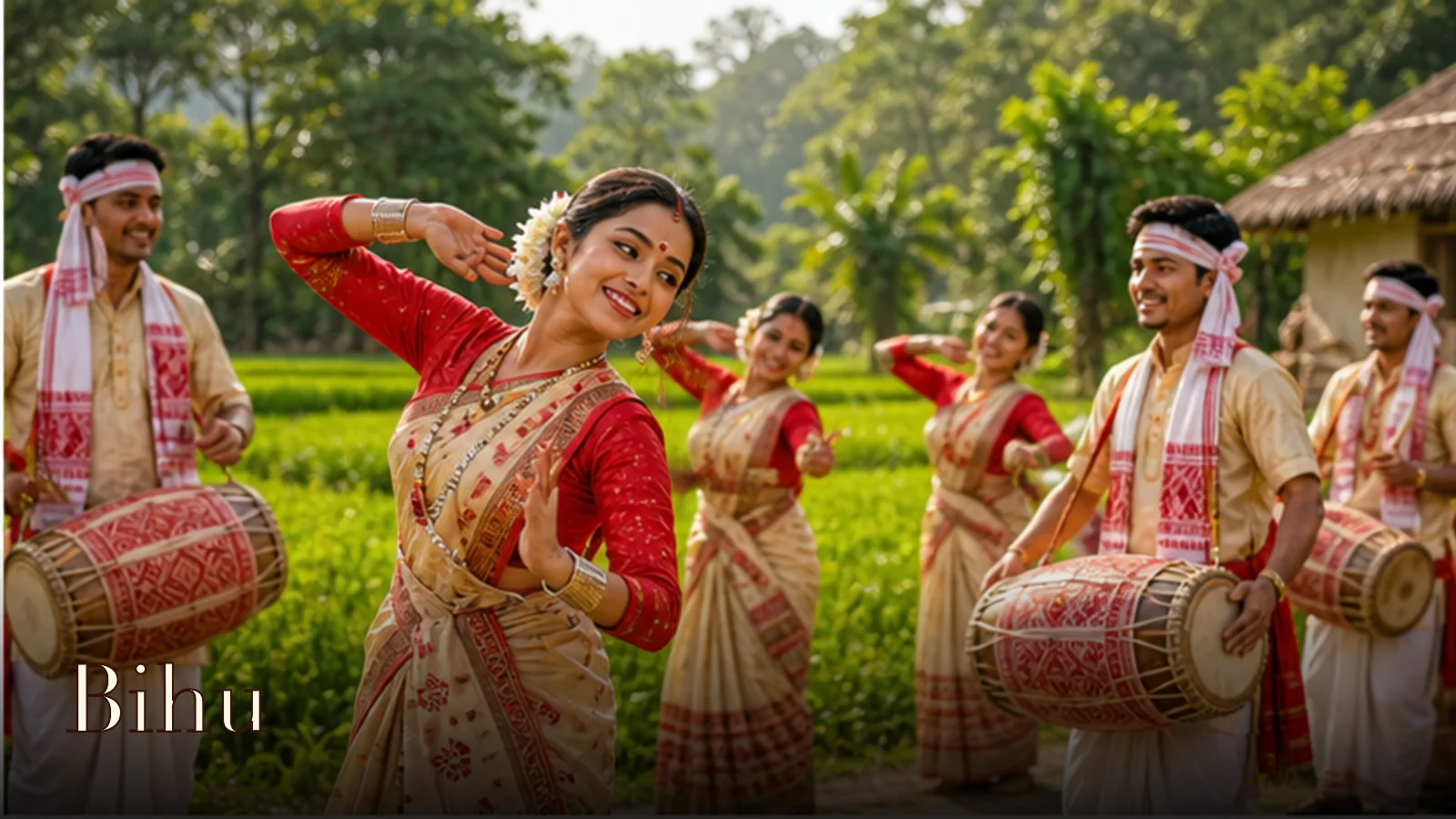
Bihu is the most beloved and culturally significant festival of Assam, celebrated three times annually to mark the transitions of the agricultural calendar. Unlike most Hindu festivals that center on a single deity, Bihu is fundamentally a harvest and seasonal festival that honors nature, the sun, the earth, and community bonds. The three Bihus — Rongali (Bohag), Kongali (Kati), and Bhogali (Magh) — each have distinct characters, rituals, and moods, reflecting the Assamese agrarian cycle with deep emotional resonance. Rongali Bihu (Bohag Bihu), celebrated in mid-April around the Assamese New Year, is the most joyous and festive of the three. It marks the onset of spring and the planting season, and coincides with solar new year celebrations across South and Southeast Asia (Pongal, Baisakhi, Vishu). Young men and women gather in open fields and forests to perform the energetic Bihu dance to the beat of dhol (drum) and pepa (horn), wearing colorful traditional attire. Rongali Bihu lasts seven days, each with its own ritual significance — from Goru Bihu (cattle worship on the first day) to Manuh Bihu (human day) and Kutum Bihu (visiting relatives). Kongali Bihu (Kati Bihu), the somber Bihu of October-November, is observed during the lean period between planting and harvest when granaries are empty. Earthen lamps are lit in fields and at the base of Tulsi plants and banana trees, symbolizing prayer for a good harvest and protection of crops. It is the quietest of the three Bihus. Bhogali Bihu (Magh Bihu), celebrated in January, marks the end of the harvest season with community feasting, bonfires (Meji), and the eating of traditional pitha (rice cakes) and laru (sweets). Communities construct large bamboo structures (Bhelaghar) that are ceremonially burned at dawn on Bihu day in thanksgiving.
Significance of Bihu
Bihu holds multifaceted significance spanning agricultural, cultural, spiritual, and social dimensions deeply woven into Assamese identity. - Agricultural Rhythm: Bihu directly mirrors the three phases of the Assamese rice cultivation cycle — planting (Rongali), growing (Kongali), and harvesting (Bhogali) — making it among the most agriculturally grounded festivals in . - Assamese New Year: Rongali Bihu marks the Assamese New Year on April 14-15, aligning with the solar calendar and celebrated as the most auspicious time for new beginnings across Assam. - Solar Worship: All three Bihus have underlying solar significance, especially Rongali Bihu which coincides with the sun's entry into Mesha Rashi (Aries), and Bhogali Bihu near Makar Sankranti. The sun is honored as the source of agricultural abundance. - Community Cohesion: Bihu transcends caste, religion, and tribe in Assam — it is celebrated by Hindus, Muslims, Christians, and indigenous tribal communities alike, making it a true people's festival. - Cattle Worship: Goru Bihu on the first day of Rongali Bihu involves the ritual bathing and worship of cattle with turmeric and mustard paste, honoring animals as agricultural partners and divine beings. - Cultural Preservation: Bihu dance and Bihu songs (Bihu geet) are recognized globally as classical folk art forms, and the festival is central to preserving and transmitting Assamese language, music, and performing arts. - Nature Reverence: Kongali Bihu's lamp lighting in fields, at Tulsi, and under banana trees reflects deep reverence for plant life and nature as divine.
Deities worshipped on Bihu
Follow the links to explore each deity’s mantras, stories, and temples on Temples.bio.
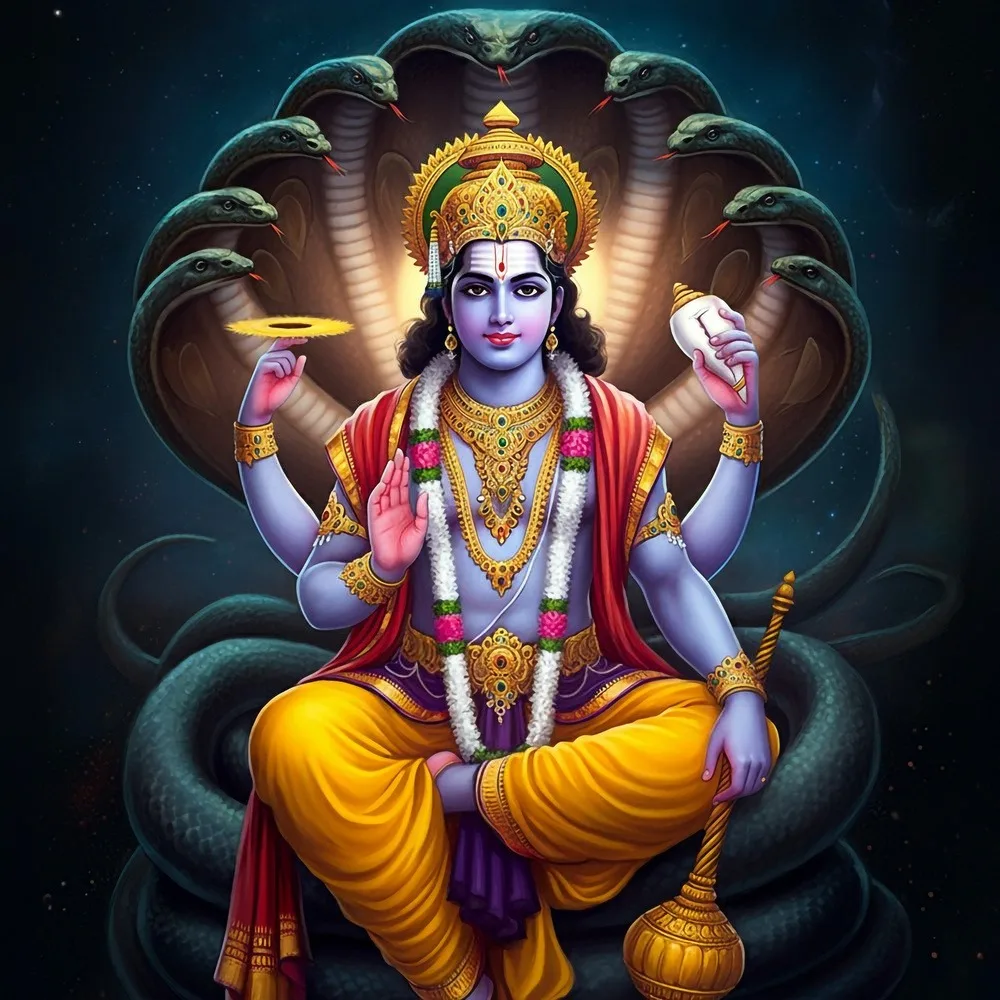
Lord Vishnu
Honored through Tulsi worship during Kongali Bihu and Vaishnava Bihu traditions
The Preserver of the Universe — the all-pervading Supreme Being who descends to Earth in divine avatars whenever righteousness declines and evil rises.
View deity →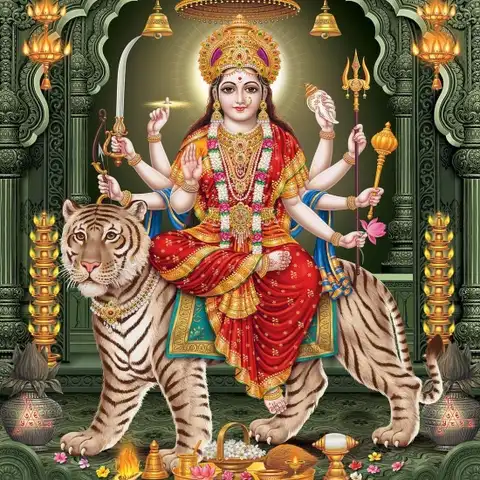
Goddess Lakshmi
Worshipped during Bhogali Bihu as goddess of harvest abundance and grain prosperity
The Invincible Mother Goddess — Supreme Feminine Power who destroys evil, protects the righteous, and embodies the divine energy of the entire universe.
View deity →Bihu does not center on a specific anthropomorphic deity in the conventional Hindu sense but is fundamentally connected to the worship of natural and cosmic forces.
Surya (the Sun God) is the most significant divine force associated with all three Bihus. Rongali Bihu coincides with Surya's entry into Mesha Rashi (Mesh Sankranti), and Bhogali Bihu aligns with Makar Sankranti — both solar transitions. Prayers for sun-blessed harvests are central to Bihu observances. Goddess Lakshmi, the deity of prosperity and grain, is honored during Bhogali Bihu as the granaries overflow and the harvest is brought home. Offerings of first-harvest rice, pitha, and laru are made to invoke her continued blessings. The Tulsi plant, sacred to Lord Vishnu and venerated as a goddess herself (Tulsi Devi), receives special worship during Kongali Bihu — earthen lamps are lit at the base of Tulsi as prayers for the growing crops. Cattle are worshipped on Goru Bihu as divine beings — this practice reflects the Vedic reverence for the cow as a sacred animal and economic lifeline. In some communities, Goddess Durga and regional forms of Shakti are also propitiated during Bihu, and Vaishnava Assamese communities incorporate prayers to Lord Vishnu-Krishna into their Bihu observances.
How to celebrate Bihu 2026
How to Celebrate All Three Bihus:
Rongali Bihu (April 14-15, 2026):
1. On Goru Bihu (Day 1, April 13), bathe cattle with turmeric and mustard paste, adorn them with new garlands, and pray for their health.
2. On Manuh Bihu (Day 2, April 14 — Assamese New Year), bathe with til (sesame) and haldi, wear new traditional attire (mekhela-sador for women, dhuti-kurta for men).
3. Visit elders to seek blessings (seva) and distribute Bihu gifts (gamosa — traditional Assamese towel).
4. Participate in community Bihu dance gatherings in open fields with dhol drumming and pepa music.
5. Prepare and share traditional Bihu foods — til pitha, ghila pitha, narikol laru.
Kongali Bihu (October-November, ~October 18, 2026):
1. At dusk, light earthen lamps (saki) at the base of the Tulsi plant, in paddy fields, at garden boundaries, and in granaries.
2. Offer prayers for the protection of standing crops and a good harvest.
3. Observe a quiet, reflective evening — Kongali is the time for hope and prayer rather than celebration.
Bhogali Bihu (January 13-14, 2026):
1. Construct a Bhelaghar (community hut) from bamboo and dry grass in an open area.
2. Prepare large community feasts (bhoj) featuring pitha, laru, fish, and rice delicacies.
3. At dawn on Bihu day, burn the Meji (bonfire) with prayers and offerings of pitha, betel nut, and sugarcane.
4. Receive warmth and blessings from the Meji fire and share feast with community.
Rituals & regional traditions
- Rongali Bihu: Seven-day festival with Goru Bihu (cattle worship with turmeric-mustard bath), Manuh Bihu (human celebration, new clothes, elder blessings), Gosain Bihu (temple worship), and community Bihu dance gatherings.
- Bihu Dance: The Rongali Bihu dance performed by young men and women in traditional attire to dhol and pepa is one of India's most energetic and internationally recognized folk dances.
- Gamosa Gifting: The traditional Assamese gamosa (white cloth with red border) is gifted to elders, teachers, and guests during Rongali Bihu as a mark of respect and affection.
- Kongali Bihu Lamps: Earthen lamps are lit across fields, at Tulsi shrines, under banana trees, and in granaries during Kongali Bihu at dusk — a practice of quiet, heartfelt prayer.
- Meji Bonfire: Bhogali Bihu's central ritual is the burning of the Meji (bamboo-grass structure) at dawn, symbolizing the destruction of all evils and old sorrows in thanksgiving for the harvest.
- Bhelaghar Feast: The night before Bhogali Bihu, communities construct and camp in Bhelaghar huts, feasting through the night on traditional foods.
- Pitha Making: Special rice-based sweets (pitha) including til pitha (sesame), ghila pitha (round sesame-coconut), and narikol pitha (coconut) are prepared and shared as central Bihu foods.
- Husori: Groups of young men (husori dal) visit homes singing Bihu songs and blessings during Rongali Bihu, receiving gifts of pitha and gamosa.
Spiritual benefits
- Renewal and new beginnings: Rongali Bihu as the Assamese New Year brings the opportunity to release the old year's burdens and begin fresh with renewed purpose.
- Agricultural abundance: Performing Goru Bihu cattle worship and Bhogali Meji fire rituals are believed to ensure continued agricultural prosperity and good harvests.
- Cultural pride and identity: Participation in Bihu dance, music, and customs deepens one's connection to Assamese heritage and community belonging.
- Solar blessings: Honoring Surya during Bihu's solar transitions is believed to bring health, vitality, and energy for the coming season.
- Community healing: Bhogali Bihu's Meji fire is said to burn away accumulated sorrows, conflicts, and negative energies of the past year.
- Nature harmony: Kongali Bihu's practice of lamp lighting in fields and gardens cultivates reverence for nature and mindfulness of one's dependence on the earth.
- Joy and vitality: The exuberant Bihu dance and communal feasting generate deep joy, strengthen social bonds, and contribute to collective well-being.
Mantras & sacred chants
Mantra 1 — Surya (Sun God) Prayer for Harvest:
Sanskrit: ॐ ह्रां ह्रीं ह्रौं सः सूर्याय नमः
Transliteration: Om Hram Hrim Hraum Sah Suryaya Namah
Meaning: Salutation to the Sun God with his primal seed mantras — this Surya mantra invokes solar energy for health, vitality, and agricultural abundance, appropriate for Bihu's solar significance.
Mantra 2 — Tulsi Worship (Kongali Bihu):
Sanskrit: तुलसी श्रीसखि शुभे पापहारिणि पुण्यदे। नमस्ते नारदनुते नारायणमनःप्रिये।।
Transliteration: Tulasi Shri-sakhi Shubhe Papa-harini Punya-de, Namaste Narada-nute Narayana-manah-priye
Meaning: O Tulasi, dear companion of Sri Lakshmi, auspicious one who removes sins and grants merit — salutations to you, praised by Narada and beloved of Lord Narayana's heart.
Mantra 3 — Lakshmi Prayer for Harvest Abundance (Bhogali Bihu):
Sanskrit: ॐ श्रीं ह्रीं क्लीं त्रिभुवन महालक्ष्म्यै अस्माकं दारिद्र्यं नाशय प्रचुर धनं देहि क्लीं ह्रीं श्रीं ॐ
Transliteration: Om Shrim Hrim Klim Tribhuvana Mahalakshmyai Asmaakam Daridryam Nashaya Prachura Dhanam Dehi Klim Hrim Shrim Om
Meaning: O Mahalakshmi of the three worlds, destroy our poverty and grant us abundant wealth and grain — this mantra is chanted during Bhogali Bihu when offering harvest first-fruits to the goddess.
Bihu 2026 — FAQs
There are three Bihus in 2026: Rongali Bihu (Bohag Bihu) falls on April 14-15, 2026 (Assamese New Year); Kongali Bihu (Kati Bihu) falls around October 18, 2026; and Bhogali Bihu (Magh Bihu) falls on January 13-14, 2026.
The three Bihus are: Rongali Bihu (Bohag) in April — the most festive, celebrating the Assamese New Year and planting season; Kongali Bihu (Kati) in October — the somber Bihu of lamp lighting during crop scarcity; and Bhogali Bihu (Magh) in January — the feast Bihu celebrating the harvest with bonfires.
Bihu dance is Assam's most iconic folk dance, performed by young men and women during Rongali Bihu in open fields. Dancers wear traditional attire (mekhela-sador for women, dhuti-kurta for men) and perform to the energetic beat of dhol drums and pepa horn. It is recognized as one of India's premier folk dance forms.
Goru Bihu is the first day of Rongali Bihu, dedicated to the worship of cattle. Farmers bathe their cattle in rivers or ponds with turmeric and mustard paste, adorn them with garlands, and pray for their health and strength. It reflects the deep Assamese reverence for cattle as agricultural partners.
Meji is the ceremonial bonfire that is the central ritual of Bhogali Bihu. Communities construct a large bamboo and grass structure (Bhelaghar) which is ritually burned at dawn on Bihu day, with offerings of pitha, betel nut, and sugarcane, symbolizing thanksgiving for the harvest and burning away past sorrows.
Gamosa is the traditional Assamese white cloth with a distinctive red-bordered design. It is gifted to elders, teachers, and guests during Rongali Bihu as a gesture of respect and love. It is one of the most important cultural symbols of Assamese identity, also used as a headband during Bihu dance.
Bihu is both. While it has religious dimensions including Surya worship, Tulsi puja, cattle worship, and Lakshmi prayers, it is fundamentally a cultural and agrarian festival celebrating seasonal cycles. It is uniquely secular in that it is celebrated across all communities in Assam — Hindu, Muslim, Christian, and tribal alike.
Bihu is famous for its traditional rice-based sweets (pitha): til pitha (sesame rice cake), ghila pitha (round sesame-coconut cake), narikol pitha (coconut stuffed rice cake), and laru (sesame or coconut balls). For Bhogali Bihu, elaborate community feasts (bhoj) featuring fish, meat, and rice dishes are central to the celebration.