About Bonalu
Last updated:
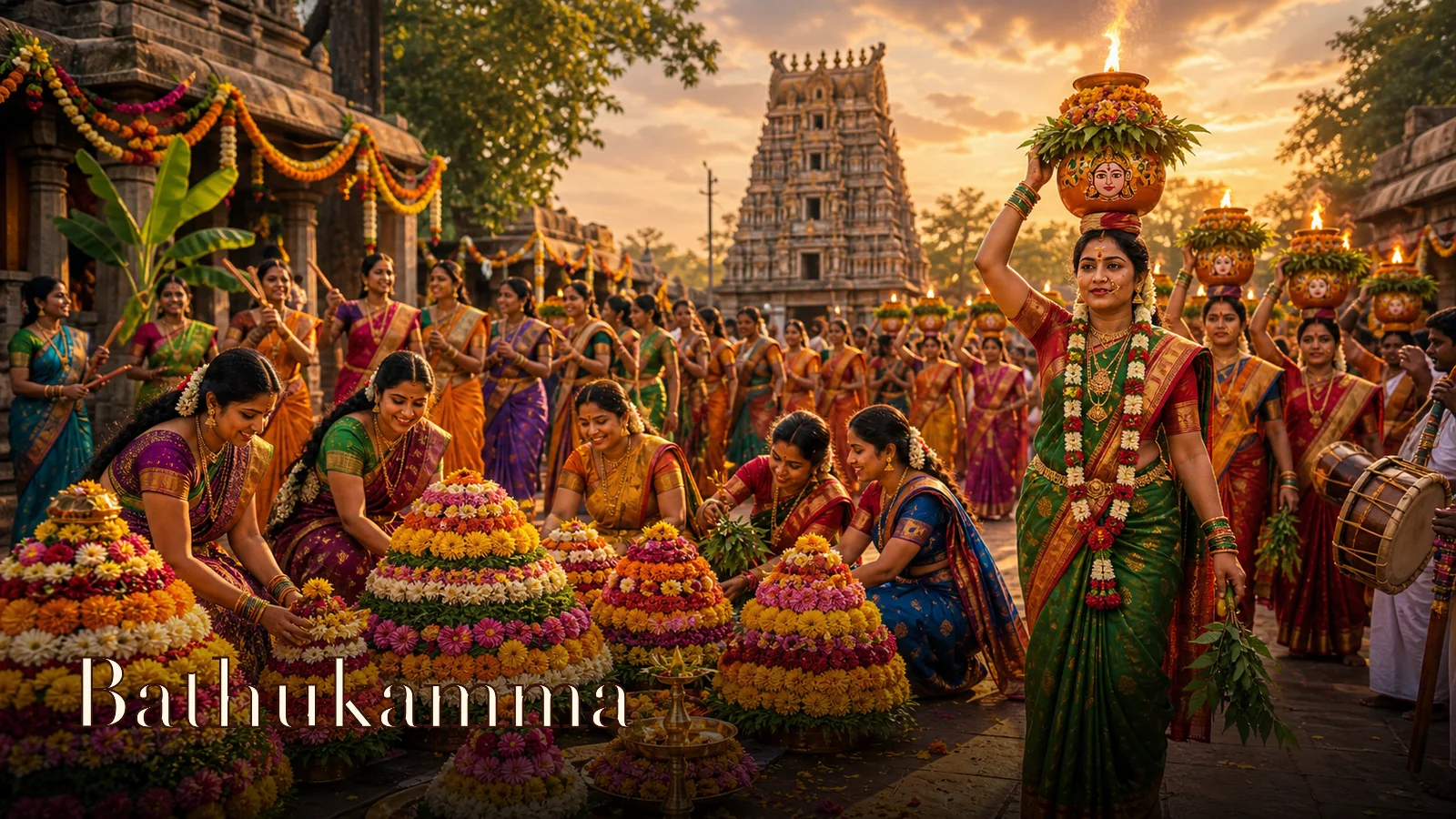
Bonalu is one of the most exuberant and deeply rooted folk festivals of Telangana and Hyderabad, celebrated primarily during the months of Ashadha and Shravan (July–August). The word "Bonalu" derives from "Bhojanalu" meaning food offerings — reflecting the central ritual of preparing cooked rice (bonu) with jaggery, curd, and vermilion in large earthen or brass pots and carrying them on the head as a sacred offering (naivedya) to the Mother Goddess. The festival is celebrated at major Shakti temples, with the most iconic celebrations at Golconda Fort's Mahankali temple, Ujjaini Mahankali temple in Secunderabad, and Akkanna-Madanna temple in the old city of Hyderabad. The festival follows a specific sequence: it begins at Golconda on the first Sunday of Ashadha and concludes at Secunderabad's Ujjaini Mahankali temple. Each Sunday during the festival period witnesses massive processions of devotees. Women dress in colourful traditional attire, balance decorated pots filled with cooked rice on their heads, and walk in processions to the temple. The pot (Bonam) is decorated with neem leaves, turmeric paste, and sometimes a lit lamp on top. Among the most dramatic elements of Bonalu are the Ghatam (a pot carried by a woman as a divine medium), Rangam (prophecy ritual), and Pothuraju — a fierce male deity who acts as the divine protector of the goddess and runs through the procession with a whip, keeping evil forces at bay. The Rangam ceremony at Ujjaini Mahankali temple involves a woman devotee entering a trance state and delivering prophecies for the coming year, drawing enormous crowds. Bonalu is not merely religious but a celebration of community resilience, historically linked to thanksgiving after epidemics and droughts.
Significance of Bonalu
Bonalu carries layered spiritual, historical, and cultural significance for Telangana: - Thanksgiving offering: Historically, Bonalu originated as a thanksgiving festival after the end of cholera and plague epidemics in Hyderabad, when communities offered cooked food to the Mother Goddess for protecting them. - Shakti worship: The festival is a direct expression of Shakti (divine feminine energy) worship, honouring the Mother Goddess in her fierce protective form as Mahankali, Ellamma, and Pochamma. - Community resilience: Bonalu reinforces collective identity and the belief that the Mother Goddess is the guardian of villages and cities against disease, drought, and adversity. - Ecological significance: The use of neem leaves, turmeric, and earthen pots reflects ancient Ayurvedic wisdom about monsoon-season health and purification. - Monsoon connection: Celebrated at the height of monsoon season, Bonalu gives thanks for rains and prays for the community's agricultural and health prosperity. - Pothuraju symbolism: The divine protector Pothuraju represents the masculine energy that guards the goddess and the community — a cosmic balance of fierce and nurturing energies. - Intangible heritage: Bonalu preserves unique Telangana folk traditions — music, dance, prophecy rituals — that are not found anywhere else in .
Deities worshipped on Bonalu
Follow the links to explore each deity’s mantras, stories, and temples on Temples.bio.
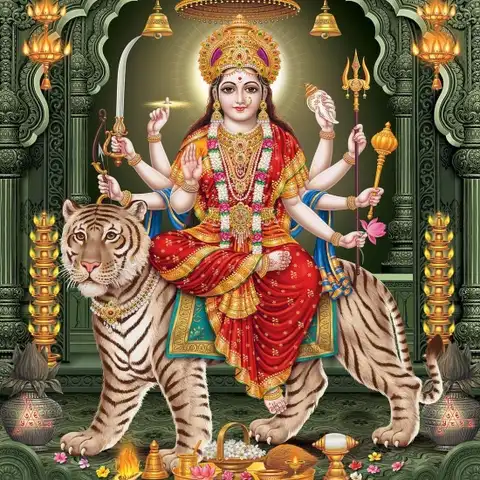
Goddess Durga
Primary deity — Goddess Mahankali is the supreme form of Durga worshipped during Bonalu
The Invincible Mother Goddess — Supreme Feminine Power who destroys evil, protects the righteous, and embodies the divine energy of the entire universe.
View deity →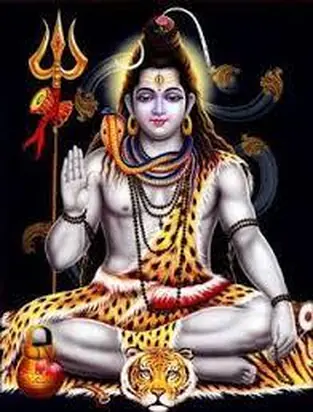
Lord Shiva
Consort of Parvati/Kali; the masculine cosmic energy balancing the fierce goddess
The Supreme Destroyer and Transformer of the Universe — The Adiyogi, Lord of Lords, and the First Yogi.
View deity →Bonalu is dedicated to Mother Goddess Mahankali — the supreme form of Kali and Durga worshipped in Telangana. Mahankali is the fierce, all-powerful guardian mother who protects her devotees from disease, evil, and cosmic imbalance. Her forms worshipped during Bonalu include:
Ujjaini Mahankali: The presiding deity of Secunderabad's famous temple, believed to have originated from Ujjain's Mahakali. She is particularly propitiated during Bonalu for community protection and is the recipient of the grand Rangam prophecy.
Golconda Mahankali: The ancient goddess of the Golconda Fort whose Bonalu celebrations launch the entire festival season for Hyderabad.
Pothuraju: The divine male attendant — brother or protector of the goddess — who manifests in possessed devotees and runs through processions wielding a whip to drive away negative forces.
Ellamma and Pochamma: Local village goddess forms of the Mother Goddess worshipped at neighbourhood shrines during Bonalu across Telangana's smaller towns and villages.
How to celebrate Bonalu 2026
Step-by-step guide to participating in Bonalu:
1. Prepare the Bonam (offering pot): Take a clean brass or earthen pot. Cook rice with jaggery or plain cooked rice. Fill the pot with the offering.
2. Decorate the pot: Apply turmeric paste and kumkum on the pot. Tie fresh neem leaves around the rim. Place a lit earthen lamp (diya) on top of the pot — this is the defining image of Bonalu.
3. Dress in traditional Telangana attire: Women wear colourful silk or cotton sarees, and men wear dhotis.
4. Join the procession: Form a group with neighbours and family. Women balance the Bonam on their heads and walk in a line to the temple.
5. Offer Bonam at the temple: Present the pot at the feet of the Mother Goddess. The priest performs aarti and accepts the offering on behalf of the goddess.
6. Witness Pothuraju: Watch for the Pothuraju — a man painted in sacred colours wielding a whip — who leads processions and drives away evil from the path.
7. Attend Rangam (if at Ujjaini Mahankali): The prophecy ceremony involves a woman medium entering a divine trance and delivering messages from the goddess. This is the spiritual highlight of Bonalu.
8. Receive prasad: Accept the blessed prasad (usually cooked rice, fruits, neem leaves) and distribute among family.
9. Light lamps and perform aarti at home shrine to Mahankali in the evening.
Rituals & regional traditions
- Bonam offering: Cooked rice in a decorated brass or earthen pot with a lit diya on top — the signature ritual carried on the head to the temple.
- Neem leaves: Ubiquitous during Bonalu — tied to pots, worn in hair, and used for purification; neem is sacred to Mahankali and has medicinal significance during monsoon.
- Pothuraju procession: A dramatic male figure painted in vivid colours, wielding a long whip, running through processions to protect the goddess and devotees.
- Rangam ceremony: A uniquely Telangana ritual at Ujjaini Mahankali temple where a woman medium delivers divine prophecies for the coming year in a trance state.
- Ghatam: A sacred pot ritual where a woman carrying a decorated pot on her head as a divine medium processes to the temple.
- Temple sequence: Golconda (1st Ashadha Sunday) → Old City temples → Lal Darwaza → Akkanna-Madanna → Secunderabad Ujjaini Mahankali (final Sunday).
- Animal offerings: At some traditional shrines, goat offerings are made as part of the Shakti worship tradition.
- Village Bonalu: In smaller Telangana towns, Bonalu is celebrated at local Pochamma, Ellamma, and Maisamma shrines with equal fervour.
Spiritual benefits
- Divine protection from epidemics, disease, and misfortune through Mahankali's fierce grace
- Fulfillment of vows (manasika) offered to the Mother Goddess
- Removal of negative energies and evil eye (drishti) through neem purification rituals
- Blessings for family health, prosperity, and children's wellbeing
- Community cohesion and collective spiritual merit through shared devotion
- Agricultural and monsoon blessings — the goddess is propitiated for good harvests
- Liberation from ancestral karma (pitru dosha) through sincere offerings
- Spiritual empowerment and fearlessness through identification with the fierce Mother Goddess
Mantras & sacred chants
1. Mahakali Mantra
Sanskrit: ॐ क्रीं क्रीं क्रीं हूं हूं ह्रीं ह्रीं दक्षिणे कालिके क्रीं क्रीं क्रीं हूं हूं ह्रीं ह्रीं स्वाहा
Meaning: Salutations to Goddess Kali of the south — the destroyer of ignorance and fear. This powerful mantra invokes her protective and liberating energy. Chant 108 times during Bonalu.
2. Shakti Gayatri
Sanskrit: ॐ सर्वसम्मोहिन्यै विद्महे विश्वजनन्यै धीमहि तन्नो शक्तिः प्रचोदयात्
Meaning: We meditate on the one who enchants all, the mother of the universe. May that Shakti illuminate and inspire our intellect.
3. Devi Stuti (Mahankali invocation)
Sanskrit: ॐ जयन्ती मंगला काली भद्रकाली कपालिनी दुर्गा क्षमा शिवा धात्री स्वाहा स्वधा नमोऽस्तु ते
Meaning: Victory to Jayanti, Mangala, Kali, Bhadrakali, Kapalini, Durga, Kshama, Shiva, Dhatri — to you who receive the offerings of Svaha and Svadha, I bow.
Bonalu 2026 — FAQs
Bonalu 2026 begins on the first Sunday of Ashadha (around July 5, 2026) at Golconda Fort and concludes at Ujjaini Mahankali temple in Secunderabad on the last Sunday of Shravan (around August 2026).
Bonalu is a Telangana folk festival where women carry cooked rice offerings in decorated pots on their heads to Mother Goddess temples. It is celebrated across Hyderabad and Telangana during Ashadha and Shravan months.
Bonam (plural Bonalu) is the sacred offering — cooked rice with jaggery or plain rice placed in a brass or earthen pot decorated with turmeric, neem leaves, and a lit lamp on top, carried to the goddess temple.
Rangam is a prophecy ritual unique to Bonalu, held at Ujjaini Mahankali temple in Secunderabad. A woman devotee enters a divine trance as a medium for the goddess and delivers predictions for the coming year.
Pothuraju is the divine male protector of the Mother Goddess — a man ritually painted and empowered who leads festival processions wielding a whip to drive away evil forces and protect the community.
Major Bonalu temples include Golconda Fort Mahankali temple (starting point), Ujjaini Mahankali temple Secunderabad (grand finale), Lal Darwaza Simhavahini temple, and Akkanna-Madanna temple in the old city.
Bonalu originated as a thanksgiving festival after Hyderabad communities survived cholera epidemics. It is an expression of gratitude to the Mother Goddess for protecting the community from disease and disaster.
The main offering is the Bonam — cooked rice in a decorated pot. Other offerings include neem leaves, turmeric, vermilion, fruits, and in some traditions, animal offerings at specific shrines.