About Govardhan Puja
Last updated:
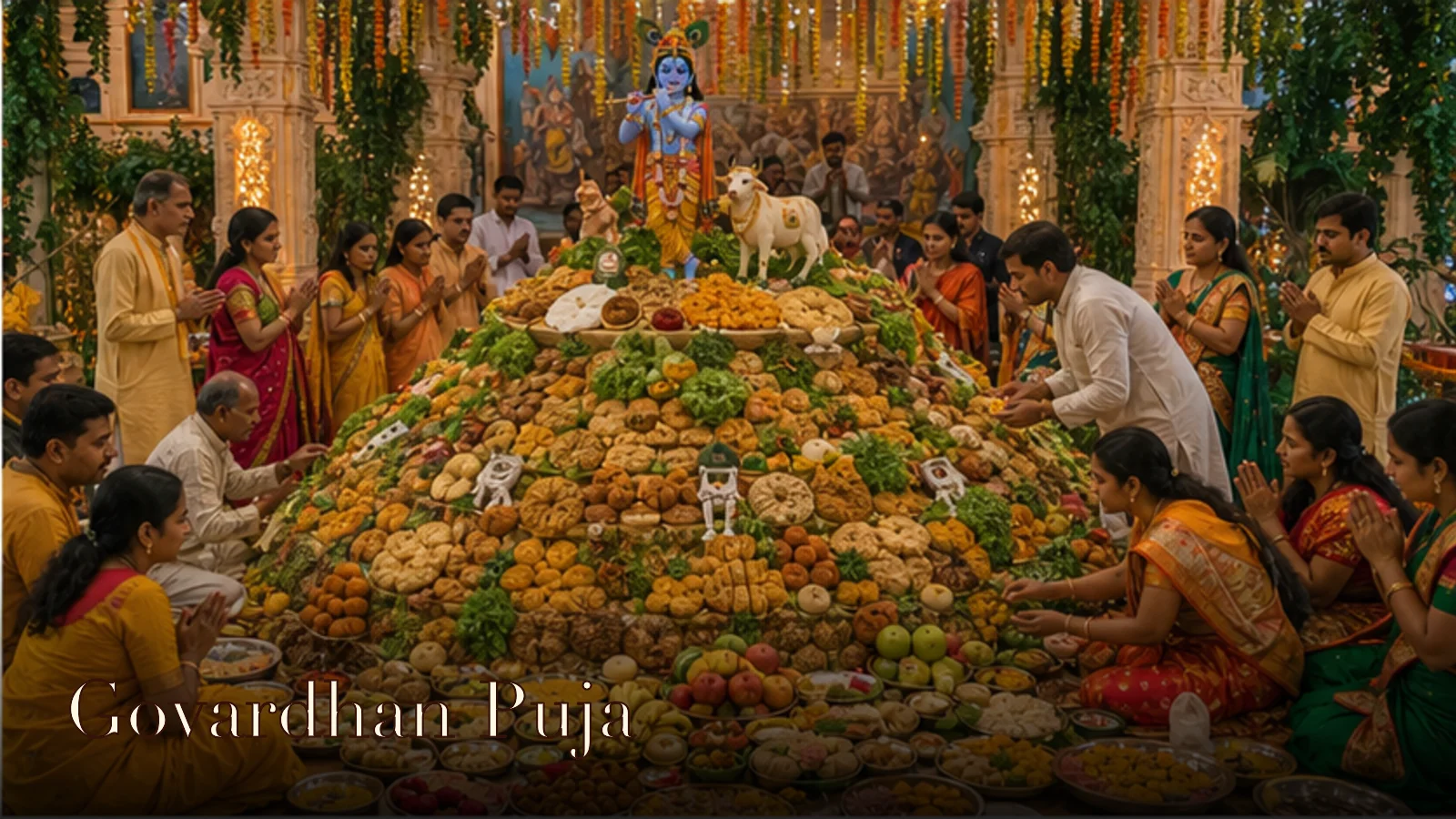
Most of the Govardhan Puja day falls next day after Diwali Puja and it is celebrated as the day when Lord Krishna defeated God Indra. Sometimes there might be one day gap between Diwali and Govardhan Puja. In religious texts, Govardhan Puja celebrations are suggested during Pratipada Tithi of Kartik month. Depending on starting of Pratipada, Govardhan Puja day might fall one day before on Amavasya day on Hindu calendar. Gowardhan Puja is also known as Annakut Puja. On this day food made of cereals like wheat, rice, curry made of gram flour and leafy vegetables is cooked and offered to Lord Krishna.
Deities worshipped on Govardhan Puja
Follow the links to explore each deity’s mantras, stories, and temples on Temples.bio.
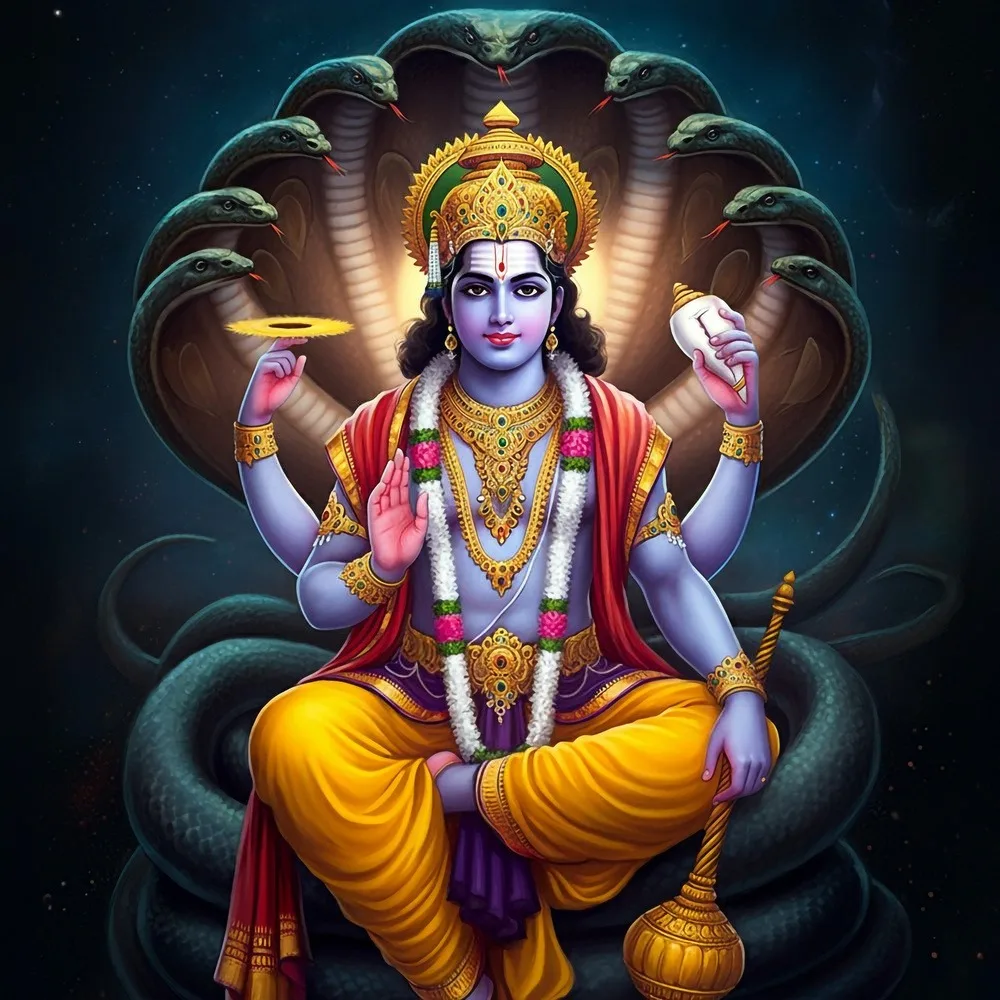
Lord Krishna
Divine hero who lifted Govardhan Hill and is offered Annakut
The Preserver of the Universe — the all-pervading Supreme Being who descends to Earth in divine avatars whenever righteousness declines and evil rises.
View deity →
Lord Vishnu
Krishna is the eighth avatar of Vishnu; Govardhan is a form of Vishnu
The Preserver of the Universe — the all-pervading Supreme Being who descends to Earth in divine avatars whenever righteousness declines and evil rises.
View deity →Govardhan Puja centers on Lord Krishna in one of His most celebrated heroic and protective roles:
Lord Krishna (Govardhandhari): On this day, Krishna is worshipped specifically in His form as Govardhandhari — the one who lifted Govardhan. Krishna is the eighth avatar of Lord Vishnu, born in Mathura but raised in Vrindavan. His childhood and youth in Vrindavan are the most beloved stories in Hindu devotion, and the Govardhan episode stands as the defining moment when He revealed His divine power and wisdom to His community. Krishna is offered the grand Annakut (Chappan Bhog) of 56 dishes on this day, compensating for the meals He skipped while protecting His devotees.
Lord Indra (in context): While Indra is not worshipped on this day — in fact, the festival commemorates redirecting worship away from him — his role is integral to the story. Indra represents the ego-driven exercise of power, and his ultimate surrender to Krishna teaches that even the king of gods must yield to pure bhakti and dharma.
Govardhan Hill (as deity): The hill itself is worshipped as a form of Krishna. Pilgrims at Govardhan (near Mathura, Uttar Pradesh) perform the 21-kilometer parikrama (circumambulation) of the hill barefoot on this day, touching the hill's sacred stones along the route.
Cows and Gomata: Cows are central to this festival as the beloved companions of Krishna and the living symbols of the Vrindavan pastoral life He protected.
How to celebrate Govardhan Puja 2026
In religious texts, Govardhan Puja celebrations are suggested during Pratipada Tithi of Kartik month. Depending on starting of Pratipada, Govardhan Puja day might fall one day before on Amavasya day on Hindu calendar. Gowardhan Puja is also known as Annakut Puja. On this day food made of cereals like wheat, rice, curry made of gram flour and leafy vegetables is cooked and offered to Lord Krishna. In Maharashtra the same day is celebrated as Bali Pratipada or Bali Padva. The day commemorates victory of Vamana, an incarnation of Lord Vishnu, over King Bali and subsequent pushing of Bali to Patal Lok (the underworld). It is believed that due to boon given by Lord Vamana, Asura King Bali visits the Prithvi Lok from the Patala Lok on this day.
Spiritual benefits
- Devotees who offer Annakut to Krishna with pure devotion receive His divine grace and protection in all worldly challenges, just as He protected the Vrindavan villagers.
- Worshipping cows on this day purifies the home, removes negative energies, and brings the blessings of Gomata — considered equivalent to worshipping all 33 crore devas.
- The festival deepens gratitude for nature's abundance, cultivating contentment, joy, and freedom from material anxiety.
- Performing Govardhan Puja is said to bestow the spiritual merit of circumambulating the sacred Govardhan Hill itself, even for those who cannot travel to Vrindavan.
- Families that perform this puja with the full 56-item offering are believed to never suffer from scarcity or food insecurity throughout the year.
- On the Vikram Samvat New Year (in Gujarat), Govardhan Puja blessings ensure prosperity, growth, and success in all new ventures begun in the coming year.
- The story of Govardhan teaches the triumph of dharma over adharma and of love over fear — internalizing this lesson brings inner strength and fearlessness to the devotee.
Mantras & sacred chants
ॐ नमो भगवते वासुदेवाय
(Om Namo Bhagavate Vasudevaya)
Meaning: Salutations to Lord Vasudeva (Krishna-Vishnu), the supreme being who dwells in the heart of all. This twelve-syllable mantra is the primary mantra chanted while offering each item of the Annakut.
गोवर्धन धराधर गोकुल त्राण कारण।
विष्णुबाहु कृत गोवर्धन नमोस्तु ते॥
(Govardhan Dharadhara Gokul Trana Karana / Vishnubahu Kruta Govardhan Namostute)
Meaning: Salutations to Govardhan Hill, held aloft by the divine arm of Vishnu (Krishna), the cause and protector of Gokul. This mantra is chanted while performing parikrama or while worshipping the Govardhan effigy.
हरे कृष्ण हरे कृष्ण कृष्ण कृष्ण हरे हरे।
हरे राम हरे राम राम राम हरे हरे॥
(Hare Krishna Hare Krishna Krishna Krishna Hare Hare / Hare Rama Hare Rama Rama Rama Hare Hare)
Meaning: This Maha-mantra is the most potent chant of the Vaishnava tradition, calling upon the energies of Krishna and Rama (both avatars of Vishnu). Chanting it continuously during the Annakut offering is considered supremely auspicious.
Govardhan Puja 2026 — FAQs
Govardhan Puja 2026 falls on November 9, on Kartik Shukla Pratipada — the day after Diwali.
Annakut means 'mountain of food'. It is the offering of 56 food items (Chappan Bhog) to Lord Krishna, compensating for the 8 meals He missed over 7 days while holding up Govardhan Hill to protect Vrindavan from Indra's rains.
Krishna lifted Govardhan Hill with His little finger to protect the villagers, cows, and animals of Vrindavan from the devastating rains sent by an enraged Lord Indra after Krishna redirected the villagers' worship away from Indra toward Govardhan Hill.
Chappan Bhog is the offering of 56 food items to Lord Krishna on Govardhan Puja. The number 56 represents 8 meals per day × 7 days Krishna fasted while holding up Govardhan Hill. The offerings include sweets, savory dishes, fruits, and dry fruits.
Bestu Varas is the Gujarati New Year, celebrated on the same day as Govardhan Puja (Kartik Shukla Pratipada). It marks the first day of the Vikram Samvat calendar, and businesses open new ledger books while families worship Lakshmi for prosperity.
Collect fresh cow dung and shape it into a long mound representing Govardhan Hill. Decorate it with wildflowers, leaves, and figurines of Krishna, Radha, cows, and cowherd boys. This effigy is then worshipped with tilak, flowers, and Annakut offerings.
The Govardhan Parikrama (circumambulation of Govardhan Hill near Mathura, UP) is approximately 21 kilometers. It is performed barefoot by devotees, and some perform the entire parikrama by prostrating at each step (dandavat parikrama) on this day.
No, Govardhan Puja is a separate festival celebrated the day after Diwali (on Kartik Shukla Pratipada). It is the fourth day of the 5-day Diwali festival cluster, which runs from Dhanteras to Bhai Dooj.