About Kali Puja
Last updated:
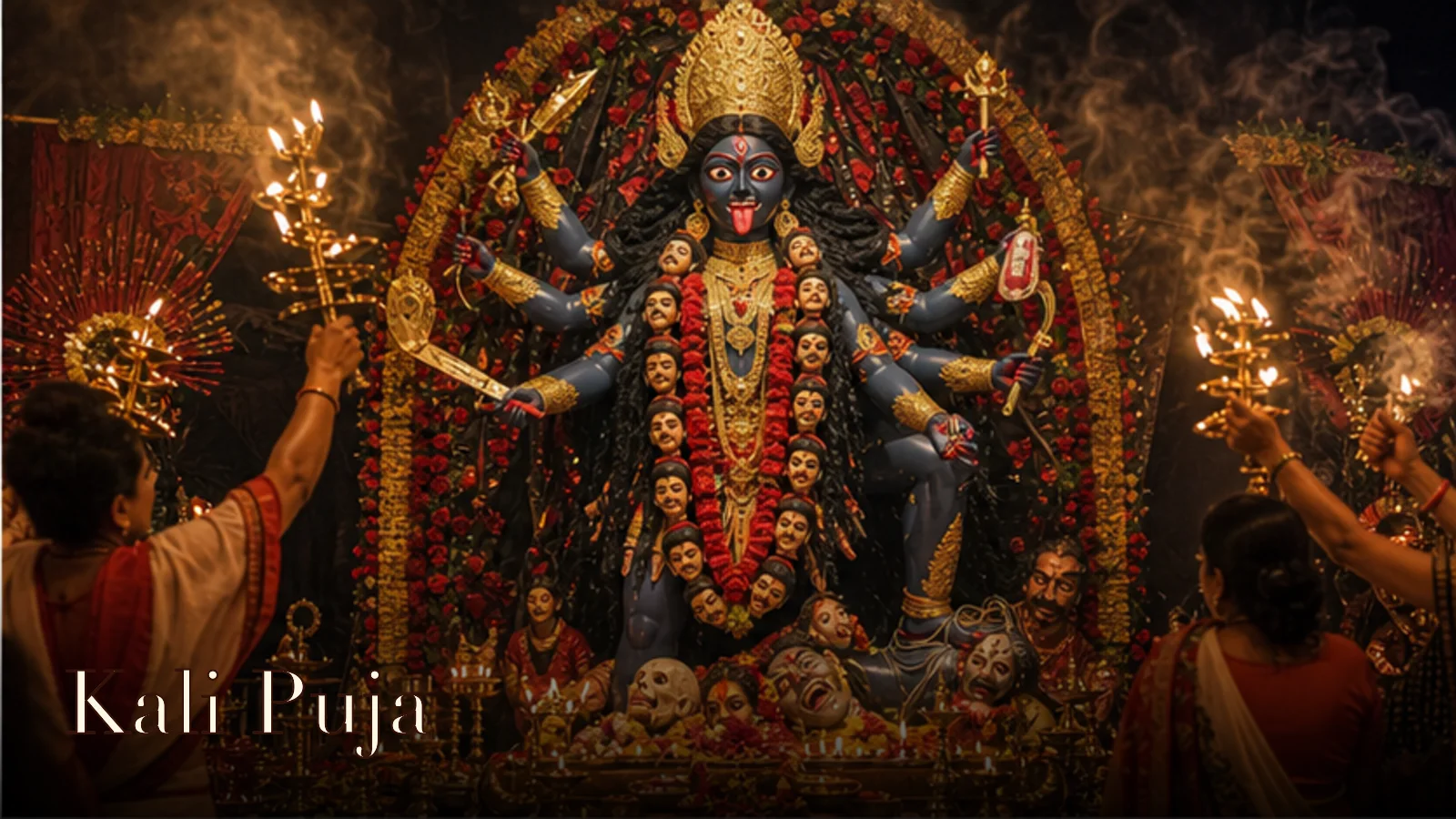
Kali Puja, also known as Shyama Puja, is one of the most significant and spiritually intense festivals of Bengal, Odisha, and Assam, celebrated on the Amavasya (new moon) night of the Kartik month. This festival falls on the same night as Diwali, and while much of worships Goddess Lakshmi on this moonless night, Bengal and eastern immerse themselves in the awe-inspiring worship of Goddess Kali, the dark mother, the destroyer of evil, and the liberator of souls. The juxtaposition of Kali's fierce, dark energy against Diwali's lights creates one of the most dramatic spiritual contrasts in the Hindu festival calendar. Kali Puja involves the creation of elaborate clay idols of the goddess — depicted as dark-skinned, wearing a garland of severed heads, with her tongue thrust out, standing on the prostrate form of Lord Shiva. These idols are installed in pandals (temporary shrines) across Bengal's towns and cities, and in home shrines, reaching their climax at midnight — the hour considered most sacred for Kali worship, as the goddess is believed to roam the earth and cremation grounds at midnight, liberating souls from the cycle of birth and death. After elaborate midnight puja, the idols are immersed in rivers and water bodies at dawn. The Kalighat Temple in Kolkata, one of the 51 Shakti Peethas, is the spiritual heart of Kali worship and draws enormous crowds during Kali Puja. Beyond Bengal, Kali Puja is celebrated with great devotion in Odisha, Assam, Bihar, and among Bengali communities worldwide. The festival is distinct from Durga Puja in its form — while Durga Puja is a public, elaborately organized ten-day festival, Kali Puja tends to be more intimate, tantric in nature, conducted at midnight, and often associated with the left-hand (Vama Marga) tantric traditions that see Kali as the ultimate liberating force.
Significance of Kali Puja
Kali Puja holds profound spiritual significance in the Shakta and tantric traditions of eastern . - Triumph Over Darkness: Kali Puja on the darkest night of the year (Kartik Amavasya) symbolizes that even in the deepest darkness, the divine light of consciousness (Kali as the primordial awareness) prevails — she is the darkness that destroys ignorance, not mere material darkness. - Tantric Power Night: Kartik Amavasya is considered the most potent night for tantric sadhana. The absence of moonlight removes all distractions, and Kali's energy is at its most accessible for those seeking direct spiritual contact with the Devi. - Liberation from Fear: Kali's fearsome form — skulls, severed heads, blood — is a deliberate teaching: she destroys the ego and all its fears, liberating the devotee from the ultimate fear of death. Worshipping Kali means confronting and transcending all fear. - Cosmic Time: Kali (from Sanskrit Kaal = time) is the goddess of time itself. Worshipping her acknowledges that all creation exists within the flow of time and will ultimately be consumed and transformed by it — a deeply philosophical recognition. - Shakti Peetha Power: Kalighat, where the toes of Goddess Sati fell, is one of the holiest Shakti Peethas. Kali Puja at this site amplifies the spiritual potency of worship manyfold. - Eastern Identity: For Bengal, Odisha, and Assam, Kali is not just a deity but a mother figure of extraordinary emotional intimacy. Kali Puja is the expression of this profound mother-child relationship between devotees and the Devi. - Duality Resolved: By worshipping Kali on Diwali night, eastern 's tradition acknowledges that light and darkness, creation and destruction, are two aspects of the same divine reality.
Deities worshipped on Kali Puja
Follow the links to explore each deity’s mantras, stories, and temples on Temples.bio.
Goddess Durga
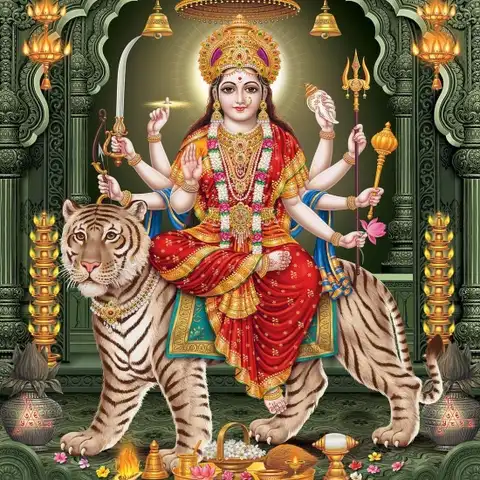
Kali emerged from Durga's third eye; both are forms of the supreme Shakti
The Invincible Mother Goddess — Supreme Feminine Power who destroys evil, protects the righteous, and embodies the divine energy of the entire universe.
View deity →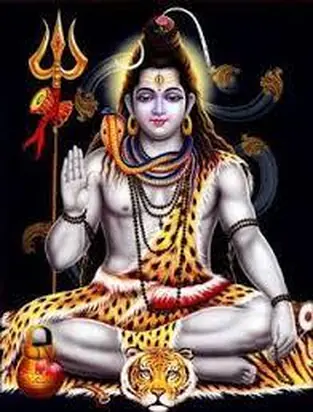
Lord Shiva
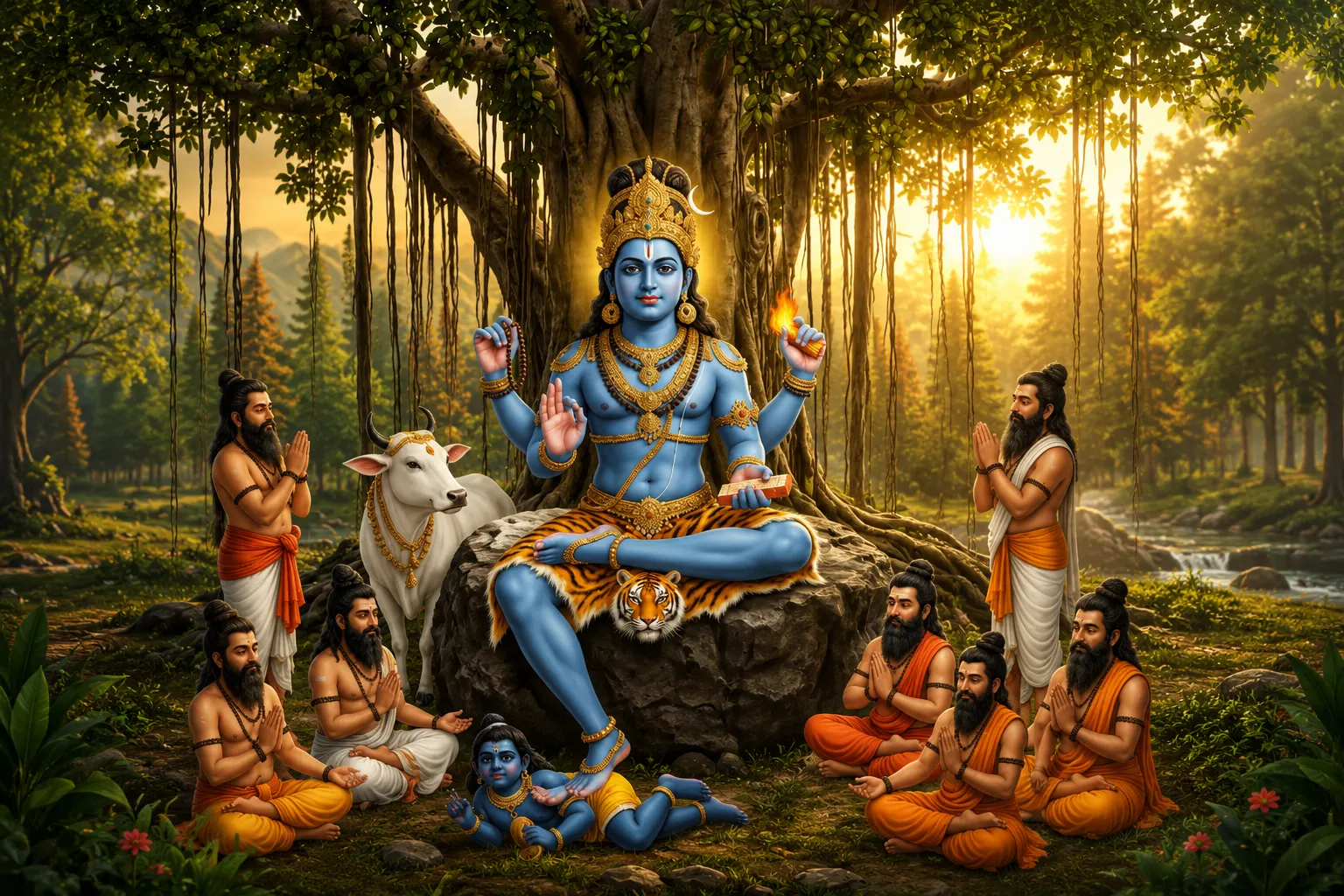
Lord Shiva as Bhairava, Kali's consort, on whom she stands — representing consciousness animated by Shakti
The Supreme Destroyer and Transformer of the Universe — The Adiyogi, Lord of Lords, and the First Yogi.
View deity →Goddess Kali is the supreme deity of Kali Puja — she is one of the most complex and profound deities in all of Hinduism. Kali is the primordial form of Shakti, representing time (Kaal), transformation, death, and ultimate liberation. She is depicted as dark-skinned or black (representing the void beyond all creation), wild-haired, with four arms holding a sword, a severed head, and showing gestures of protection and blessing. She wears a garland of 51 human skulls (representing the 51 letters of the Sanskrit alphabet, signifying her dominion over speech and knowledge), and her tongue is thrust out — variously interpreted as shame at stepping on Shiva, or as the consuming of all existence.
Kali stands on the prostrate form of Lord Shiva, representing that pure consciousness (Shiva) is inert without Shakti's dynamic energy — she is the active principle that animates the universe. In the Devi Mahatmya, Kali emerges from the third eye of Goddess Durga to destroy the demons Chanda and Munda, and later to slay the demon Raktabija by drinking his blood so that no new demon could spring from each drop. In the tantric tradition, Kali is the first and most powerful of the Dasa Mahavidyas (ten tantric goddesses), superior in power to all other forms. Lord Shiva is her consort, and he is said to be the only being who can calm her after battle, which is why she stops dancing when she realizes she is standing on him. Bhairava, the fierce tantric form of Shiva, is also closely associated with Kali worship at places like Kalighat.
How to celebrate Kali Puja 2026
How to Perform Kali Puja:
1. Begin preparations on the afternoon of Kartik Amavasya. Clean the puja space thoroughly.
2. Install the Kali idol or image (panchamundi asana — the traditional seat) in the designated puja area.
3. Perform Kalasha Sthapana (installation of sacred pot) with Ganga water, mango leaves, and coconut.
4. Conduct Prana Pratishtha (invoking life into the idol) with Vedic mantras if you have access to a priest.
5. Offer the Shodashopacharas (16 traditional offerings): avahana (invocation), asana (seat), padya (water for feet), arghya (water for hands), achamana (sipping water), snana (bath), vastra (cloth), yajnopavita (sacred thread offering), gandha (sandalwood), pushpa (flowers — red hibiscus is most sacred to Kali), dhupa (incense), dipa (lamp), naivedya (food offering), tambula (betel), dakshina (offering), and arati.
6. The midnight puja (Nishitha Puja) is the most sacred — perform this between 11:30 PM and 12:30 AM on Amavasya night.
7. Offer red hibiscus flowers, red sindoor, fish (in non-vegetarian traditions), sweets like khichdi and luchi.
8. Animal sacrifice (Bali) is traditionally practiced in some communities; vegetarians offer pumpkin, sugarcane, or banana as symbolic substitutes.
9. Recite the Kali Kavach, Mahakali Stotra, and Dasa Mahavidya stotras.
10. Perform Kali Arati at midnight and again at dawn before idol immersion.
11. On the following day, immerse the idol in a river or water body with proper ceremony.
Rituals & regional traditions
- Midnight Puja (Nishitha Puja): The most important ritual, conducted at midnight when Kali's power is said to peak — priests and devotees perform elaborate rituals at Kalighat and household shrines through the night.
- Clay Idol Installation: Elaborate Kali idols made by master artisans are installed in community pandals and homes — Kolkata's Kali Puja pandals rival Durga Puja in artistic elaboration.
- Bali (Offering): Traditional animal sacrifice (goat) is practiced at Kalighat and certain temples; vegetarian substitutes (pumpkin, banana) are widely used in modern practice.
- Red Hibiscus Offering: Jaba (red hibiscus) flowers are Kali's most beloved offering — thousands are offered at temples and home shrines throughout the night.
- Aghori and Tantric Sadhana: Cremation grounds (shamshans) across Bengal see tantric practitioners performing specialized Kali sadhana on this night, considered the most powerful time for such practices.
- Community Pandals: Like Durga Puja, community organizations install large Kali idols in illuminated pandals, drawing crowds for darshan throughout the night.
- Idol Immersion (Visarjan): On the day after Kali Puja (or the following morning), idols are immersed in the Hooghly river and other water bodies in colorful processions.
- Diwali Parallel: While Kali Puja is observed, many Bengali families also light diyas and burst fireworks in the Diwali tradition — creating a unique dual celebration.
Spiritual benefits
- Fearlessness: Worshipping Kali destroys the root fear — fear of death — granting the devotee profound courage and equanimity in all circumstances.
- Liberation (Moksha): Kali is the goddess of liberation; sincere devotion to her is said to accelerate the soul's journey toward ultimate spiritual freedom.
- Protection from evil: Kali's power to destroy demons makes her the supreme protector against black magic, evil eye, and malevolent forces.
- Transformation: Kali's energy dissolves old patterns, toxic attachments, and ego structures, enabling radical personal transformation.
- Mother's unconditional love: Behind Kali's fierce form lies the most unconditional maternal love — devotees experience her as the most accessible and compassionate of all deities.
- Tantric awakening: For spiritual practitioners, Kali Puja on this night is believed to accelerate the awakening of Kundalini Shakti and deepen meditative states.
- Victory over time and death: Meditating on Kali as the goddess of time grants acceptance of impermanence and reduces anxiety about aging, loss, and mortality.
Mantras & sacred chants
Mantra 1 — Kali Moola Mantra:
Sanskrit: ॐ क्रीं कालिकायै नमः
Transliteration: Om Krim Kalikayai Namah
Meaning: Salutation to Goddess Kali with her seed mantra Krim — this is the primary mantra for Kali worship, invoking her transformative power to destroy ego and grant liberation.
Mantra 2 — Mahakali Ashtakam verse:
Sanskrit: करालवदनां घोरां मुक्तकेशीं चतुर्भुजाम्। कालिकां दक्षिणां दिव्यां मुण्डमालाविभूषिताम्।।
Transliteration: Karavadanam Ghoram Muktakeshim Chaturbhujam, Kalikam Dakshinam Divyam Mundamalavibhushitam
Meaning: I meditate on the terrifying-faced, fearsome, wild-haired, four-armed, divine Goddess Kali adorned with a garland of skulls — who stands in the south (direction of death) and bestows liberation.
Mantra 3 — Kali Dhyana Mantra for Midnight Puja:
Sanskrit: ॐ जयंती मंगला काली भद्रकाली कपालिनी। दुर्गा क्षमा शिवा धात्री स्वाहा स्वधा नमोस्तुते।।
Transliteration: Om Jayanti Mangala Kali Bhadrakali Kapalini, Durga Kshama Shiva Dhatri Swaha Swadha Namostute
Meaning: Salutations to the victorious, auspicious Kali, Bhadrakali, the skull-bearer, Durga, the forgiving, Shiva, the nourisher — we offer svaha and svadha (sacrificial offerings) to you.
Kali Puja 2026 — FAQs
Kali Puja 2026 falls on November 8, 2026, which is Kartik Amavasya (the new moon night of the Kartik month). This is the same night as Diwali 2026. The most sacred worship takes place at midnight (Nishitha Puja) on this date.
Kali Puja and Diwali fall on the same Kartik Amavasya (new moon night). While most of India worships Goddess Lakshmi on this night, Bengal and eastern India worship Goddess Kali. Both traditions use the darkest night of the year — Lakshmi representing prosperity's light, Kali representing the power that conquers darkness itself.
Shyama Puja is another name for Kali Puja. Shyama (meaning dark or black) is one of Kali's most affectionate names in Bengali devotional tradition. The term Shyama Puja emphasizes the intimate, motherly aspect of Kali rather than her fierce warrior form.
Kali is worshipped at midnight because she is believed to roam cremation grounds and the earth at this hour, liberating souls trapped in the cycle of rebirth. Midnight on Amavasya (no moon) is the most powerful time for Kali sadhana, tantric practices, and direct spiritual contact with the Devi.
Red hibiscus (jaba) flowers are Kali's most sacred offering. Traditional offerings include fish, rice preparations (khichdi, luchi), sweets, and in traditional settings, animal sacrifice (bali) — typically goat. Modern and vegetarian devotees substitute pumpkin, banana, or sugarcane for bali.
Durga Puja is a 10-day public festival in Ashwin month celebrating Durga's victory over Mahishasura, with enormous community pandals and cultural programs. Kali Puja is a single-night midnight worship in Kartik month focused on Kali's more fierce and tantric aspects, with greater intimacy, smaller gatherings, and stronger Vama Marga (left-hand tantric) traditions.
Kalighat Temple in Kolkata, one of the 51 Shakti Peethas, sees enormous crowds during Kali Puja. The temple performs special midnight puja with elaborate rituals, animal sacrifice, and the distinctive Kalighat style of worship. Devotees queue through the night for darshan of the ancient stone idol.
No, while Bengal is the primary center, Kali Puja is also widely celebrated in Odisha, Assam, Bihar, and Jharkhand. Bengali communities across India and the world observe it with great devotion. The Kamakhya Temple in Assam and various Kali temples across eastern India also hold major Kali Puja celebrations.