About Makar Sankranti
Last updated:
Makar Sankranti is one of the few Hindu festivals that follows the solar calendar rather than the lunar calendar, which is why it falls on January 14 almost every year (occasionally January 15 in leap year cycles). The festival marks the precise astronomical moment when the Sun (Surya) transitions from Sagittarius (Dhanu) into Capricorn (Makara) — a zodiac shift of tremendous spiritual significance in Vedic astrology. This transition also marks the beginning of Uttarayan, the six-month northward journey of the Sun, which is considered the most auspicious half of the year in Hindu tradition.
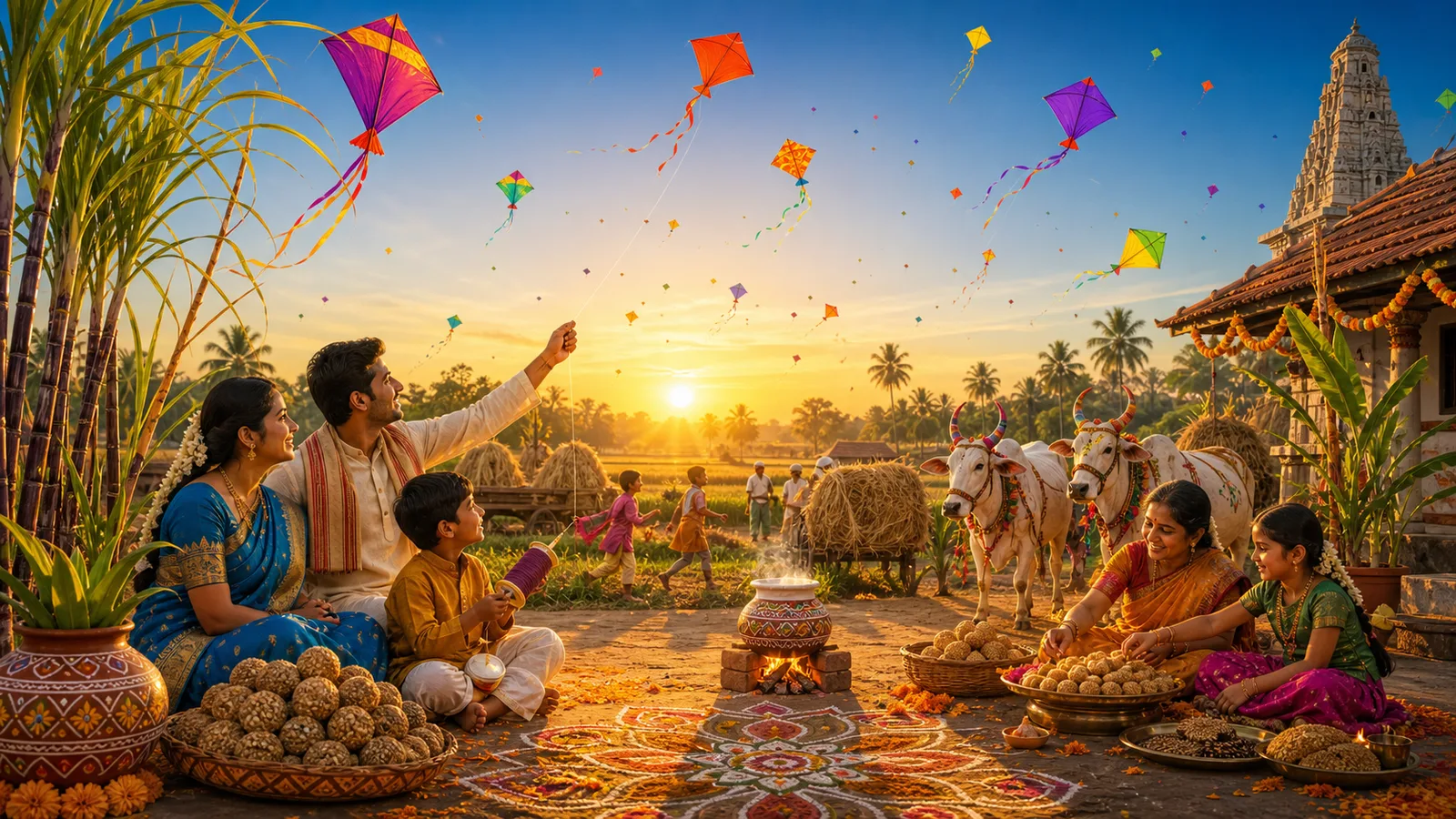
Makar Sankranti is celebrated across virtually every state in India, though under different regional names and with different customs. In Gujarat and Rajasthan, the skies come alive with millions of kites as families and neighbourhoods compete in friendly kite-flying battles from rooftops. In Maharashtra, people exchange til-gul (sesame and jaggery sweets) with the phrase "Til gul ghya, god god bola" (Take sesame-jaggery, speak sweetly). In Punjab and Haryana, the preceding evening is celebrated as Lohri with bonfires and Bhangra. In Andhra Pradesh and Telangana, it is Sankranti — a multi-day harvest festival. In Tamil Nadu it is Pongal. In Assam it is Bhogali Bihu. Despite the diversity of names and customs, the unifying thread is gratitude to the Sun God and the celebration of harvest abundance.
For pilgrims and spiritual seekers, Makar Sankranti holds special significance as one of the most powerful days for holy bathing (snan) at sacred rivers. Millions converge at Prayagraj (Allahabad), Haridwar, Varanasi, Nashik, and other riverbank tirthas to take a dawn dip in the Ganga, Yamuna, or Godavari, believing that a bath on this day is equivalent to the merit of countless ordinary sacred baths. During Kumbh Mela years, the Makar Sankranti Shahi Snan (royal bath) draws tens of millions of pilgrims in a single day, making it one of the largest human gatherings on Earth.
Significance of Makar Sankranti
Spiritual and Cultural Significance of Makar Sankranti
Makar Sankranti is charged with astronomical, agricultural, and spiritual significance:
- Uttarayan Begins: The Sun's northward journey (Uttarayan) commences on this day. The Bhagavad Gita (Chapter 8) declares that those who depart during Uttarayan attain moksha — making this six-month period sacred for all spiritual endeavours.
- Solar Transition: The Sun's entry into Makar (Capricorn) is a precise astronomical event. Surya's movement from Dhanu (Sagittarius) to Makar is a cosmic reset point marking the gradual lengthening of days and the victory of light over darkness.
- Harvest Thanksgiving: Makar Sankranti is fundamentally a harvest festival across India — a time to thank Surya (Sun) and the earth for the rabi (winter) crop harvest, particularly sesame (til), sugarcane, rice, and wheat.
- Sacred Bathing Merit: A holy dip in the Ganga, Yamuna, or any sacred river on Makar Sankranti is believed to cleanse accumulated sins of many lifetimes, purify the subtle body, and grant liberation (moksha).
- Kumbh Mela Connection: During Kumbh Mela (Prayagraj), Makar Sankranti hosts the first and most auspicious Shahi Snan — the Royal Bath — attended by millions of sadhus, saints, and pilgrims.
- Donation (Daan) Amplified: Giving tilgul, blankets, warm clothing, food, and sesame-based items to the poor on Makar Sankranti is believed to generate exceptional spiritual merit, as acts of charity during solar transitions are considered especially powerful.
- Victory of Light: As days grow longer after winter solstice, Makar Sankranti symbolises the triumph of light, warmth, and growth — themes central to the Hindu understanding of cosmic order (Rita).
Deities worshipped on Makar Sankranti
Follow the links to explore each deity’s mantras, stories, and temples on Temples.bio.
Surya — The Solar Deity of Makar Sankranti
Surya, the Sun God, is the supreme deity of Makar Sankranti. In Vedic cosmology, Surya is not merely a physical star but the visible manifestation of the Divine — the source of all consciousness, energy, and life. Surya is praised in the Rigveda as Savitri (the life-giver), Aditya (son of infinity), Bhaskara (the illuminator), and Vivasvan (the brilliant one). The Aditya Hridayam, a powerful hymn from the Valmiki Ramayana, extols Surya as the embodiment of all gods and is traditionally recited on Makar Sankranti.
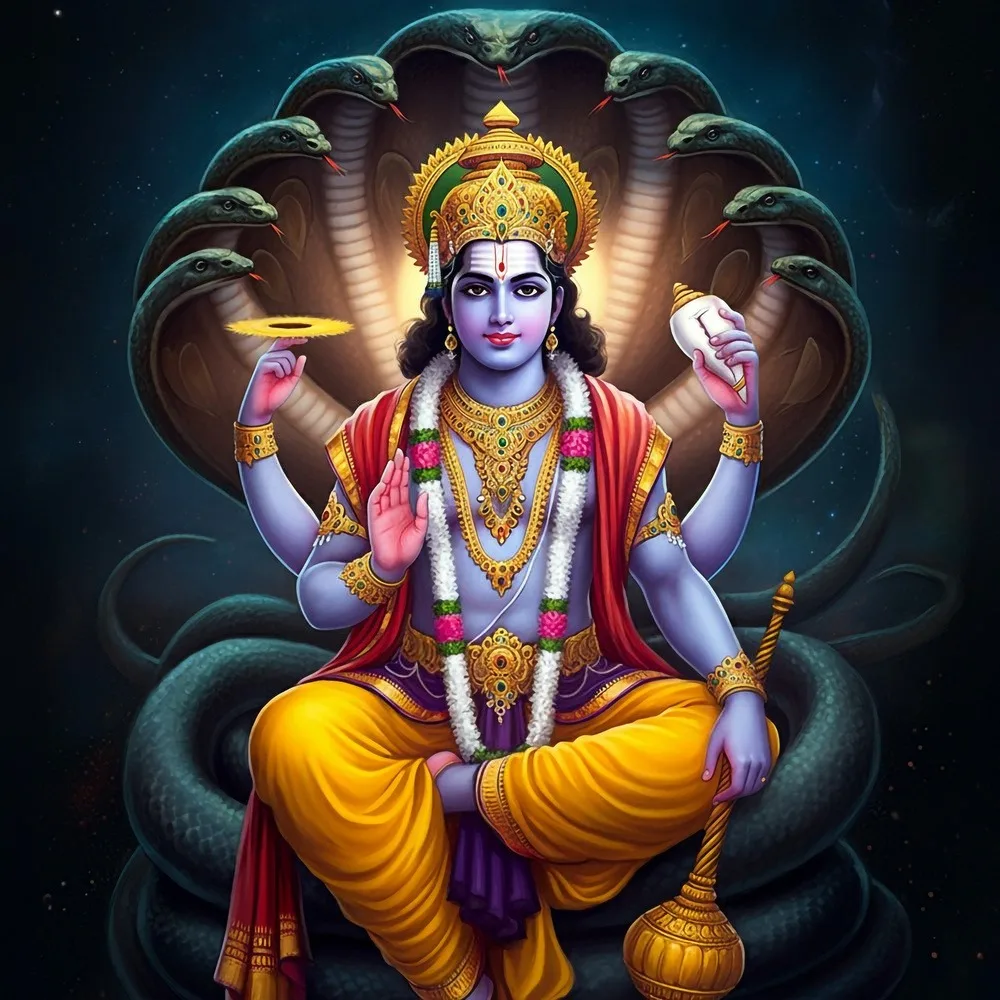
Vishnu's connection: In Vaishnava tradition, Makar Sankranti is also associated with Vishnu, as Uttarayan is described in the Mahabharata as Vishnu's half-year — the period during which the cosmos is under Vishnu's direct benevolent influence. Bhishma Pitamah famously waited on a bed of arrows for Uttarayan to begin before departing his mortal body, seeking the liberation that this period promises.
Shani (Saturn): In Vedic astrology, Capricorn (Makar) is ruled by Shani (Saturn), who is also the son of Surya. Makar Sankranti is thus considered auspicious for propitiating Shani and resolving Saturn-related karmic challenges through oil lamps, sesame donations, and Shani Stotram chanting.
How to celebrate Makar Sankranti 2026
How to Celebrate Makar Sankranti — Puja and Ritual Guide
1. Wake Up Before Sunrise: Rise early (Brahma Muhurta, 4–6 am) and complete your morning ablutions.
2. Holy Bath (Snan): If near a river, lake, or sacred waterbody, take a bath in the open water before sunrise. At home, add sesame seeds and a few drops of Ganga jal to your bath water. Chant "Om Suryaya Namah" while bathing.
3. Surya Arghya (Offering Water to the Sun): After bathing, stand facing east. Fill a copper vessel (lota) with clean water, add red flowers (hibiscus or rose), red sandalwood, and raw rice. Pour the water slowly towards the rising sun, forming a stream through which you can see the sun's disc. Chant the Surya Namaskar mantra twelve times (one for each solar name).
4. Light a Lamp: Light a ghee lamp (diya) and incense before your home altar. Place an image or idol of Surya Bhagavan.
5. Offer Til-Gul and Sugarcane: Offer sesame (til) seeds, jaggery (gul), sugarcane pieces, and seasonal fruits to Surya. These items represent the harvest and sweetness of the season.
6. Chant Aditya Hridayam: Recite the Aditya Hridayam (27 verses from Valmiki Ramayana) in full. Alternatively, chant the Surya Gayatri Mantra 108 times.
7. Perform Charity (Daan): Give til-gul, blankets, warm clothing, or food to Brahmins, sadhus, and the poor. This is considered the most meritorious act of the day.
8. Kite Flying (Gujarat/Rajasthan): Participate in kite flying with family — the custom symbolises sending prayers skyward to the Sun.
9. Feast: Prepare and eat traditional Sankranti foods — khichdi (rice and lentils), til ladoo, gajak, chikki, Pongal (in the South), and sugarcane.
10. Visit Temple: Visit a Surya temple or any local temple for darshan and special Makar Sankranti abhishekam.
Rituals & regional traditions
Regional Customs and Traditions of Makar Sankranti
- Gujarat and Rajasthan — Uttarayan Kite Festival: The entire state turns into a sky full of kites from dawn to dusk. International kite festivals are held in Ahmedabad. The night before (January 13) is celebrated as Lohri-equivalent with bonfires.
- Maharashtra — Til-Gul Exchange: People visit neighbours and relatives exchanging til-gul (sesame-jaggery sweets) with the greeting "Til gul ghya, god god bola" ("Take sesame-jaggery and speak sweetly") — a call for harmony and sweetness in relationships.
- Punjab and Haryana — Lohri (January 13): The evening before Makar Sankranti is celebrated as Lohri with massive bonfires, Bhangra dancing, and offerings of popcorn, peanuts, and sugarcane into the fire.
- Prayagraj — Holy Dip at Triveni Sangam: Millions of pilgrims converge at the Sangam (confluence of Ganga, Yamuna, and Saraswati) for the sacred Makar Sankranti snan, believed to grant liberation.
- Andhra Pradesh and Telangana — Sankranti (4 days): A four-day festival with Bhogi (bonfire), Sankranti (main day), Kanuma (cattle worship), and Mukkanuma, featuring Haridasu (wandering devotional singers) and Gobbemmalu (clay cow figurines).
- Assam — Bhogali Bihu: Community feasts (Bhelaghar), meji bonfires, and traditional games mark this harvest festival.
- Uttar Pradesh and Bihar — Khichdi Parva: Khichdi (rice and lentil porridge) is the traditional food; the day is also called Khichdi and sacred bathing at the Ganga is paramount.
- West Bengal — Gangasagar Mela: Hundreds of thousands of pilgrims travel to Sagar Island at the mouth of the Ganga for the Gangasagar Mela holy dip, considered especially meritorious.
Spiritual benefits
Spiritual Benefits of Makar Sankranti Observances
- Solar Energy Activation: The precise moment of Surya's entry into Makar is believed to unleash a special surge of solar (pranic) energy — meditating and chanting at this time is said to dramatically amplify spiritual progress.
- Karmic Purification: A sacred bath in the Ganga or any river on Makar Sankranti is described in the Puranas as capable of washing away the accumulated sins of many lifetimes in one immersion.
- Moksha Grace: As Uttarayan commences, the path to moksha (liberation) opens more widely. Spiritual practices undertaken during Uttarayan are considered to generate double the merit compared to Dakshinayan (southward journey).
- Health and Vitality: Worshipping Surya and consuming sesame-based foods on Makar Sankranti is believed to strengthen the immune system, improve eyesight, and energise the body for the coming year.
- Financial and Agricultural Prosperity: Performing Surya puja and charitable donations (daan) on this day is believed to attract material abundance, good harvests, and business success.
- Harmony in Relationships: The Maharashtra tradition of exchanging til-gul carries a spiritual teaching — sweetness in speech creates sweetness in relationships and dissolves past conflicts.
- Ancestral Blessings: Performing tarpan (water offering) for ancestors on Makar Sankranti is believed to satisfy the departed souls and earn their blessings for the living family members.
- Shani Dosha Relief: Since Capricorn is Shani's domain, propitiating Saturn through sesame donations, oil lamps, and Shani mantras on this day is believed to mitigate malefic Saturn influences in one's horoscope.
Mantras & sacred chants
Mantras and Chants for Makar Sankranti
1. Surya Namaskar Mantra (12 Names of the Sun)
Sanskrit: ॐ मित्राय नमः। ॐ रवये नमः। ॐ सूर्याय नमः। ॐ भानवे नमः। ॐ खगाय नमः। ॐ पूष्णे नमः। ॐ हिरण्यगर्भाय नमः। ॐ मरीचये नमः। ॐ आदित्याय नमः। ॐ सवित्रे नमः। ॐ अर्काय नमः। ॐ भास्कराय नमः।
Transliteration: Om Mitraya Namah. Om Ravaye Namah. Om Suryaya Namah. Om Bhanave Namah. Om Khagaya Namah. Om Pushne Namah. Om Hiranyagarbhaya Namah. Om Marichaye Namah. Om Adityaya Namah. Om Savitre Namah. Om Arkaya Namah. Om Bhaskaraya Namah.
Meaning: Salutations to the Sun by his twelve sacred names — Friend of All, the Radiant One, the Bright Light, the Illuminator, the Sky-Wanderer, the Nourisher, the Golden Womb, the Ray of Light, the Son of Aditi, the Life-Giver, the Shining One, the Maker of Light.
2. Surya Gayatri Mantra
Sanskrit: ॐ भास्कराय विद्महे महाद्युतिकराय धीमहि। तन्नो आदित्यः प्रचोदयात्।।
Transliteration: Om Bhaskaraya Vidmahe Mahadyuteekaraya Dheemahi. Tanno Adityah Prachodayat.
Meaning: We meditate upon Bhaskara, the maker of great radiance. May Aditya (the Sun) inspire and enlighten our intellect.
3. Makar Sankranti Daan Sankalpa Mantra
Sanskrit: ॐ सूर्याय नमः। तिलदानं समर्पयामि।
Transliteration: Om Suryaya Namah. Tiladanam Samarpayami.
Meaning: Salutations to Surya. I offer this donation of sesame in your honour. (Recited while giving til-gul, blankets, or food in charity.)
Makar Sankranti 2026 — FAQs
Makar Sankranti 2026 falls on January 14. It is a solar festival marking the Sun's entry into Capricorn (Makar Rashi), which occurs on January 14 every year. The auspicious Punya Kala for bathing and charity typically begins at sunrise on January 14.
Makar Sankranti marks the beginning of Uttarayan — the Sun's six-month northward journey — which the Bhagavad Gita identifies as the most auspicious period for spiritual practice and liberation. It is also a harvest thanksgiving festival and one of the most powerful days for sacred bathing (Ganga snan) and charity (daan).
Kite flying is a tradition associated especially with Gujarat and Rajasthan where the festival is called Uttarayan. The kites represent the soul's aspiration to rise towards the sun (Surya) and the divine. It is also a joyful community activity that brings families and neighbours together on rooftops. The International Kite Festival in Ahmedabad is held every January 14.
Til-gul are sweets made from sesame seeds (til) and jaggery (gul), traditionally exchanged in Maharashtra on Makar Sankranti. The accompanying phrase 'Til gul ghya, god god bola' means 'Take sesame-jaggery and speak sweetly.' Sesame is associated with Surya and warmth; jaggery symbolises sweetness; together they represent the wish for warm, sweet relationships in the new solar year.
Taking a sacred bath in the Ganga, Yamuna, Godavari, or any river on Makar Sankranti is described in Hindu scriptures as exceptionally meritorious — equal to the merit of bathing on thousands of ordinary sacred days. The most auspicious location is the Triveni Sangam at Prayagraj. During Kumbh Mela years, the Makar Sankranti Shahi Snan draws tens of millions of pilgrims.
Traditional Sankranti foods include til ladoo (sesame balls), gajak (sesame-jaggery brittle), chikki (peanut-jaggery), khichdi (rice and lentils), sugarcane, and jaggery. Sesame is especially important as it is associated with Surya and believed to generate warmth and vitality during winter. In Tamil Nadu, sweet Pongal rice is the signature dish.
During Kumbh Mela (held at Prayagraj every 12 years and Ardh Kumbh every 6 years), Makar Sankranti marks the first and most auspicious Shahi Snan (Royal Bath). Millions of saints, sadhus, and pilgrims gather at the Triveni Sangam on this day for a mass sacred bath, making it one of the largest single-day human gatherings in history.
Sesame (til) donation is the most important Makar Sankranti daan — giving til-gul to Brahmins, sadhus, and the poor is considered highly meritorious. Blankets and warm clothing given to the needy on this winter day are also considered very auspicious. Additionally, donating khichdi, jaggery, and oil lamps to temples earns significant spiritual merit according to the Dharmashastra texts.