About Navratri
Last updated:
Navratri, meaning "nine nights" in Sanskrit, is one of the most sacred and widely celebrated Hindu festivals, observed four times a year but most grandly during Sharad Navratri in the autumn month of Ashwin. The festival honours Goddess Durga in her nine magnificent manifestations, collectively known as Navadurga, symbolising the triumph of divine feminine power over evil. Across India, millions of devotees fast, pray, sing devotional hymns, and participate in vibrant cultural gatherings that transform neighbourhoods into celebrations of light, colour, and devotion. In 2026, Sharad Navratri begins on 21 October and concludes on 30 October, culminating in the auspicious Vijayadashami (Dussehra).
Each of the nine nights is dedicated to a specific form of the Goddess: Shailaputri, Brahmacharini, Chandraghanta, Kushmanda, Skandamata, Katyayani, Kalaratri, Mahagauri, and Siddhidatri. Devotees perform special pujas for each form, decorate altars with fresh flowers and lamps, and chant the Durga Saptashati — 700 verses from the Markandeya Purana that extol the glory of the Divine Mother. The recitation of these verses over nine nights is considered immensely powerful, purifying the mind and home while invoking the Goddess's protective grace.
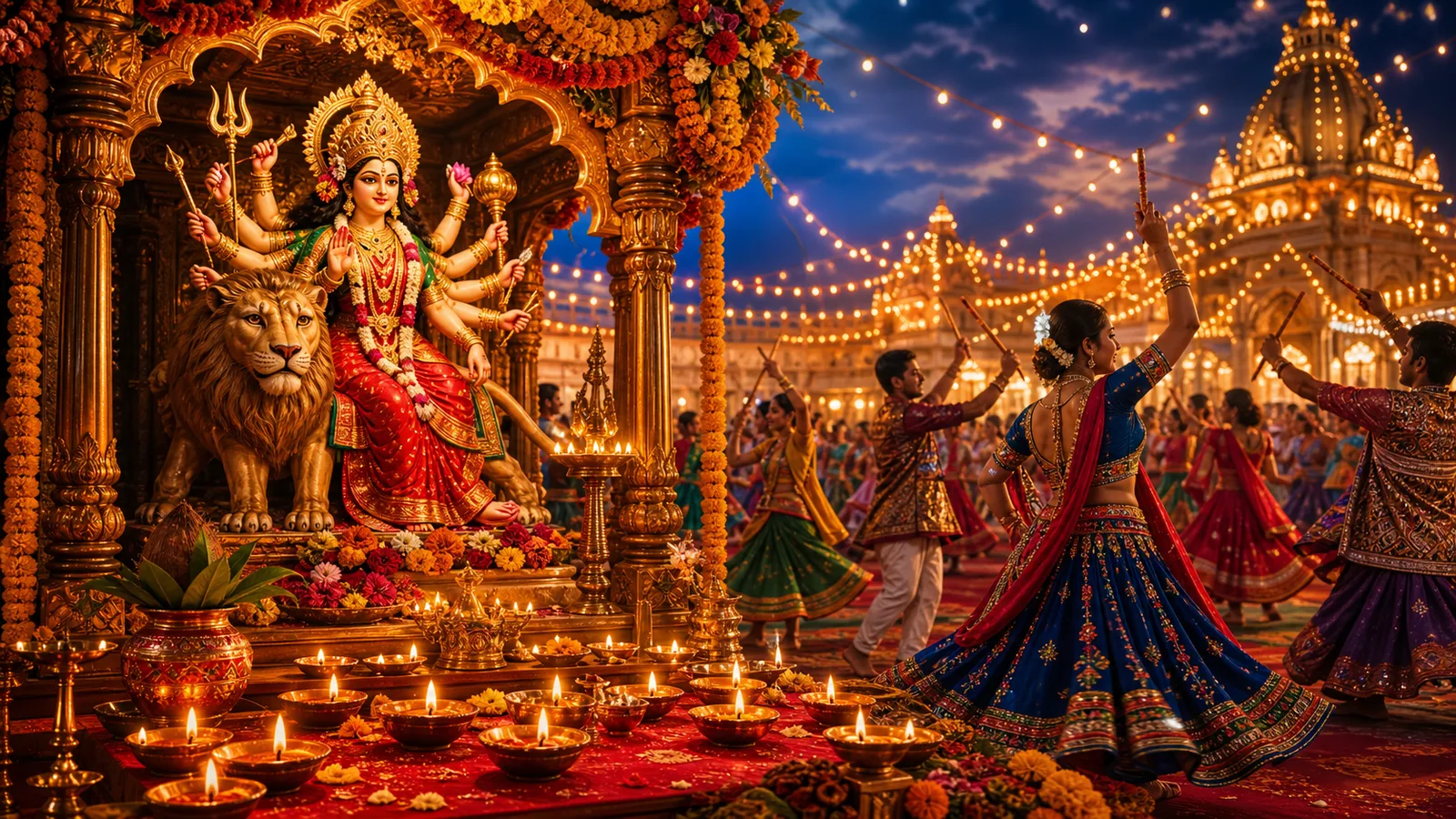
Regionally, Navratri wears many faces. In Gujarat, the festival is synonymous with the electrifying garba and dandiya raas dances performed in massive open-air venues where thousands of participants dressed in traditional chaniya choli and kediya twirl through the night in concentric circles around an image or lamp representing the Goddess. In West Bengal, Navratri merges seamlessly into Durga Puja, with elaborate clay idols installed in community pandals. In North India, Ramlila performances dramatise the Ramayana, and the festival ends with the symbolic burning of Ravana's effigy. In South India, the Golu or Bommai Kolu tradition involves arranging dolls on stepped platforms to celebrate the victory of good over evil. No matter the form it takes, Navratri remains a time of collective joy, spiritual renewal, and deep reverence for the Divine Mother's boundless compassion and power.
Significance of Navratri
Navratri holds profound spiritual, cultural, and cosmic significance in the Hindu tradition:
Cosmic Victory of Good over Evil: The festival commemorates the Goddess Durga's nine-night battle against the buffalo demon Mahishasura, culminating in his defeat on Vijayadashami. This narrative is a timeless metaphor for the human soul's struggle to overcome ignorance, ego, and negativity through the power of divine grace.
Celebration of the Divine Feminine (Shakti): Navratri is the preeminent festival of Shakti — the primal cosmic energy that animates all creation. Worshipping the Goddess in her nine forms acknowledges that the universe is sustained by feminine power in its creative, nurturing, and protective aspects.
Seasonal and Agricultural Significance: Sharad Navratri falls at the juncture of the harvest season, and the fasting and feasting associated with it mark gratitude for the earth's abundance. It is also seen as a transition point between the rainy and winter seasons, a liminal time when cosmic energies are especially potent.
Purification and Renewal: The nine days of fasting, prayer, and celibacy are designed to purify the body and mind, reduce attachment to sensory pleasures, and redirect energy toward spiritual practice. Many devotees undertake Akhand Jyoti — keeping a lamp burning continuously — as an act of vigil and surrender.
Community and Cultural Cohesion: Navratri brings entire communities together in shared worship and dance. The garba circle is itself a spiritual symbol — dancers rotating around a central lamp representing the Goddess, enacting the cosmic dance of life around the divine source.
Deities worshipped on Navratri
Follow the links to explore each deity’s mantras, stories, and temples on Temples.bio.
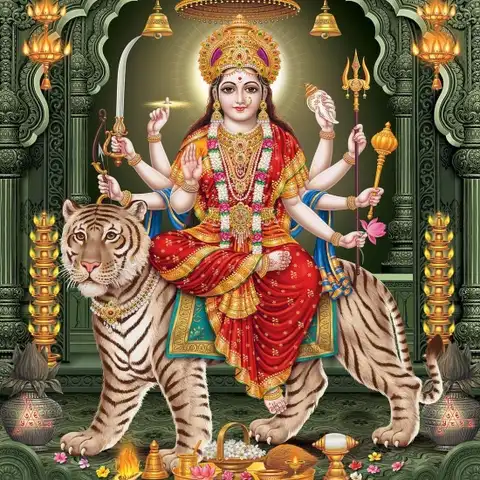
Goddess Durga
Supreme deity of Navratri, worshipped in nine forms as Navadurga
The Invincible Mother Goddess — Supreme Feminine Power who destroys evil, protects the righteous, and embodies the divine energy of the entire universe.
View deity →
Goddess Saraswati
Worshipped on Navami (Saraswati Puja) as the Goddess of learning and arts
The Invincible Mother Goddess — Supreme Feminine Power who destroys evil, protects the righteous, and embodies the divine energy of the entire universe.
View deity →
Goddess Lakshmi
Invoked on the eighth day for prosperity and abundance
The Invincible Mother Goddess — Supreme Feminine Power who destroys evil, protects the righteous, and embodies the divine energy of the entire universe.
View deity →Goddess Durga is the supreme deity of Navratri. She is the warrior goddess born from the combined energy (tejas) of all the male deities — Brahma, Vishnu, and Shiva — who were unable to defeat the demon Mahishasura individually. Armed with weapons gifted by each god and riding a lion, Durga embodies unstoppable divine power and maternal protection.
The nine forms of Navadurga each represent a distinct aspect of the Goddess: Shailaputri (daughter of the Himalayas, first form, rides a bull); Brahmacharini (the ascetic, embodies penance and renunciation); Chandraghanta (adorned with a crescent bell, destroys evil); Kushmanda (creator of the cosmic egg, source of all energy); Skandamata (mother of Kartikeya, embodies motherly love); Katyayani (fierce warrior form, slayer of Mahishasura); Kalaratri (the darkest form, destroyer of ignorance); Mahagauri (pure white form, grants peace and forgiveness); Siddhidatri (bestower of all siddhis or supernatural powers, worshipped by gods and sages alike).
Lord Rama is also invoked during Navratri in North India, as he worshipped Goddess Durga before his battle against Ravana, and his victory on Vijayadashami links the festival to the Ramayana tradition.
How to celebrate Navratri 2026
Follow this day-by-day guide for a complete Navratri puja at home:
1. Kalash Sthapana (Day 1 — Pratipada): On the first morning, purify the puja space and install a copper or clay kalash (sacred pot) filled with water, adorned with mango leaves and a coconut. Place it on a mound of sand or soil in which barley seeds (jau) are sown. This kalash represents the Goddess and the seeds symbolise prosperity. Light an Akhand Jyoti (unbroken lamp) that should ideally burn for all nine days.
2. Daily Puja: Each morning and evening, bathe the deity's image or the kalash with panchamrit (milk, curd, honey, ghee, sugar), dress it with fresh flowers and red/orange cloth, and offer fruits, sweets, and betel leaves. Recite the relevant Navadurga stotra for the day's specific form.
3. Durga Saptashati Parayana: Read or listen to one chapter (adhyaya) of the Durga Saptashati each day, completing all 13 chapters across the nine days.
4. Fasting: Observe a fast on all nine days or at minimum on Ashtami and Navami. Permitted foods include fruits, milk, sabudana (tapioca), singhare ka atta (water chestnut flour), and sendha namak (rock salt). Avoid non-vegetarian food, onion, garlic, and regular grain.
5. Aarti: Perform Durga aarti twice daily using camphor and ghee lamps. Sing the Jai Ambe Gauri or Ambe Tu Hai Jagdambe Kali hymns.
6. Kanya Puja (Day 8 or 9): Invite 9 young girls (kanya) representing the nine forms of the Goddess. Wash their feet, apply alta (red dye), offer them a meal of puri, chana, and halwa, and present them with gifts. This is considered the most auspicious ritual of Navratri.
7. Havan (Day 9): Perform a fire ceremony (havan) with nine specific oblations (ahutis) of sesame, ghee, and barley, chanting the Navarna Mantra with each offering.
8. Visarjan (Day 10): On Vijayadashami, perform final aarti of the kalash and immerse it in a river or water body, symbolising the return of the Goddess to her divine abode.
Rituals & regional traditions
Navratri is celebrated with remarkable regional diversity across India:
Gujarat — Garba and Dandiya Raas:
- The world's largest annual folk dance celebration, with millions participating in nine nights of garba (circular devotional dance) and dandiya raas (stick dance).
- Women wear traditional chaniya choli (embroidered skirts) and men wear kediya-dhoti; both genders don elaborate mirror-work embroidery.
- Garba is performed around a clay pot with holes (the garbo) lit from within, representing the Goddess's womb and light.
- Major venues in Ahmedabad, Vadodara, and Surat host celebrity performers and attract participants from around the world.
West Bengal — Durga Puja:
- The last five days of Navratri (Saptami to Vijayadashami) coincide with the grand Durga Puja celebration.
- Elaborate clay idols of Durga slaying Mahishasura are installed in community pandals (decorated marquees).
- Sindoor Khela on Vijayadashami: married women smear sindoor on the Goddess and on each other before the idol's immersion.
North India — Ramlila and Kanya Puja:
- Daily Ramlila theatrical performances dramatising Valmiki's Ramayana draw enormous crowds in cities like Varanasi, Delhi, and Ayodhya.
- Kanya Puja (feeding of young girls) is the central home ritual, observed on Ashtami or Navami.
- The festival ends with Dussehra — the burning of giant effigies of Ravana, Meghanada, and Kumbhakarna.
South India — Golu (Bommai Kolu):
- Households arrange dolls and figurines on odd-numbered stepped platforms (3, 5, 7, or 9 steps), displaying mythological scenes, village life, and seasonal themes.
- Women and girls visit each other's homes to view the Golu displays, exchanging gifts of bananas, coconuts, and blouse pieces.
- Saraswati Puja on Navami dedicates books, instruments, and tools to the Goddess of learning.
Maharashtra:
- Ghatasthapana (kalash installation) is performed with great ceremony.
- The Saptashati is recited in homes and temples across the nine days.
- Lalbaug and Dadar in Mumbai host massive public celebrations.
Spiritual benefits
Observing Navratri with devotion bestows the following spiritual and material blessings:
- Liberation from sin and negative karma: Nine days of sincere prayer and fasting is said to wash away accumulated sins from multiple lifetimes.
- Protection from evil forces: The Goddess's protective energy surrounds devoted worshippers, shielding them from black magic, ill health, and enemies.
- Fulfilment of wishes: Devotees who complete the nine-day fast and Saptashati recitation with pure intent are granted their heartfelt desires — whether related to marriage, children, career, or health.
- Awakening of Shakti within: The festival is an opportunity to awaken the dormant divine energy (kundalini shakti) within the devotee through sustained spiritual practice.
- Removal of fear and anxiety: Meditating on the fierce and compassionate forms of the Goddess dissolves deep-seated fears and cultivates inner courage.
- Purification of the home: The Akhand Jyoti and continuous chanting of mantras fill the home with positive vibrations, driving out negativity.
- Community harmony and joy: Participating in garba and communal pujas fosters social bonds and collective spiritual upliftment.
- Intellectual and creative blessings: The Saraswati Puja on Navami invites the Goddess of learning's grace for students, artists, and professionals.
Mantras & sacred chants
1. Navarna Mantra (Nine-Syllable Mantra of Durga)
Sanskrit: ॐ ऐं ह्रीं क्लीं चामुण्डायै विच्चे
Transliteration: Om Aim Hreem Kleem Chamundayai Vichche
Meaning: The seed syllables Aim (Saraswati), Hreem (Maya/Shakti), and Kleem (Kama/Krishna) invoke Chamunda (the fierce form of Durga). This is the primary mantra of Navratri, chanted 108 times daily.
2. Durga Ashtakam Opening Verse
Sanskrit: या देवी सर्वभूतेषु शक्तिरूपेण संस्थिता। नमस्तस्यै नमस्तस्यै नमस्तस्यै नमो नमः।
Transliteration: Ya Devi Sarvabhuteshu Shakti-Rupena Samsthita, Namastasyai Namastasyai Namastasyai Namo Namah.
Meaning: "To the Goddess who dwells in all beings as power — salutations to Her, salutations to Her, salutations to Her, and again salutations." This verse from the Durga Saptashati is chanted at the start of each day's puja.
3. Devi Mahatmya Seed Mantra
Sanskrit: ॐ दुं दुर्गायै नमः
Transliteration: Om Dum Durgayai Namah
Meaning: The beeja (seed) mantra of Goddess Durga. "Dum" is the primordial sound energy of the Goddess. Chanting this mantra 108 times with a rudraksha mala invokes the Goddess's immediate protection and blessings.
Navratri 2026 — FAQs
Sharad Navratri 2026 begins on 21 October 2026 (Pratipada) and ends on 30 October 2026 (Navami), with Vijayadashami (Dussehra) falling on 31 October 2026.
Each day is dedicated to one of the Navadurga forms: Day 1 — Shailaputri, Day 2 — Brahmacharini, Day 3 — Chandraghanta, Day 4 — Kushmanda, Day 5 — Skandamata, Day 6 — Katyayani, Day 7 — Kalaratri, Day 8 — Mahagauri, Day 9 — Siddhidatri.
Navratri fasting permits fruits, milk, curd, sabudana (tapioca), singhare ka atta (water chestnut flour), kuttu atta (buckwheat flour), potatoes, and sendha namak (rock salt). Grains, regular salt, onion, garlic, and meat are strictly avoided. Many devotees fast on all nine days; others fast only on Ashtami and Navami.
Kanya Puja is a ritual performed on Ashtami (Day 8) or Navami (Day 9) in which 9 young girls (kanya), representing the nine forms of the Goddess, are invited home, their feet washed, and they are fed a traditional meal of puri, chana, and halwa, then gifted. It is considered the most important ritual of Navratri.
Garba is a devotional circular dance performed around a clay pot or image representing Goddess Durga. The circular movement symbolises the cycle of life and the rotation of the universe around the divine source. Originating in Gujarat, garba has become a global celebration during Navratri, with dancers wearing traditional attire.
The most powerful Navratri mantra is the Navarna Mantra: 'Om Aim Hreem Kleem Chamundayai Vichche,' chanted 108 times daily. The Saptashati verse 'Ya Devi Sarvabhuteshu Shakti-Rupena Samsthita, Namastasyai Namastasyai Namastasyai Namo Namah' is also widely chanted during the puja.
In Gujarat, Navratri centres on garba and dandiya raas dance festivals. In West Bengal, it overlaps with Durga Puja — featuring pandal installations and sindoor khela. In North India, Ramlila performances and Kanya Puja are central. In South India, the Golu doll-display tradition and Saraswati Puja on Navami are the highlights.
Sharad Navratri 2025 runs from 2 October to 11 October 2025. Sharad Navratri 2027 runs from 10 October to 19 October 2027.