About Ugadi
Last updated:
Ugadi, derived from the Sanskrit words "Yuga" (era) and "Adi" (beginning), heralds the start of a new Hindu lunar year according to the traditional Shalivahana calendar. Celebrated predominantly in Andhra Pradesh, Telangana, and Karnataka, this festival falls on Chaitra Shukla Pratipada — the first day of the bright fortnight of the month of Chaitra. In 2026, Ugadi falls on March 19, a day brimming with spiritual renewal, cultural richness, and family togetherness.
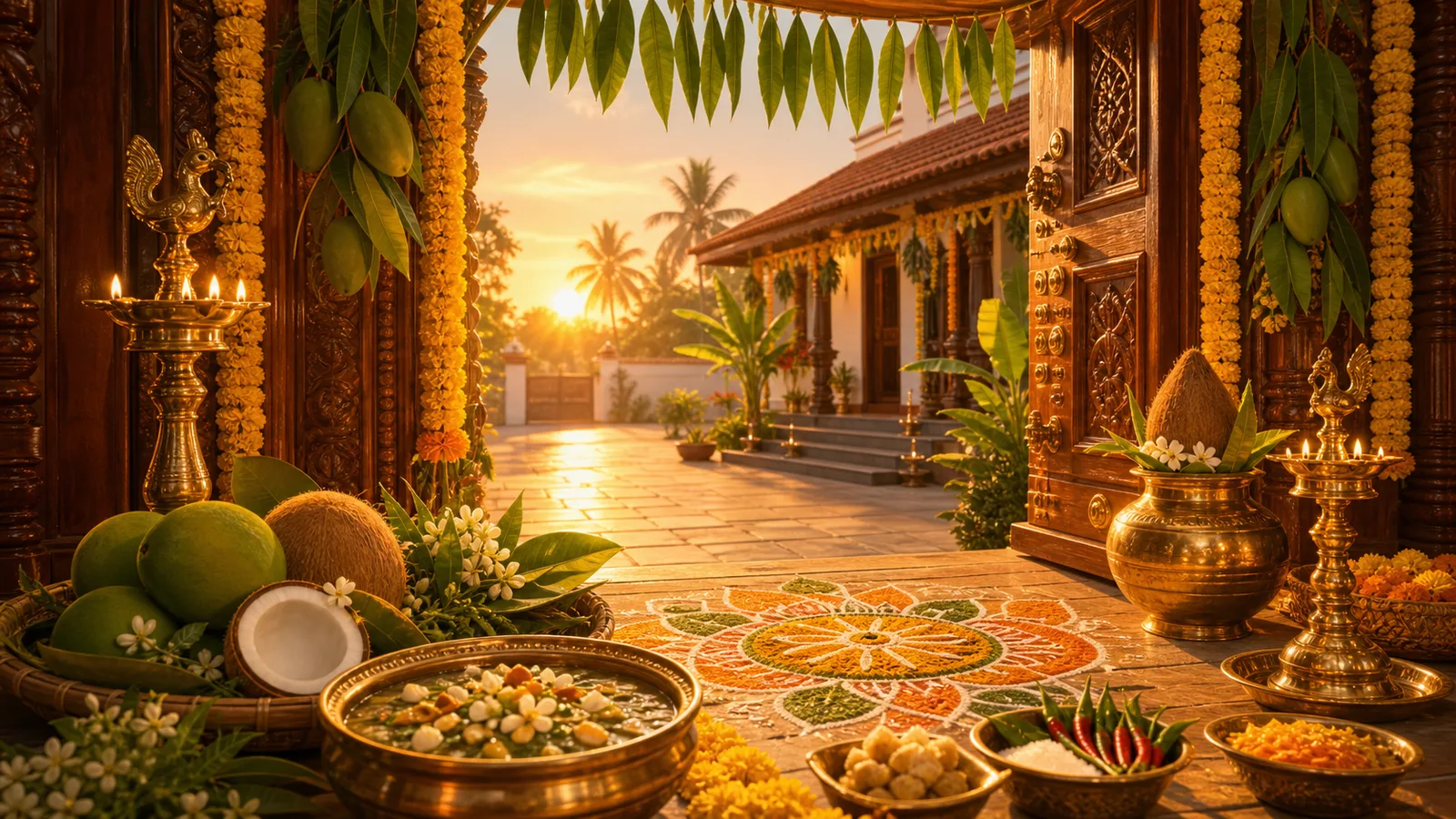
The festival begins before sunrise as households undergo thorough cleaning and are decorated with fresh mango leaf torans and vibrant rangoli. Devotees take an oil bath — a purifying ritual believed to cleanse the body and soul — before donning new clothes and offering prayers to Lord Brahma, the creator, who is said to have begun the creation of the universe on this very day. Visits to local temples, particularly those dedicated to Brahma and Vishnu, are an integral part of the morning ritual. The festive atmosphere is marked by the fragrance of fresh flowers, incense, and the sounds of devotional hymns.
The highlight of Ugadi celebrations is the preparation and consumption of Ugadi Pachadi — a unique chutney made from six distinct ingredients: raw mango (sourness), jaggery (sweetness), neem flowers (bitterness), tamarind (tanginess), green chilli (heat), and salt (saltiness). This combination is a profound philosophical metaphor, teaching devotees to accept all experiences of life — joy and sorrow, pleasure and pain — with equanimity and grace. The new year almanac, known as the Panchanga, is also read aloud during community gatherings, foretelling the year's astrological predictions for agriculture, weather, and personal well-being.
Significance of Ugadi
Ugadi holds extraordinary spiritual, cultural, and astrological significance for Hindus across South India:
- Creation Anniversary: According to Hindu tradition, Lord Brahma created the universe on Chaitra Shukla Pratipada. Celebrating Ugadi honours this cosmic act of creation and acknowledges the eternal cycle of time.
- New Year of Multiple Calendars: Ugadi marks the beginning of the Shalivahana Saka calendar year, used widely in AP, Telangana, Karnataka, and Maharashtra (where it is celebrated as Gudi Padwa).
- Panchanga Sravanam: The reading of the annual almanac (Panchanga) on Ugadi provides astrological guidance for the coming year, including forecasts for rainfall, harvest, and personal destiny.
- Life Philosophy: The six-flavoured Ugadi Pachadi is a living symbol of the Bhagavad Gita's teaching to accept both joy and suffering as inevitable parts of human existence.
- Agricultural Significance: Coinciding with the arrival of spring and the mango blossoming season, Ugadi has deep agrarian roots, celebrating nature's renewal and the promise of a fruitful harvest.
- Spiritual Renewal: The rituals of early bathing, new clothes, and temple worship signify leaving behind the old year's burdens and entering the new year with a purified body, mind, and spirit.
- Community Bonding: Ugadi is a time for families to reunite, share meals, exchange sweets and gifts, and collectively seek divine blessings for the year ahead.
Deities worshipped on Ugadi
Follow the links to explore each deity’s mantras, stories, and temples on Temples.bio.
Lord Brahma, the Creator of the Hindu Trinity (Trimurti), is the presiding deity of Ugadi. Hindu scripture holds that Brahma began the act of cosmic creation on Chaitra Shukla Pratipada, making this day his sacred anniversary. While temples solely dedicated to Brahma are rare across India — with Pushkar in Rajasthan being the most famous — his worship on Ugadi is universal in South Indian households through prayers, Panchanga recitation, and offerings.
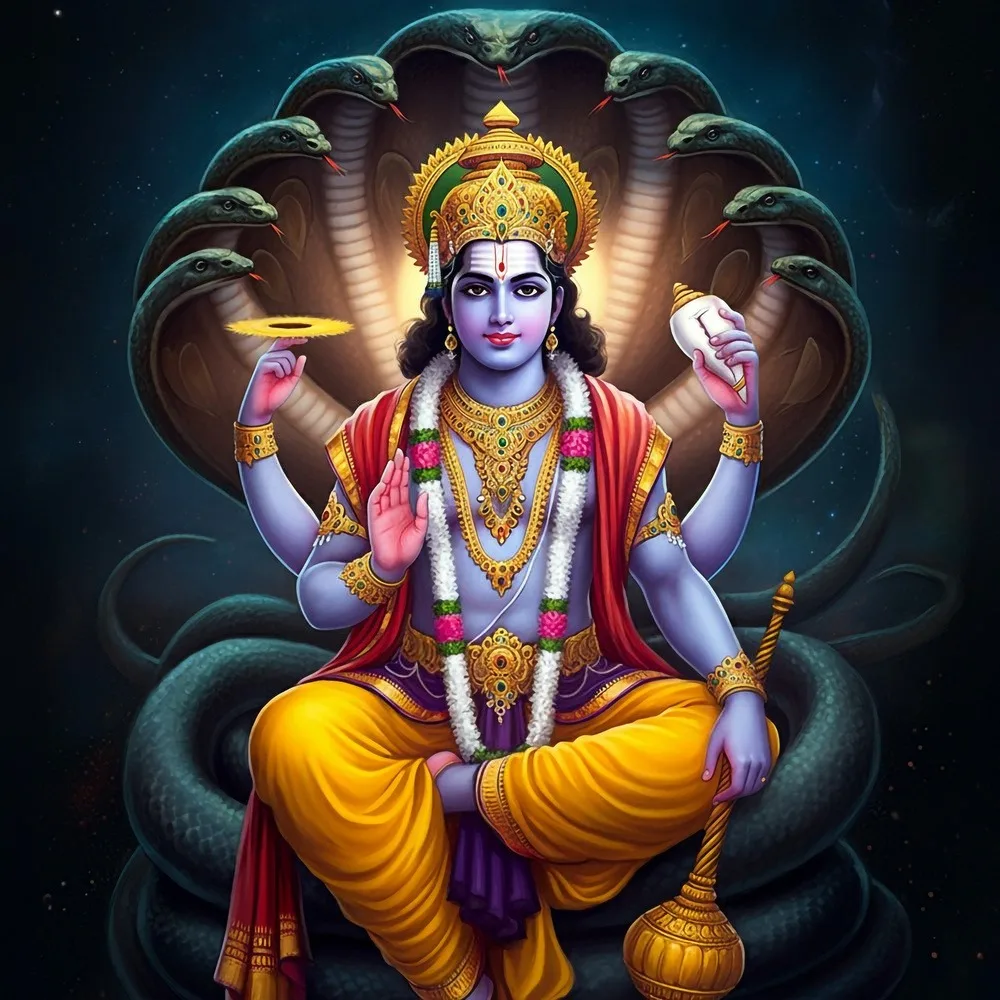
Lord Vishnu, the Preserver, is also venerated on Ugadi. Devotees visit Vishnu temples and offer Tulasi leaves, yellow flowers, and prasad, seeking his blessings for prosperity, health, and protection in the new year. In some regional traditions, Ugadi is also associated with the advent of the sun moving into Aries (Mesha Rashi), making Surya (the Sun God) an important deity in prayers offered during sunrise.
How to celebrate Ugadi 2026
Celebrating Ugadi in 2026 with the complete traditional puja vidhi:
1. Pre-dawn preparation: Wake up before sunrise (4–5 AM). Clean the house thoroughly the previous evening. Decorate the entrance with fresh mango leaf torans (bandhanwar) and draw rangoli with rice flour at the threshold.
2. Abhyanga Snanam (Oil Bath): Apply sesame oil or coconut oil over the body and take a head bath. This ritual purifies the body and is believed to ward off illness for the coming year.
3. New Clothes: Wear new clothes or at minimum freshly washed traditional attire. This symbolises entering the new year renewed and prosperous.
4. Home Puja: Set up the puja altar with a clean cloth. Place images or idols of Lord Brahma and Lord Vishnu. Light a lamp (deepam) with ghee or sesame oil. Offer fresh flowers — preferably neem flowers, jasmine, and marigold.
5. Naivedyam (Food Offering): Prepare Ugadi Pachadi and offer it to the deity first before consuming. Also offer seasonal fruits, coconut, and betel leaves.
6. Ugadi Pachadi Preparation and Consumption: Make the six-ingredient Ugadi Pachadi (raw mango, jaggery, neem flowers, tamarind, green chilli, salt) and consume it together as a family after the puja.
7. Panchanga Sravanam: Gather the family and listen to or read the new year's Panchanga (astrological almanac), either at home or at the local temple. This is considered highly auspicious.
8. Temple Visit: Visit nearby temples, especially those dedicated to Brahma, Vishnu, or the local presiding deity. Offer special prayers and seek blessings for the new year.
9. Sharing and Gifting: Distribute sweets, new clothes, and gifts to family members, neighbours, and the less fortunate as acts of charity (danam).
10. Evening Celebrations: Many communities organise cultural programs, Harikatha (devotional storytelling), and Kavi Sammelans (poetry gatherings) in the evening.
Rituals & regional traditions
Ugadi is celebrated with rich regional variations across South India:
Andhra Pradesh & Telangana:
- Ugadi Pachadi is prepared with fresh raw mango, neem flowers, jaggery, tamarind, green chilli, and salt.
- Special dishes like Bobbatlu (sweet flatbread stuffed with lentils and jaggery), Pulihora (tamarind rice), and Shrikhand are prepared.
- Homes are decorated with fresh mango leaf festoons strung across doorways.
- Community Panchanga Sravanam events are held at temples and town squares.
Karnataka:
- Known as "Yugadi" in Kannada, the festival follows identical rituals with Bevu-Bella — a mixture of neem flowers and jaggery — being the equivalent of Ugadi Pachadi.
- Traditional dishes include Obbattu (Holige), Kosambari, and mango-based preparations.
- The Dharwad and Mysuru regions have particularly grand temple processions.
Maharashtra (Gudi Padwa):
- Though called Gudi Padwa, this is the same Chaitra Pratipada celebration. A Gudi (a decorated bamboo pole with a copper pot) is erected outside homes as a symbol of victory.
Common Customs Across Regions:
- Oil bath before sunrise
- New clothes and jewellery
- Listening to the Panchanga
- Charitable donations and feeding the poor
- Visiting elders and seeking blessings
Spiritual benefits
Observing Ugadi with devotion bestows numerous spiritual and material blessings:
- Divine Protection: Seeking Lord Brahma's and Lord Vishnu's blessings on this auspicious day is believed to bring divine protection throughout the new year.
- Prosperity and Abundance: The rituals and offerings performed on Ugadi invite Goddess Lakshmi's grace, ensuring financial stability and abundance.
- Health and Longevity: The Abhyanga Snanam (oil bath) and consumption of Ugadi Pachadi — especially neem flowers — are believed to purify the body and boost immunity for the year ahead.
- Mental Equanimity: The philosophical lesson of Ugadi Pachadi — accepting life's mixed experiences — cultivates inner peace, resilience, and emotional balance.
- Astrological Blessings: Listening to the Panchanga on Ugadi is said to neutralise negative planetary influences for the coming year.
- Ancestral Blessings: Performing prayers and charitable acts on Ugadi pleases the ancestors (Pitrus), whose blessings are believed to flow down through generations.
- Community Harmony: The collective celebrations of Ugadi strengthen social bonds, foster goodwill, and reinforce cultural identity among Telugu and Kannada communities worldwide.
- Karmic Cleansing: The act of beginning the new year with purity, prayer, and charity is said to cleanse accumulated karma and set a virtuous trajectory for the months ahead.
Mantras & sacred chants
1. Brahma Puja Mantra:
Sanskrit: ॐ ब्रह्मणे नमः
Transliteration: Om Brahmanye Namah
Meaning: Salutations to Lord Brahma, the Creator.
2. Ugadi Pachadi Shloka (Recited while partaking):
Sanskrit: शतायुर्वज्रदेहाय सर्वसम्पत्करायच। सर्वारिष्टविनाशाय निम्बकं दलभक्षणम्॥
Transliteration: Shatayur vajradehaya sarvasampatkaraya cha, sarvarishta vinashaya nimbakam dalabhakshanam.
Meaning: May the consumption of neem leaves grant a life of hundred years, a body as strong as diamond, all wealth, and the destruction of all misfortunes.
3. New Year Blessing Shloka:
Sanskrit: सर्वे भवन्तु सुखिनः सर्वे सन्तु निरामयाः। सर्वे भद्राणि पश्यन्तु मा कश्चिद् दुःखभाग्भवेत्॥
Transliteration: Sarve bhavantu sukhinah, sarve santu niramayah, sarve bhadrani pashyantu, ma kashchid dukha bhagbhavet.
Meaning: May all be happy, may all be free from illness, may all see what is auspicious, may no one suffer.
Ugadi 2026 — FAQs
Ugadi 2026 falls on Thursday, March 19, 2026. It is observed on Chaitra Shukla Pratipada according to the Hindu lunar calendar.
Ugadi Pachadi is a ceremonial chutney made from six ingredients — raw mango, jaggery, neem flowers, tamarind, green chilli, and salt. Each ingredient represents one of life's flavours: bitterness, sweetness, sorrow, challenges, anger, and fear. Eating it together symbolises accepting all experiences of life with equanimity.
Ugadi marks the Telugu and Kannada New Year and the beginning of the Shalivahana Saka calendar. It commemorates the day Lord Brahma began the creation of the universe and is a time for spiritual renewal, seeking blessings, and welcoming prosperity.
Ugadi is celebrated by taking an oil bath before sunrise, decorating homes with mango leaf torans, wearing new clothes, performing Brahma and Vishnu puja, preparing and eating Ugadi Pachadi, and listening to the Panchanga (annual almanac).
Panchanga Sravanam is the ritual reading of the Hindu astrological almanac (Panchanga) on Ugadi day. It includes predictions about rainfall, harvests, planetary movements, and guidance for the new year. Listening to it is considered highly auspicious and is believed to neutralise negative planetary effects.
Yes, both Ugadi and Gudi Padwa fall on the same day — Chaitra Shukla Pratipada. While Ugadi is celebrated in Andhra Pradesh, Telangana, and Karnataka, Gudi Padwa is the Maharashtrian version of the same New Year festival with slightly different customs.
Traditional Ugadi dishes include Ugadi Pachadi, Bobbatlu or Holige (sweet stuffed flatbread), Pulihora (tamarind rice), Shrikhand, mango dal, and various seasonal mango-based preparations.
Ugadi in 2025 falls on March 30, 2025, and in 2027 it falls on April 7, 2027. The festival date changes each year as it follows the Hindu lunar calendar.