About Chaitra Navratri
Last updated:
Chaitra Navratri, also known as Vasanta Navratri or Ram Navami Navratri, is one of the four Navratris observed in the Hindu calendar, and among the most auspicious. Celebrated during the bright fortnight (Shukla Paksha) of the month of Chaitra, it spans nine nights and ten days of intense devotion to Goddess Durga in her nine divine manifestations, collectively known as the Navadurga. In 2026, Chaitra Navratri begins on March 19 and concludes on March 27, with Ram Navami — the birth anniversary of Lord Rama — on the ninth day.
The festival marks the transition from winter to spring, a time of natural renewal and heightened spiritual energy. Unlike the more widely celebrated Sharad Navratri (held in autumn), Chaitra Navratri holds special importance for North Indian states like Uttar Pradesh, Bihar, Madhya Pradesh, Himachal Pradesh, and also parts of West Bengal and Maharashtra. During these nine days, millions of devotees fast, recite the Durga Saptashati (also called the Chandi Path or Devi Mahatmyam), perform daily Devi puja, and visit Shakti Pithas and Devi temples.
Each of the nine days is dedicated to one of the nine forms of the Goddess: Shailaputri, Brahmacharini, Chandraghanta, Kushmanda, Skandamata, Katyayani, Kalaratri, Mahagauri, and Siddhidatri. Devotees dress in specific colours each day, offer prescribed flowers, fruits, and foods to the Goddess, and maintain fasting vows (upvas) that range from complete abstinence to consuming only fruits and dairy. The festival culminates with Kanya Puja — the ritual worship of young girls as living embodiments of the Goddess — followed by the breaking of the fast.
Significance of Chaitra Navratri
Chaitra Navratri is one of the most spiritually potent periods in the Hindu calendar, charged with divine feminine energy:
- Nine Forms of the Goddess: Each of the nine days venerates one aspect of Adi Shakti — from Shailaputri (the mountain daughter) to Siddhidatri (the bestower of supernatural powers) — giving devotees a complete communion with the Goddess in all her manifestations.
- Cosmic Energy Peak: The transition from winter to spring during Chaitra is believed to be a time when the veil between the human and divine worlds is thinnest, making prayers especially powerful and effective.
- Dharmic Protection: According to the Devi Mahatmyam, the Goddess destroyed the demons Madhu-Kaitabha, Mahishasura, and Shumbha-Nishumbha to restore cosmic order. Navratri commemorates these victories and invokes her protection against evil.
- Precursor to Ram Navami: Chaitra Navratri concludes on the same day as Ram Navami (the ninth day), connecting the divine feminine energy of Devi with Lord Rama's birth — Lord Rama himself worshipped Goddess Durga before his battle with Ravana.
- Spiritual Discipline: The nine-day fast and recitation schedule cultivates tapasya (austerity), focus, and devotion, accelerating spiritual progress.
- Agricultural Significance: Falling at the start of the harvest season in many regions, Chaitra Navratri also carries prayers for a bountiful crop and seasonal abundance.
- Shakti Pitha Yatras: Many devotees undertake pilgrimages to Shakti Pithas — the 51 sacred seats of the Goddess — during Chaitra Navratri, believing the blessings received are multiplied manifold during this period.
Deities worshipped on Chaitra Navratri
Follow the links to explore each deity’s mantras, stories, and temples on Temples.bio.
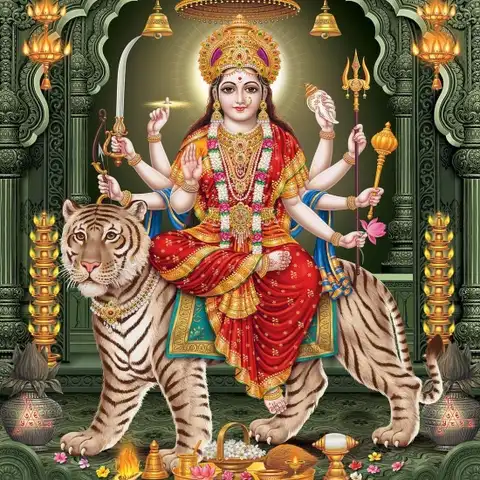
Goddess Durga
Primary deity of Navratri, worshipped in nine forms (Navadurga) across the nine nights
The Invincible Mother Goddess — Supreme Feminine Power who destroys evil, protects the righteous, and embodies the divine energy of the entire universe.
View deity →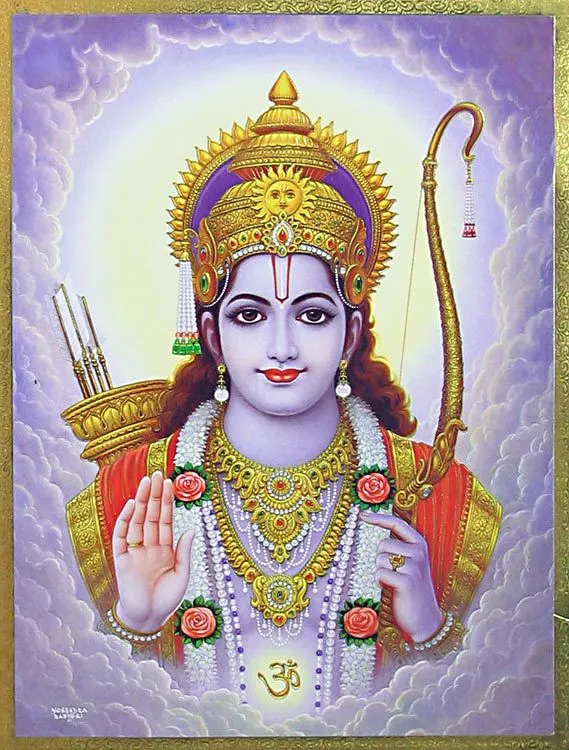
Lord Rama
Lord Rama's birth (Ram Navami) falls on the final day of Chaitra Navratri, connecting Shakti and Vaishnava devotion
The Ideal Man, Perfect King, and Seventh Avatar of Vishnu — whose life is the eternal standard of righteousness, duty, and devotion to dharma.
View deity →
Goddess Saraswati
Goddess of knowledge invoked during Navratri as an aspect of Adi Shakti for wisdom and learning
The Invincible Mother Goddess — Supreme Feminine Power who destroys evil, protects the righteous, and embodies the divine energy of the entire universe.
View deity →
Goddess Lakshmi
Goddess of prosperity invoked as an aspect of Adi Shakti on Navratri for wealth and abundance
The Invincible Mother Goddess — Supreme Feminine Power who destroys evil, protects the righteous, and embodies the divine energy of the entire universe.
View deity →Goddess Durga is the supreme presiding deity of Chaitra Navratri, worshipped across all nine days in her Navadurga forms. She is Adi Shakti — the primordial divine energy from whom all creation emerges. The nine forms worshipped are: Shailaputri (Day 1, daughter of the Himalayas, rides a bull, represents groundedness); Brahmacharini (Day 2, the ascetic form, represents discipline and penance); Chandraghanta (Day 3, the warrior goddess with a crescent bell, bestows courage); Kushmanda (Day 4, creator of the universe through her smile, bestows health); Skandamata (Day 5, mother of Lord Kartikeya, bestows wisdom and salvation); Katyayani (Day 6, the fierce warrior form, destroys evil); Kalaratri (Day 7, the dark and formidable form, removes darkness and fear); Mahagauri (Day 8, the pure white goddess, bestows purity and peace); and Siddhidatri (Day 9, bestower of all siddhis or supernatural powers).
On the concluding day — Ram Navami — Lord Rama, the seventh avatar of Vishnu, is also venerated. According to the Ramayana, Brahma advised Lord Rama to worship Goddess Durga (the Chandi) before his war with Ravana. This divine connection makes the final day a joint celebration of Shakti and Vishnu devotion.
How to celebrate Chaitra Navratri 2026
A complete guide to observing Chaitra Navratri 2026 (March 19 – March 27):
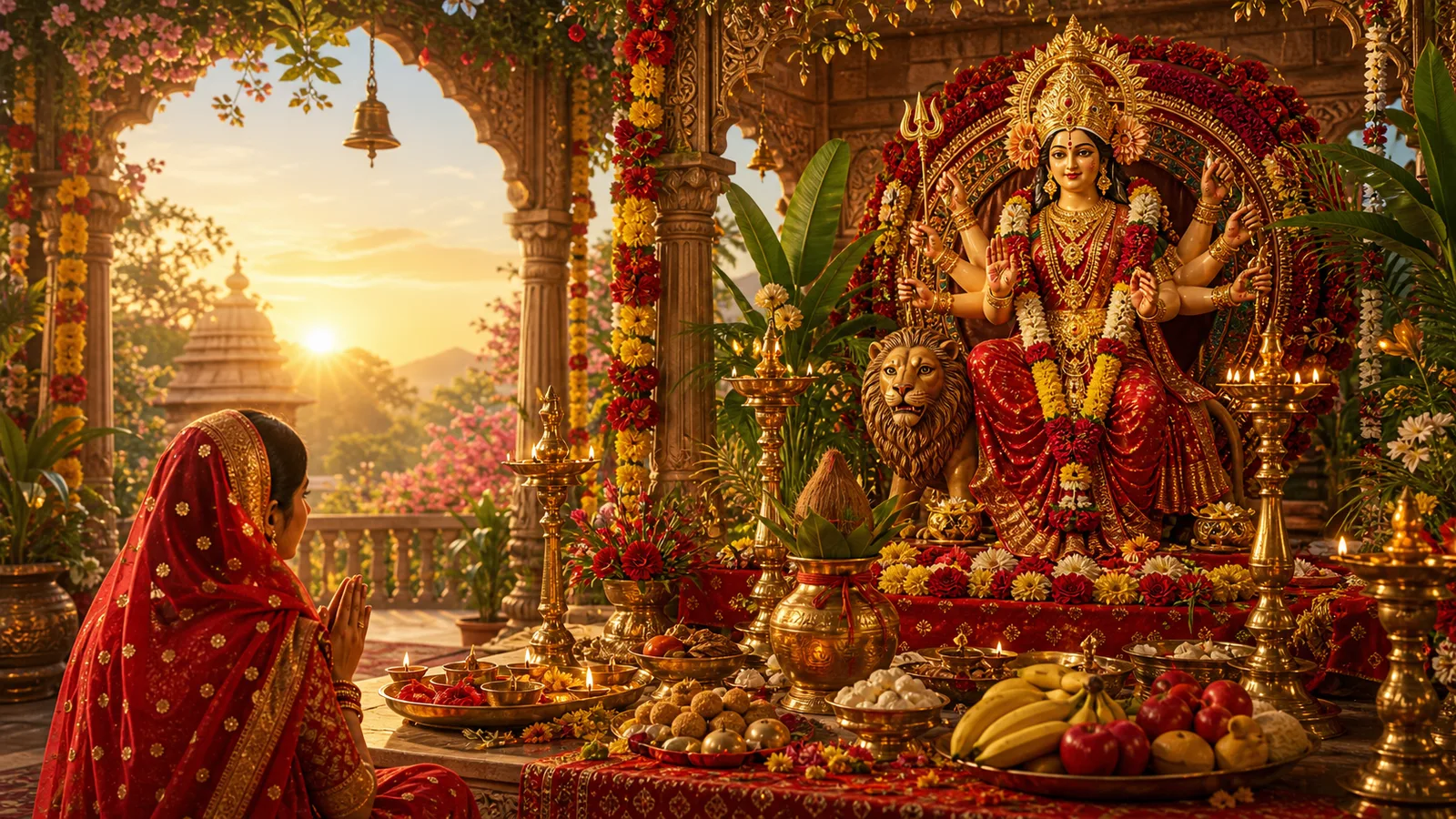
1. Ghatasthapana (Day 1 — March 19): Begin Navratri with the sacred Ghatasthapana ritual. Place a clay pot (ghata) filled with soil and barley seeds, topped with a coconut, on an altar. Invoke Goddess Shailaputri and light the Akhand Jyoti (continuous lamp) that must remain lit for all nine days.
2. Daily Puja Routine: Every morning and evening, offer fresh flowers (red and yellow are preferred), fruits, sweets, and incense to the Goddess. Apply tilak (kumkum and turmeric) to the deity image and yourself.
3. Navadurga Worship by Day: Follow the prescribed day-wise worship — offer white flowers to Shailaputri (Day 1), red to Brahmacharini (Day 2), vermillion to Chandraghanta (Day 3), green to Kushmanda (Day 4), banana to Skandamata (Day 5), honey to Katyayani (Day 6), jaggery to Kalaratri (Day 7), coconut to Mahagauri (Day 8), sesame to Siddhidatri (Day 9).
4. Durga Saptashati Recitation: Recite one chapter (or Adhyaya) of the Durga Saptashati (Devi Mahatmyam) each day, or as many as your schedule allows. Completing the full 700 verses over the nine days is considered the most auspicious practice.
5. Fasting (Upvas): Observe a fast according to your capacity — complete fasting, fruit-only diet, or one sattvic meal per day (without grains, onion, garlic). Navratri fasting foods include kuttu (buckwheat) flour dishes, sabudana (tapioca), singhara (water chestnut) flour, and fresh fruits.
6. Aarti: Perform the Durga Aarti morning and evening using camphor and ghee lamps. Sing the Jai Ambe Gauri aarti and ring bells throughout.
7. Kanya Puja (Day 8 or 9): On Ashtami or Navami, invite 9 young girls (symbolising the 9 forms of Durga) to your home. Wash their feet, offer them red chunri (scarf), apply alta (red dye) to their feet, offer a meal of puri, halwa, and chana, and give them gifts as dakshina.
8. Ram Navami Puja (Day 9 — March 27): On the final day, perform a special puja for Lord Rama along with the Navami Devi puja. Recite the Ram Stuti or Sundara Kanda, and offer tulasi leaves, yellow flowers, and sweets.
Rituals & regional traditions
Chaitra Navratri is observed with rich traditions across different regions of India:
North India (UP, Bihar, MP, Rajasthan):
- Ghatasthapana with Akhand Jyoti is the central ritual.
- Durga Saptashati recitation and Jagrans (overnight devotional singing sessions) are popular.
- Kanya Puja on Ashtami and Navami is widely practised.
- Fasting foods include kuttu puri, sabudana khichdi, and aloo ki sabzi.
Himachal Pradesh:
- Major pilgrimages to the Chintpurni, Kangra Devi (Bajreshwari), and Naina Devi temples draw lakhs of devotees.
- The Kullu Navratri sees elaborate processions with palanquins of the Goddess.
Maharashtra:
- Gudi Padwa (falling on the same first day) merges with Navratri observances.
- Ghatasthapana and temple visits are the primary customs.
West Bengal:
- Basanti Puja (spring Durga Puja) is observed during Chaitra Navratri with elaborate pandals and traditional dhak drumming.
Gujarat:
- While Sharad Navratri is more prominent, many families observe Chaitra Navratri with home pujas and temple visits.
Common Practices Across India:
- Colour-coded sarees and kurtas for each of the nine days
- Devotional music and bhajan sessions
- Charitable feeding of the poor
- Reading the Devi Bhagavata Purana
Spiritual benefits
Sincere observance of Chaitra Navratri bestows the following spiritual and worldly blessings:
- Divine Protection: The Goddess Durga's nine forms collectively provide complete protection from enemies, negative energies, black magic, and evil forces.
- Removal of Obstacles: Worshipping Goddess Kushmanda and Skandamata is believed to remove deep-seated karmic obstacles and open the path to success.
- Fulfilment of Desires: Kanya Puja on Ashtami or Navami is said to fulfil sincere wishes, especially those related to marriage, childbirth, and career advancement.
- Physical Purification: The Navratri fast detoxifies the body, boosts immunity, and aligns physical health with the seasonal transition from winter to spring.
- Mental Clarity and Courage: Worshipping Chandraghanta and Katyayani is believed to instil fearlessness, mental clarity, and the courage to face life's challenges.
- Spiritual Advancement: Regular recitation of the Durga Saptashati activates the divine feminine energy (Shakti) within the practitioner, accelerating spiritual progress and intuition.
- Ancestral Blessings: Performing the Navratri fast and Kanya Puja is said to please the Matrikas (divine mothers) and ancestral goddesses, bringing peace to the family lineage.
- Material Prosperity: Goddess Lakshmi, an aspect of Adi Shakti, is invoked during Navratri for wealth, abundance, and long-term financial security.
Mantras & sacred chants
1. Navadurga Dhyana Mantra (Opening invocation):
Sanskrit: ॐ देवी शैलपुत्र्यै नमः (Day 1)
Transliteration: Om Devi Shailaputryai Namah
Meaning: Salutations to Goddess Shailaputri, daughter of the mountains.
(Each day, replace "Shailaputryai" with the name of that day's form — Brahmacharinyai, Chandraghantayai, Kushmandayai, Skandamatayai, Katyayanyai, Kalaratryai, Mahagauryai, Siddhidatryai)
2. Durga Saptashati Beej Mantra:
Sanskrit: ॐ ऐं ह्रीं क्लीं चामुण्डायै विच्चे
Transliteration: Om Aim Hreem Kleem Chamundayai Vichche
Meaning: This powerful seed mantra of the Goddess destroys all negative forces. "Aim" invokes Saraswati (knowledge), "Hreem" invokes Lakshmi (prosperity), "Kleem" invokes Kali (power). Chanting 108 times daily during Navratri is highly recommended.
3. Ya Devi Sarva Bhuteshu (Universal Devi Shloka from Devi Mahatmyam):
Sanskrit: या देवी सर्वभूतेषु शक्तिरूपेण संस्थिता। नमस्तस्यै नमस्तस्यै नमस्तस्यै नमो नमः॥
Transliteration: Ya Devi Sarva Bhuteshu Shakti Rupena Samsthita, Namastasyai Namastasyai Namastasyai Namo Namah.
Meaning: Salutations again and again to the Goddess who dwells in all beings in the form of power/energy. This is the most universally recited Navratri mantra.
Chaitra Navratri 2026 — FAQs
Chaitra Navratri 2026 begins on March 19, 2026 (Chaitra Shukla Pratipada) and ends on March 27, 2026 (Navami), concluding with Ram Navami on the same day.
Chaitra Navratri occurs in spring (March-April) during the Chaitra month, while Sharad Navratri occurs in autumn (September-October) during the Ashwin month. Both are nine-day festivals dedicated to Goddess Durga, but Sharad Navratri is more widely celebrated with public events, while Chaitra Navratri is observed more privately with fasting and home puja.
Navratri fasting rules include abstaining from grains, non-vegetarian food, onion, garlic, and alcohol. Devotees may consume fruits, dairy products, nuts, and dishes made from kuttu (buckwheat) flour, sabudana (tapioca), singhara (water chestnut) flour, and potatoes. Many devotees observe a complete fast on Ashtami and Navami.
The nine forms (Navadurga) are: Day 1 — Shailaputri, Day 2 — Brahmacharini, Day 3 — Chandraghanta, Day 4 — Kushmanda, Day 5 — Skandamata, Day 6 — Katyayani, Day 7 — Kalaratri, Day 8 — Mahagauri, Day 9 — Siddhidatri. Each form represents a different aspect of divine feminine power.
Kanya Puja is a ritual where nine young girls (usually between ages 2 and 10) are invited to the home and worshipped as living forms of the nine Durgas. Their feet are washed, they are offered a meal of puri, halwa, and chana, given a red chunri, and presented with gifts. It is performed on Ashtami (8th day) or Navami (9th day) of Navratri.
Ghatasthapana is the ritual installation of a sacred pot (ghata) on the first day of Navratri. A clay pot is filled with fertile soil, barley seeds are sown in it, and a coconut is placed on top. An Akhand Jyoti (continuous lamp) is lit alongside it. This ritual invokes Goddess Durga into the pot, which serves as her temporary abode for the nine days.
Yes, Durga Saptashati (also called Chandi Path or Devi Mahatmyam) can and should be recited at home during Chaitra Navratri. The 700-verse text is divided across 13 chapters. Devotees can recite one chapter per day, completing the full text over 9 days, or chant selected key verses like the Argala Stotram and Keelakam daily.
Chaitra Navratri in 2025 begins on March 30, 2025, and in 2027 it begins on April 7, 2027. The start date changes yearly as it follows Chaitra Shukla Pratipada in the Hindu lunar calendar.