About Ganesh Chaturthi
Last updated:
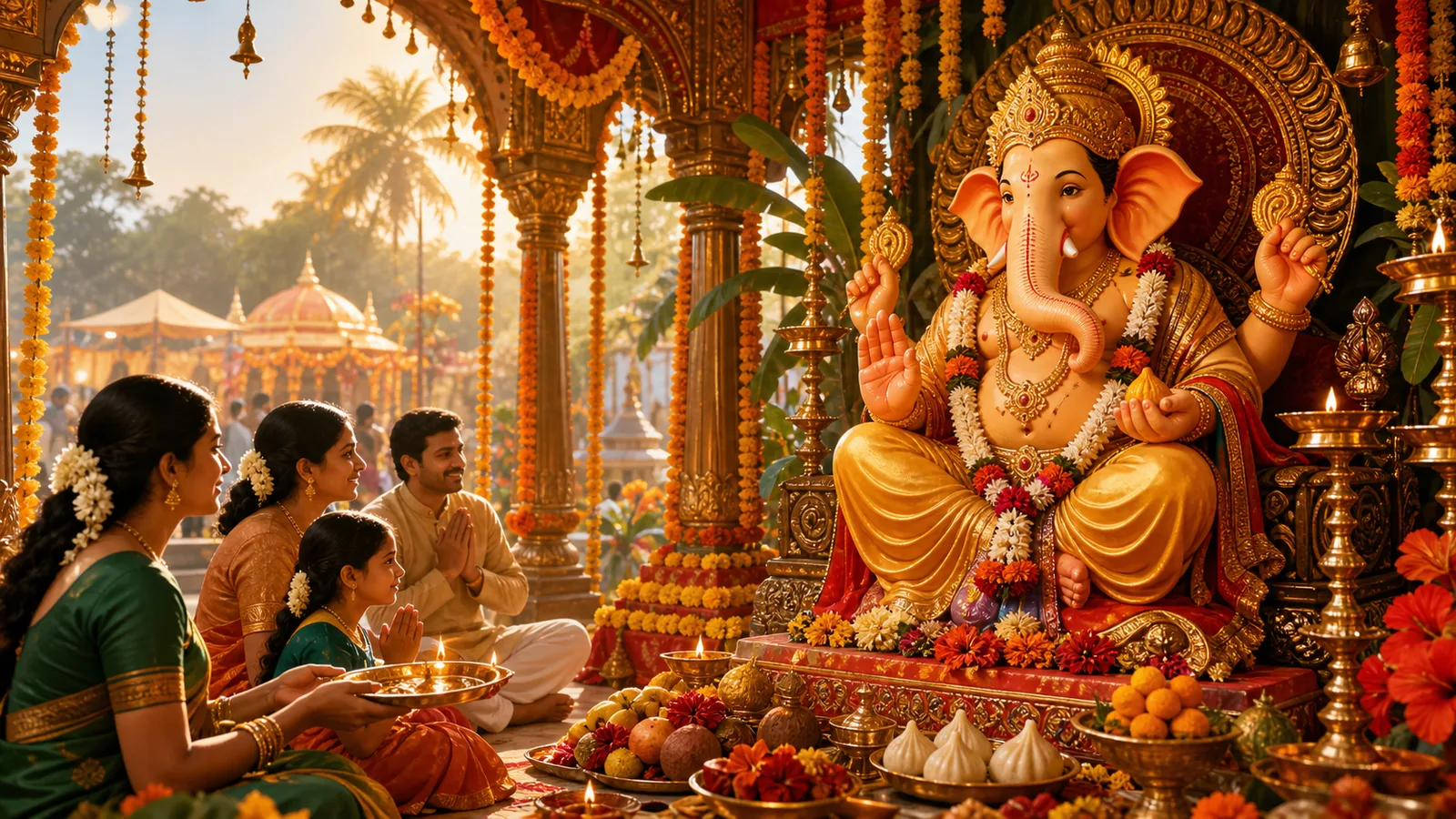
Ganesh Chaturthi is celebrated as birth anniversary of Lord Ganesh. On Ganesh Chaturthi, Lord Ganesh is worshipped as the god of wisdom, prosperity and good fortune. It is believed that Lord Ganesh was born during Shukla Paksha of Bhadrapada month. Currently Ganesh Chaturthi day falls in month of August or September in English calendar.
The Ganeshotsav, the festivity of Ganesh Chaturthi, ends after 10 days on Anant Chaturdashi which is also known as Ganesh Visarjan day. On Anant Chaturdashi, devotees immerse idol of Lord Ganesh in water body after a gala street procession.
Ganesh Chaturthi is also known as Vinayaka Chaturthi and Ganesh Chauth.
Significance of Ganesh Chaturthi
Prohibited Moon Sighting on Ganesha Chaturthi
It is believed that one should not sight the moon on Ganesh Chaturthi. Sighting moon on Ganesh Chaturthi creates Mithya Dosham or Mithya Kalank (कलंक) which means false accusation of stealing something.
As per Puranic legends, Lord Krishna was falsely accused of stealing precious jewel named Syamantaka. After seeing plights of Lord Krishna, Sage Narada informed that Lord Krishna sighted moon on the day of Bhadrapada Shukla Chaturthi and because of that he has been cursed with Mithya Dosha.
Sage Narada further informed Lord Krishna that God Chandra has been cursed by Lord Ganesha that anyone who sighted moon on Shukla Chaturthi during Bhadrapada month would be cursed with Mithya Dosha and would be tainted and dishonored in the society. On the advice of sage Narada Lord Krishna observed Ganesha Chaturthi fasting to get rid of Mithya Dosha.
Deities worshipped on Ganesh Chaturthi
Follow the links to explore each deity’s mantras, stories, and temples on Temples.bio.
Lord Shiva
Father of Lord Ganesha, invoked as part of Ganesha's divine lineage
The Supreme Destroyer and Transformer of the Universe — The Adiyogi, Lord of Lords, and the First Yogi.
View deity →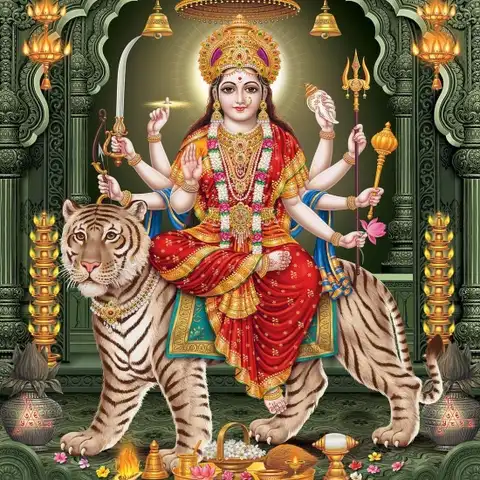
Goddess Durga
Mother Parvati (a form of Durga) is honoured alongside Ganesha, especially in Karnataka's Gowri-Ganesha celebrations
The Invincible Mother Goddess — Supreme Feminine Power who destroys evil, protects the righteous, and embodies the divine energy of the entire universe.
View deity →Lord Ganesha (also known as Vinayaka, Ganapati, Vighnaharta, and Ekadanta) is the son of Lord Shiva and Goddess Parvati. He is the presiding deity of Ganesh Chaturthi and is revered as the first deity to be worshipped before any puja, ceremony, or new undertaking in Hindu tradition.
Ganesha's elephant head symbolises supreme wisdom, enormous memory, and the ability to overcome all obstacles. His large ears represent the virtue of listening, his small eyes denote concentration and focus, and his trunk symbolises adaptability and discrimination (viveka). The modak in his hand represents the sweetness of spiritual knowledge, and the mouse (mushika) at his feet — his vehicle — symbolises the ego that must be kept under control.
How to celebrate Ganesh Chaturthi 2026
Ganapati Sthapana and Ganapati Puja Muhurat
Ganesh Puja is preferred during Madhyahna as it is believed that Lord Ganesh was born during Madhyahna Kala. Madhyahna Kala is equivalent to midday according to Hindu division of the day.
As per Hindu time-keeping, the time duration between sunrise to sunset is divided into five equal parts. These five parts are known as Pratahkala, Sangava, Madhyahna, Aparahna and Sayankal. Ganapati Sthapana and Ganapati Puja on Ganesha Chaturthi are done during Madhyahna part of the day and as per Vedic astrology it is considered the most appropriate time for Ganesha Puja.
During midday, Ganesha devotees perform detailed ritualistic Ganesha Puja which is known as Shodashopachara Ganapati Puja.
Rituals & regional traditions
Regional Customs and Traditions of Ganesh Chaturthi:
- Maharashtra: The grandest celebrations occur in Pune (the city of the legendary Kasba Ganpati and Tambdi Jogeshwari) and Mumbai (famous for Lalbaugcha Raja, drawing millions of devotees). Lokmanya Tilak's tradition of 10-day public celebrations continues with elaborate pandals, cultural programmes, and massive Visarjan processions on the final day.
- Andhra Pradesh & Telangana: Known as Vinayaka Chavithi, celebrated with unique rituals including the making of vundrallu (steamed rice dumplings) and modakam. Families observe a mandatory moon-sighting restriction on Chaturthi night (looking at the moon is said to invite false accusations).
- Tamil Nadu: Celebrated as Vinayagar Chaturthi. Special kolam (rangoli) patterns are drawn, and kozhukattai (steamed modak) is offered. Temples conduct elaborate abishekam and alankaram.
- Goa: A three-day version is popular, and the community pandals in Goa have a distinct Portuguese-influenced flair.
- Karnataka: Called Gowri-Ganesha Habba — Goddess Gowri (Parvati) is worshipped the day before Ganesha, and the combined celebration is a major family festival.
Spiritual benefits
Spiritual Benefits of Worshipping Lord Ganesha on Ganesh Chaturthi:
- Removal of Life's Obstacles: Sincere worship of Ganesha on Chaturthi is said to remove all material and spiritual obstacles (vighnas) from one's life path.
- Bestows Intellect and Wisdom: Ganesha, as Buddhidata, blesses devotees with sharp intellect, sound judgement, and clarity of purpose — especially valuable for students and professionals.
- Success in New Ventures: Praying to Ganesha on Chaturthi before starting a new business, marriage, project, or journey is believed to ensure success and auspiciousness.
- Family Harmony and Prosperity: Ganesh Chaturthi puja performed by the whole family is said to bring unity, happiness, and material abundance to the household.
Mantras & sacred chants
Mithya Dosha Prevention Mantra
Depending on start and end time of Chaturthi Tithi, sighting of moon might be prohibited for two consecutive days. According to DrikPanchang.com rules, Moon should not be sighted while Chaturthi Tithi is prevailing. Further, Moon risen during Chaturthi should not be sighted even if Chaturthi Tithi gets over before moonset.
If anyone has mistakenly sighted moon on Ganesha Chaturthi then he should chant following Mantra to get rid of the curse -
Sanskrit:
सिंहः प्रसेनमवधीत्सिंहो जाम्बवता हतः।
सुकुमारक मारोदीस्तव ह्येष स्यमन्तकः॥
Transliteration:
*Simhah Prasenamavadhitsimho Jambavata Hatah।
Sukumaraka Marodistava Hyesha Syamantakah॥*
Ganesha Moola Mantra:
ॐ गं गणपतये नमः (Om Gam Ganapataye Namah)
Ganesh Chaturthi 2026 — FAQs
Ganesh Chaturthi 2026 falls on Sunday, August 17, 2026. The 10-day festival ends with Anant Chaturdashi (Visarjan) on August 27, 2026.
Ganesh Chaturthi 2025 is on August 27, 2025. In 2027, it falls on September 5, 2027.
The Ganesh Chaturthi festival lasts 10 days, from Chaturthi (4th tithi of Bhadrapada Shukla paksha) through Anant Chaturdashi. However, many households immerse the idol on the 1st, 3rd, 5th, or 7th day depending on their tradition.
Modak (a sweet steamed dumpling) is Lord Ganesha's favourite food. Offering 21 modaks during puja is considered highly auspicious and is believed to please Ganesha and invite his blessings. The sweet interior of the modak symbolises the bliss of spiritual knowledge.
According to Hindu tradition, one should avoid looking at the moon on the night of Ganesh Chaturthi (Bhadrapada Shukla Chaturthi). It is believed that Lord Krishna was falsely accused of theft after looking at the moon on this night. If you accidentally see the moon, chanting 'Om Namah Shivaya' or reciting the Syamantaka gem story from the Bhagavata Purana is said to counter the ill effect.
Devotees observing a fast on Ganesh Chaturthi abstain from non-vegetarian food, alcohol, and onion-garlic. Many eat only one meal in the afternoon after completing the puja. Some observe a full day fast (nirjala or phalahar) consuming only fruits, milk, and sweets. The fast is broken after the evening aarti.
Visarjan is the ritual immersion of the Ganesha idol in a water body — river, lake, sea, or bucket of water at home. It symbolises Ganesha's return to Mount Kailash after his earthly visit. In 2026, Visarjan (Anant Chaturdashi) falls on August 27, 2026. Devotees carry the idol in festive processions chanting 'Ganpati Bappa Morya!'
The most famous Ganesh Chaturthi celebrations are in Pune (Kasba Ganpati, the city's presiding deity) and Mumbai (Lalbaugcha Raja, which attracts millions). Hyderabad's Khairatabad Ganesh is famous for its enormous idol. Goa, Chennai, and Bengaluru also host spectacular public celebrations.