About Gudi Padwa Samvatsar Padvo
Last updated:
Gudi Padwa or Samvatsar Padvo is celebrated as the first day of the year by Maharashtrians and Konkanis. On this day new Samvatsara, which is cycle of sixty years, starts. All sixty Samvatsara are identified by unique name. Gudi Padwa is celebrated as Ugadi by the people of Karnataka and Andhra Pradesh. Both Gudi Padwa and Ugadi are celebrated on the same day. Gudi Padwa is Marathi New Year according to LuniSolar calendar. LuniSolar calendars consider the position of the Moon and the position of the Sun to divide the year into months and days. The counterpart of LuniSolar calendar is Solar calendar which considers only position of the Sun to divide the year into months and days. Because of that Hindu New Year is celebrated twice in the year with different names and at two different times of the year. The Hindu New Year based on Solar calendar is known as Puthandu in Tamil Nadu, Bihu in Assam, Vaisakhi in Punjab, Pana Sankranti in Orissa and Naba Barsha in West Bengal.
Deities worshipped on Gudi Padwa Samvatsar Padvo
Follow the links to explore each deity’s mantras, stories, and temples on Temples.bio.
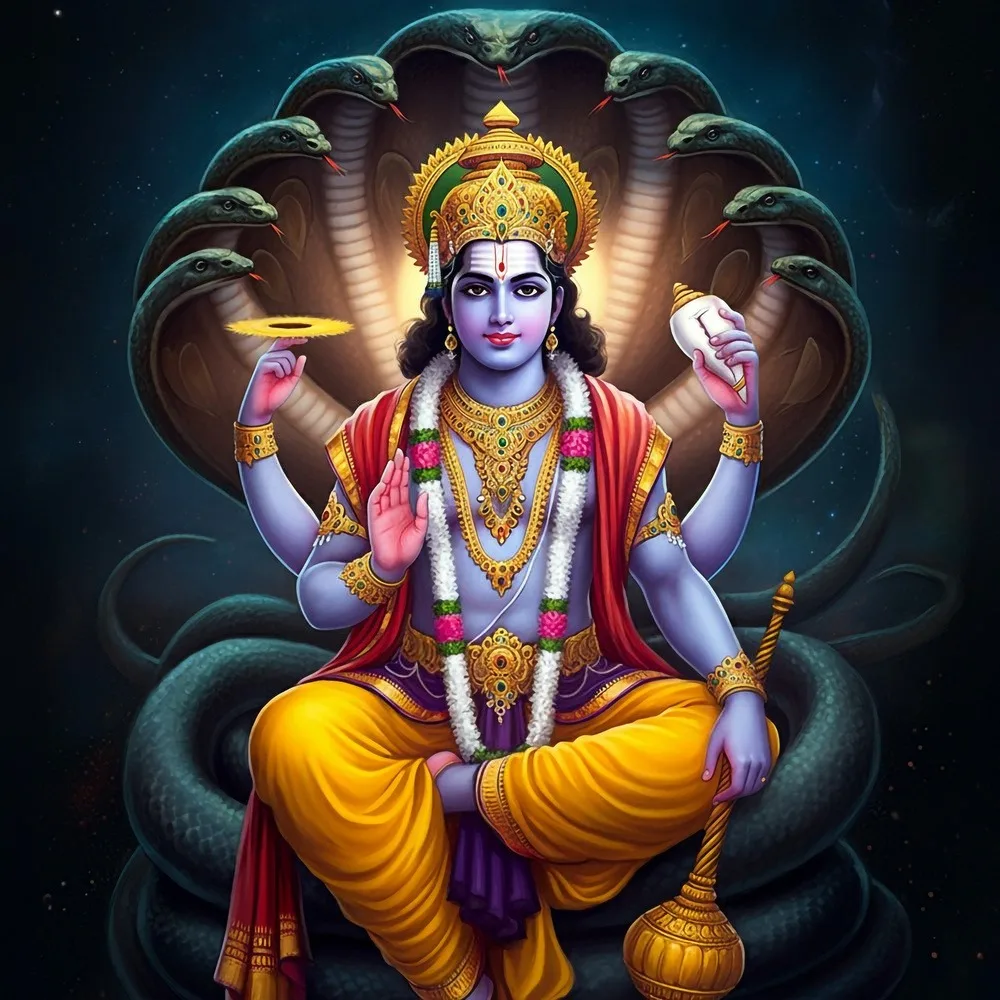
Lord Vishnu
Lord Vishnu as Satyanarayan is worshipped on this day
The Preserver of the Universe — the all-pervading Supreme Being who descends to Earth in divine avatars whenever righteousness declines and evil rises.
View deity →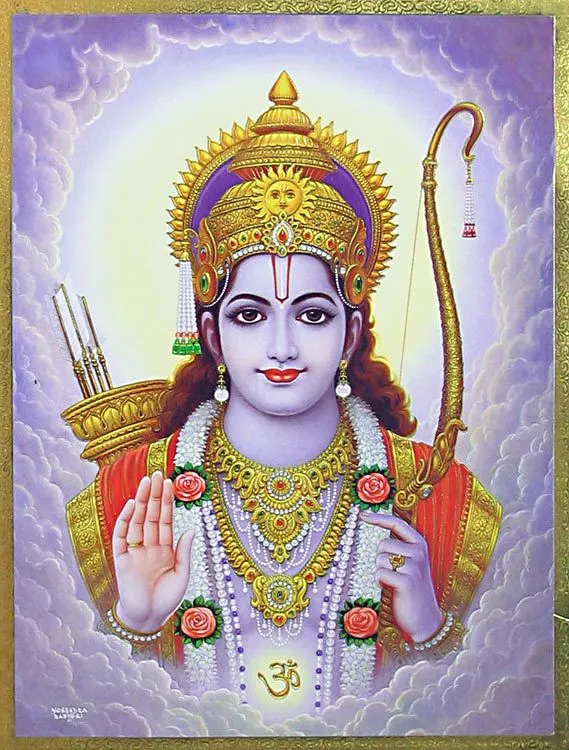
Lord Rama
Rama's victorious return to Ayodhya is commemorated on Gudi Padwa
The Ideal Man, Perfect King, and Seventh Avatar of Vishnu — whose life is the eternal standard of righteousness, duty, and devotion to dharma.
View deity →Gudi Padwa is primarily associated with Lord Brahma, the Creator, as the festival commemorates his act of creation on this very day. Brahma is worshipped as the source of time, cosmic order, and new beginnings. In some traditions, the Gudi itself represents Brahmadhwaj — the flag of Brahma.
Lord Vishnu and his avatar Lord Rama are also central to Gudi Padwa celebrations. The festival marks Rama's victorious return to Ayodhya, and in many households prayers are offered to Rama and Sita. The Gudi is also interpreted as a symbol of Rama's victory banner raised by the people of Ayodhya.
Satyanarayan Puja — a worship of Lord Vishnu as Satyanarayan — is commonly performed on this day, seeking blessings for the new year. In some Maharashtrian communities, Goddess Shakti is also honoured as the divine feminine energy that sustains creation. The brass pot atop the Gudi is associated with Brahma's Kamandalu (sacred water pot), and the silk cloth represents royal authority blessed by the gods.
How to celebrate Gudi Padwa Samvatsar Padvo 2026
Gudi Padwa is celebrated as Ugadi by the people of Karnataka and Andhra Pradesh. Both Gudi Padwa and Ugadi are celebrated on the same day. Gudi Padwa is Marathi New Year according to LuniSolar calendar. LuniSolar calendars consider the position of the Moon and the position of the Sun to divide the year into months and days. The counterpart of LuniSolar calendar is Solar calendar which considers only position of the Sun to divide the year into months and days. Because of that Hindu New Year is celebrated twice in the year with different names and at two different times of the year. The Hindu New Year based on Solar calendar is known as Puthandu in Tamil Nadu, Bihu in Assam, Vaisakhi in Punjab, Pana Sankranti in Orissa and Naba Barsha in West Bengal. The day begins with ritual oilbath followed by prayers. Oil bath and eating Neem leaves are must rituals suggested by scriptures. North Indians do not celebrate Gudi Padwa but start nine days Chaitra Navratri Puja on the same day and also eat Neem with Mishri on the very first day of Navratri.
Spiritual benefits
- Seeking divine blessings for health, prosperity, and success in the new year
- Purification of body and mind through ritualistic bath and neem prasad
- Protection of the home from negative energies through the auspicious Gudi
- Strengthening of family bonds through shared rituals and feasting
- Accumulation of spiritual merit by performing puja and visiting temples
- Auspicious timing for new ventures, investments, and important decisions
- Connection to cultural heritage and ancestral traditions of Maharashtra
- Inner renewal — releasing the past year's burdens and embracing fresh beginnings
Mantras & sacred chants
Om Brahmaaya Namaha (ॐ ब्रह्माय नमः) — Salutation to Lord Brahma, the Creator; chanted while erecting the Gudi to invoke cosmic blessings for the new year.
Om Namo Bhagavate Vasudevaaya (ॐ नमो भगवते वासुदेवाय) — The twelve-syllable mantra of Lord Vishnu/Rama; recited during Satyanarayan puja and temple visits to seek protection and grace throughout the year.
Sharva Mangala Maangalye Shive Sarvartha Saadhike, Sharanye Tryambake Gauri Narayani Namostute (सर्वमङ्गलमाङ्गल्ये शिवे सर्वार्थसाधिके। शरण्ये त्र्यम्बके गौरि नारायणि नमोऽस्तुते।) — A universal prayer for auspiciousness and well-being, traditionally recited at the start of any new beginning.
Gudi Padwa Samvatsar Padvo 2026 — FAQs
Gudi Padwa 2026 falls on Thursday, March 19, 2026. It is celebrated on Chaitra Shukla Pratipada, the first day of the Hindu month of Chaitra.
Gudi Padwa marks the Maharashtrian New Year. It commemorates Lord Brahma's creation of the universe, Lord Rama's victorious return to Ayodhya, and Chhatrapati Shivaji's military victories. The Gudi erected outside homes symbolises victory, prosperity, and divine blessing.
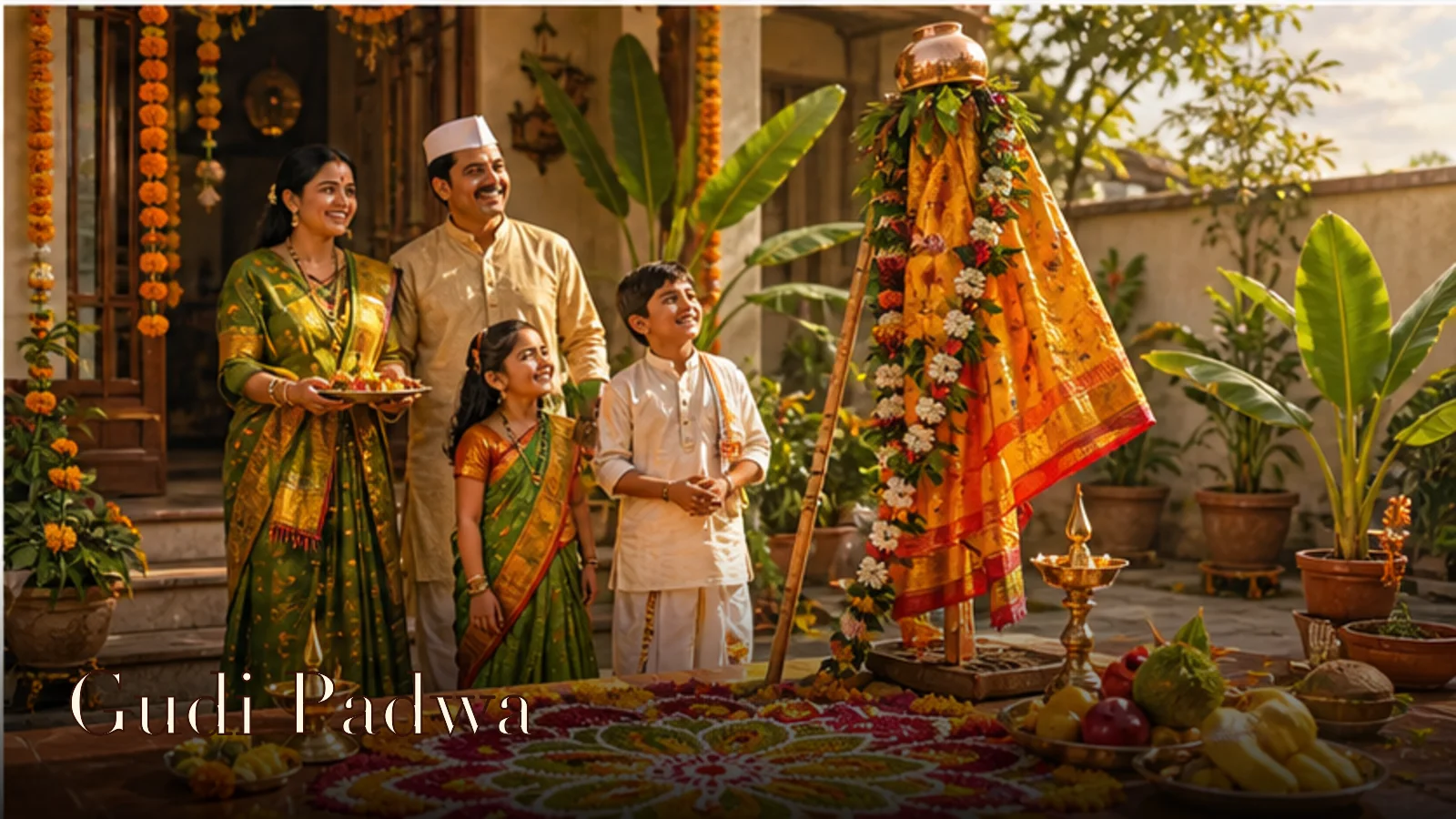
A Gudi is made by tying bright silk cloth, a garland of flowers, neem leaves, and an inverted brass pot on top of a bamboo pole. It is erected outside homes at sunrise to invite divine blessings, ward off evil, and celebrate the new year.
Traditional foods include puran poli (sweet flatbread with chana dal and jaggery), shrikhand with puri, aamras, and varan bhaat. A small amount of neem mixed with jaggery and tamarind is eaten first as health prasad.
Yes, Gudi Padwa and Ugadi fall on the same day — Chaitra Shukla Pratipada. Gudi Padwa is the Maharashtrian and Konkani celebration, while Ugadi is celebrated in Karnataka, Andhra Pradesh, and Telangana with similar traditions.
The Gudi itself is worshipped with incense, diyas, flowers, and akshat. Many families also perform Satyanarayan Puja. The day begins with oil bath, neem prasad, and temple visits.
Yes, Gudi Padwa is considered one of the most auspicious muhurat days of the year for buying gold, jewellery, vehicles, and property, and for starting new businesses or ventures.
Gudi Padwa puja vidhi: Sunrise snan, neem-gudacha prasad, Gudi erection with silk-tamba-neem-phule, dhoopbatti-divyanchi puja, mantra paath, puran poli prasad, devalyala bheti, ani sandhyakaali Gudi utravava.