About Janaki Navami
Last updated:
Janaki Navami, also known as Sita Navami or Sita Jayanti, commemorates the divine birth of Goddess Sita — the beloved consort of Lord Rama and a central figure of the Ramayana. Observed on Vaishakha Shukla Navami — the ninth day of the bright fortnight in the month of Vaishakha — the festival honors the extraordinary circumstances of Sita's birth: she was not born of a woman but emerged from the earth itself as the daughter of Mother Earth (Bhumi Devi) and was discovered in a sacred furrow by King Janaka of Mithila as he ploughed the ground in preparation for a yajna. This miraculous birth gave Sita her other names: Bhumija (earth-born) and Maithili (princess of Mithila). The festival is celebrated with particular grandeur in Janakpur, Nepal — the ancient capital of the Mithila kingdom and the birthplace of Sita — where the magnificent Janaki Mandir draws tens of thousands of pilgrims on this day. In , Sitamarhi in Bihar — identified as the spot where Sita was discovered — is the other major center of celebration. Temples dedicated to Sita-Rama across hold special puja, the Ramayana is recited, and devotees offer prayers seeking marital happiness, virtue, and the blessings of the divine couple. In some traditions, Janaki Navami is observed on the same day or near Rama Navami (the birthday of Lord Rama), emphasizing the eternal and inseparable bond between Rama and Sita. Sita is worshipped as the ideal of pativrata (devoted wife), as Shakti manifest in the domestic sphere, and as the goddess who willingly underwent trials of fire (Agni Pariksha) to demonstrate her purity. Her story transcends biography and becomes a philosophical and spiritual teaching on devotion, endurance, and inner purity.
Significance of Janaki Navami
Janaki Navami carries deep spiritual, cultural, and social significance that resonates through Hindu dharma: - Celebration of the Divine Feminine: Sita represents the highest ideal of stree shakti — the power of a woman rooted in virtue, patience, and unwavering devotion. Her birthday is an occasion to honor the sacred feminine in its most serene and powerful form. - Earth's Gift to Humanity: As Bhumija (born of the earth), Sita embodies the fertility, sustenance, and unconditional love of Mother Earth. Her birth from the soil symbolizes purity beyond human conception — a soul untainted by karmic accumulation. - Devotion to Dharma: Sita's life story is a masterclass in adherence to dharma under the most extreme circumstances — exile, abduction, separation — making her an eternal inspiration for devotees facing adversity. - Marital Harmony and Blessing: Married women observe Janaki Navami fasts and pujas to invoke blessings for their husbands' longevity, marital happiness, and a loving household — just as Sita's devotion to Rama represents the ideal of sacred partnership. - The Inseparability of Rama-Sita: In Vaishnava theology, Sita is Lakshmi herself — the eternal consort of Vishnu/Rama. Worshipping Sita invokes the complete blessing of the divine couple. - Cultural Heritage of Mithila: Janaki Navami celebrates the glorious Mithila civilization — known for its Madhubani art, scholarship, and the Janaka tradition of philosopher-kings — honoring Sita as its greatest gift to the world.
Deities worshipped on Janaki Navami
Follow the links to explore each deity’s mantras, stories, and temples on Temples.bio.
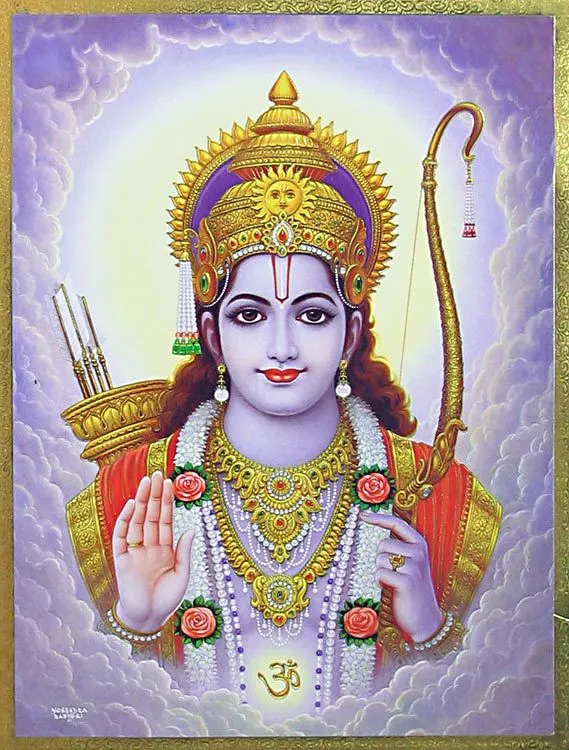
Lord Rama
Divine consort of Sita, worshipped together as the eternal couple
The Ideal Man, Perfect King, and Seventh Avatar of Vishnu — whose life is the eternal standard of righteousness, duty, and devotion to dharma.
View deity →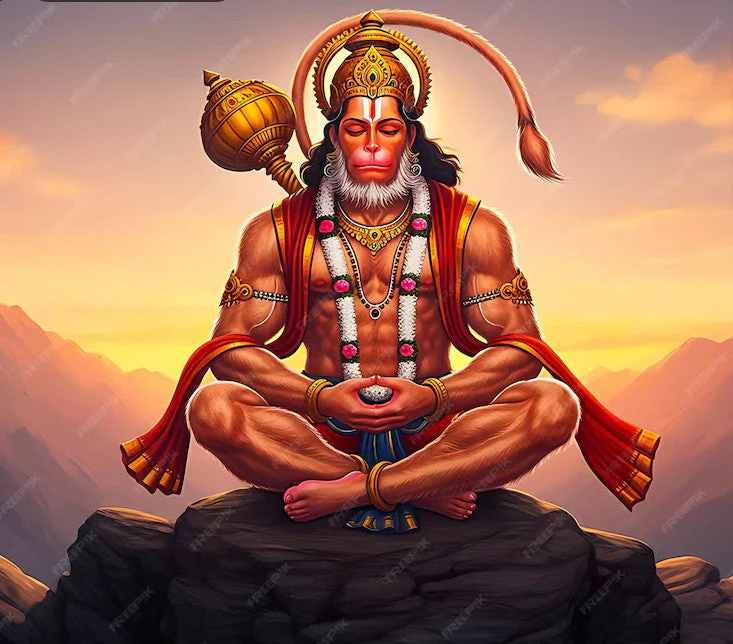
Lord Hanuman
Devoted servant of Sita-Rama, always present in their worship
The Eternal Devotee of Lord Rama — Embodiment of Strength, Courage and Selfless Service.
View deity →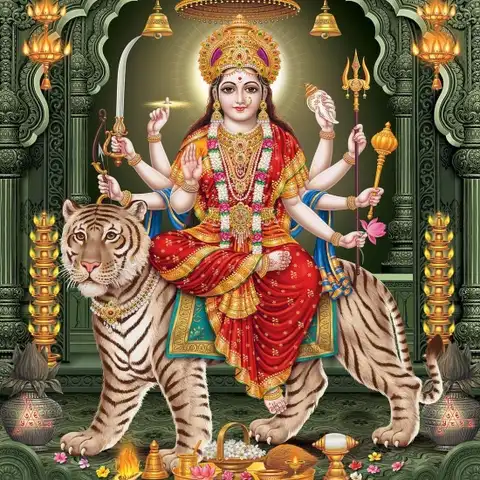
Goddess Lakshmi
Sita is an avatar of Lakshmi who descended to earth as Rama's consort
The Invincible Mother Goddess — Supreme Feminine Power who destroys evil, protects the righteous, and embodies the divine energy of the entire universe.
View deity →Goddess Sita (Janaki) is the central deity of Janaki Navami. She is revered as an avatar of Goddess Lakshmi — the divine consort of Vishnu who manifested on earth as Sita to accompany Rama in his divine mission. Sita is addressed by many names that reflect her divine qualities: Janaki (daughter of Janaka), Maithili (princess of Mithila), Vaidehi (from Videha kingdom), Bhumija (earth-born), Ramaa (beloved of Rama), and Jankivallabha's Shakti.
Lord Rama is worshipped alongside Sita on this occasion, as the divine couple is always venerated together in the Vaishnava tradition. The image of Sita-Rama seated together, with Lakshmana and Hanuman in attendance, is the most worshipped icon on Janaki Navami. Hanuman's presence is also significant — his unswerving devotion to Sita-Rama makes him an inevitable part of any Rama-related festival. Devotees who worship Sita on her birthday receive the combined blessings of the entire divine household of Ayodhya.
How to celebrate Janaki Navami 2026
Step 1: Wake at sunrise, take a purifying bath with sesame or neem water, and wear clean white or yellow clothes.
Step 2: Establish a puja altar with an image or idol of Goddess Sita — ideally the Sita-Rama-Lakshmana-Hanuman group image.
Step 3: Observe the Navami fast — as on Rama Navami, this is a significant fast day. Fruits, milk, and sattvic food are permitted; grains are avoided.
Step 4: Begin puja with the invocation of Mother Earth (Bhumi Devi), as Sita is her daughter — place some clean earth or soil near the altar and offer flowers.
Step 5: Perform Shodashopachar Puja to Goddess Sita — offer red or white flowers (especially lotus and jasmine), fruits, sindoor (vermilion), and a specially made sweet such as panchamrit.
Step 6: Recite the Sita Ashtottara Shatanama (108 names of Sita) or the relevant sections of Valmiki Ramayana — particularly the Bal Kanda describing her divine birth.
Step 7: Read or listen to the Sita Chalisa or recite the Sundar Kanda of the Ramayana, which describes Hanuman's search for Sita and her unwavering devotion in captivity.
Step 8: Offer sindoor, a red sari or cloth, bangles, and flowers to Sita — these are the markers of a blessed married woman and carry deep symbolic meaning.
Step 9: Married women perform the puja with specific intent for the long life and health of their husbands; unmarried women pray for a virtuous husband.
Step 10: Conclude with aarti of Sita-Rama, distribute prasad, and if possible donate food, clothing, or money to women in need in honor of Sita's compassion.
Rituals & regional traditions
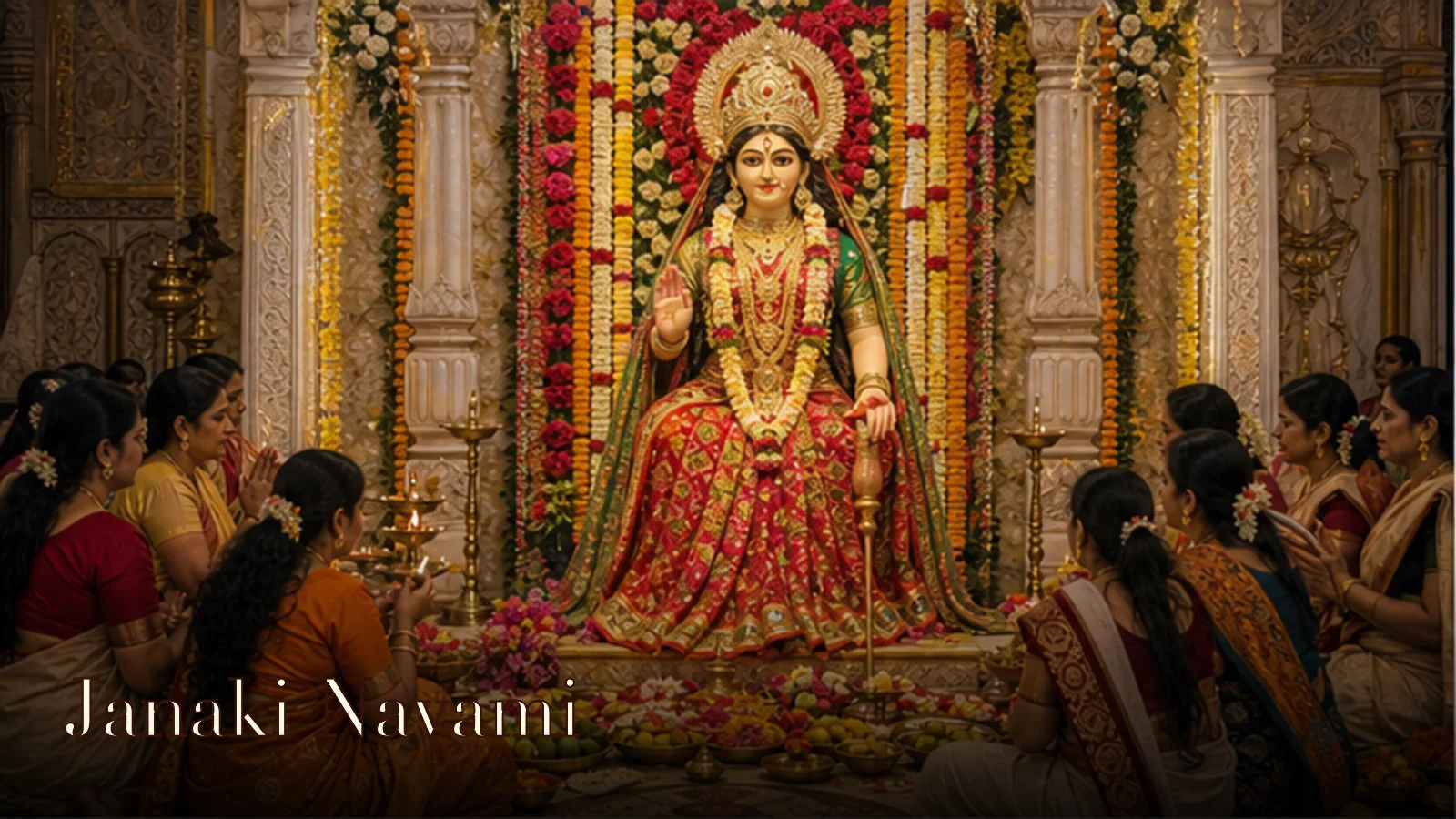
- Janakpur (Nepal) Celebrations: The Janaki Mandir in Janakpur holds a magnificent puja attended by tens of thousands of pilgrims. The temple is decorated with flowers and lights, and the silver image of Sita is adorned with new jewelry and garments.
- Sitamarhi (Bihar) Mela: A large fair is held at Sitamarhi, believed to be the exact spot where Sita emerged from the earth. Devotees take a holy dip at Janaki Kund and circumambulate the temple.
- Ramayana Recitation: Continuous recitation (Akhand Paath) of the Ramayana — especially the Bal Kanda describing Sita's birth and Sita Swayamvara — is conducted at temples and homes.
- Saubhagya Puja by Married Women: Married women in North India and Nepal perform special Saubhagya Puja (puja for husband's wellbeing) with sindoor, flowers, and red cloth offered to Sita.
- Flower Decoration of the Furrow: At some temples, a symbolic furrow (halrekha) is decorated with flowers and the image of Sita is placed in it, recreating the moment of her miraculous discovery.
- Distribution of Janaki Prasad: Temples distribute yellow rice (turmeric rice), panchamrit, and sweets as prasad in honor of Sita's birth.
- Bridal Adornment of Sita: Sita's idol or image is dressed as a bride on this day in many temples, celebrating her both as Janaka's daughter and as Rama's eternal consort.
Spiritual benefits
- Blessings for marital harmony and a loving, long-lasting marriage — as Sita embodies the highest ideal of sacred partnership.
- Fulfillment of the desire for a virtuous life partner for unmarried devotees who observe the Janaki Navami fast with sincere prayer.
- Grace of Lakshmi Devi — since Sita is Lakshmi's earthly form, worshipping Sita on her birthday invites abundance, domestic peace, and prosperity.
- Strength and inner resilience to face adversity — Sita's story teaches that purity and righteousness cannot be destroyed by any external force.
- Purification of past karma through the powerful merit of worshipping the divine mother on her birthday in the auspicious month of Vaishakha.
- Children's wellbeing and virtue — Sita as the ideal mother (Sitamaiya) is invoked for blessings upon children, ensuring they grow in righteousness and love.
- Liberation of ancestral souls — offering Tarpan (water libation) or donations in Sita's name on her birthday is believed to benefit one's ancestors.
- Enhancement of feminine virtues — patience, compassion, self-respect, and wisdom — in all who worship Sita with devotion on this day.
Mantras & sacred chants
Sita Gayatri Mantra:
Sanskrit: ॐ जानकीदेव्यै विद्महे, भूमिजायै धीमहि, तन्नः सीता प्रचोदयात्॥
(Om Janakidevyai Vidmahe, Bhumijayai Dhimahi, Tannah Sita Prachodayat)
Meaning: "We meditate upon the great Goddess Janaki, we contemplate upon Bhumija (earth-born Sita). May that Sita illuminate our intellect and inspire us." This Gayatri mantra specifically invokes Sita's wisdom, purity, and divine light.
Sita Ashtakam Verse:
Sanskrit: जनक राजकिशोरी जय जय माधव प्रिये। (Janaka Raja Kishori Jaya Jaya Madhava Priye)
Meaning: "Victory, victory to the daughter of King Janaka, the beloved of Lord Madhava (Vishnu/Rama)." This celebratory verse from the Sita Ashtakam is sung at Janaki Navami in temples across India and Nepal.
Rama-Sita Vandana:
Sanskrit: ॐ श्री सीतारामाभ्यां नमः (Om Sri Sitaramabhyam Namah)
Meaning: "I bow to the divine couple Sri Sita and Sri Rama." In Vaishnava tradition, Sita's name precedes Rama's — "Sita-Ram" — as the Shakti is always invoked first. This simple yet profound mantra encapsulates the complete divine blessing of the eternal couple.
Janaki Navami 2026 — FAQs
Janaki Navami 2026 (Sita Navami / Sita Jayanti) falls on Monday, April 27, 2026. It is observed on Vaishakha Shukla Navami — the ninth day of the bright fortnight in the Hindu month of Vaishakha.
Janaki Navami, also called Sita Navami or Sita Jayanti, commemorates the birthday of Goddess Sita — the consort of Lord Rama and an avatar of Lakshmi. Sita was miraculously born from the earth and discovered by King Janaka of Mithila as he ploughed the ground for a yajna.
Sita is called Janaki because she is the daughter (putri) of King Janaka of Mithila. Though she was earth-born (Bhumija), King Janaka adopted her as his daughter after finding her in a furrow. Other names include Maithili (from Mithila), Vaidehi (from Videha kingdom), and Bhumija (earth-born).
Janaki Navami is celebrated most grandly at Janaki Mandir in Janakpur, Nepal — the birthplace of Sita — where tens of thousands of pilgrims gather. In India, Sitamarhi in Bihar (where Sita is believed to have emerged from the earth) holds a large mela and pilgrimage on this day.
Janaki Navami puja includes waking at sunrise, taking a bath, observing a fast, worshipping Sita-Rama with flowers, sindoor, and red cloth, reciting the Sita Ashtottara (108 names), reading the Bal Kanda of Ramayana, and offering prasad. Married women perform Saubhagya puja for their husband's longevity.
No, they are different festivals, though both fall on Navami (ninth day). Rama Navami celebrates Lord Rama's birthday on Chaitra Shukla Navami. Janaki Navami celebrates Sita's birthday on Vaishakha Shukla Navami — approximately a month later. In some traditions they are celebrated together as the divine couple's joint festival.
Fasting on Janaki Navami is believed to bestow blessings for marital harmony, the longevity of one's husband, fulfillment of the desire for a virtuous spouse, abundance through Lakshmi's grace, and the strength of Sita's own virtues — patience, purity, and inner resilience — in the devotee's life.
According to the Valmiki Ramayana, King Janaka of Mithila was ploughing a field to purify the earth for a yajna when his plough struck the ground and a baby girl emerged from the furrow. He named her Sita (furrow) and raised her as his daughter. She is considered an avatar of Goddess Lakshmi who descended to earth to accompany Vishnu's avatar Rama.