About Makara Vilakku
Last updated:
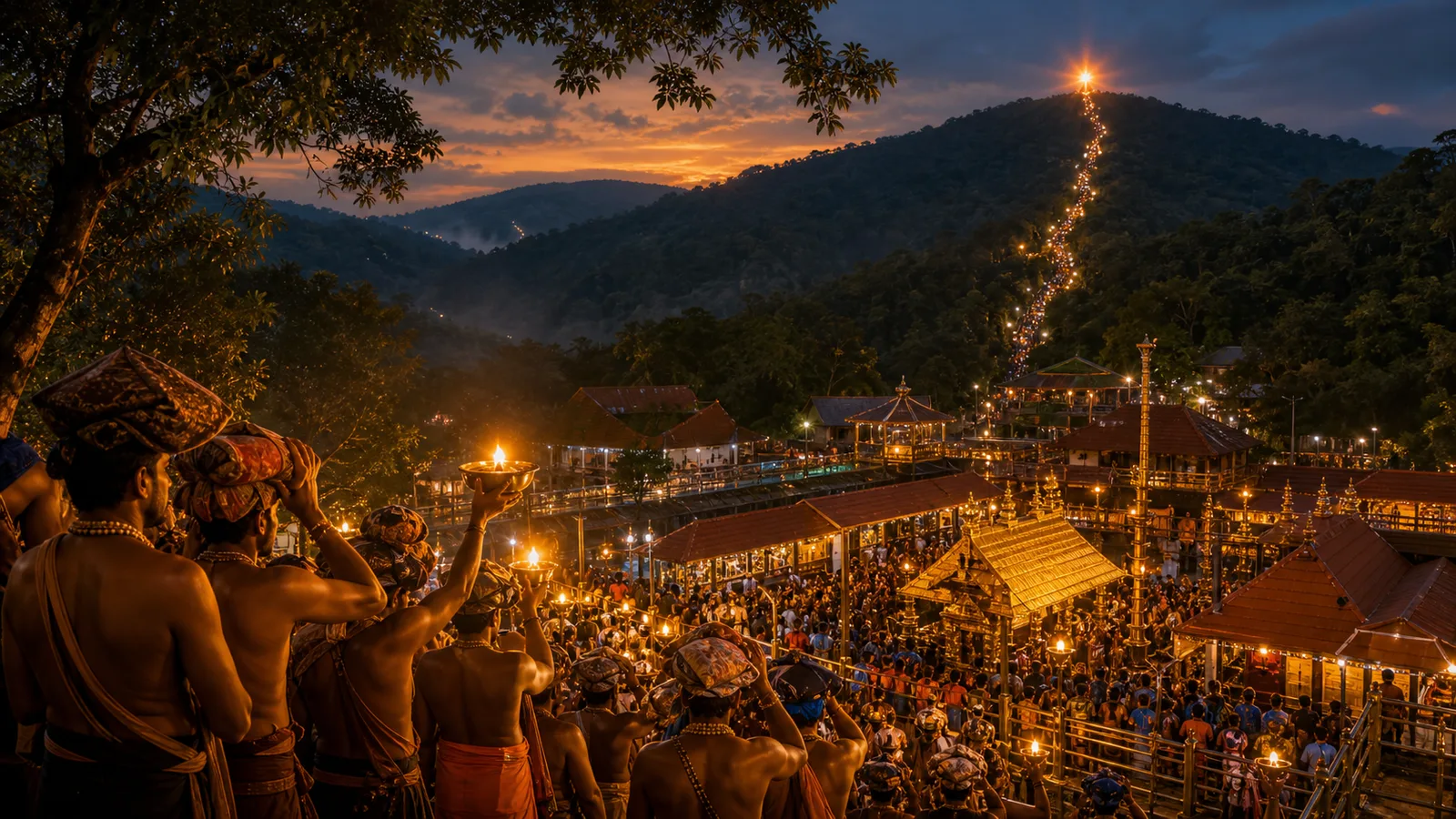
Makara Vilakku is one of the most awe-inspiring and spiritually charged festivals in the Hindu calendar, celebrated annually at the sacred Sabarimala Ayyappa Temple in Kerala on the auspicious day of Makar Sankranti (January 14). In 2026, Makara Vilakku falls on January 14th, drawing millions of pilgrims who have completed the rigorous 41-day Mandalam vow to witness the miraculous appearance of the Makara Jyothi — a celestial star-like light that blazes on the distant Ponnambalamedu hill in the Western Ghats jungle at nightfall.
The festival marks the culmination of the Mandalam season — the sacred 41-day period of intense austerities observed by Ayyappa devotees (Ayyappans) beginning from Mandala Pooja in late November or early December. Pilgrims undertake strict vows of celibacy, vegetarianism, and brahmacharya for 41 days, wearing black or blue garments, carrying the sacred Irumudi (twin pouches) on their heads, and abstaining from worldly pleasures. The journey to Sabarimala itself, which involves a forest trek through the Periyar Tiger Reserve, is part of the penance. Reaching Sabarimala and witnessing the Makara Jyothi on Makara Vilakku night is considered the supreme reward for their months of devotion.
The miraculous Makara Jyothi sighting is a moment of profound spiritual ecstasy for the assembled millions. As darkness falls on Makar Sankranti night, a brilliant star-like light is said to appear three times in the sky above the Ponnambalamedu hill, visible from the temple premises. Devotees believe this is Lord Ayyappa himself appearing to bless his children, fulfilling his divine promise. The sight of the Makara Jyothi sends waves of ecstatic devotion through the assembled multitudes, who cry out "Swamiye Saranam Ayyappa" ("Lord Ayyappa, I seek your refuge") in unison. Simultaneously, the Makara Vilakku — the sacred lamp — is lit inside the temple sanctum, marking the onset of Makaravilakkam. Coinciding with Thai Pongal in Tamil Nadu and Makar Sankranti across India, this festival beautifully unites multiple Hindu traditions in a single transcendent celebration.
Significance of Makara Vilakku
The Multifaceted Significance of Makara Vilakku:
Makara Vilakku holds significance on astronomical, mythological, and spiritual levels that make it one of the most unique festivals in Hinduism:
- Astronomical Alignment: Makara Vilakku coincides with Makar Sankranti — the day the sun enters Capricorn (Makara Rashi) in its northward journey (Uttarayana). This solar transition is considered highly auspicious across all Hindu traditions, and the Makara Jyothi sighting on this precise astronomical moment deepens its cosmic significance.
- Mandalam Completion: For the hundreds of thousands of devotees who have observed the strict 41-day Mandalam vow, Makara Vilakku is the culminating moment — the divine reward for weeks of austerity, celibacy, and devotion. The sighting of the Jyothi confirms that their penance has been accepted by the Lord.
- The Makara Jyothi Miracle: The appearance of a brilliant light on the Ponnambalamedu hill — visible to millions gathered at Sabarimala — is believed to be a direct manifestation of Lord Ayyappa blessing his devotees. Whether understood as a natural phenomenon or divine miracle, its effect on assembled pilgrims is one of mass spiritual awakening.
- Lord Ayyappa's Divine Promise: Mythology holds that Lord Ayyappa himself promised to appear as the Jyothi (light) annually on Makar Sankranti night to reassure his devotees of his eternal presence and blessing.
- Pongal-Makara Vilakku Connection: In Tamil Nadu, the day is simultaneously Thai Pongal — the harvest festival. The convergence of Ayyappa worship and the Tamil harvest tradition on the same day creates a unique spiritual-cultural confluence celebrated by millions.
- Universal Brotherhood: The Sabarimala pilgrimage famously transcends caste, religion, and social distinctions — all Ayyappans are equal before the Lord. Makara Vilakku celebrates this egalitarian spirit on the grandest possible scale.
Deities worshipped on Makara Vilakku
Follow the links to explore each deity’s mantras, stories, and temples on Temples.bio.
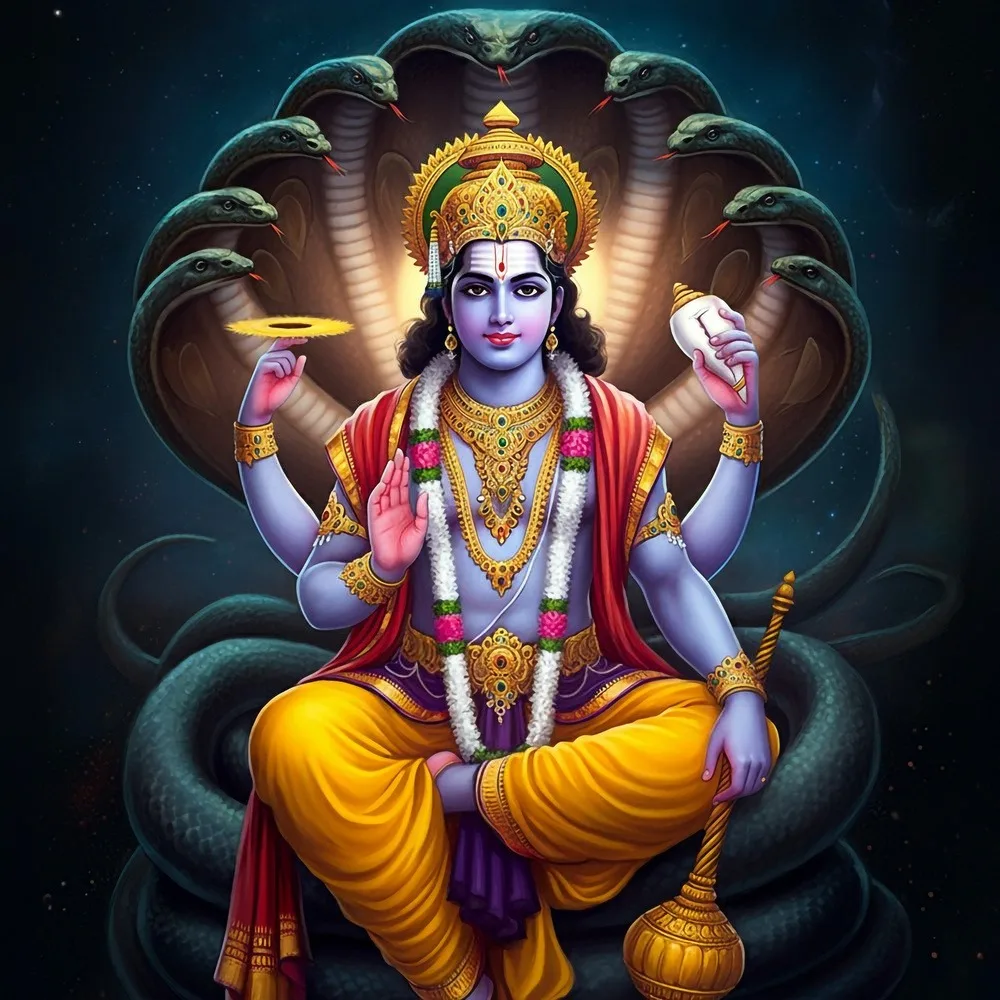
Lord Vishnu
Father of Ayyappa through his Mohini avatar; honoured as Ayyappa's Vaishnava parent
The Preserver of the Universe — the all-pervading Supreme Being who descends to Earth in divine avatars whenever righteousness declines and evil rises.
View deity →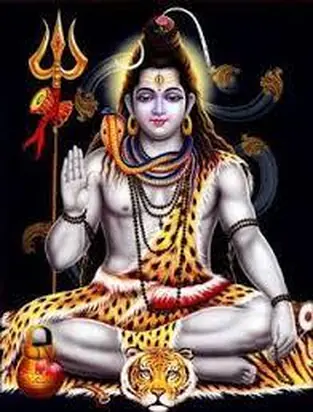
Lord Shiva
Father of Ayyappa in his Shaiva aspect; Harihara — the union of Shiva and Vishnu — is venerated
The Supreme Destroyer and Transformer of the Universe — The Adiyogi, Lord of Lords, and the First Yogi.
View deity →Lord Ayyappa — The Presiding Deity:
Lord Ayyappa, also known as Manikanta, Dharma Sasta, and Hari-Hara Putra, is the central deity of Makara Vilakku. He is the son born of the divine union of Lord Vishnu (in his Mohini avatar) and Lord Shiva — making him uniquely the child of both the Preserver and the Destroyer in the Hindu Trinity. Ayyappa embodies the perfect synthesis of Shaiva and Vaishnava traditions (Harihara). He is depicted as a celibate yogi seated in padmasana with a jewel (Mani) around his neck, symbolising his role as the guardian of dharma and the destroyer of ignorance and evil.
At Sabarimala, Ayyappa is worshipped in his Brahmacharya (celibate ascetic) form — which is why traditionally women of menstruating age were restricted from the temple. He is the fierce protector who slayed the demoness Mahishi, but also the compassionate guide who personally escorts sincere devotees through the Makara Jyothi vision toward liberation.
Lord Shiva and Lord Vishnu:
As the parents of Ayyappa, both Shiva and Vishnu are honoured during the Makara Vilakku celebrations. The festival thus brings together devotees of both Shaiva and Vaishnava traditions in a unique expression of Hindu unity.
Vavar Swami:
The Muslim saint Vavar, a loyal companion and devotee of Lord Ayyappa, is also revered during the Sabarimala pilgrimage. Pilgrims traditionally stop at Vavar's mosque in Erumeli before commencing the forest trek to Sabarimala, embodying the inclusive spirit of Ayyappa worship.
How to celebrate Makara Vilakku 2026
Complete Guide to Observing Makara Vilakku:
1. Begin the 41-Day Mandalam Vow (Diksha): Ideally, the pilgrimage begins with taking Diksha (initiation) from a Guru on the first day of Mandalam season. Wear black or blue garments throughout the 41 days. Observe strict vegetarianism, celibacy, abstain from alcohol and tobacco, sleep on the floor, and worship Lord Ayyappa daily.
2. Prepare the Irumudi: The Irumudi is a twin-pouch cloth bag — the front pouch (Munmudi) contains sacred items for the deity (coconut filled with ghee, camphor, betel leaves, flowers, sacred ash) and the rear pouch (Pinmudi) contains personal provisions for the journey. The Irumudi must be carried on the head throughout the trek.
3. Stop at Erumeli: Before beginning the forest trek, visit the Erumeli Petta Thullal (a ritual folk dance) and Vavar's mosque as tradition demands.
4. Trek through the Forest: The traditional Sabarimala route involves a forest trek of approximately 61 km through the Periyar Tiger Reserve. Modern facilities also exist with vehicle access to Pampa base camp and a shorter 4-km trek from Pampa to the temple.
5. Take a Ritual Bath at Pampa River: At Pampa (Pamba), bathe in the sacred Pampa River — believed to wash away all sins accumulated during the journey and prepare the body and soul for the divine darshan.
6. Climb the 18 Holy Steps (Pathinettam Padi): The 18 golden steps leading to the main sanctum represent the 18 hills of Sabarimala and the 18 Puranas. Only those carrying the Irumudi on their heads may climb these steps.
7. Darshan of Lord Ayyappa: Receive the sacred darshan of Lord Ayyappa in the inner sanctum. Apply sacred ash (vibhuti) from the temple to the forehead.
8. Witness the Makara Jyothi: Gather with all assembled pilgrims to witness the appearance of the Makara Jyothi on the Ponnambalamedu hill at nightfall on Makar Sankranti (January 14, 2026). This is the spiritual climax of the pilgrimage.
9. Break the Fast and Open the Irumudi: After darshan and Jyothi sighting, break your fast. Open the coconut from the Irumudi and offer its ghee contents to the temple.
10. Return and Remove Diksha: After safely returning home, remove the Diksha garments (black/blue clothing) in a formal ceremony, marking the completion of the vow.
Rituals & regional traditions
Regional Traditions and Customs of Makara Vilakku:
- Kerala (Sabarimala): The epicentre of celebrations. The 41-day Mandalam vow, Irumudi preparation, forest trek, Pampa river bath, 18-steps climb, and Makara Jyothi sighting are all Kerala-centric traditions. The Kerala Forest Department, Travancore Devaswom Board, and state government manage the massive pilgrimage logistics.
- Tamil Nadu (Thai Pongal Connection): In Tamil Nadu, Makara Vilakku coincides with Thai Pongal. Many Tamil Ayyappa devotees undertake the Sabarimala pilgrimage specifically during this time, chanting Ayyappa bhajans in Tamil. The phrase "Makara Vilakku" is widely used in Tamil, connecting the festival to the harvest season.
- Karnataka: Large numbers of Ayyappa devotees from Karnataka (especially from Mysuru, Bengaluru, and coastal Karnataka) undertake the Sabarimala pilgrimage for Makara Vilakku. Kannada Ayyappa mandals organize group pilgrimages.
- Andhra Pradesh and Telangana: Telugu devotees form one of the largest groups at Sabarimala. Many Ayyappa temples in these states hold special Makara Vilakku celebrations with lamp-lighting ceremonies and bhajan nights.
- Erumeli Petta Thullal: The unique folk ritual at Erumeli involving a procession and ritual dance (Thullal) performed by pilgrims is a tradition exclusive to the Sabarimala route.
- Temple Celebrations Across South India: Even Ayyappa temples outside Sabarimala — from Chennai to Hyderabad to Coimbatore — observe Makara Vilakku with special pujas, lamp festivals, and all-night devotional singing.
Spiritual benefits
Spiritual Benefits of the Makara Vilakku Pilgrimage:
- Moksha and Liberation: Completing the Sabarimala pilgrimage and witnessing the Makara Jyothi is believed to grant liberation from the cycle of rebirth — Ayyappa is said to personally guide sincere devotees toward moksha.
- Purification through Penance: The 41-day Mandalam vow is one of the most intensive spiritual disciplines in Hinduism. Observers emerge spiritually purified, with strengthened willpower, mental clarity, and reduced ego.
- Destruction of Negative Karma: Lord Ayyappa, as the slayer of Mahishi (the demon of accumulated karma), is believed to destroy the negative karmic burden of devotees who undertake the pilgrimage with sincerity.
- Healing and Physical Wellbeing: The austere lifestyle, vegetarian diet, forest trek, and river bath during the pilgrimage are believed to heal physical ailments and strengthen the body as much as the soul.
- Fulfilment of Vows (Nerchas): Devotees who made specific vows (like undertaking 18 or 41 pilgrimages) receive the fulfilment of their prayers — be it for children, health, career success, or resolution of family disputes.
- Inner Transformation: The discipline of Mandalam Diksha — 41 days without alcohol, non-vegetarian food, and worldly distractions — permanently transforms the habits and consciousness of many devotees.
- Divine Darshan: Simply witnessing the Makara Jyothi with sincere devotion is said to bestow immense grace, equivalent to a lifetime of spiritual practice.
Mantras & sacred chants
Key Mantras and Chants for Makara Vilakku / Ayyappa Worship:
1. Ayyappa Saranam Mantra (Primary Pilgrimage Chant)
Malayalam/Sanskrit: സ്വാമിയേ ശരണം അയ്യപ്പ
Transliteration: Swamiye Saranam Ayyappa
Meaning: "Lord Ayyappa, I seek your refuge / I surrender to you, O Lord." This is the quintessential chant of the Sabarimala pilgrimage, chanted continuously by pilgrims throughout the journey and at the peak moment of the Makara Jyothi sighting.
2. Ayyappa Ashtakam (Eight-Verse Hymn)
Key verse in Sanskrit: भूतनाथं सदानन्दं भक्ताभीष्टफलप्रदम् ।
नमामि शास्तारं देवं नमो ऽस्तु धर्मरक्षिणे ॥
Transliteration: Bhutanatham Sadanandam Bhakta-abhishta-phala-pradam,
Namami Shastaram Devam Namo'stu Dharma-rakshine.
Meaning: "I bow to the Lord of all beings, ever-blissful, who fulfils the desires of devotees. I salute the divine Sasta, the protector of dharma."
3. Harivarasanam (The Lullaby of Ayyappa)
Transliteration of opening line: Harivarasanam Vishwamohanam, Haridadasanam Mangalam Hareh,
Harivarasanam Daivajanam, Haridadasanam Mangalam Harey.
Meaning: "Ayyappa, the beautiful one who enchants the universe, seated on the divine seat of Hari (Vishnu), all auspiciousness to the Lord of Hari." Harivarasanam is sung every night as the temple closes, and its haunting melody is the last sound pilgrims hear at Sabarimala.
Makara Vilakku 2026 — FAQs
Makara Vilakku 2026 falls on January 14th, coinciding with Makar Sankranti — the day the sun enters Capricorn (Makara Rashi). This date remains consistent year to year as it follows the solar calendar. The Makara Jyothi sighting at Sabarimala occurs at nightfall on this date.
The Makara Jyothi is a miraculous star-like light that appears three times on the distant Ponnambalamedu hill (visible from Sabarimala temple) at nightfall on Makar Sankranti. Devotees believe this is Lord Ayyappa himself appearing to bless the assembled millions. The sighting is considered the spiritual climax of the Sabarimala pilgrimage and sends waves of ecstatic devotion through the crowd, who chant 'Swamiye Saranam Ayyappa' at that moment.
The Mandalam vow is a 41-day period of intense austerities observed by Ayyappa devotees before the pilgrimage. It involves wearing black or blue garments, strict vegetarianism, celibacy and brahmacharya, abstaining from alcohol and tobacco, sleeping on the floor, daily Ayyappa puja, and avoiding worldly entertainments. The vow begins 41 days before Makara Vilakku (typically in late November or early December) and is taken under the guidance of a Guru. Completing the vow transforms the devotee into a 'Ayyappan' qualified to undertake the Sabarimala pilgrimage.
The Irumudi is a sacred twin-pouch cloth bag that every Sabarimala pilgrim must carry on their head. The front pouch (Munmudi) contains ritual items for Lord Ayyappa — a coconut filled with ghee, camphor, sacred ash, betel leaves, and flowers. The rear pouch (Pinmudi) holds the pilgrim's personal provisions. Carrying the Irumudi on the head is mandatory for ascending the 18 holy steps. Without the Irumudi, a pilgrim cannot enter the sanctum. It symbolises carrying the burden of devotion above one's ego.
Sabarimala is located in the Pathanamthitta district of Kerala. The most common route is to travel to Pampa (accessible by road from Kottayam or Ernakulam) and then trek 4 km from Pampa to the temple. The traditional pilgrimage route from Erumeli involves a 61-km forest trek. Due to the massive crowds during Makara Vilakku, devotees are advised to book virtual queues through the official Sabarimala online booking system and plan their journey well in advance. The Kerala government operates special bus services from major cities.
Following the Supreme Court of India's 2018 judgment allowing women of all ages to enter Sabarimala, the legal position is that all devotees may visit. However, the traditional practice at this particular temple has historically restricted women of menstruating age (10–50 years). Devotees are advised to check current temple guidelines and Kerala government advisories before planning a visit. Women outside this age group — young girls and post-menopausal women — have traditionally been allowed and continue to visit the temple.
During the 41-day Mandalam vow and the pilgrimage itself, strict vegetarianism is mandatory. Avoid non-vegetarian food, onion, garlic, eggs, and alcohol completely. Preferred foods are simple sattvic meals — rice, dal, vegetables, fruits, and milk products. During the actual trek to Sabarimala, many pilgrims carry dry provisions like poha, chivda, fruits, and boiled rice. At the Pampa base camp, food stalls serve simple vegetarian meals. After breaking the coconut from the Irumudi, the ghee is offered to the temple and the coconut pieces are distributed as prasad.
Makara Vilakku and Thai Pongal both fall on Makar Sankranti (January 14), creating a meaningful convergence of traditions. Thai Pongal is the Tamil harvest festival celebrating the sun's northward journey (Uttarayana) with the boiling of the first harvest rice. Many Tamil Ayyappa devotees combine both celebrations — observing Pongal at home in the morning and undertaking or completing the Sabarimala pilgrimage for Makara Vilakku. The shared solar astronomical basis unites these traditions in a beautiful expression of South Indian culture.