About Onam
Last updated:
Onam is the most celebrated festival of Kerala, observed over ten magnificent days during the Malayalam month of Chingam (August–September). It commemorates the mythological golden age of King Mahabali, the benevolent asura king who ruled Kerala with absolute justice and equality. According to legend, Lord Vishnu, in his Vamana avatar, pushed Mahabali into the netherworld (Patala) to restore cosmic balance, but granted him the boon to visit his beloved subjects once every year. Onam is that cherished annual reunion, and every Keralite welcomes their beloved king with elaborate preparations, vibrant rituals, and heartfelt devotion.
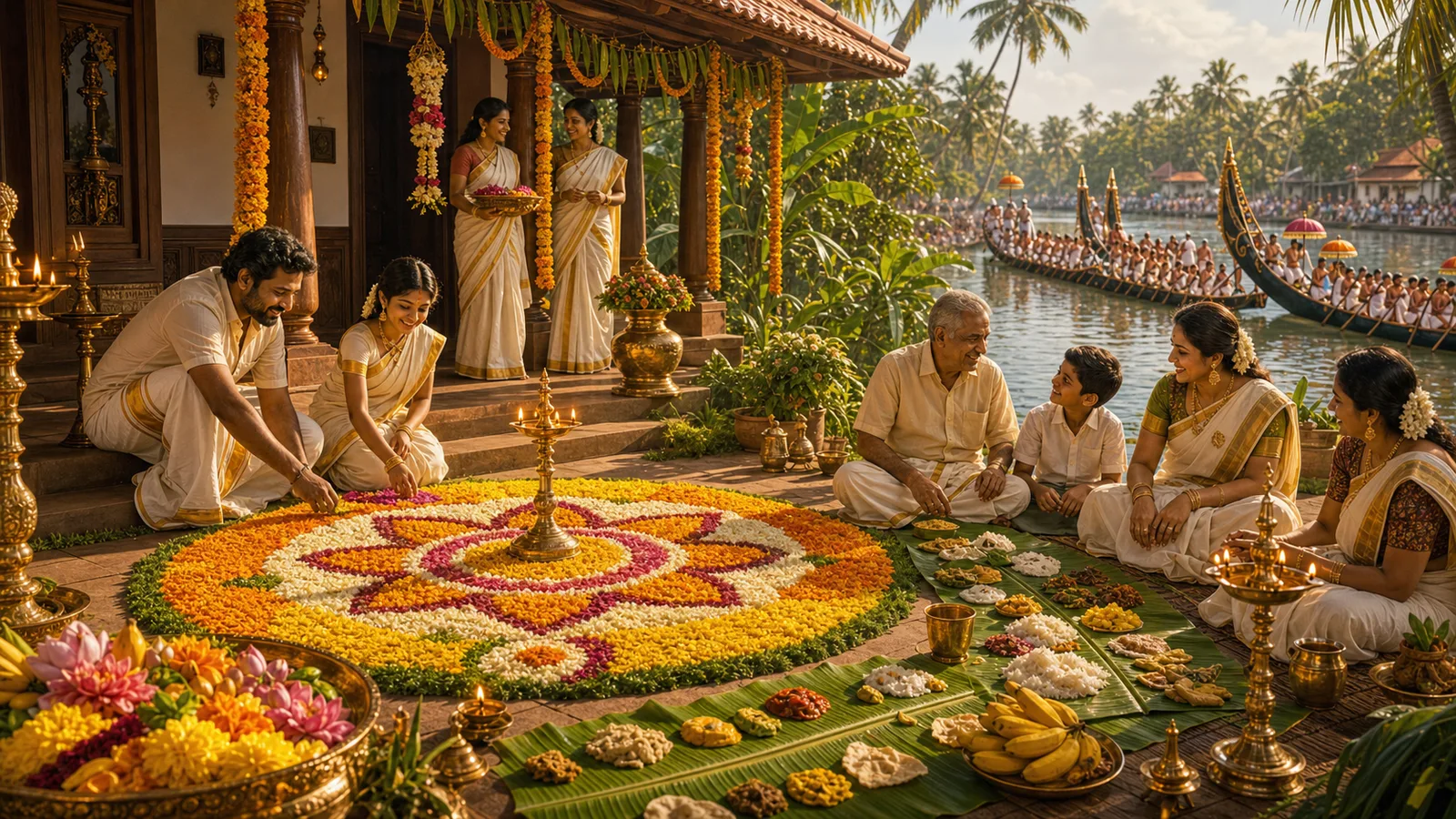
The festival begins on Atham, nine days before the climactic Thiruvonam day, which falls on the Thiruvonam nakshatra (star) in Chingam. Each of the ten days carries a distinct name and significance: Atham, Chithira, Chodhi, Vishakam, Anizham, Thriketa, Moolam, Pooradam, Uthradom, and the grand Thiruvonam. During this period, households across Kerala transform their courtyards into vibrant canvases with Pookalam — intricate floral rangolis created fresh each morning using dozens of varieties of flowers. The Pookalam grows larger each day, reaching its most elaborate form on Thiruvonam.
The Onam Sadhya, a grand vegetarian feast served on fresh banana leaves, is the culinary heart of the festival. Comprising 26 or more dishes including avial, olan, kalan, erissery, thoran, pachadi, pickles, papadam, payasam, and rice, the Sadhya is both a gastronomic delight and a spiritual offering. Vallam Kali, the famous snake boat race held on the backwaters of Alappuzha and Punnamada Lake, draws thousands of spectators and is one of India's most iconic sporting traditions. Women perform the graceful Thiruvathirakali dance in circles, and Pulikali (tiger dance), Kummattikali (mask dance), and Kathakali performances fill the festive air. Onam transcends religion and caste — it is a celebration of Kerala's shared cultural identity and the enduring spirit of human brotherhood.
Significance of Onam
Onam holds profound spiritual, cultural, and agricultural significance that makes it unique among all Indian festivals:
Spiritual Significance:
- Celebrates the eternal bond between a king and his subjects, symbolising that righteous governance earns divine blessings
- Reaffirms the Hindu belief in the cyclical return of goodness — Mahabali's annual visit represents hope and renewal
- Honours Lord Vishnu's Vamana avatar, the fifth of the Dashavatara, who embodies cosmic justice and dharmic balance
- The 10-day duration mirrors the significance of completeness in Hindu numerology
Agricultural Significance:
- Onam marks the end of the monsoon sowing season and the beginning of the kharif harvest in Kerala
- Farmers express gratitude to nature, the land, and Lord Vishnu (as sustainer) for a bountiful crop
- The Pookalam using fresh flowers symbolises nature's abundance and prosperity
Cultural Significance:
- Onam is Kerala's state festival, officially celebrated by people of all religions as a shared cultural heritage
- It preserves and promotes classical Kerala arts: Kathakali, Mohiniattam, Thiruvathirakali, Panchavadyam
- The Sadhya feast embodies the spirit of egalitarianism — everyone sits together on the same mat and eats the same food
- Vallam Kali (snake boat race) represents Kerala's historic maritime heritage and community cooperation
Deities worshipped on Onam
Follow the links to explore each deity’s mantras, stories, and temples on Temples.bio.
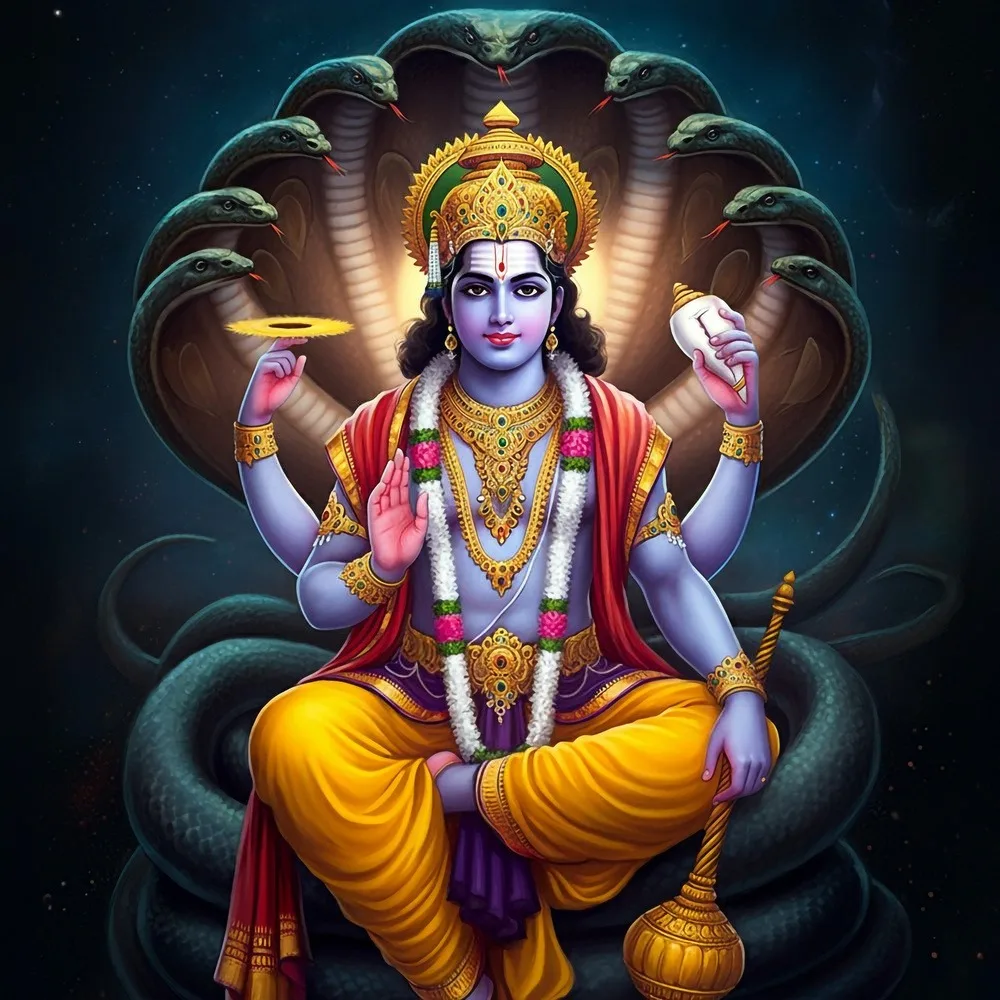
Lord Vishnu
Presiding deity in Vamana avatar; cosmic judge who granted Mahabali his annual return
The Preserver of the Universe — the all-pervading Supreme Being who descends to Earth in divine avatars whenever righteousness declines and evil rises.
View deity →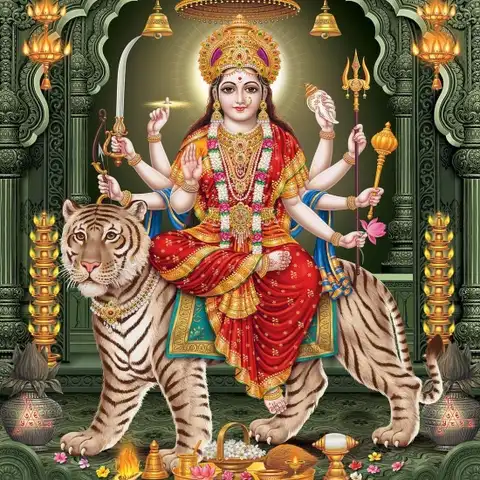
Goddess Lakshmi
Goddess of prosperity whose blessings are sought through the harvest thanksgiving rituals
The Invincible Mother Goddess — Supreme Feminine Power who destroys evil, protects the righteous, and embodies the divine energy of the entire universe.
View deity →Lord Vishnu is the presiding deity of Onam in his Vamana avatar — the dwarf Brahmin form he took to subdue the mighty King Mahabali. Vishnu is worshipped at Thrikkakara Appan temple in Ernakulam, which is considered the spiritual epicentre of Onam celebrations. A clay idol of Thrikkakara Appan (Vamana) is placed at the centre of every Pookalam as the divine witness to the festival. Lord Vishnu is praised as the sustainer of the universe who, even while restraining Mahabali, honoured his righteousness by granting him the boon of annually visiting his kingdom. Devotees offer prayers at Vishnu temples on Thiruvonam seeking prosperity and the blessings of Mahabali's golden age. Some traditions also venerate Mahabali himself as a devotee-king (Bhakta-raja) whose unwavering dharma earned him a special place in Vaishnava lore.
How to celebrate Onam 2026
Onam puja and celebrations follow a structured 10-day progression:
1. Atham (Day 1): Begin the Pookalam with a small circular design using yellow flowers. Clean and decorate the home entrance. Visit the local Vishnu temple for special prayers.
2. Days 2–9 (Chithira to Uthradom): Expand the Pookalam each morning with fresh flowers in concentric rings. Add new flower varieties daily. On Uthradom (Day 9), do major house cleaning (Onam cleaning), prepare special snacks, and go shopping.
3. Thiruvonam (Day 10 — Main Day):
- Wake before sunrise, take an oil bath (Enna Thalimpu), and wear new clothes (Onakkodi)
- Place the Thrikkakara Appan clay idol at the centre of the Pookalam
- Light a lamp (nilavilakku) and offer fresh flowers
- Recite Vishnu Sahasranama or simple prayers welcoming King Mahabali
- Prepare the Onam Sadhya starting early morning — all 26+ dishes
- Serve the feast on fresh banana leaves at noon; begin with banana, pappadam, and pickle
- Offer a portion of the feast to the Thrikkakara Appan idol before eating
- Participate in or watch Vallam Kali if near Alappuzha backwaters
- In the evening, women perform Thiruvathirakali and children play traditional games (Ambeyyal, Talappanthukali)
- Distribute gifts (Onasadya) and sweets to neighbours and the poor
4. Post-Thiruvonam: Some families observe a second Sadhya on the day after (Avittom); the Pookalam is respectfully cleared.
Rituals & regional traditions
Onam is celebrated with remarkable regional and community variations across Kerala and the diaspora:
Central Kerala (Thrissur, Ernakulam):
- Thrikkakara Temple festival with grand processions and Athachamayam parade
- Elaborate Pukalam competitions in public spaces
- Pulikali (tiger dance) performance on the fourth day of Onam in Thrissur
Backwaters Region (Alappuzha, Kottayam):
- Nehru Trophy Vallam Kali (snake boat race) held on Punnamada Lake — the world-famous race with 100+ oarsmen per boat
- Payippad Boat Race and Champakulam Moolam Boat Race
North Kerala (Kozhikode, Malappuram):
- Kummattikali (colourful mask dance) is especially popular
- Different floral arrangements specific to Malabar style Pookalam
Palakkad and Hill Districts:
- Stronger emphasis on agricultural rituals, offering first harvest to the deity
- Elephant processions at temples
Tulunadu (Coastal Karnataka):
- Celebrated as Onam with Tulu cultural elements; Yakshagana performances
Kerala Diaspora (Global):
- Onam associations worldwide organise grand Sadhya, cultural programmes, and boat race simulations
- Celebrated as Kerala Cultural Day in many cities
Common traditions across all regions:
- New clothes (Onakkodi) purchased and worn on Thiruvonam
- Sending Onam gifts (fruit baskets, sweets, sarees) to family
- Children's games: Uriyadi (pot-breaking), Talappanthukali (ball game)
Spiritual benefits
Celebrating Onam with devotion bestows a wide range of spiritual and worldly benefits:
- Divine Grace of Lord Vishnu: Worshipping Vamana on Thiruvonam is believed to earn Vishnu's protection and blessings for the entire year
- Prosperity and Abundance: The Sadhya feast and harvest rituals attract Lakshmi's grace, bringing financial stability and food security
- Ancestral Blessings: Welcoming King Mahabali — considered a noble ancestor figure — is believed to bring blessings from one's lineage
- Community Harmony: Sharing the Sadhya together regardless of caste or religion purifies social bonds and cultivates unity
- Renewal of Dharma: Recalling Mahabali's golden age reminds devotees to practice righteousness, truth, and fairness in daily life
- Cultural Continuity: Preserving Onam traditions ensures that children inherit Kerala's rich spiritual and artistic heritage
- Mental Peace: The beauty of Pookalam, the rhythm of boat races, and the joy of communal feasting reduce stress and uplift the spirit
- Gratitude and Contentment: The harvest thanksgiving dimension of Onam cultivates a mindset of gratitude toward nature and the divine
Mantras & sacred chants
1. Vamana Gayatri Mantra:
Sanskrit: ॐ दशबाहवे विद्महे कर आक्रमणाय धीमहि। तन्नो वामन प्रचोदयात्॥
Transliteration: Om Dashabhahave Vidmahe Kara Akramanaya Dhimahi. Tanno Vamana Prachodayat.
Meaning: We meditate on the ten-armed one, on the one who measured the worlds with his steps. May Vamana illuminate our minds.
2. Vishnu Mangalashtakam (Key Verse):
Sanskrit: मंगलं भगवान विष्णुः मंगलं मधुसूदनः। मंगलं पुण्डरीकाक्षः मंगलाय तनो हरिः॥
Transliteration: Mangalam Bhagavan Vishnuh Mangalam Madhusudanah. Mangalam Pundarikakshah Mangalaya Tano Harih.
Meaning: Auspicious is Lord Vishnu, auspicious is Madhusudana. Auspicious is the lotus-eyed one; may Hari bring auspiciousness.
3. Onam Welcome Prayer (Traditional Kerala verse):
Malayalam: മാവേലി നാടു വാണീടും കാലം മനുഷ്യരെല്ലാരും ഒന്നുപോലെ
Transliteration: Maveli Nadu Vaneedum Kalam Manushyarellorum Onnupole
Meaning: When Maveli (Mahabali) ruled the land, all people were equal — a folk hymn sung across Kerala celebrating Mahabali's just reign.
Onam 2026 — FAQs
Onam 2026 Thiruvonam (the main day) falls on Wednesday, August 26, 2026. The 10-day festival begins on Atham, August 17, 2026, and concludes on Thiruvonam, August 26, 2026.
Lord Vishnu in his Vamana avatar (dwarf Brahmin form) is the presiding deity of Onam. A clay idol called Thrikkakara Appan is placed at the centre of every Pookalam. Thrikkakara Temple near Ernakulam is the most sacred Onam pilgrimage site.
Onam celebrates King Mahabali's annual return to Kerala. According to legend, Mahabali was a just and benevolent king whose rule was a golden age. Lord Vishnu pushed him to the netherworld but granted him the boon to visit his subjects every year during Onam.
Onam Sadhya is the grand vegetarian feast served on banana leaves on Thiruvonam day. A traditional Sadhya has 26 or more dishes including avial, olan, kalan, erissery, pachadi, thoran, papadam, three types of payasam, pickles, and rice. Everyone eats seated on the floor in a row.
Onam is primarily a celebration of abundance rather than fasting. However, some devotees fast until the Sadhya is served on Thiruvonam. Those visiting the Thrikkakara Appan temple often fast on Thiruvonam morning until puja is completed.
Pookalam is a floral rangoli (carpet) made fresh each morning during the 10 days of Onam. It begins small on Atham and grows larger each day. On Thiruvonam it reaches its most elaborate form. Fresh flowers of many colours — thumba, mukkutti, chethi, kakka, and others — are arranged in concentric circles.
Key Onam activities include: creating Pookalam daily, preparing the grand Sadhya feast, watching Vallam Kali (snake boat races) at Alappuzha, witnessing Pulikali (tiger dance) in Thrissur, attending Kathakali and Thiruvathirakali performances, wearing new Onakkodi clothes, and giving Onam gifts.
Onam Thiruvonam 2025 falls on September 5, 2025. Onam Thiruvonam 2027 falls on September 14, 2027. The festival always falls during the Malayalam month of Chingam when the Thiruvonam star is prominent.