About Prabodhini Ekadashi
Last updated:
Devotees can decide the type of Ekadashi fasting during Sankalp according to their will power and physical strength. In religious texts four types of Ekadashi fasting has been mentioned. 1. Jalahar (जलाहर) i.e. Ekadashi fasting with only water. Most devotees observer this fasting during Nirjala Ekadashi. However devotees can observe it on all Ekadashi fasting. 2. Ksheerbhoji (क्षीरभोजी) i.e. Ekadashi fasting on Ksheer. Ksheer refers to milk and milky juice of plants. But in Ekadashi context it should be all products made of milk.
Deities worshipped on Prabodhini Ekadashi
Follow the links to explore each deity’s mantras, stories, and temples on Temples.bio.
Lord Vishnu
Primary deity — awakens from Yoganidra on this Ekadashi
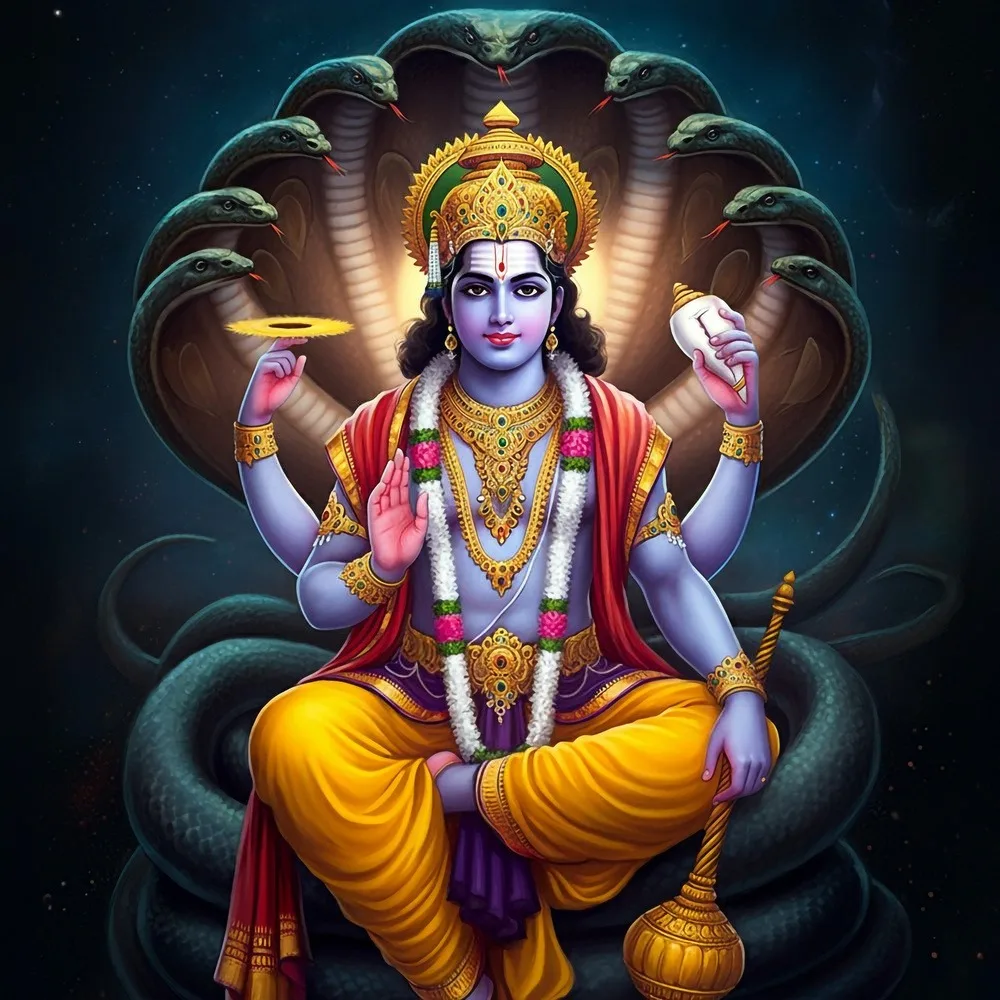
The Preserver of the Universe — the all-pervading Supreme Being who descends to Earth in divine avatars whenever righteousness declines and evil rises.
View deity →
Lord Krishna
Worshipped as Vishnu's avatar, especially in Mathura-Vrindavan celebrations
The Preserver of the Universe — the all-pervading Supreme Being who descends to Earth in divine avatars whenever righteousness declines and evil rises.
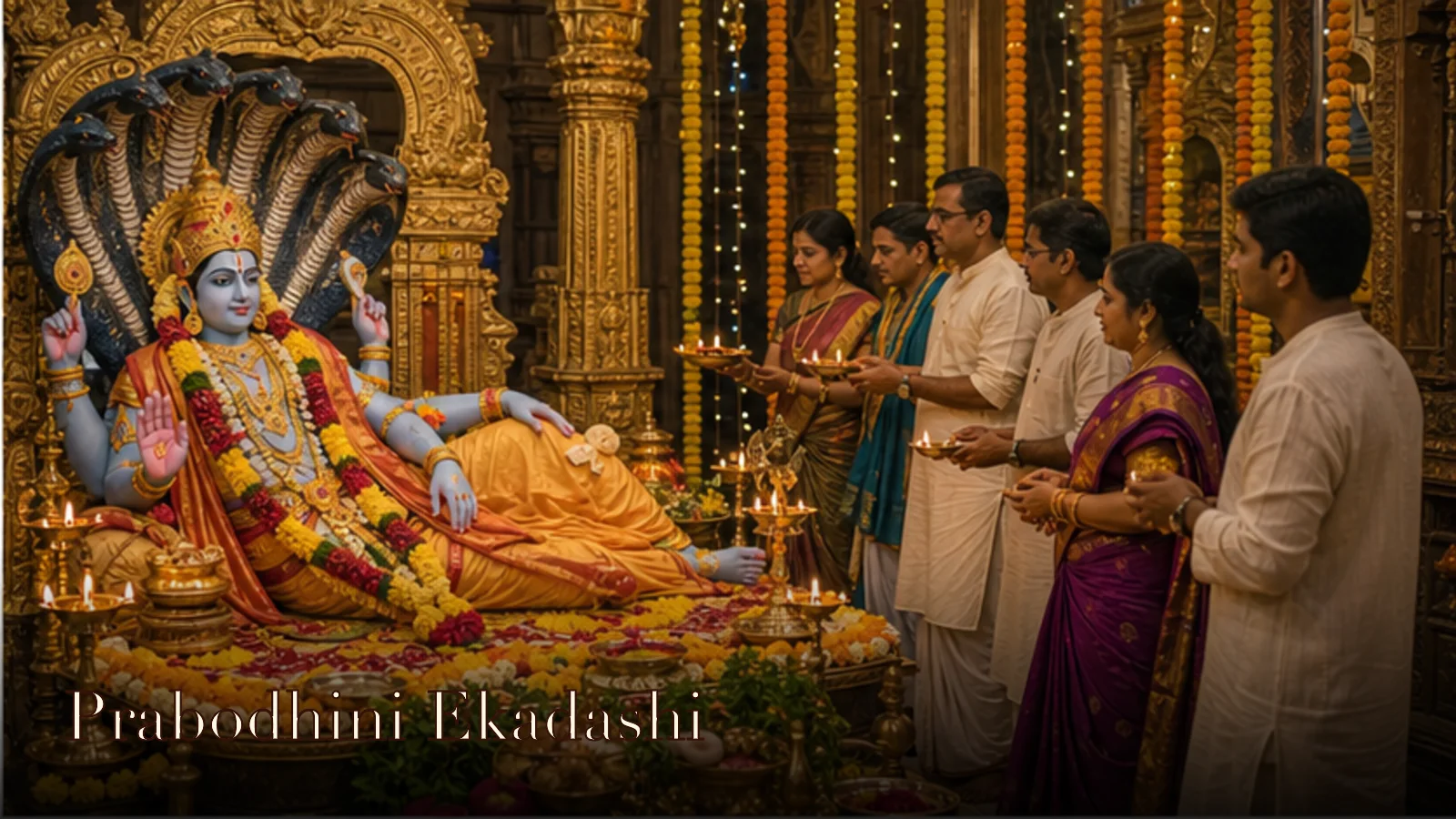
View deity →Prabodhini Ekadashi is entirely dedicated to Lord Vishnu — the supreme preserver and sustainer of the cosmos in the Hindu Trinity. Vishnu's awakening from Yoganidra is the central event of the day. He is worshipped in his Shayana (reclining) form on Shesha, the thousand-headed serpent, and also as the fully awakened lord standing with conch, disc, mace, and lotus.
Tulsi Devi — the Holy Basil plant — is the other central figure of Prabodhini Ekadashi. Tulsi is considered an incarnation of Vrinda Devi, a devoted consort of Vishnu. The Tulsi Vivah celebrates her union with Vishnu, recognizing her as the most sacred plant in Vaishnavism — present in every act of Vishnu worship. The Shaligram — a fossilized ammonite stone from the Gandaki river in Nepal — represents Vishnu in his formless, eternal aspect during the Tulsi Vivah ceremony.
Lord Krishna, as an avatar of Vishnu, is also prominently worshipped on this day, especially in Vrindavan and Mathura where the Prabodhini Ekadashi celebrations are particularly magnificent, with the temples decorated as if for a royal wedding.
How to celebrate Prabodhini Ekadashi 2026
Parana means breaking the fast. Ekadashi Parana is done after sunrise on next day of Ekadashi fast. It is necessary to do Parana within Dwadashi Tithi unless Dwadashi is over before sunrise. Not doing Parana within Dwadashi is similar to an offence. Parana should not be done during Hari Vasara. One should wait for Hari Vasara to get over before breaking the fast. Hari Vasara is first one fourth duration of Dwadashi Tithi. The most preferred to break the fast is Pratahkal. One should avoid breaking the fast during Madhyahna. If due to some reasons one is not able to break the fast during Pratahkal then one should do it after Madhyahna. At times Ekadashi fasting is suggested on two consecutive days. It is advised that Smartha with family should observe fasting on first day only. The alternate Ekadashi fasting, which is the second one, is suggested for Sanyasis, widows and for those who want Moksha. When alternate Ekadashi fasting is suggested for Smartha it coincides with Vaishnava Ekadashi fasting day. Ekadashi fasting on both days is suggested for staunch devotees who seek for love and affection of Lord Vishnu.
Spiritual benefits
- Liberation from the cycle of birth and death (moksha) — observing Prabodhini Ekadashi with complete fasting and devotion is said to grant the merit of performing all major yajnas.
- Fulfillment of all material and spiritual desires as Vishnu's awakening restores the full flow of divine grace and cosmic blessings to the world.
- Purification of sins accumulated over four lifetimes through the Ekadashi fast — the Padma Purana states that this Ekadashi's merit surpasses all other tirthas and donations combined.
- Auspicious commencement of new endeavors — businesses, marriages, and projects begun after seeking blessings on this day are believed to prosper under Vishnu's divine protection.
- Harmonious married life for couples — those who perform or witness Tulsi Vivah receive blessings for marital happiness, longevity, and a loving partnership.
- Removal of obstacles to marriage — young men and women who observe this fast and perform Tulsi Vivah are believed to be blessed with an ideal life partner.
- Spiritual awakening mirroring Vishnu's cosmic awakening — devotees who perform this Ekadashi with sincere devotion experience an inner expansion of consciousness and clarity of purpose.
- Enhanced Bhakti (devotion) — this Ekadashi is specifically praised in the Puranas as the gateway to unwavering Vishnu bhakti and liberation.
Mantras & sacred chants
Dev Uthani Mantra:
Sanskrit: उत्तिष्ठ उत्तिष्ठ गोविन्द त्यज निद्रां जगत्पते। त्वयि सुप्ते जगन्नाथ जगत् सुप्तं भवेदिदम्॥
(Uttishtha Uttishtha Govinda Tyaja Nidram Jagatpate, Tvayi Supte Jagannatha Jagat Suptam Bhaved Idam)
Meaning: "Arise, arise, O Govinda! Give up sleep, O Lord of the Universe. When you sleep, O Jagannatha, the entire world sleeps. Now awaken and awaken the world." This mantra is chanted at brahma muhurta on Prabodhini Ekadashi to ritually awaken Lord Vishnu.
Tulsi Vivah Mantra:
Sanskrit: ॐ तुलस्यै नमः। श्री कृष्णप्रियायै नमः। (Om Tulasyai Namah, Sri Krishna Priyayai Namah)
Meaning: "I bow to Tulsi Devi, I bow to the beloved of Lord Krishna." This mantra is chanted while performing circumambulations of Tulsi during the wedding ceremony, honoring her as Vishnu's eternal consort.
Ekadashi Vishnu Mantra:
Sanskrit: ॐ नमो भगवते वासुदेवाय (Om Namo Bhagavate Vasudevaya)
Meaning: "I bow to Lord Vasudeva (Vishnu), the all-pervading divine reality." The twelve-syllable Dwadasakshara mantra of Vishnu, chanted 108 times on every Ekadashi and especially on Prabodhini Ekadashi to awaken Vishnu's presence within oneself.
Prabodhini Ekadashi 2026 — FAQs
Prabodhini Ekadashi 2026 (Dev Uthani Ekadashi) falls on Tuesday, December 1, 2026. It is observed on Kartik Shukla Ekadashi — the eleventh day of the bright fortnight in the Hindu month of Kartik.
Dev Uthani Ekadashi (Prabodhini Ekadashi or Devotthan Ekadashi) marks the day Lord Vishnu awakens from his four-month Yoganidra (cosmic sleep) that began on Ashadi Ekadashi. This ends Chaturmas and reopens the auspicious season for weddings and religious ceremonies.
Tulsi Vivah is the ceremonial wedding of the Tulsi plant (Holy Basil) to Lord Vishnu (represented by a Shaligram stone). It is performed on Prabodhini Ekadashi evening with full wedding rituals — fire, seven circumambulations, and mantras. It marks the opening of the Hindu wedding season.
The Prabodhini Ekadashi vrat katha from the Padma Purana narrates how a king named Mandata was told by the sage Vashishtha that observing this Ekadashi with full devotion grants merit exceeding all yajnas, tirthas, and donations combined, as Vishnu awakens to bestow blessings on this supreme day.
No, Hindu weddings are traditionally not performed during Chaturmas (the four months from Ashadi Ekadashi to Prabodhini Ekadashi) when Lord Vishnu is in Yoganidra. Marriages resume only after Prabodhini Ekadashi when Vishnu awakens. This is why wedding season begins immediately after this Ekadashi.
On Prabodhini Ekadashi fast, grains, rice, wheat, lentils, and beans are strictly prohibited. Permitted foods include fruits, milk, curd, ghee, sendha namak (rock salt), potatoes, sabudana (tapioca), and specific Ekadashi foods. Strict devotees observe nirjala fast (no food or water).
Tulsi (Holy Basil) is the most sacred plant in Vaishnavism. No offering to Vishnu is complete without a Tulsi leaf. She is considered an incarnation of Vrinda Devi, Vishnu's eternal consort. Daily circumambulation of Tulsi is a standard Vaishnava practice that cleanses sins and bestows divine blessings.
Chaturmas literally means four months — the period from Ashadi Ekadashi (July) to Prabodhini Ekadashi (October-November) during which Lord Vishnu sleeps. Ascetics stay in one place, and auspicious rituals are minimized. Chaturmas 2026 ends on December 1, 2026, with Prabodhini Ekadashi.