About Raksha Bandhan
Last updated:
Raksha Bandhan is celebrated in Shravana month during full moon day or Purnima day. The best to tie Rakhi on Raksha Bandhan is during Aparahna which is late afternoon according to Hindu division of the day. If Aparahna is not available then Pradosh is also suitable to perform rituals related to Raksha Bandhan. Raksha Bandhan rituals should not be done during Bhadra. Bhadra is malicious which should be avoided for all auspicious work. Most Hindu religious texts, including Vratraj, advise to avoid Bhadra to tie Rakhi during Raksha Bandhan festival.
Deities worshipped on Raksha Bandhan
Follow the links to explore each deity’s mantras, stories, and temples on Temples.bio.
Lord Krishna
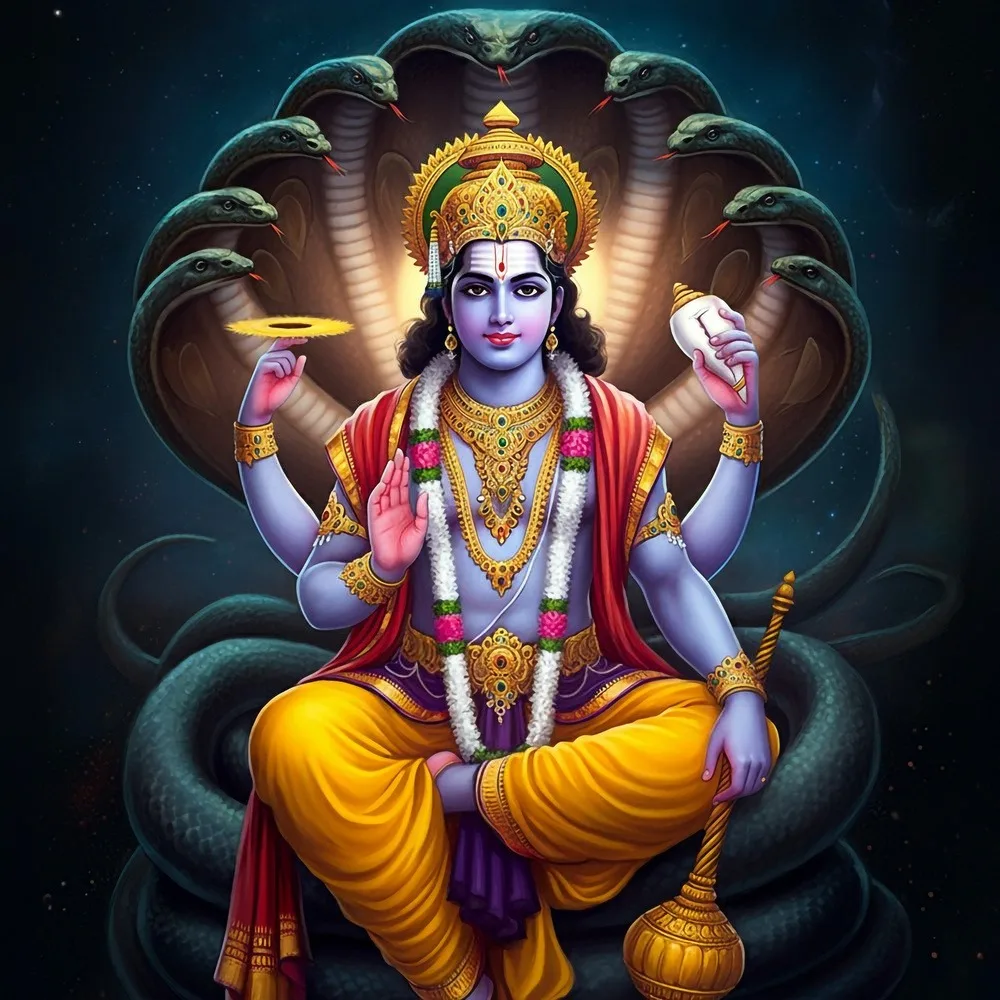
Ideal protector; honoured the Draupadi rakhi bond
The Preserver of the Universe — the all-pervading Supreme Being who descends to Earth in divine avatars whenever righteousness declines and evil rises.
View deity →
Lord Vishnu
Lakshmi tied rakhi on Vishnu to secure Bali's release
The Preserver of the Universe — the all-pervading Supreme Being who descends to Earth in divine avatars whenever righteousness declines and evil rises.
View deity →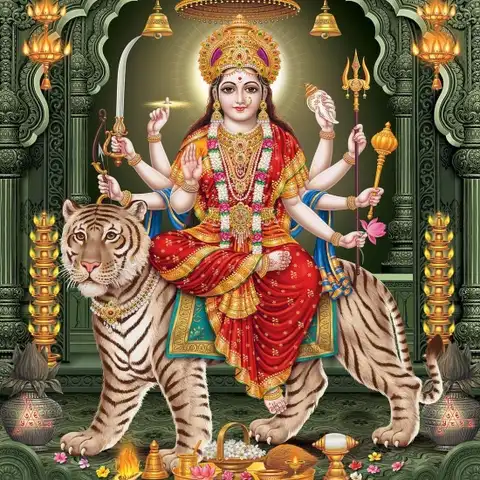
Goddess Lakshmi
Tied rakhi on King Bali in Vamana tradition
The Invincible Mother Goddess — Supreme Feminine Power who destroys evil, protects the righteous, and embodies the divine energy of the entire universe.
View deity →Raksha Bandhan is primarily a festival of human devotion and family, but it also has divine and mythological associations.
Lord Krishna: The most celebrated divine connection is with Krishna, who is considered the ideal brother figure. When Draupadi tore her sari to bandage Krishna's wrist, he promised to repay the debt of cloth — a vow fulfilled when he provided an endless stream of fabric to save her honour at the Kaurava court. This story establishes Krishna as the ultimate protector who honours the rakhi bond.
Lord Vishnu and Goddess Lakshmi: In one tradition, Goddess Lakshmi tied a rakhi on King Bali's wrist to secure Vishnu's release after Vishnu pledged to guard Bali's kingdom. This story is central to Vamana-related Raksha Bandhan traditions in some regions.
Lord Varuna (Narali Purnima): In coastal Maharashtra and Goa, Varuna — the Vedic god of the seas, water, and cosmic order — is propitiated on Shravan Purnima. Fishermen and coastal communities offer coconuts to the sea as a prayer to Varuna for protection during sea voyages.
Indra: Ancient Vedic texts mention Indrani tying a protective thread (raksha) on Indra's wrist before his great battle, linking the festival to the oldest Vedic traditions of protective amulets.
How to celebrate Raksha Bandhan 2026
The best to tie Rakhi on Raksha Bandhan is during Aparahna which is late afternoon according to Hindu division of the day. If Aparahna is not available then Pradosh is also suitable to perform rituals related to Raksha Bandhan. Raksha Bandhan rituals should not be done during Bhadra. Bhadra is malicious which should be avoided for all auspicious work. Most Hindu religious texts, including Vratraj, advise to avoid Bhadra to tie Rakhi during Raksha Bandhan festival. It should be noted that Bhadra prevails during first half of Purnima Tithi. Hence one should wait for Bhadra to get over before starting any auspicious work. In North it is customary to tie Rakhi in the morning which might not be suitable to do it. The DrikPanchang's team believes that it might be due to ignorance. When such information is easily available one should avoid tying Rakhi during Bhadra.
Spiritual benefits
- Strengthening of the lifelong bond of love, duty, and protection between siblings, grounded in mutual respect and affection
- Protection of the brother from negative energies and harm through the spiritually charged rakhi thread empowered by the sister's sincere prayers
- Renewal of family bonds and reconnection with siblings who may be geographically separated
- Blessings of Lord Krishna for fraternal devotion and the fulfilment of lifelong promises and duties
- Spiritual merit (punya) earned by sisters through selfless prayer and love for their brothers
- For Brahmin men: purification and renewal of Vedic vows through Yajnopavita Parivartan, strengthening dharmic commitment
- For coastal communities: blessings of Lord Varuna for safe sea voyages, abundant catch, and family prosperity
- Cultivation of gratitude, generosity, and the spirit of seva (service) within the family unit
Mantras & sacred chants
1. Rakhi Tying Mantra
Sanskrit: येन बद्धो बली राजा दानवेन्द्रो महाबलः। तेन त्वामपि बध्नामि रक्षे मा चल मा चल।
Transliteration: Yena baddho Bali Raja Danavendra Mahabalah. Tena tvamapi badhnami raksche ma chala ma chala.
Meaning: With the same thread by which the mighty Bali, the king of demons, was bound, I bind you. O Raksha (protection), do not waver, do not waver. This is the traditional Vedic mantra recited while tying the rakhi.
2. Brother's Protective Pledge Mantra
Sanskrit: ॐ श्री कृष्णाय नमः। सहोदरी प्रेम रक्षणाय नमः।
Transliteration: Om Shri Krishnaya Namah. Sahodari prema rakshanaya namah.
Meaning: Salutations to Lord Krishna. I bow to the love and protection between siblings. Chanted by brothers to invoke divine protection over their sisters.
3. Yajnopavita Mantra (Sacred Thread Renewal)
Sanskrit: यज्ञोपवीतं परमं पवित्रं प्रजापतेर्यत्सहजं पुरस्तात्। आयुष्यमग्र्यं प्रतिमुञ्च शुभ्रं यज्ञोपवीतं बलमस्तु तेजः।
Transliteration: Yajnopavitam paramam pavitram Prajapateryatsahajam purastaat. Ayushyamagryam pratimuñcha shubhram yajnopavitam balmastu tejah.
Meaning: The sacred thread is supremely holy, born with Prajapati in the beginning. May this bright thread, which brings long life, be worn with strength and radiance.
Raksha Bandhan 2026 — FAQs
Raksha Bandhan 2026 falls on Friday, August 28, 2026, on the Purnima (full moon) of Shravan month.
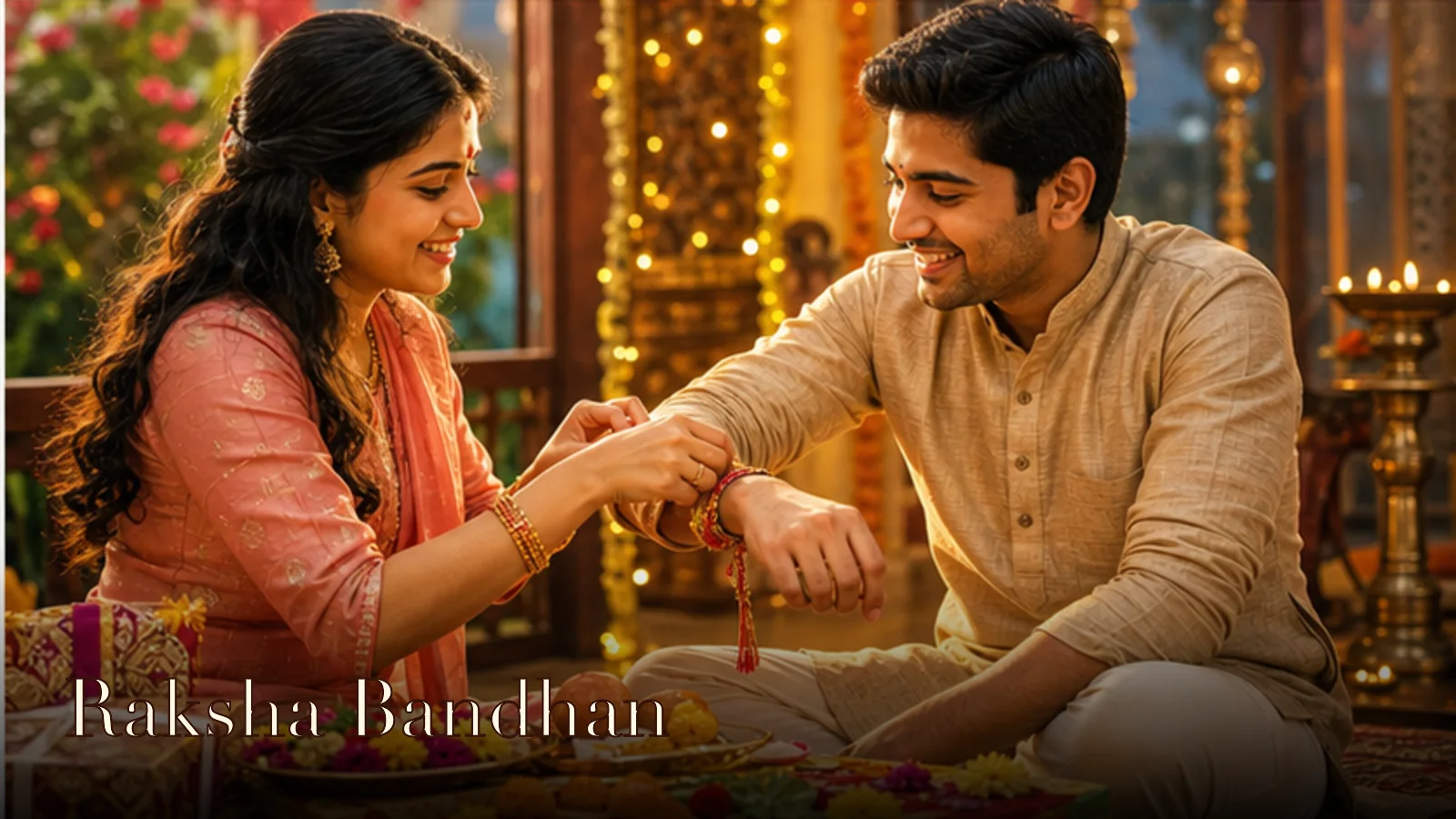
Raksha Bandhan celebrates the sacred bond of protection between siblings. The sister ties a rakhi on her brother's wrist praying for his well-being, and the brother pledges lifelong protection. It also symbolises the Krishna-Draupadi bond of divine protection.
The traditional rakhi tying mantra is: Yena baddho Bali Raja Danavendra Mahabalah, Tena tvamapi badhnami raksche ma chala ma chala — meaning the same protective bond that bound King Bali now binds you, O protection do not waver.
Yajnopavita Parivartan (also called Avani Avittam in South India) is performed by Brahmin men on Shravan Purnima. They ceremonially change their sacred yajnopavita thread, recite Vedic mantras, and perform tarpan (water offerings to ancestors) to renew their spiritual vows.
Narali Purnima is observed by fishing communities (especially Kolis) in Maharashtra and Goa on Shravan Purnima. Fishermen offer coconuts to the sea god Varuna, decorate their boats, and celebrate the end of the monsoon fishing ban with coconut sweets and community feasts.
Yes. The story of Draupadi and Krishna shows that the rakhi bond can be formed with any person who promises protection and care. In communities across India, rakhis are also tied to trees, deities, and respected elders as gestures of collective protection.
When Lord Krishna's finger was cut during battle, Draupadi immediately tore a strip of her sari and bandaged his wound. Moved by her affection, Krishna promised to repay the debt. He fulfilled this vow at the Kaurava court by providing endless fabric to save Draupadi's honour, making him the ideal Raksha Bandhan protector.
Brothers traditionally give sisters cash (shagun), clothing, jewellery, or meaningful gifts as a token of their love and appreciation. In modern times, gifts include accessories, sweets, experiences, and online transfers for sisters living abroad.