About Skanda Sashti
Last updated:
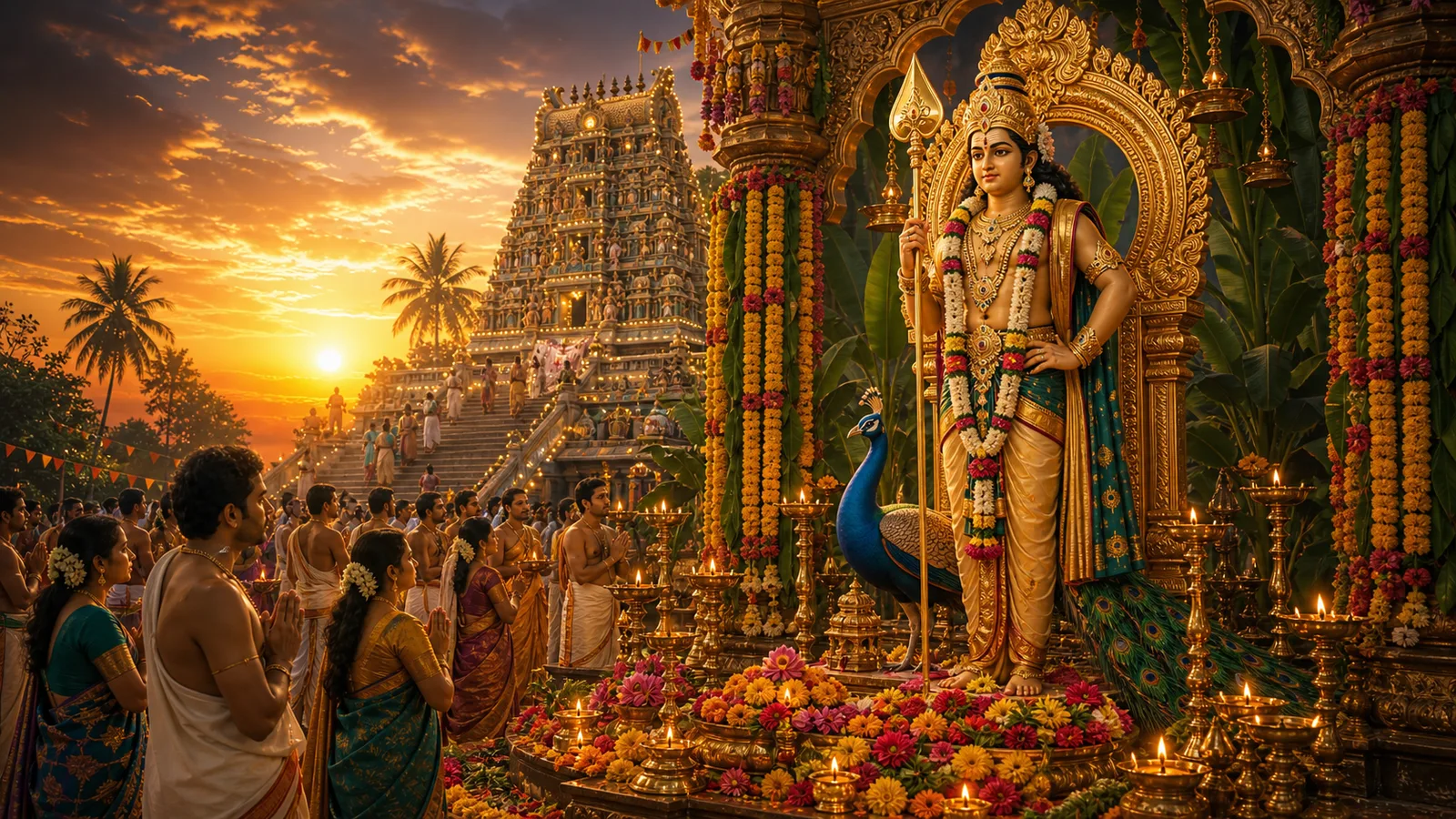
Skanda Sashti is one of the most important festivals in the Shaivite Tamil tradition, celebrated with immense devotion across Tamil Nadu, Sri Lanka, Malaysia, and Singapore over six consecutive days. The festival falls on the Sashti tithi (sixth day) of the waxing moon in the Tamil month of Aippasi (October–November), and commemorates Lord Murugan's cosmic battle against the powerful demon Soorapadman and his eventual triumph over evil forces.
The six days of Skanda Sashti mirror the six days of battle that Lord Murugan waged against the asura army led by Soorapadman. Devotees observe strict fasting, continuous prayer, and physical austerities during this period as an act of devotion and surrender to the deity. The festival reaches its dramatic climax on the sixth day — Soorasamharam — when the mythological defeat of Soorapadman is enacted through elaborate theatrical performances at major Murugan temples. On this day, Lord Murugan hurls his divine Vel (spear) at Soorapadman, splitting him into a peacock and a rooster, which then become Murugan's vahana and flag symbol respectively.
The grandest celebrations take place at Tiruchendur Murugan Temple on the Coromandel Coast, Palani Murugan Temple in the Dindigul hills, and Kataragama in Sri Lanka. Hundreds of thousands of pilgrims gather at these temples, many carrying Kavadi — a decorated arch balanced on the shoulders — as a physical act of penance and gratitude. The air resonates with the rhythmic chant of "Vel Vel Muruga, Vel Vel Shakti Vel" as processions wind through temple streets. Skanda Sashti in 2026 falls on 27 October, with celebrations beginning on 22 October.
Significance of Skanda Sashti
Why Skanda Sashti Matters Spiritually:
Skanda Sashti holds profound spiritual significance in Hindu tradition and particularly in Tamil Shaivism:
- Victory of Dharma: The festival symbolises the eternal triumph of righteousness over evil. Murugan's defeat of Soorapadman represents the soul's conquest over ego, ignorance, and worldly desires.
- Shakti of the Vel: The Vel (divine spear) of Murugan is worshipped as Jnana Shakti — the power of divine wisdom that destroys ignorance. Meditating on the Vel during Sashti bestows clarity and discrimination.
- Six-Day Tapas: The six days of the festival correspond to the six chakras of the subtle body. Fasting and prayer during each day is believed to activate and purify each energy centre progressively.
- Kavadi Attam: The act of bearing the Kavadi is a supreme act of surrender, symbolising that the devotee carries the weight of samsara and places it at Murugan's feet for liberation.
- Purification through Austerity: Observing the Sashti vrat cleanses accumulated karma and deepens one's spiritual resolve, making it a powerful annual reset for the soul.
- Murugan as Guru: Murugan is the Adi Guru who taught the Pranava mantra Om to his own father Shiva. Skanda Sashti is therefore also a celebration of the guru-disciple relationship and the transmission of divine knowledge.
Deities worshipped on Skanda Sashti
Follow the links to explore each deity’s mantras, stories, and temples on Temples.bio.
Lord Shiva
Father of Murugan; his divine energy gave birth to Murugan to protect the cosmos
The Supreme Destroyer and Transformer of the Universe — The Adiyogi, Lord of Lords, and the First Yogi.
View deity →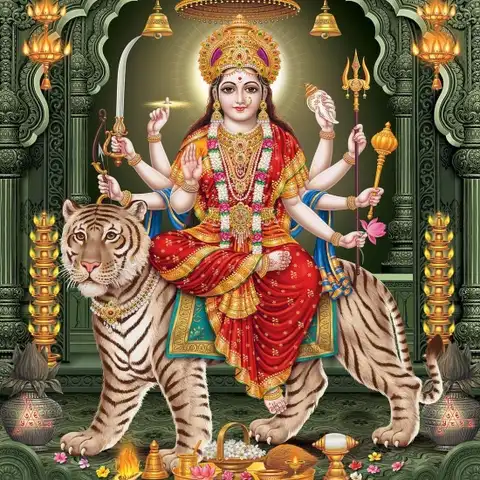
Goddess Durga
As Parvati, mother of Murugan who gifted him the Vel (divine spear)
The Invincible Mother Goddess — Supreme Feminine Power who destroys evil, protects the righteous, and embodies the divine energy of the entire universe.
View deity →Lord Murugan (also known as Kartikeya, Skanda, Subramanya, and Shanmukha) is the central deity of Skanda Sashti. He is the son of Lord Shiva and Goddess Parvati, born from the sparks of Shiva's third eye to lead the Devas against the demon Soorapadman. Murugan is depicted with six faces (Shanmukha) representing mastery over the six directions and the six inner enemies of humanity. He carries the divine Vel spear gifted by his mother Parvati, which represents wisdom piercing through ignorance.
Lord Shiva plays a supporting role in the festival narrative — it is from his divine energy that Murugan was born. The festival honours the lineage of Shiva's grace flowing through his son.
Goddess Valli and Devasena — Murugan's two consorts — are also honoured during Skanda Sashti. Valli represents the human soul (jeeva) drawn to the divine, while Devasena represents the divine grace (shakti) that guides the soul. Together they flank Murugan in his temple icons, symbolising the union of devotion and grace.
How to celebrate Skanda Sashti 2026
How to Observe Skanda Sashti Vrat — Step-by-Step Guide:
1. Sankalpa (Resolve): On the first morning of Skanda Sashti, take a bath before sunrise, wear clean clothes (preferably yellow or orange), and make a formal resolve (sankalpa) to observe the six-day fast in honour of Lord Murugan.
2. Morning Puja: Light a lamp with sesame oil or ghee before Murugan's image or idol. Offer fresh flowers (especially red and yellow), bilva leaves, and fruits. Recite the Skanda Sashti Kavacham — the protective hymn of Murugan.
3. Fasting Rules: Observe a strict fast, consuming only fruits, milk, and water. Many devotees observe full fasting (nirjala) or single-meal fasting on all six days. Avoid onion, garlic, non-vegetarian food, and alcohol throughout the festival period.
4. Vel Vel Chanting: Throughout each day chant "Vel Vel Muruga, Vel Vel Shakti Vel" — ideally 108 times in the morning and evening. This vibration is considered protective and transformative.
5. Evening Deepa Aradhana: Light lamps at dusk and perform camphor arati to Murugan. Read or listen to the Kanda Puranam or Thirupugazh hymns.
6. Soorasamharam Day (6th Day): If possible, visit a Murugan temple on the sixth day. Witness or participate in the Soorasamharam enactment. Offer special prayers and break the fast only after evening puja.
7. Kavadi Preparation: Devotees who have made a vow to carry Kavadi should begin preparations from the first day, maintaining celibacy, sleeping on the floor, and eating only once a day.
8. Breaking the Fast: Break the fast on the evening of Soorasamharam with prasad from the temple, preferably panchagavya (five cow products) or sweet pongal.
Rituals & regional traditions
Regional Traditions and Customs of Skanda Sashti:
- Tamil Nadu: The most elaborate celebrations occur across all six Paadal Petra Sthalams (celebrated Murugan temples). At Tiruchendur, the six-day festival draws over 500,000 pilgrims. The Soorasamharam at Tiruchendur is a full theatrical ocean-side enactment where an effigy representing Soorapadman is symbolically destroyed. At Palani, devotees climb the hill barefoot carrying milk-filled pots.
- Kavadi Attam: A unique feature of Skanda Sashti is the Kavadi dance performed by devotees who pierce their skin with small vel needles (vel kavadi) or carry elaborately decorated arched frames. This is considered the highest form of physical devotion to Murugan.
- Sri Lanka (Kataragama): The Kataragama temple is one of the most important Murugan pilgrimage sites outside India. Skanda Sashti here draws Tamil, Sinhalese, and even Buddhist devotees in a remarkable display of multi-ethnic reverence.
- Malaysia and Singapore: The Tamil diaspora observes Skanda Sashti with great fervour. Temples in Batu Caves (Kuala Lumpur) and Sri Mariamman Temple (Singapore) host week-long programmes.
- Andhra Pradesh and Karnataka: Known as Subramanya Sashti here, devotees prepare special offerings of milk and honey for the serpent form of Murugan (as Subrahmanya).
- Skanda Sashti Kavacham: The recitation of the 28-verse Skanda Sashti Kavacham composed by Devaraya Swamigal is a universal practice across all regions during this festival.
Spiritual benefits
Spiritual Benefits of Observing Skanda Sashti:
- Removal of Obstacles: Devotion to Murugan during Sashti is believed to destroy all obstacles in one's career, education, and spiritual practice.
- Healing of Diseases: The Skanda Sashti Kavacham is traditionally recited for protection from illness and for healing. Many devotees report relief from chronic ailments after sincere observance.
- Victory over Enemies: Just as Murugan defeated Soorapadman, devotees are said to gain the strength to overcome personal and professional adversaries.
- Attainment of Jnana (Wisdom): Murugan is Jnanaskanda — the lord of divine wisdom. Fasting and prayer during Sashti sharpens the intellect and deepens spiritual insight.
- Fulfilment of Vows: Sincere Kavadi observance is considered one of the most powerful ways to fulfil prayers for fertility, healing, marriage, and success.
- Karmic Cleansing: The six days of tapas burn away accumulated negative karma from past actions, creating a fresh spiritual slate.
- Protection for Children: Murugan is considered the protector of children. Parents fast during Skanda Sashti to pray for the health and success of their children.
- Moksha Progression: Regular observance of Skanda Sashti over years is believed to accelerate the soul's journey toward liberation.
Mantras & sacred chants
Key Mantras for Skanda Sashti:
1. Shadakshara Mantra of Murugan
Sanskrit: ॐ शरवणभव
Transliteration: Om Saravanabhava
Meaning: Salutations to the one born in the reeds of Saravana lake. This six-syllable mantra (Sha-Ra-Va-Na-Bha-Va) is the primary mantra of Lord Murugan corresponding to his six faces.
2. Vel Vel Muruga Chant
Transliteration: Vel Vel Muruga Vel, Vel Vel Shakti Vel, Arogara, Arogara, Haro Hara!
This rhythmic battle cry is the signature chant of Skanda Sashti. It is chanted in processions, during Kavadi dancing, and throughout the festival to invoke Murugan's protective presence.
3. Skanda Gayatri Mantra
Sanskrit: ॐ तत्पुरुषाय विद्महे महासेनाय धीमहि। तन्नः स्कन्दः प्रचोदयात्॥
Transliteration: Om Tatpurushaya Vidmahe Mahasenaya Dhimahi. Tanno Skandah Prachodayat.
Meaning: We meditate on that Supreme Being, the commander of the divine army. May Lord Skanda illuminate our intellect and inspire us toward righteousness.
Skanda Sashti 2026 — FAQs
Skanda Sashti in 2026 falls on 27 October. The six-day festival begins on 22 October 2026 and culminates with Soorasamharam on 27 October 2026.
Soorasamharam is the dramatic sixth day of Skanda Sashti when Lord Murugan's defeat of the demon Soorapadman is enacted. It represents the triumph of divine wisdom (Vel) over ego and evil. At Tiruchendur temple, this is staged as a grand theatrical event by the sea.
Devotees observe a strict fast for all six days, avoiding non-vegetarian food, onion, garlic, and alcohol. Most observe a fruit-and-milk fast. Some devotees observe complete fasting (nirjala). The fast is broken on the evening of Soorasamharam after puja.
Kavadi is a decorated arch or frame carried on the shoulders as an act of physical penance and devotion to Murugan. Any devotee who has made a vow to Murugan can carry a Kavadi. Kavadi bearers must observe celibacy, sleep on the floor, and eat only once a day during the preparation period.
The most important temples are Tiruchendur Murugan Temple (Tamil Nadu coast), Palani Murugan Temple (Dindigul, Tamil Nadu), Swamimalai Murugan Temple (near Kumbakonam), and Kataragama Temple in Sri Lanka. All six Paadal Petra Murugan temples hold grand celebrations.
Yes. Set up a Murugan altar with his image or a Vel. Light a lamp each morning and evening, recite the Skanda Sashti Kavacham, chant 'Vel Vel Muruga', observe the fast, and perform simple fruit offerings. Full benefit is believed to accrue from sincere home observance as well.
The Skanda Sashti Kavacham is a 28-verse protective hymn composed by Devaraya Swamigal invoking Lord Murugan's protection over every part of the body and life. It is recited daily during Skanda Sashti and is one of the most popular Tamil devotional texts.
Yes. Skanda Sashti is celebrated with great enthusiasm by Tamil communities in Sri Lanka (especially at Kataragama), Malaysia (Batu Caves and other Murugan temples), Singapore, Mauritius, and across the Tamil diaspora worldwide.