About Tulsi Vivah
Last updated:
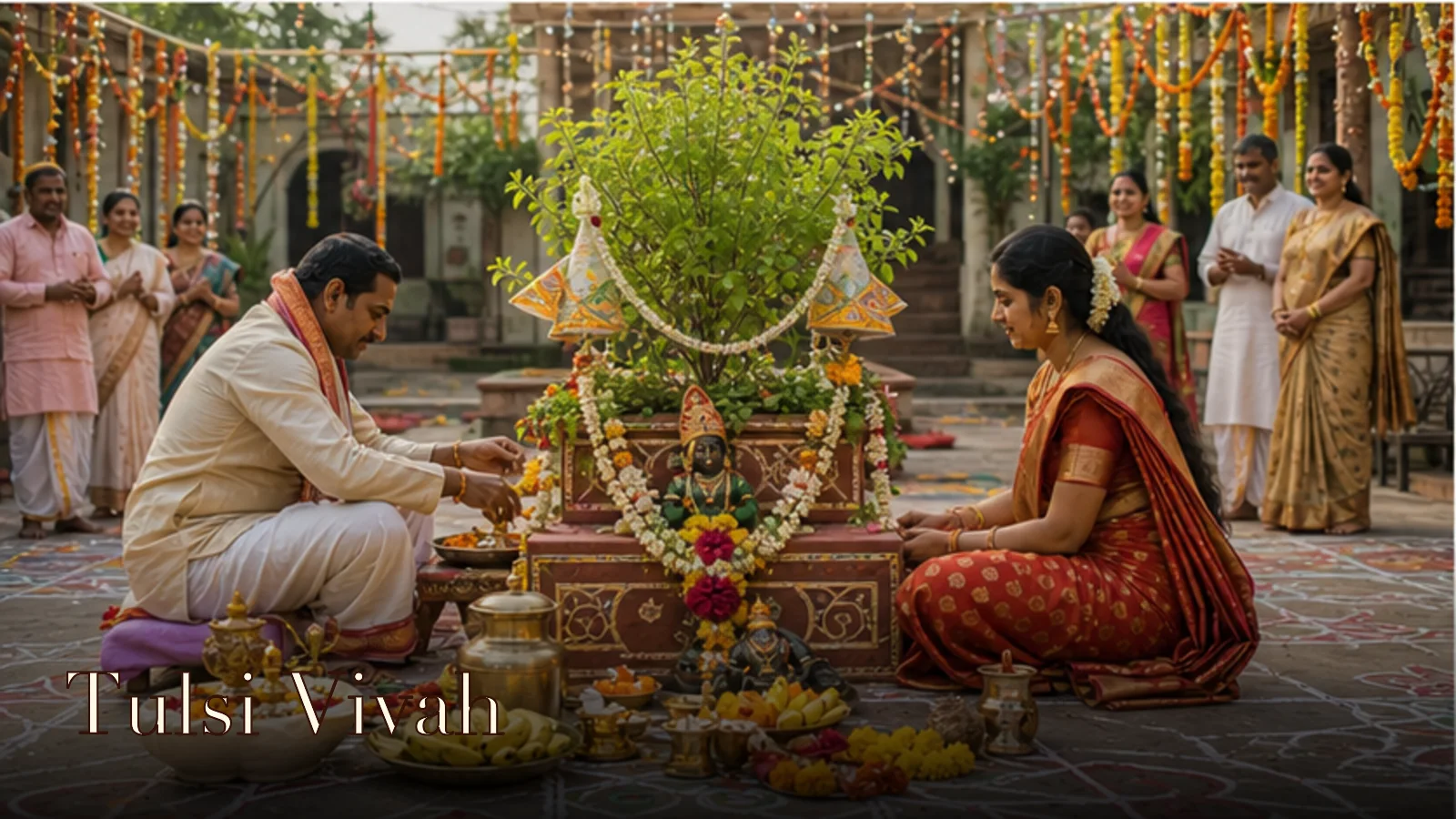
Tulsi Vivah is one of the most auspicious and spiritually significant festivals in the Hindu calendar. Celebrated on Prabodhini Ekadashi — the eleventh day of the bright fortnight of Kartik month — this festival marks the ceremonial marriage of the sacred Tulsi plant (Holy Basil) to Lord Vishnu, represented by a Shaligram stone or an idol of Lord Vishnu. The festival coincides with the end of Chaturmas, the four-month sacred period during which Lord Vishnu is believed to sleep in Yoga Nidra on the cosmic ocean. As Vishnu awakens on this day, all auspicious activities including weddings, engagements, and new ventures that were paused during Chaturmas are ceremoniously resumed. Tulsi Vivah thus signals the official beginning of the Hindu wedding season, which runs through Kartik, Margashirsha, and beyond. The rituals of Tulsi Vivah mirror a traditional Hindu wedding in remarkable detail. The Tulsi plant, placed in a decorated pot, is adorned as a bride with a red sari, bangles, and jewelry. A Shaligram stone or Vishnu idol is prepared as the groom. Priests chant Vedic hymns and wedding mantras while family members take on the roles of bride's and groom's families. Sugarcane stalks are used to create a wedding canopy (mandap), and the ceremony includes the exchange of garlands, tying of the sacred thread (mangalsutra), and circumambulation (saptapadi). Lamps are lit, conch shells blown, and ululations fill the air as in any traditional wedding.
Significance of Tulsi Vivah
The significance of Tulsi Vivah is profound across spiritual, cultural, and cosmic dimensions: - Spiritual Liberation: Performing or witnessing Tulsi Vivah is believed to bestow the merit equivalent to performing Kanyadan — the most sacred gift in Hinduism — thus removing ancestral debts and ensuring moksha for the family. - Awakening of the Divine: This festival marks Vishnu's awakening from Yoga Nidra, symbolizing the return of cosmic consciousness, dharma, and divine blessings to the world after four months of dormancy. - Sacred Plant Veneration: Tulsi (Ocimum sanctum) is revered as the most sacred plant in Hinduism, believed to be a form of Goddess Lakshmi herself. Every Hindu household maintains a Tulsi plant, and this festival honors that divine presence. - Marriage Season Inauguration: Culturally, Tulsi Vivah marks the commencement of the Hindu wedding season, as all auspicious events were suspended during Chaturmas. No Hindu marriage is considered complete without Tulsi's blessings. - Cosmic Balance: The union of Tulsi (Earth's most sacred plant) with Vishnu (the Preserver of the cosmos) symbolizes the harmonious relationship between nature and divinity, between the earthly and the eternal. - Devotional Bhakti: The festival exemplifies the Hindu concept of bhakti through seva — loving service expressed through adorning, worshipping, and ceremonially honoring the divine in plant form.
Deities worshipped on Tulsi Vivah
Follow the links to explore each deity’s mantras, stories, and temples on Temples.bio.
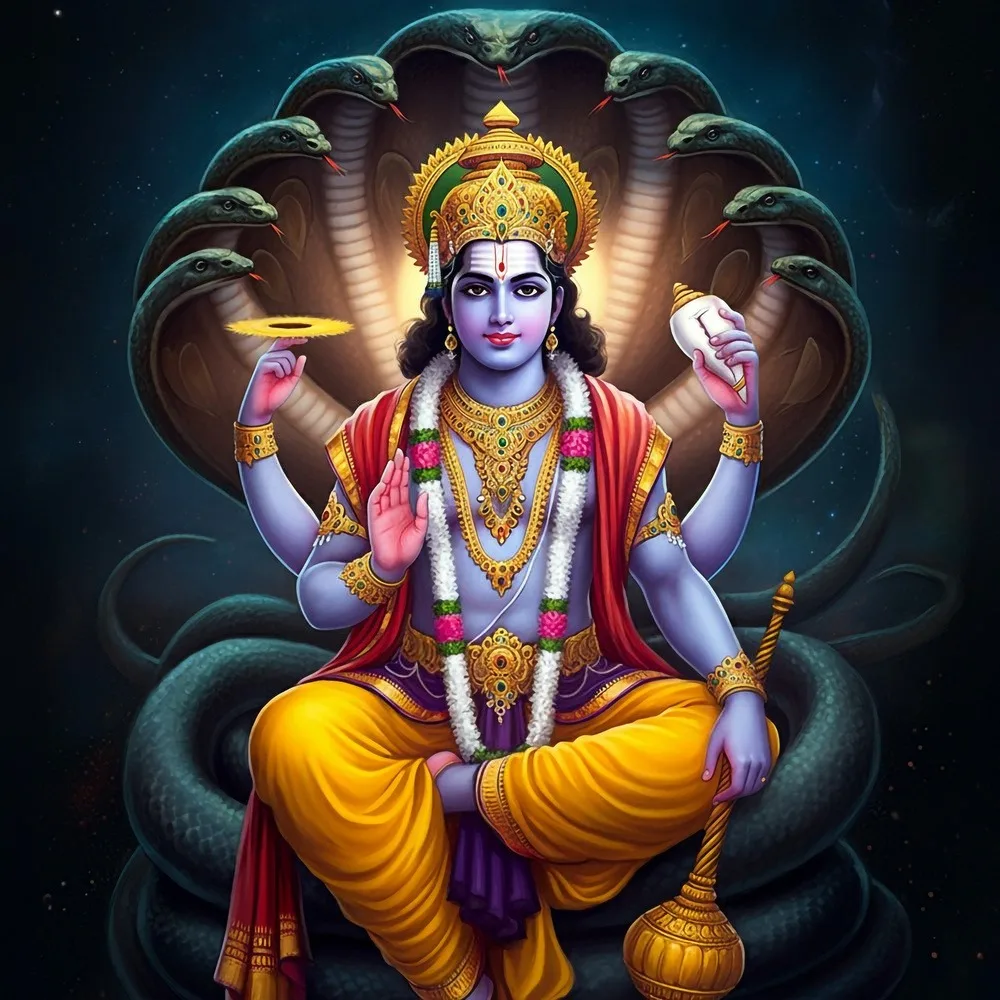
Lord Vishnu
Divine groom in Shaligram form
The Preserver of the Universe — the all-pervading Supreme Being who descends to Earth in divine avatars whenever righteousness declines and evil rises.
View deity →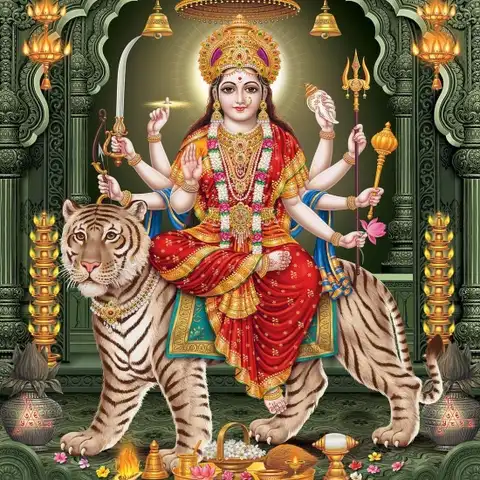
Goddess Lakshmi
Tulsi Devi is a manifestation of Goddess Lakshmi
The Invincible Mother Goddess — Supreme Feminine Power who destroys evil, protects the righteous, and embodies the divine energy of the entire universe.
View deity →Tulsi Vivah centers on two principal divine figures whose relationship forms the heart of this festival:
Lord Vishnu / Shaligram: Lord Vishnu, the Preserver of the universe and one of the Trimurti, is worshipped in the form of the Shaligram — a sacred black ammonite fossil stone found in the Gandaki River of Nepal. The Shaligram is considered a self-manifested (svayambhu) form of Vishnu, inherently pure and requiring no consecration. During Tulsi Vivah, the Shaligram serves as the divine groom, symbolizing Vishnu's eternal bond with His earthly devotee Tulsi. Some families use a decorated idol of Lord Vishnu or Lord Krishna in His form as Ranganatha or Venkateswara.
Tulsi Devi / Vrinda: Tulsi is venerated as a goddess herself — specifically as the devoted wife Vrinda, who was transformed into the Tulsi plant by divine grace. According to Puranic legend, Vrinda was an ardent devotee of Vishnu whose purity protected her asura husband Jalandhar. After a complex divine drama, Vrinda was blessed to be reborn as the sacred Tulsi plant and eternally married to Vishnu. Thus every Tulsi plant in a Hindu home is considered a living goddess, and her marriage to Vishnu on this day is a re-enactment of that cosmic union.
How to celebrate Tulsi Vivah 2026
Performing Tulsi Vivah follows the structure of a traditional Hindu wedding ceremony:
1. Preparation (Morning): Clean the Tulsi pot or Tulsi Vrindavan thoroughly. Decorate the Tulsi plant with a miniature red sari or cloth, small bangles, sindoor, and jewelry. Apply turmeric paste to the pot and draw auspicious rangoli around it.
2. Prepare the Groom: Place the Shaligram stone or Vishnu idol on a clean wooden platform (paat) near the Tulsi. Adorn the Shaligram with fresh flowers, tulsi leaves, and a small dhoti or yellow cloth.
3. Mandap Setup: Arrange sugarcane stalks around both the Tulsi pot and Shaligram to form a wedding canopy. Hang mango leaves and marigold garlands as decoration.
4. Sankalpa (Vow): The priest or head of household takes a formal vow (sankalpa) stating the purpose of the puja, the date, and the family name.
5. Ganesh Puja: Begin with a prayer to Lord Ganesha to remove obstacles and bless the ceremony.
6. Exchange of Garlands: Garland both Tulsi and Shaligram with fresh flowers and tulsi malas, symbolizing their acceptance of each other.
7. Saptapadi (Seven Steps): Symbolically take seven rounds around the Tulsi-Shaligram together, chanting appropriate mantras for each round.
8. Mangalsutra and Sindoor: Apply a tiny mangalsutra or red thread to the Tulsi plant and offer sindoor as part of the wedding ritual.
9. Aarti: Perform aarti with camphor and ghee lamps, blow the conch shell, and sing devotional songs and Vishnu stotras.
10. Prasad Distribution: Distribute prasad of tulsi leaves, sweets, sugarcane pieces, and amla to all present.
Rituals & regional traditions
- Lighting Lamps: 108 or 1008 deepas (clay lamps) are lit around the Tulsi plant at dusk, a practice especially prominent in Maharashtra and Gujarat.
- Sugarcane Canopy: Stalks of sugarcane are arranged as a ceremonial mandap, and small pieces are distributed as prasad — symbolizing sweetness in the divine marriage.
- Amla (Indian Gooseberry): Amla is considered sacred to Vishnu and is prominently offered during this puja; consuming amla on this day is believed to be highly auspicious.
- Fasting: Devotees, especially women, observe a strict fast throughout the day, breaking it only after completing the Tulsi Vivah ceremony in the evening.
- Community Celebrations in Maharashtra: Tulsi Vivah is especially elaborate in Maharashtra where entire neighborhoods participate; women dress in traditional nine-yard sarees and the ceremony is conducted like an actual wedding with full Vedic rites.
- Goddess Status Reinforced in Gujarat: In Gujarat, Tulsi Vivah marks the day homes re-establish the primacy of the Tulsi plant and women sing traditional folk songs (garba-style) in Tulsi's honor.
- Reading of Skanda Purana: The Tulsi Mahatmya section from the Skanda Purana, which narrates Tulsi's divine origin story, is read aloud during the ceremony.
- Tulsi Leaves Offering: Vishnu is never worshipped without Tulsi leaves — on this day, garlands of fresh Tulsi are offered along with yellow flowers (marigold, champaka) exclusively.
Spiritual benefits
- Performing Tulsi Vivah earns merit equivalent to Kanyadan — the highest form of charity in Hinduism — removing all sins and ancestral debts.
- Families who perform Tulsi Vivah with devotion are believed to be blessed with marital happiness, harmony, and longevity for all couples in the household.
- Unmarried girls who observe this fast and perform the puja are blessed with virtuous, devoted husbands and early fulfillment of marriage wishes.
- The awakening of Lord Vishnu on this day means all prayers offered are directly received by the fully conscious divine — making puja especially potent.
- Tending the Tulsi plant daily and performing her marriage ceremony is said to purify the home's atmosphere both spiritually and physically, removing negative energies.
- Devotees receive the blessings of Goddess Lakshmi who dwells in the Tulsi plant, attracting prosperity, abundance, and divine grace to the household.
- Liberation (moksha) is promised to those who observe this festival with full faith, as the union of Tulsi and Vishnu represents the soul's union with the Supreme.
Mantras & sacred chants
ॐ तुलस्यै नमः
(Om Tulasyai Namah)
Meaning: Salutations to Tulsi Devi, the sacred plant goddess, embodiment of devotion and purity.
ॐ नमो भगवते वासुदेवाय
(Om Namo Bhagavate Vasudevaya)
Meaning: Salutations to Lord Vasudeva (Vishnu), the indwelling divine, who pervades all creation. This is the twelve-syllable Dwadasakshari mantra of Vishnu, chanted while offering Tulsi leaves.
तुलसी श्रीर्महालक्ष्मीर्विद्याविद्या यशस्विनी।
धर्म्या धर्मानना देवी देवीदेवमनःप्रिया॥
(Tulasi Shri Mahalakshmi Vidya Avidya Yashasvini / Dharmya Dharmanana Devi Devidevamanahpriya)
Meaning: Tulsi is Shri, Mahalakshmi, knowledge and beyond knowledge, illustrious, righteous, divinely faced, the beloved of the gods and the God of gods. This shloka is recited while circumambulating the Tulsi plant.
Tulsi Vivah 2026 — FAQs
Tulsi Vivah 2026 falls on December 1, on Kartik Shukla Ekadashi (Prabodhini Ekadashi).
Tulsi Vivah marks the sacred marriage of the Tulsi plant to Lord Vishnu, symbolizes His awakening from Chaturmas sleep, and inaugurates the Hindu wedding season. Performing it earns merit equal to Kanyadan.
Decorate the Tulsi plant as a bride and place a Shaligram as the groom. Set up a sugarcane mandap, perform Ganesh puja, exchange garlands, complete seven rounds (saptapadi), do aarti, and distribute prasad of tulsi leaves, amla, and sugarcane.
Lord Vishnu — represented by a Shaligram stone or His idol — is the divine groom, and Tulsi Devi (Vrinda) is the bride. Both are worshipped with Vedic rituals.
Yes. Unmarried girls who observe the fast and perform Tulsi Vivah puja with devotion are believed to be blessed with a good husband and fulfillment of their marriage wishes.
Prasad includes tulsi leaves, amla (Indian gooseberry), sugarcane pieces, and seasonal sweets. Amla is especially sacred to Vishnu and prominent in this puja.
Tulsi (Holy Basil) is believed to be a form of Goddess Lakshmi and the devoted wife Vrinda reborn as a plant. Lord Vishnu is never worshipped without Tulsi leaves, and the plant purifies the home spiritually and physically.
During Chaturmas (4 months), all auspicious activities including weddings are paused. When Vishnu awakens on Prabodhini Ekadashi, the wedding season officially resumes. Tulsi Vivah is the ceremonial first wedding that opens this season.