About Vaikunta Ekadasi
Last updated:
Vaikunta Ekadasi, also known as Mukkoti Ekadasi or Swarga Vathil Ekadasi, is the most sacred among all 24 Ekadasis in the Hindu calendar. Observed on the eleventh day (Ekadasi) of the bright fortnight (Shukla Paksha) in the Tamil month of Margazhi (December–January), this festival holds supreme significance for Vaishnava devotees across India and especially in South India. In 2026, Vaikunta Ekadasi falls on January 1st, offering devotees a spiritually powerful start to the new year.
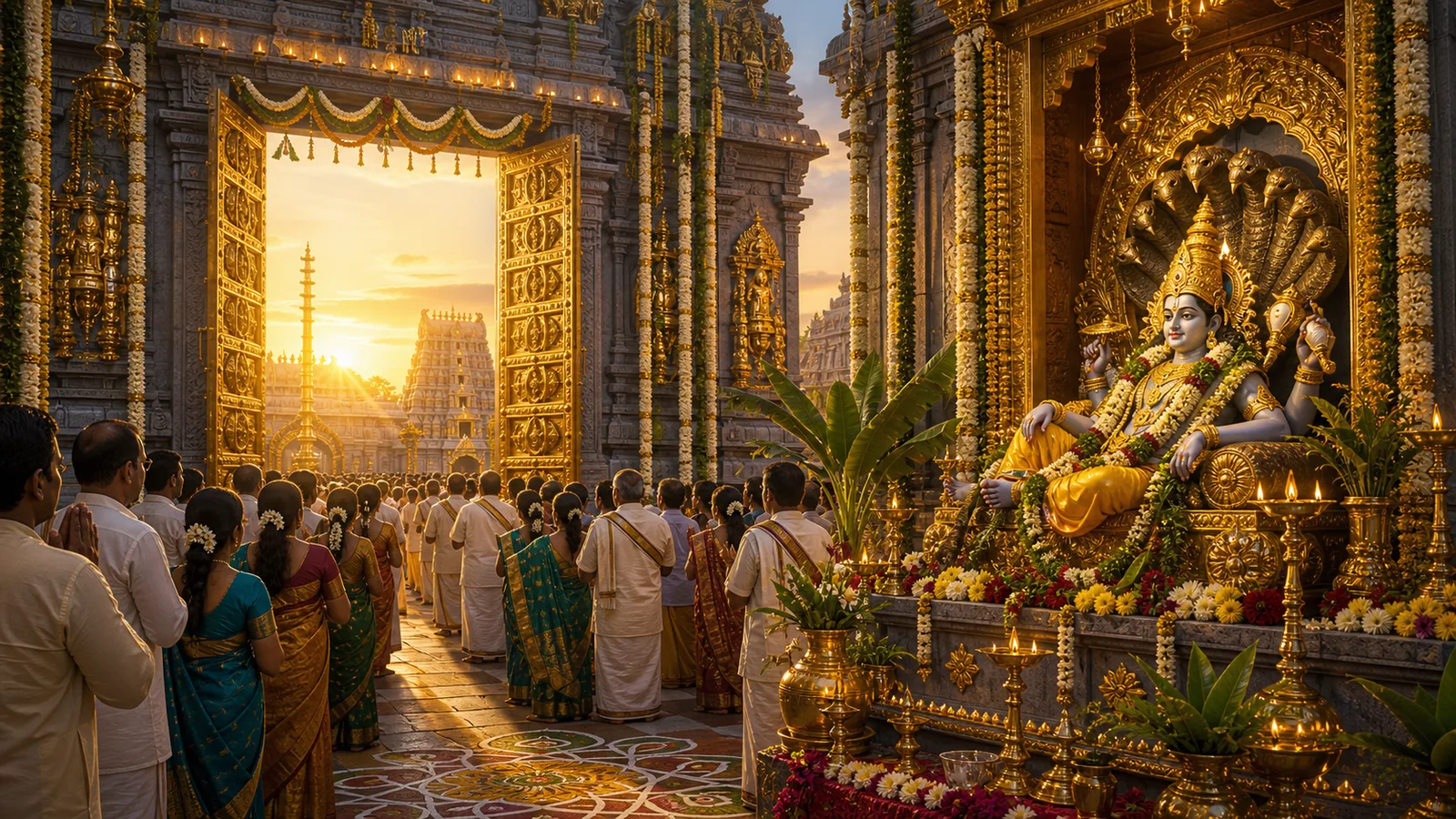
The name "Vaikunta" refers to the divine abode of Lord Vishnu, and on this day, it is believed that the gates of Vaikunta — the celestial paradise — are thrown open to receive all sincere devotees. Temples dedicated to Lord Vishnu observe this occasion by opening a special northern entrance called the Vaikunta Dwaram, through which devotees pass to receive moksha (liberation from the cycle of birth and death). The act of entering through this sacred gateway is considered equivalent to attaining Vaikunta itself. Temples like Srirangam, Tirupati, and other major Vishnu shrines see millions of devotees thronging the premises in the early hours of the morning to be among the first to enter through the divine gateway.
The 21-day Adhyayan Utsavam (Festival of Recitation) at the Srirangam Ranganathaswamy Temple culminates on Vaikunta Ekadasi. During this period, the sacred Nalayira Divya Prabandham — 4,000 Tamil verses composed by the Alvars (Vaishnava poet-saints) — is recited in full. The final day, Vaikunta Ekadasi, sees the grand Paramapada Vasal procession where Lord Ranganatha is taken through the northern gateway in a grand procession. This tradition, unbroken for over a thousand years, makes Srirangam the epicentre of Vaikunta Ekadasi celebrations globally. Devotees fast throughout the day and night, maintain vigil singing the glories of Lord Vishnu, and seek his grace for liberation and prosperity.
Significance of Vaikunta Ekadasi
Why Vaikunta Ekadasi is the Most Sacred Ekadasi:
Vaikunta Ekadasi carries unparalleled spiritual significance in the Vaishnava tradition for several reasons:
- Gateway to Liberation: Hindu scriptures declare that fasting on Vaikunta Ekadasi and entering the Vaikunta Dwaram at a Vishnu temple is equivalent to attaining moksha — freedom from the cycle of rebirth.
- Mukkoti Ekadasi: It is called Mukkoti Ekadasi because the merit earned on this single day equals the combined merit of observing all other 30 crore (300 million) Ekadasis.
- Vishnu's Blessings: Lord Vishnu is believed to be especially responsive to prayers on this day. Devotees who observe this Ekadasi with sincerity are said to receive his direct blessings for liberation.
- Scriptural Sanction: The Padma Purana, Skanda Purana, and Bhavishyottara Purana all extol the virtues of Vaikunta Ekadasi, calling it the remover of all sins and the bestower of liberation.
- Adhyayan Utsavam Culmination: At Srirangam, the 21-day recitation of the Nalayira Divya Prabandham concludes on this day, making it the pinnacle of the Vaishnava devotional calendar.
- All-Night Vigil: Staying awake through the night of Vaikunta Ekadasi, singing hymns and meditating on Vishnu, is said to bestow the same merit as performing a thousand Ashwamedha yajnas.
- Universal Significance: Unlike many regional festivals, Vaikunta Ekadasi is celebrated by Vaishnavas across South India, North India, and among the global Indian diaspora.
Deities worshipped on Vaikunta Ekadasi
Follow the links to explore each deity’s mantras, stories, and temples on Temples.bio.
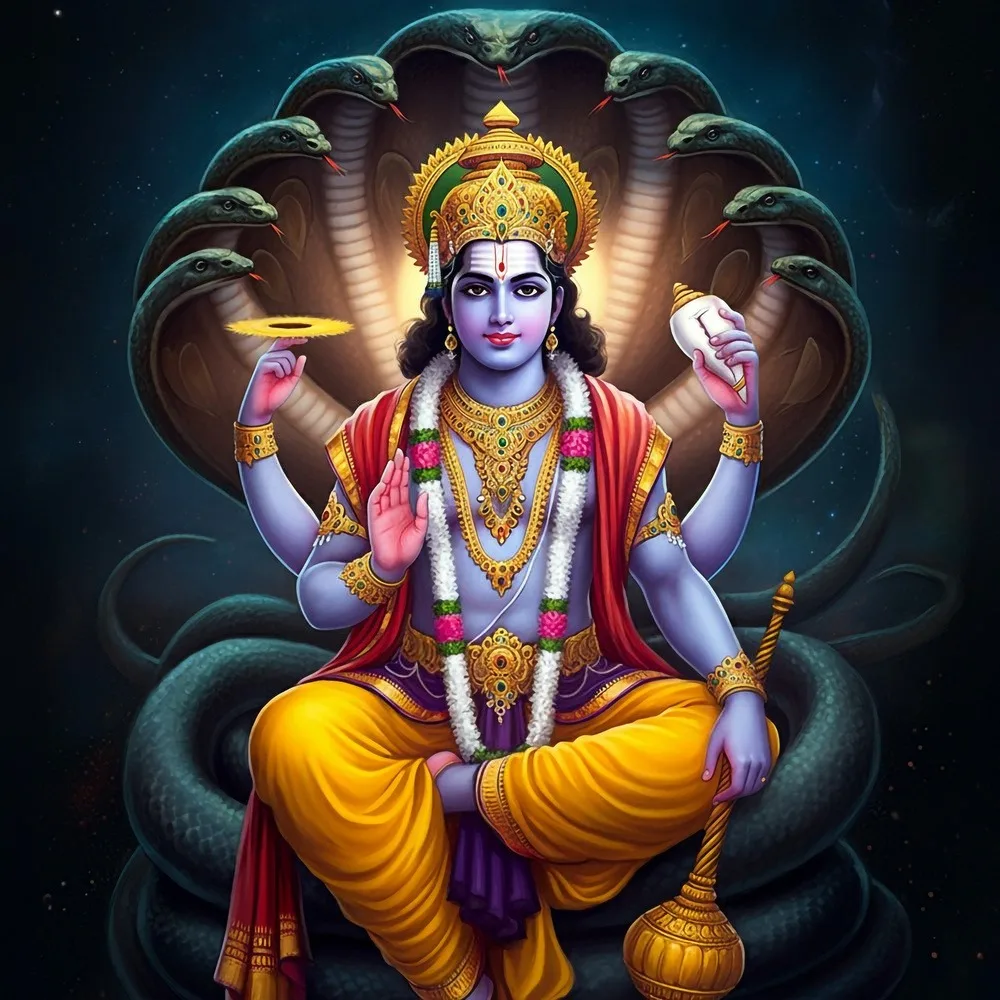
Lord Vishnu
Supreme presiding deity whose divine abode Vaikunta is opened on this day
The Preserver of the Universe — the all-pervading Supreme Being who descends to Earth in divine avatars whenever righteousness declines and evil rises.
View deity →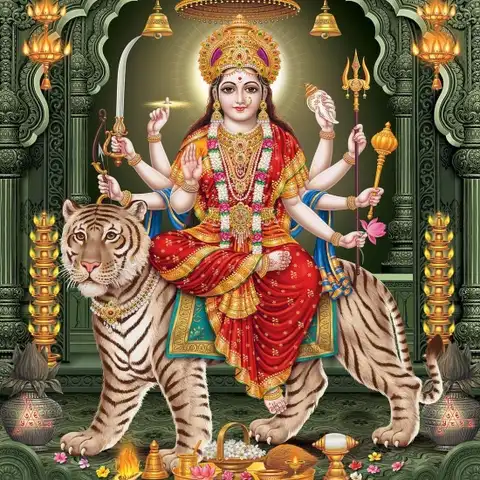
Goddess Lakshmi
Divine consort who intercedes for devotees seeking entry into Vaikunta
The Invincible Mother Goddess — Supreme Feminine Power who destroys evil, protects the righteous, and embodies the divine energy of the entire universe.
View deity →Vaikunta Ekadasi is entirely centred on Lord Vishnu, the Preserver of the Universe in the Hindu Trinity. On this day, Vishnu is worshipped in his supreme cosmic form as the lord of Vaikunta — the eternal, imperishable paradise beyond the cycles of creation and destruction.
Lord Vishnu — The presiding deity of Vaikunta Ekadasi, Vishnu is invoked in his majestic four-armed form holding the Shankha (conch), Chakra (discus), Gada (mace), and Padma (lotus). At Srirangam, he is worshipped as Sri Ranganatha in his reclining (Shayana) form on the cosmic serpent Adi Shesha. At Tirupati, he is venerated as Sri Venkateswara. On this day, Vishnu is believed to personally open the gates of his divine abode to receive devotees.
Goddess Lakshmi — As Vishnu's eternal consort, Goddess Mahalakshmi plays a central role in Vaikunta Ekadasi. She is the divine intercessor who pleads on behalf of sincere devotees for their admission to Vaikunta. Her grace is essential for the devotee's journey toward liberation.
Garuda — The divine eagle mount of Vishnu, Garuda is also honoured during Vaikunta Ekadasi. Garuda vahana processions are a highlight at many temples, symbolising the swift and sure vehicle that carries devotees toward divine liberation.
How to celebrate Vaikunta Ekadasi 2026
Step-by-Step Vaikunta Ekadasi Puja and Fasting Guide:
1. Dashami Preparation (Day Before): On Dashami (the tenth day), eat a simple meal before sunset. Avoid non-vegetarian food, onion, garlic, and intoxicants. Take a vow (sankalpa) to observe the fast.
2. Brahma Muhurta Wake-Up: Rise before sunrise (ideally between 4:00–6:00 AM) on Ekadasi. Take a purifying bath, preferably with sesame seeds mixed in the water.
3. Morning Sankalpa: Light a lamp (deepam) before the image or idol of Lord Vishnu. Offer Tulsi leaves, yellow flowers, and fruits. Take a formal vow: "Om Namo Narayanaya. I observe Vaikunta Ekadasi fast for the grace of Lord Vishnu and liberation."
4. Complete Fast: Observe a complete fast (nirjala — without water — for maximum merit, or with water and fruits for those with health considerations). Avoid rice, grains, lentils, onion, and garlic throughout the day.
5. Temple Visit: Visit a Vishnu temple, preferably before dawn. Enter through the Vaikunta Dwaram (northern gateway) if available. This act alone is said to grant liberation.
6. Vishnu Sahasranamam: Recite the Vishnu Sahasranamam (1,000 names of Vishnu) at least once. Devotees with time recite it multiple times throughout the day and night.
7. All-Night Vigil (Jaagaran): Stay awake through the night, singing bhajans, reciting Divya Prabandham (for South Indian devotees), and meditating on Vishnu. This is considered as meritorious as a thousand yagas.
8. Dwadasi Break-Fast: On the next morning (Dwadasi), break the fast after sunrise. The first food should be offered to God and then consumed. Eat simple, sattvic food — preferably rice with ghee and payasam.
Rituals & regional traditions
Regional Traditions and Customs of Vaikunta Ekadasi:
- Srirangam (Tamil Nadu): The grandest celebration takes place at Srirangam Ranganathaswamy Temple. The 21-day Adhyayan Utsavam culminates with the Paramapada Vasal procession. Hundreds of thousands of devotees queue overnight to enter through the Vaikunta Dwaram in the early hours.
- Tirupati (Andhra Pradesh): At Tirumala Venkateswara Temple, special sevas (rituals) are performed. The temple remains open continuously for 24 hours. The Vaikunta Ekadasi queue is among the longest in the world, often stretching for miles.
- Pandharpur (Maharashtra): Varkari pilgrims undertake a padayatra (foot pilgrimage) to Pandharpur to seek the blessings of Vitthal (Vishnu) on this day.
- North India Traditions: In Uttar Pradesh and Rajasthan, Vishnu temples conduct the Tulsi Vivah (if not already done) and special Satyanarayan Kathas.
- Kerala: The Guruvayur Temple observes special upachar (ritual services) and the Ekadasi fast is widely observed by devotees.
- Karnataka: In Udupi, the Sri Krishna Math observes Vaikunta Ekadasi with the Paryaya festival tradition, and special pujas are conducted.
- All-India Custom: The recitation of Vishnu Sahasranamam, fasting from grains, and staying awake through the night are universal customs observed across all regions.
Spiritual benefits
Spiritual Benefits of Observing Vaikunta Ekadasi:
- Liberation (Moksha): The primary benefit — sincere observance is said to free the soul from the cycle of birth, death, and rebirth, granting entry into Vaikunta.
- Removal of Sins: All sins accumulated over many lifetimes are said to be washed away on Vaikunta Ekadasi, as Vishnu's grace descends abundantly.
- Equivalent to 300 Crore Ekadasis: The Mukkoti Ekadasi merit means the benefit of a single Vaikunta Ekadasi fast equals that of observing 30 crore other Ekadasis.
- Purification of Mind and Body: The 24-hour fast purifies the physical body and the mind, reducing the influence of tamas (lethargy) and rajas (passion), promoting sattva (purity).
- Divine Protection: Devotees who observe this fast with devotion are said to receive Vishnu's direct protection in this life and guidance toward liberation after death.
- Fulfilment of Desires: Along with moksha, material blessings such as health, prosperity, marital harmony, and removal of obstacles are bestowed on sincere devotees.
- Ancestral Benefit: Observing Vaikunta Ekadasi with a prayer for one's ancestors is said to help departed souls attain peace and higher realms.
Mantras & sacred chants
Key Mantras and Chants for Vaikunta Ekadasi:
1. Vishnu Ashtakshara Mantra (The Eight-Syllable Mantra)
Sanskrit: ॐ नमो नारायणाय
Transliteration: Om Namo Narayanaya
Meaning: "I bow to Lord Narayana (Vishnu)." This is the primary mantra of Vaikunta Ekadasi, to be chanted 108 times or continuously throughout the day.
2. Vishnu Dwadashakshara Mantra (Twelve-Syllable Mantra)
Sanskrit: ॐ नमो भगवते वासुदेवाय
Transliteration: Om Namo Bhagavate Vasudevaya
Meaning: "I bow to Lord Vasudeva (Krishna-Vishnu), the source of all existence." Chant this mantra 108 times while offering Tulsi leaves to Vishnu.
3. Vishnu Sahasranamam Opening Shloka
Sanskrit: शुक्लाम्बरधरं विष्णुं शशिवर्णं चतुर्भुजम् ।
प्रसन्नवदनं ध्यायेत् सर्वविघ्नोपशान्तये ॥
Transliteration: Shuklambara-dharam Vishnum Shashi-varnam Chatur-bhujam,
Prasanna-vadanam Dhyayet Sarva-vighno-upashantaye.
Meaning: "Meditate on Vishnu, dressed in white, of the colour of the moon, four-armed, with a pleasant face, for the removal of all obstacles." Recite this before beginning the full Vishnu Sahasranamam.
Vaikunta Ekadasi 2026 — FAQs
Vaikunta Ekadasi 2026 falls on January 1st (Thursday). It is observed on the Shukla Ekadasi (eleventh day of the bright fortnight) of the Tamil month of Margazhi (Margashirsha). In 2025, it fell on January 10th, and in 2027 it will fall on December 21st.
Vaikunta Dwaram (also called Paramapada Vasal or Swarga Vathil) is a special northern entrance at Vishnu temples that is opened only on Vaikunta Ekadasi. Passing through this gateway is believed to be equivalent to entering Vaikunta — the divine abode of Lord Vishnu — and grants the devotee liberation from the cycle of rebirth. At Srirangam, it is the most awaited moment of the 21-day Adhyayan Utsavam.
Devotees fast completely from grains, lentils, rice, onion, and garlic on Vaikunta Ekadasi. The strictest fast (Nirjala) avoids even water. A more moderate fast allows fruits, milk, nuts, and water. The fast begins at sunrise on Ekadasi and is broken the next morning (Dwadasi) after sunrise. Staying awake through the night is highly recommended for maximum spiritual benefit.
The Adhyayan Utsavam is a 21-day festival at Srirangam Ranganathaswamy Temple during which the entire Nalayira Divya Prabandham (4,000 sacred Tamil verses by the 12 Alvars) is recited. Vaikunta Ekadasi is the culminating day when Lord Ranganatha is taken in a grand procession through the Vaikunta Dwaram. This tradition has been observed continuously for over a thousand years.
The most celebrated temples for Vaikunta Ekadasi are the Srirangam Ranganathaswamy Temple in Trichy (the grandest celebration), Tirumala Venkateswara Temple in Tirupati, Guruvayur Temple in Kerala, and Udupi Sri Krishna Math in Karnataka. All major Vishnu and Venkateswara temples across India observe this festival with special rituals and open their Vaikunta Dwaram.
Vaikunta Ekadasi is called Mukkoti Ekadasi because the spiritual merit earned by fasting on this single day is said to equal the combined merit of observing all 30 crore (300 million) Ekadasis that appear in a cosmic cycle. 'Mukkoti' means three crores in some traditions, referring to the 33 crore deities who descend to bless devotees on this day.
Children below 8 years and elderly people with health conditions are not required to observe a strict fast. They may consume fruits, milk, and permitted foods throughout the day. The essence of Vaikunta Ekadasi is devotion, prayer, and temple visits — even those who cannot fast fully receive blessings by visiting a Vishnu temple and reciting the Vishnu Sahasranamam.
The fast is broken on Dwadasi (the twelfth day) morning after sunrise. Traditionally, the break-fast (parana) is done within a specific time window — typically between sunrise and before the Dwadasi tithi ends. Simple sattvic food such as rice with ghee, payasam (sweet rice pudding), and fruits are ideal. Avoid non-vegetarian food, onion, and garlic even after breaking the fast on Dwadasi.