About Vishu
Last updated:
Vishu is the traditional new year celebrated in Kerala and coastal Karnataka (Tulunadu), marking the sun's entry into Mesha (Aries) — the first sign of the zodiac. This astronomical event, known as Mesha Sankranti, typically occurs on April 14 or 15 each year. Unlike the lunisolar festivals of most of India, Vishu is a solar festival, making it one of the most astronomically precise celebrations in the Hindu calendar. The day is considered extraordinarily auspicious because it marks the beginning of a new solar year, symbolising fresh starts, renewed hope, and the promise of abundance.
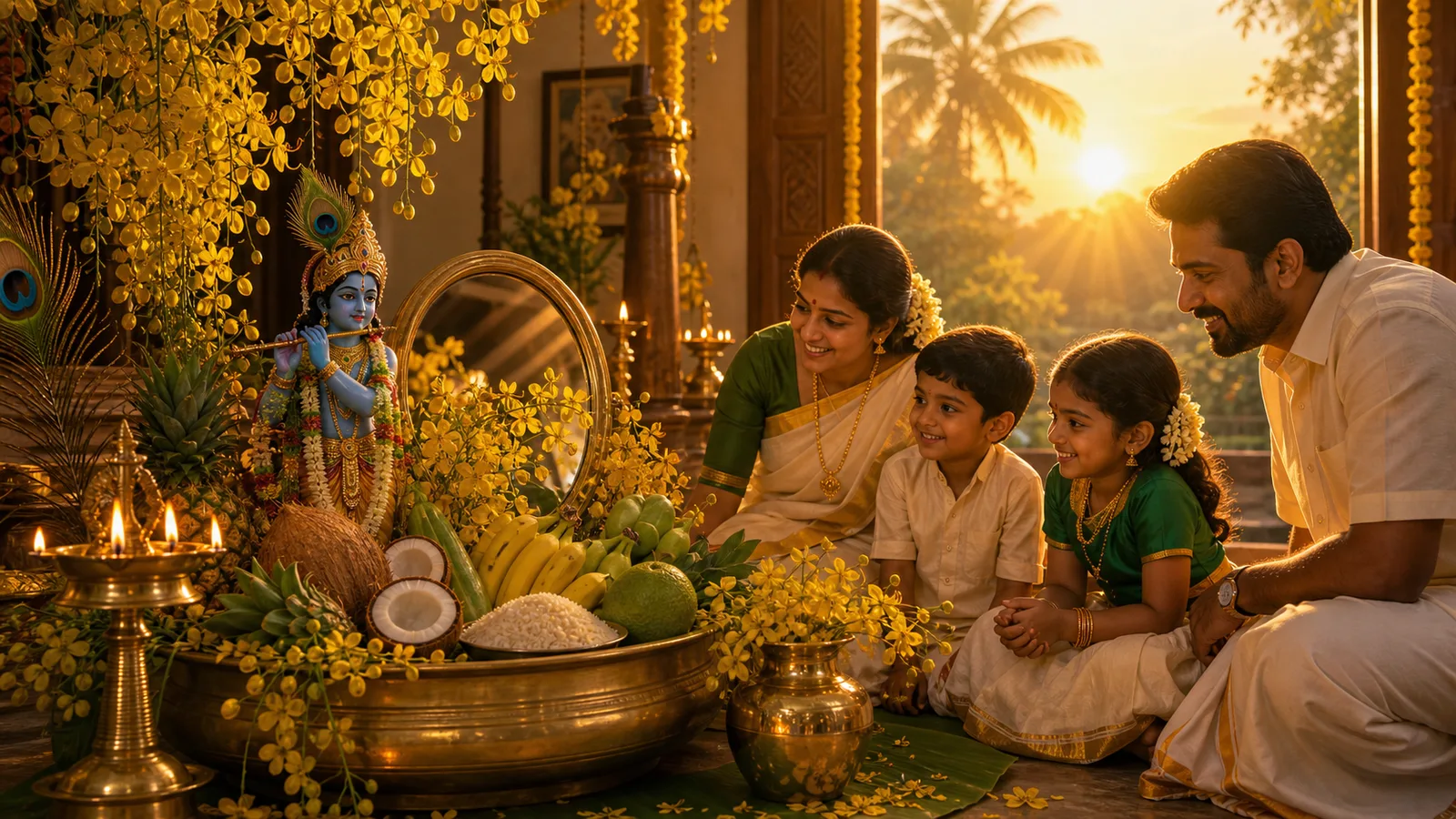
The most sacred and distinctive tradition of Vishu is the Vishukkani — the auspicious first sight (kani) that a devotee sees upon waking on Vishu morning. The Vishukkani is carefully arranged the night before by the eldest woman of the household in a large brass urniyam (vessel) or before the family deity's altar. It includes a Vishnu idol or image (usually Krishna), a polished bronze mirror (kannadi), golden cucumber or yellow cucumber (Vishu kani vellari), coconuts, a bunch of golden konna flowers (Cassia fistula — Kerala's state flower), rice, a lit lamp, gold coins or jewellery, fruits, vegetables, and holy scriptures. The ensemble represents the universe's abundance — spiritual, material, and natural wealth. Family members are led blindfolded to the Vishukkani by the eldest and open their eyes at the designated moment, believing that what they first see determines the prosperity of the year ahead.
Vishukkaineetam, the ritual gifting of money by elders to younger family members, is another beloved tradition. It symbolises the blessing of prosperity flowing from one generation to the next. The Vishu Sadhya — a festive meal on banana leaves with dozens of vegetarian dishes — follows the morning rituals. Vishu katta (a sweet rice-jaggery preparation) and Vishu kanji (a rice gruel) are traditional morning foods. Firecrackers (Vishu Pattalam) are burst at dawn to herald the new year, and new clothes (Puthukodi) are worn to mark the fresh beginning.
Significance of Vishu
Vishu carries layered significance across spiritual, astronomical, agricultural, and cultural dimensions:
Astronomical and Spiritual Significance:
- Marks the sun's ingress into Mesha Rashi (Aries), the first zodiac sign — the true astronomical new year
- In Vedic astrology, Mesha Sankranti is one of the most auspicious solar transits of the year
- The day is ideal for beginning new ventures, contracts, and investments as the sun's energy is at a pivotal renewal point
- Symbolises the triumph of light — the days are now longer than nights across the northern hemisphere
Agricultural Significance:
- Vishu marks the beginning of the Karkidaka agricultural cycle in Kerala
- The golden Konna flowers (Cassia fistula) that bloom abundantly in April are a natural signal of the harvest season
- Farmers traditionally begin new cultivation plans and seek blessings for a prosperous growing season
- The Vishukkani vegetables and grains represent the first fruits offered back to the divine
Cultural Significance:
- Vishu is the official solar new year of Kerala and is a gazetted public holiday
- The Vishukkani tradition is one of the most spiritually intimate family rituals in all of Indian culture — it binds families across generations
- Vishukkaineetam gift-giving creates economic and emotional bonds between elders and youth
- The festival preserves Kerala's deep relationship with Vedic astronomy and jyotisha
Symbolic Significance:
- The mirror in Vishukkani represents self-reflection and consciousness
- Gold and grains together symbolise spiritual and material abundance
- The Vishnu image at the centre affirms that all prosperity originates from the divine
Deities worshipped on Vishu
Follow the links to explore each deity’s mantras, stories, and temples on Temples.bio.
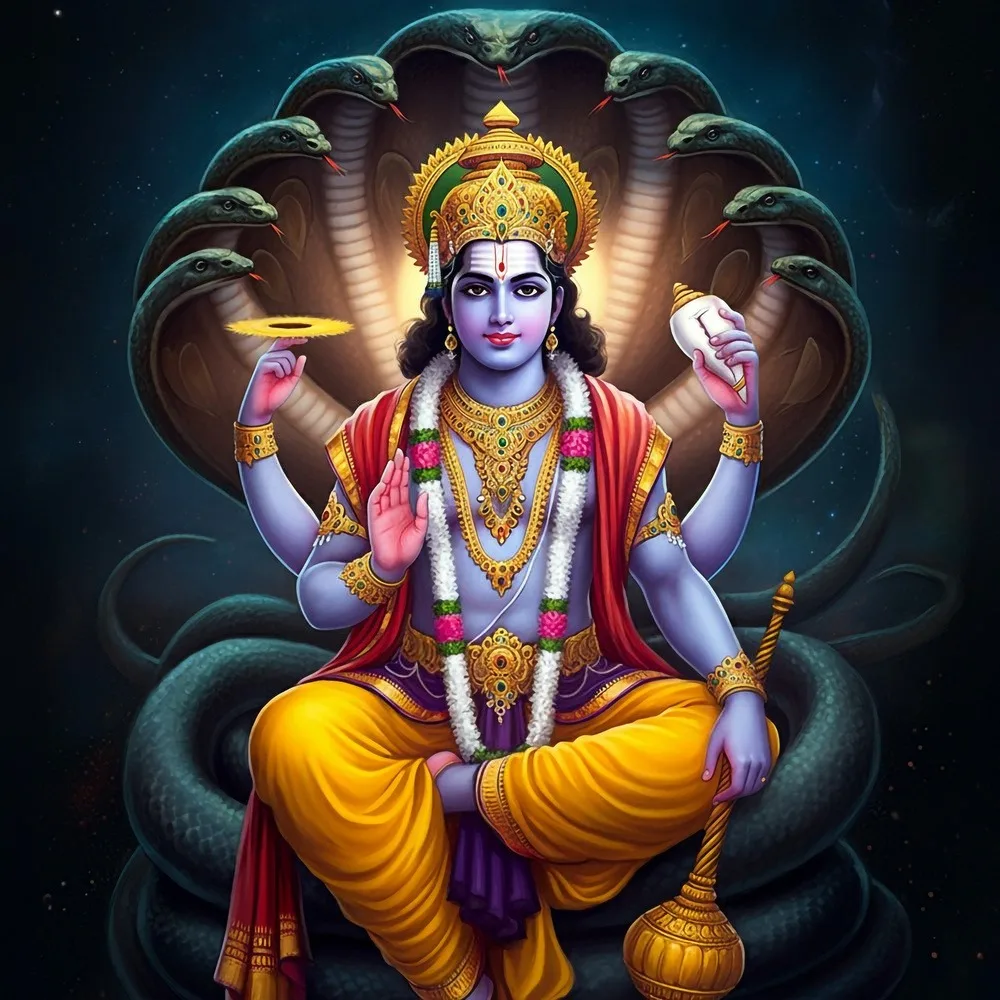
Lord Vishnu
Central deity of Vishu; worshipped as Guruvayurappan (Krishna) during the Vishukkani ritual and new year puja
The Preserver of the Universe — the all-pervading Supreme Being who descends to Earth in divine avatars whenever righteousness declines and evil rises.
View deity →
Lord Krishna
Most popular form of Vishnu in Vishukkani; Guruvayur Krishna temple is the most visited on Vishu day
The Preserver of the Universe — the all-pervading Supreme Being who descends to Earth in divine avatars whenever righteousness declines and evil rises.
View deity →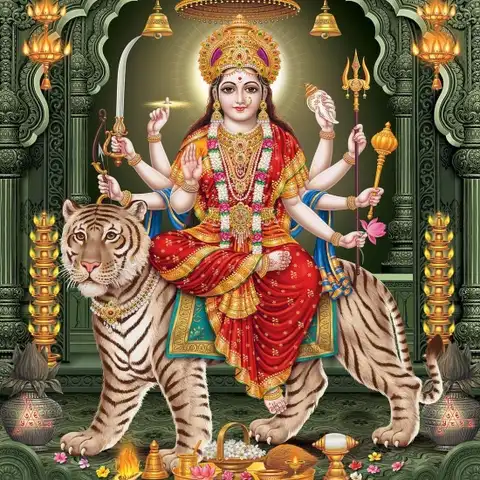
Goddess Lakshmi
Goddess of prosperity invoked through the gold and grains in Vishukkani to bless the new year with abundance
The Invincible Mother Goddess — Supreme Feminine Power who destroys evil, protects the righteous, and embodies the divine energy of the entire universe.
View deity →Lord Vishnu is the central deity of Vishu. The Vishukkani arrangement is always centred on a Vishnu idol or image — most commonly Lord Krishna holding a lotus, which is the most popular Vishnu form in Kerala. The festival's very name "Vishu" is derived from Sanskrit Vishuvat, meaning equinox, though in popular devotion it is closely associated with Vishnu as the lord of cosmic cycles and solar order. Lord Guruvayurappan (Krishna as worshipped at Guruvayur Temple in Kerala) is especially venerated on Vishu, and thousands of devotees visit Guruvayur Temple for special darshan. At the Thrissur Pooram and Guruvayur temples, elaborate Vishu puja is performed. Some families also place images of Goddess Lakshmi alongside Vishnu in the Vishukkani, as Lakshmi represents the prosperity and abundance that the new year is expected to bring. In Tulunadu (coastal Karnataka), Vishnu temples hold special Mesha Sankranti pujas, and the festival is celebrated as Bisu with similar Vishukkani-inspired traditions.
How to celebrate Vishu 2026
Vishu celebrations follow a precise ritual sequence that spans the evening before through the morning of the festival day:
The Night Before (Vishu Eve):
1. The eldest woman of the family (or the head of household) prepares the Vishukkani after sunset
2. In a large brass uruli or before the puja room altar, arrange:
- A Vishnu/Krishna idol or framed image at the centre
- A polished bronze mirror (kannadi) to the side
- A bunch of golden Konna flowers (Cassia fistula)
- Golden cucumber (Vishu kani vellari) or yellow cucumber
- A ripe jackfruit section
- A coconut, broken to show the white inside
- Raw rice (uncooked, in a small heap)
- Gold coins or gold jewellery
- Seasonal fruits: mango, banana
- Vegetables: ash gourd, pumpkin
- A lit brass lamp (nilavilakku)
- A copy of the Ramayanam or other holy scripture
3. Light the lamp and offer a small prayer; keep the Vishukkani room closed until morning
Vishu Morning Rituals:
4. Wake before sunrise — ideally before 5 AM
5. Do not open your eyes fully or look at anything carelessly before seeing the Vishukkani
6. The eldest family member (or parent) leads each person blindfolded or with closed eyes to the Vishukkani room
7. At the right moment, open eyes and behold the full Vishukkani — this auspicious first sight (kani) is believed to determine the year's fortune
8. Prostrate before the Vishukkani and offer prayers to Lord Vishnu
9. Burst firecrackers (Vishu Pattalam) to herald the new year
10. Elders distribute Vishukkaineetam — coins or cash gifted to children, younger relatives, and household helpers
11. Take an oil bath (enna thalimpu) and wear new clothes (Puthukodi)
12. Eat Vishu kanji (rice gruel with coconut milk) and Vishu katta (sweet rice-jaggery cake) as the first morning meal
13. Visit the local Vishnu or Krishna temple for Vishu puja and special darshan
14. Prepare and enjoy the Vishu Sadhya — a full banana-leaf feast at noon
Rituals & regional traditions
Vishu is celebrated with distinct regional variations across Kerala and Tulunadu:
Central Kerala (Thrissur, Ernakulam, Palakkad):
- Most elaborate Vishukkani preparations with all traditional items
- Guruvayur Temple draws lakhs of devotees for special Vishu darshan
- Grand Vishu Sadhya with over 20 dishes on banana leaves
- Vishu Pattalam (firecrackers) burst enthusiastically from before dawn
North Kerala (Kozhikode, Kannur, Malappuram):
- Known as Bali Vishu in some communities
- Special emphasis on visiting ancestral temples and seeking blessings
- Vallamkali (boat races) and local fairs in some areas
South Kerala (Thiruvananthapuram, Kollam):
- Padmanabhaswamy Temple (Vishnu temple) in Thiruvananthapuram holds grand Vishu puja
- The Vishukkani tradition is especially elaborate here
Tulunadu (Dakshina Kannada, Udupi, Coastal Karnataka):
- Celebrated as Bisu among Tulu-speaking communities
- Bisu Kani (similar to Vishukkani) arranged with regional additions like betel leaves, areca nuts, and local flowers
- Yakshagana performances and community gatherings
- Considered the Tulu new year alongside Vishu
Traditions common across regions:
- Vishukkaineetam: Elders give cash gifts to children and young family members as a new year blessing
- Puthukodi: Everyone wears new clothes
- Konna flowers: Cassia fistula (golden shower tree) blossoms are integral to the Vishukkani and home decoration
- Sadhya feast: Grand vegetarian meal at noon
- Temple visits: Special Vishnu/Krishna temple darshan on Vishu day
Spiritual benefits
Observing Vishu with devotion and sincerity bestows profound spiritual and practical benefits:
- Auspicious Year-Beginning: Seeing the Vishukkani on the new year morning is believed to fill the entire year with prosperity, health, and happiness
- Vishnu's Blessings: Performing Vishu puja at a Vishnu or Krishna temple on this solar new year earns special divine favour as the sun marks a new cosmic cycle
- Prosperity and Wealth: The gold, grains, and fruits in the Vishukkani invoke Lakshmi's grace for financial stability and material well-being through the year
- Family Harmony: The Vishukkaineetam gift tradition strengthens intergenerational bonds and cultivates generosity and gratitude
- Positive Mindset: Beginning the year by consciously choosing to see beauty and abundance (Vishukkani) conditions the mind toward positivity and optimism
- Cultural Identity: Celebrating Vishu keeps alive Kerala's unique solar calendar traditions and astronomical heritage
- Renewed Devotion: The new year provides a sacred opportunity to recommit to spiritual practices, prayers, and dharmic living
- Community Solidarity: Vishu Sadhya and Vishukkaineetam shared with neighbours, friends, and helpers build social trust and communal well-being
Mantras & sacred chants
1. Vishnu Ashtakshara Mantra (for Vishukkani puja):
Sanskrit: ॐ नमो नारायणाय
Transliteration: Om Namo Narayanaya
Meaning: I bow to Lord Narayana (Vishnu). This eight-syllable mantra is the primary Vishnu mantra chanted during Vishu puja and while beholding the Vishukkani.
2. Suryopasthana Mantra (Sun salutation for Mesha Sankranti):
Sanskrit: ॐ सूर्याय नमः। ॐ भास्कराय नमः। ॐ आदित्याय नमः॥
Transliteration: Om Suryaya Namah. Om Bhaskaraya Namah. Om Adityaya Namah.
Meaning: Salutations to the Sun (Surya), the Radiant One (Bhaskara), and the Son of Aditi (Aditya). Chanted at sunrise on Vishu to mark the solar new year.
3. Guruvayurappan Dhyana Sloka:
Sanskrit: गुरुवायुपुरेशाय कृष्णाय परमात्मने। नमस्कारं करोमि अहं भक्त्या नित्यं जगत्पतेः॥
Transliteration: Guruvayupuresaya Krishnaya Paramatmane. Namaskaram Karomi Aham Bhaktya Nityam Jagatpateh.
Meaning: I offer daily salutations with devotion to Krishna, the lord of Guruvayur, the Supreme Soul, the master of the universe — especially popular in Kerala Vishu worship.
Vishu 2026 — FAQs
Vishu 2026 falls on Tuesday, April 14, 2026. It marks the sun's entry into Mesha (Aries) — the Mesha Sankranti — which is Kerala's solar new year. The Vishukkani is arranged on the night of April 13 and viewed at dawn on April 14.
Vishukkani is the auspicious first-sight arrangement viewed on Vishu morning. It includes a Vishnu/Krishna idol, a polished bronze mirror, golden Konna flowers (Cassia fistula), golden cucumber, coconut, rice, gold coins or jewellery, ripe fruits, vegetables, a lit lamp, and holy scriptures. Seeing this arrangement as the very first sight of the new year is believed to bring prosperity.
Vishukkaineetam is the tradition of elders gifting money (coins or cash) to younger family members, children, and household helpers on Vishu morning after the Vishukkani ritual. It symbolises the blessing of prosperity flowing from one generation to the next and is one of the most cherished Vishu customs.
Lord Vishnu — primarily in his Krishna form — is the principal deity of Vishu. The Vishukkani always centres on a Vishnu or Krishna image. Guruvayurappan (Krishna at Guruvayur Temple) is especially venerated, and thousands visit Guruvayur on Vishu day for special darshan.
Vishu is primarily celebrated in Kerala and in Tulunadu (coastal Karnataka), where it is known as Bisu. Tulu-speaking communities celebrate Bisu Kani with similar first-sight traditions. Kerala diaspora communities worldwide also celebrate Vishu with Vishukkani arrangements and Sadhya feasts.
Vishu Sadhya is the grand vegetarian feast served on banana leaves on Vishu day. It includes dishes like avial, erissery, olan, thoran, pachadi, papadam, payasam, and rice. The morning traditionally begins with Vishu kanji (rice gruel with coconut milk) and Vishu katta (sweet rice-jaggery cake) before the main noon feast.
Fasting is not a mainstream requirement for Vishu. However, some devout devotees fast until they have completed the Vishukkani darshan and temple puja. The morning meal is typically light — Vishu kanji and Vishu katta — before the full Sadhya feast at noon.
Vishu falls on April 14 every year as it is based on the solar calendar (Mesha Sankranti). Vishu 2025 is on April 14, 2025, and Vishu 2027 is also on April 14, 2027. On some years it may fall on April 15 depending on the precise time of Mesha Sankranti.