About Arudra Darshan
Last updated:
Arudra Darshan is a Tamil festival and this day is dedicated to Lord Shiva. Arudra Nakshatram, which is also known as Thiruvaathirai Nakshatram, during Maargazhi Masam is considered highly auspicious. On this day Arudra Nakshatra also coincides with Pournami. On this day Nataraj form of Lord Shiva is worshipped during Arunodaya along with holy chanting from Vedas. Being dedicated to Nataraj form of Lord Shiva this day is also considered as the birthday of Lord Shiva. In rest of the it is Maha Shivaratri which is considered as the birthday of Lord Shiva.
Deities worshipped on Arudra Darshan
Follow the links to explore each deity’s mantras, stories, and temples on Temples.bio.
Lord Shiva
Lord Shiva as Nataraja is the principal deity — his Ananda Tandava (cosmic dance of bliss) is the central focus of the entire festival
The Supreme Destroyer and Transformer of the Universe — The Adiyogi, Lord of Lords, and the First Yogi.
View deity →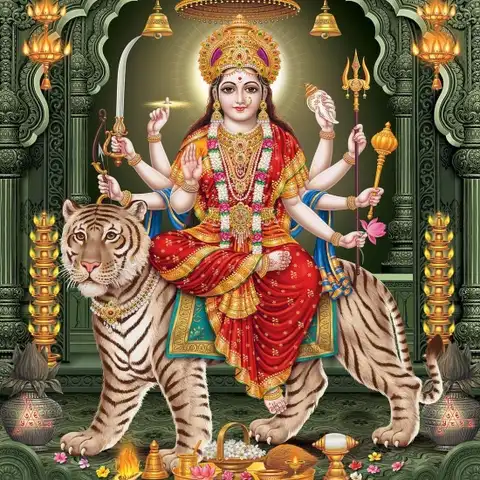
Goddess Durga
Goddess Shivakami (Parvati) accompanies Nataraja in the Chidambaram procession and is worshipped as Shiva's divine consort and cosmic Shakti
The Invincible Mother Goddess — Supreme Feminine Power who destroys evil, protects the righteous, and embodies the divine energy of the entire universe.
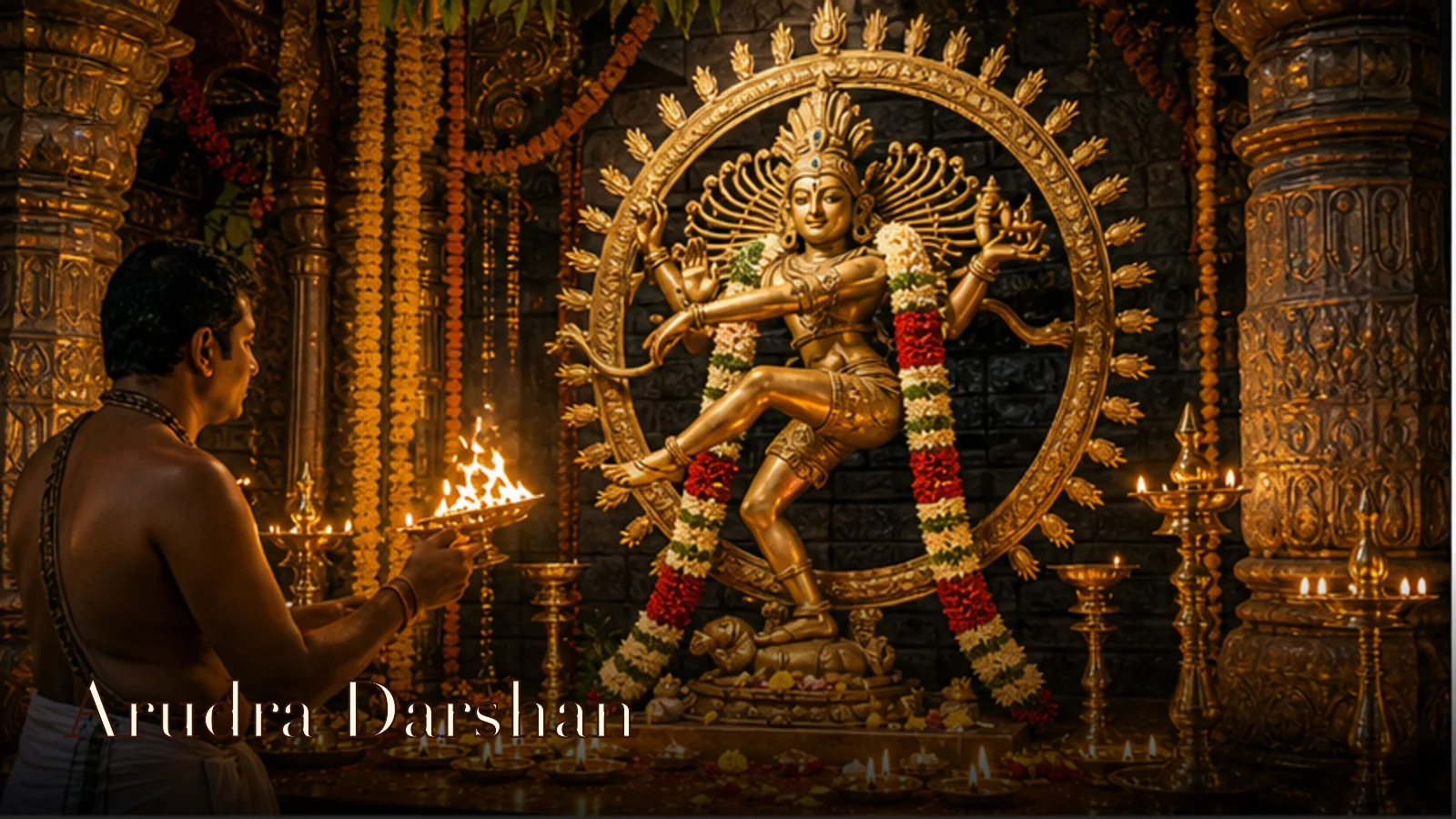
View deity →Lord Shiva as Nataraja is the supreme deity of Arudra Darshan. Nataraja — the King of Dance — is one of the most philosophically rich and aesthetically perfect divine icons in world religious art. He stands on one leg upon Apasmara (the dwarf of ignorance), with his hair flying in four directions, encircled by a halo of flames (Prabhamandala) representing the cosmic fire of dissolution. His four arms hold Damaru (drum of creation), Agni (fire of dissolution), grant Abhaya mudra (protection), and point toward his raised foot (moksha).
At Chidambaram, Nataraja is enshrined as the principal deity, flanked by his consort Shivakami (Parvati) as a skilled dancer in her own right. The Nataraja temple at Chidambaram is maintained by the Dikshitar priests — hereditary keepers of the temple — who follow a unique and ancient ritual tradition unbroken for over 2,000 years. On Arudra Darshan, Nataraja is adorned with special flowers, silk garments, and the most elaborate jewelry, and taken in procession on the golden chariot. The goddess Shivakami accompanies the Lord in a separate procession, and the reunion of the divine couple on this night is considered especially auspicious for devotees who witness it.
Spiritual benefits
- Direct experience of cosmic consciousness through contemplation of Nataraja's cosmic dance
- Liberation from fear, including fear of death, through Shiva's Abhaya mudra blessing
- Destruction of ignorance (symbolized by Apasmara) through Shiva's grace on this most powerful night
- Purification of speech, thought, and action through fasting and all-night vigil
- Grace for artistic pursuits — dance, music, and all performing arts — as Nataraja is the divine patron of all arts
- Removal of obstacles and sufferings through sincere worship of the Panchakritya form of Shiva
- Deepening of jnana (spiritual wisdom) through meditation on Shiva's five cosmic acts
- Special blessings for children born or conceived during Arudra Darshan period
Mantras & sacred chants
1. Nataraja Dhyana Shloka
Sanskrit: नृत्तावसाने नटराजराजो ननाद ढक्कां नवपञ्चवारम्। उद्धर्तुकामः सनकादिसिद्धानेतद्विमर्शे शिवसूत्रजालम्॥
Transliteration: Nruttavasane Natarajarajo Nanada Dhakkam Navapanchavaram, Uddhartu Kamah Sanakadisiddhan Etad Vimarshe Shivasutrajalaam
Meaning: At the end of his cosmic dance, Nataraja sounded his Damaru drum fourteen times, wishing to uplift the sages Sanaka and others — and from those fourteen sounds emerged the entire web of the Shiva Sutras (Maheshwara Sutras), the seed of all Sanskrit grammar.
2. Panchakshara Mantra
Sanskrit: ॐ नमः शिवाय
Transliteration: Om Namah Shivaya
Meaning: Salutations to the auspicious one — this five-syllable mantra (Na-Ma-Shi-Va-Ya) represents the five elements (earth, water, fire, air, ether) and the five cosmic acts of Shiva, making it the perfect mantra for Arudra Darshan.
3. Thiruvathirai Chant (Tamil)
Transliteration: Siva Siva Shambo Mahadeva, Nataraja Ananda Tandava
Meaning: O Shiva, O Shiva, the auspicious one, the great god — O Nataraja, you of the blissful cosmic dance — a Tamil devotional chant that captures the essence of Arudra Darshan in its simplest form.
Arudra Darshan 2026 — FAQs
Arudra Darshan 2026 falls on Wednesday, January 14, 2026, when the Arudra (Thiruvathirai/Ardra) star ascends on the full moon night of the Tamil month Margazhi.
Arudra Darshan (Thiruvadirai) is the festival celebrating Lord Shiva as Nataraja, the cosmic dancer, on the night when the Arudra star ascends in Margazhi. It commemorates Shiva's Ananda Tandava — the cosmic dance of bliss through which the universe is created, maintained, and dissolved.
The Nataraja temple at Chidambaram in Tamil Nadu is the world center of Arudra Darshan. The Chidambaram Dikshitars perform elaborate rituals and a grand chariot procession of Nataraja through the four mada streets. Thiruvanaikaval (Jambukeswarar) and other Shiva temples also hold grand celebrations.
The traditional prasadam of Arudra Darshan is Kali (a sweet porridge made from broken rice or wheat with jaggery and coconut) and Kari or Ezhu Curry (a mixed vegetable curry including jackfruit, raw banana, and yam). In Kerala, this is prepared as Thiruvathirai Kali.
Chidambara Rahasyam (Secret of Chidambaram) is the sacred mystery at the heart of the Nataraja temple — behind a golden curtain in the Kanaka Sabha, the formless Shiva as Akasha (space) is represented only by a cluster of golden vilva leaves. On Arudra Darshan, this curtain is parted to reveal the 'secret' to devotees, symbolizing the direct vision of formless consciousness.
Thiruvathirai Kali is a graceful group folk dance performed by women in Kerala on Thiruvathirai (Arudra Darshan). Women form a circle around a lit oil lamp, clapping rhythmically and singing devotional songs about Parvati's love for Shiva, celebrating the divine union of Shiva and Shakti.
Nataraja's Ananda Tandava symbolizes Shiva's five cosmic acts (Panchakrityas): creation (Damaru drum), preservation (Abhaya gesture), dissolution (fire in hand), concealment (standing leg), and grace (raised foot). The encircling flames represent the universe, and the dwarf under his foot represents defeated ignorance.
At home, set up a Nataraja or Shiva Lingam, perform abhishekam with milk and water, offer bilva leaves and vibhuti (sacred ash), recite Om Namah Shivaya and Thiruvasakam verses, prepare Kali prasadam, light sesame oil lamps, and ideally keep vigil through the night with Shiva bhajans.