About Guru Purnima Puja
Last updated:
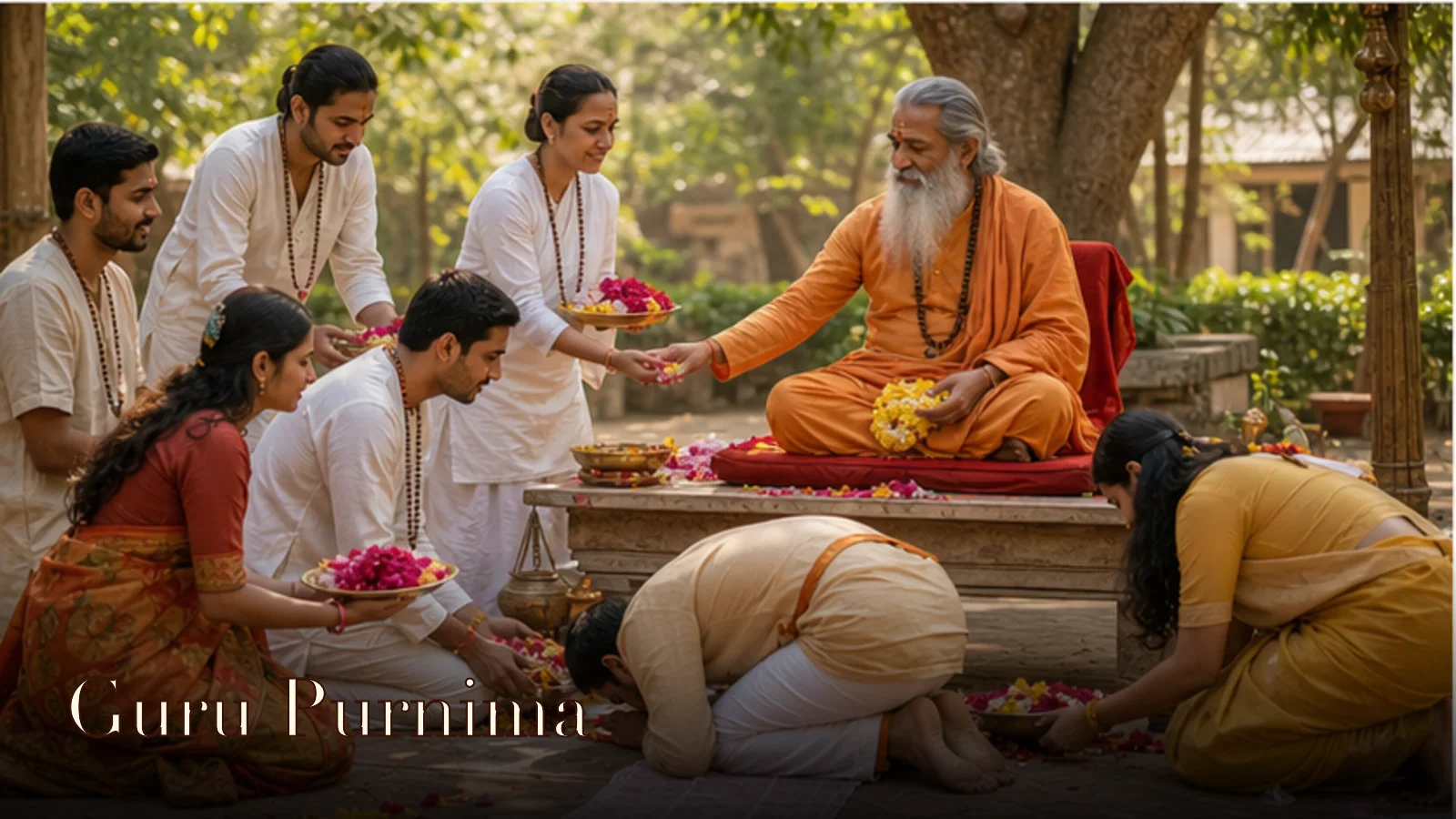
Full moon day during Ashadha month is known as Guru Purnima day. Traditionally this day is reserved for Guru Puja or Guru Worship. On this day disciples offer Puja or pay respect to their Gurus. Guru refers to spiritual guide who enlighten disciples by his knowledge and teachings. Guru Purnima is also known as Vyasa Purnima and this day is commemorated as birth anniversary of Veda Vyasa. Veda Vyasa was the author as well as a character in the Hindu epic Mahabharata. Adi Shankara, Sri Ramanuja Acharya and Sri Madhvacharya are some of the noteworthy Gurus in Hinduism.
Deities worshipped on Guru Purnima Puja
Follow the links to explore each deity’s mantras, stories, and temples on Temples.bio.
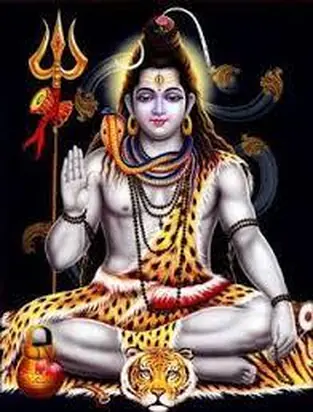
Lord Shiva
Adiyogi — the first yogi who transmitted yoga knowledge on Guru Purnima
The Supreme Destroyer and Transformer of the Universe — The Adiyogi, Lord of Lords, and the First Yogi.
View deity →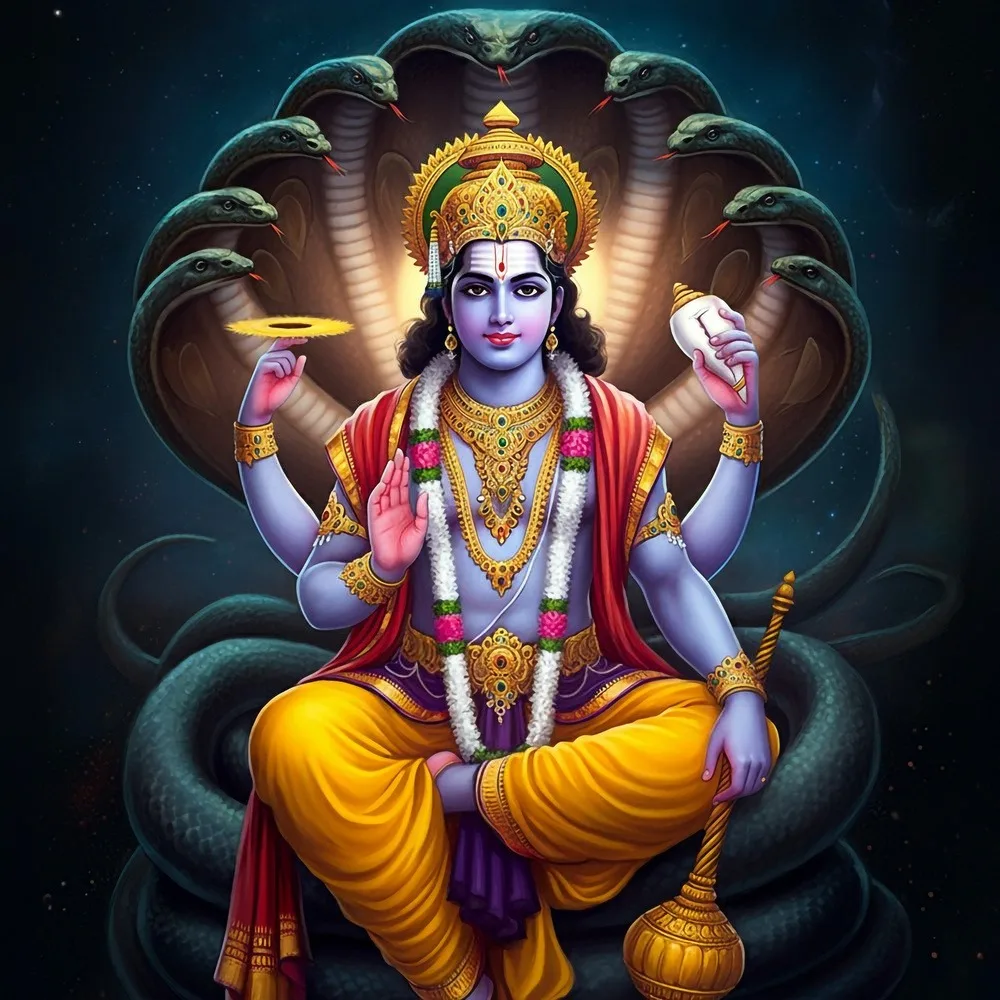
Lord Vishnu
Veda Vyasa, the Guru of all Gurus, is considered a partial avatar of Vishnu
The Preserver of the Universe — the all-pervading Supreme Being who descends to Earth in divine avatars whenever righteousness declines and evil rises.
View deity →Guru Purnima is primarily centred on Veda Vyasa as the Adi Guru (primordial teacher) of Hindu tradition, but also honours Lord Dattatreya and one's own personal spiritual teacher.
Veda Vyasa, born on this day, is worshipped as the Guru of all Gurus. As the compiler of the Vedas and author of the Mahabharata and Puranas, he ensured that the highest spiritual knowledge would be accessible to humanity across all ages. Puja offered to Vyasa on Guru Purnima is considered puja offered to the entire Guru lineage.
Lord Dattatreya, the divine incarnation representing the combined essence of Brahma, Vishnu, and Shiva, is revered as the Adi Guru in many spiritual traditions, particularly in Maharashtra and Karnataka. He is worshipped as the cosmic teacher who instructs through nature and direct experience.
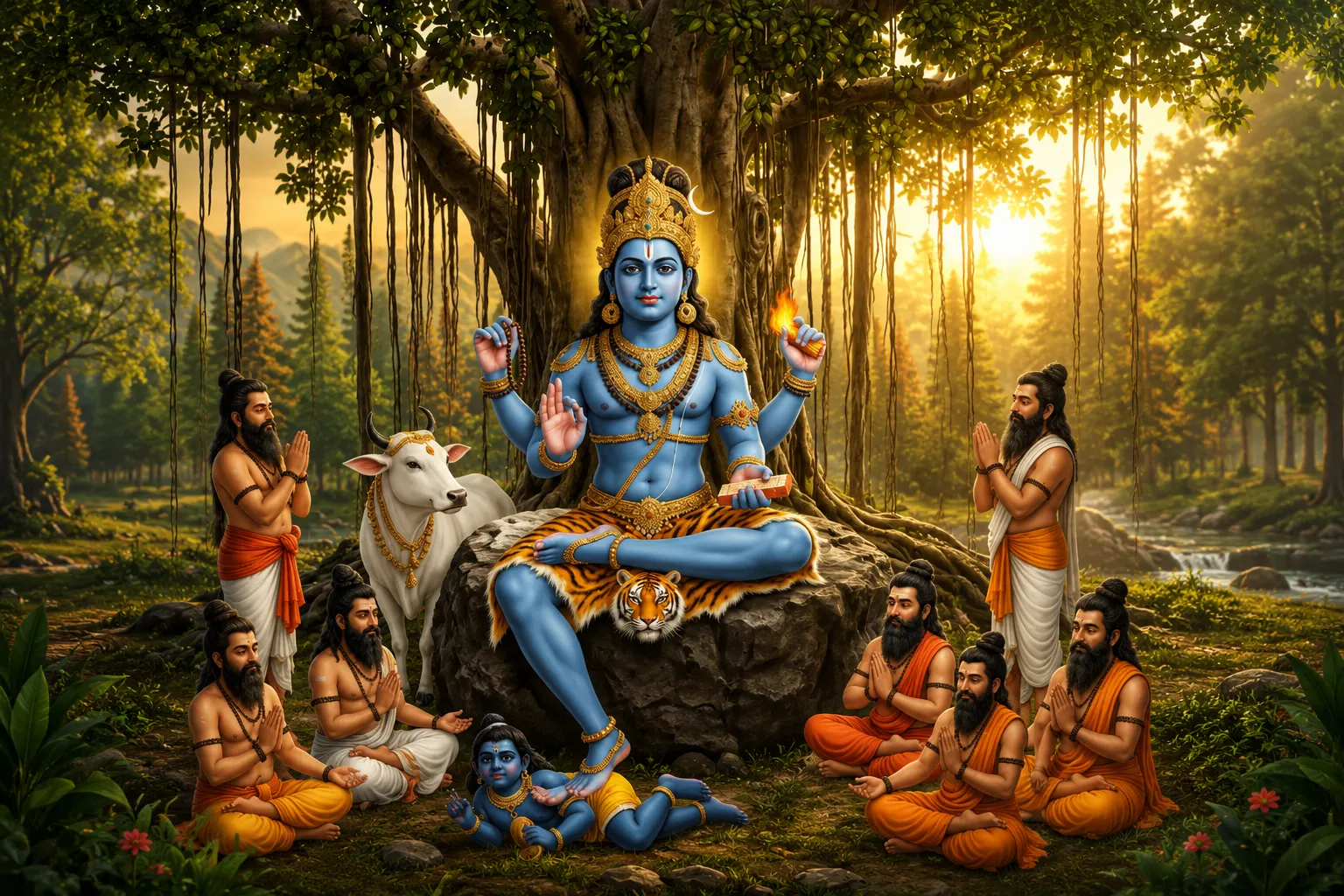
Lord Shiva is venerated as Adiyogi — the first yogi and original teacher of yoga — who transmitted the knowledge of yoga to the Saptarishis (seven sages) on this full moon day according to yogic tradition. In Isha Foundation and other Shaivite lineages, Guru Purnima is celebrated as the day Adiyogi became Adi Guru.
One's own living spiritual teacher (Sadguru) is the most direct object of worship on Guru Purnima. Disciples perform pada puja (worship of the teacher's feet), offer flowers, and seek personal blessings.
How to celebrate Guru Purnima Puja 2026
Guru Purnima is also known as Vyasa Purnima and this day is commemorated as birth anniversary of Veda Vyasa. Veda Vyasa was the author as well as a character in the Hindu epic Mahabharata. Adi Shankara, Sri Ramanuja Acharya and Sri Madhvacharya are some of the noteworthy Gurus in Hinduism. Guru Purnima is also celebrated by Buddhists in the honor of Gautama Buddha to commemorate the day when Buddha gave his first sermon at Sarnath, Uttar Pradesh .
Spiritual benefits
- Receiving the Guru's grace on this day dissolves accumulated karma and accelerates the seeker's journey towards liberation (moksha).
- The practice of Guru puja on this day strengthens the subtle spiritual connection between the disciple and the teacher.
- Study and recitation of sacred texts on Guru Purnima enhances memory, intellect, and wisdom.
- Charity and service performed in the Guru's name on this day yield immeasurable spiritual merit.
- Meditation on the full moon of Ashadha is believed to awaken dormant spiritual energies (kundalini) and deepen meditative states.
- Honouring the Guru on this day purifies the ego and cultivates the humility necessary for genuine spiritual growth.
- Disciples who observe Guru Purnima with sincerity are said to receive spontaneous inner guidance and clarity in their spiritual practice.
- The collective puja of thousands of disciples amplifies the spiritual field, creating a powerful environment for breakthroughs in consciousness.
Mantras & sacred chants
Mantra 1 — Guru Vandana (Universal Guru Prayer):
Sanskrit: गुरुर्ब्रह्मा गुरुर्विष्णुः गुरुर्देवो महेश्वरः। गुरुः साक्षात् परं ब्रह्म तस्मै श्री गुरवे नमः॥
Transliteration: Gurur Brahma Gurur Vishnu Gurur Devo Maheshvarah, Guruh Sakshat Param Brahma Tasmai Shri Gurave Namah
Meaning: The Guru is Brahma (creator), Vishnu (preserver), and Maheshvara (destroyer); the Guru is verily the Supreme Brahman — to that revered Guru, I bow.
Mantra 2 — Vyasa Stuti:
Sanskrit: नमोऽस्तु ते व्यास विशालबुद्धे फुल्लारविन्दायतपत्रनेत्र। येन त्वया भारततैलपूर्णः प्रज्वालितो ज्ञानमयः प्रदीपः॥
Transliteration: Namo'stu Te Vyasa Vishala Buddhe Phullara-vindayata-patra-netra, Yena Tvaya Bharata-taila-purnah Prajvalito Jnana-mayah Pradipah
Meaning: Salutations to you, O Vyasa, of vast intellect and lotus-petal eyes; you who lit the lamp of knowledge, filled with the oil of the Mahabharata.
Mantra 3 — Guru Mantra:
Sanskrit: ॐ गुरवे नमः
Transliteration: Om Gurave Namah
Meaning: I bow to the Guru, the remover of darkness and bestower of the light of knowledge.
Guru Purnima Puja 2026 — FAQs
Guru Purnima 2026 falls on Thursday, July 30, 2026, on the Purnima tithi of Ashadha Shukla Paksha.
Guru Purnima is celebrated to honour the Guru-Shishya tradition and to mark the birth of Veda Vyasa, who compiled the Vedas and wrote the Mahabharata. It is also the day Lord Buddha gave his first sermon at Sarnath.
Guru Purnima celebrates the sacred relationship between teacher and student, acknowledges the debt owed to those who transmit spiritual and worldly knowledge, and honours Veda Vyasa as the Guru of all humanity.
In ashrams, disciples gather for pada puja (worship of the Guru's feet), listen to discourses, recite the Guru Gita, meditate, and offer dakshina to their spiritual teacher.
Vyasa Purnima is another name for Guru Purnima, marking the birth anniversary of sage Veda Vyasa who organised the Vedas and authored the Mahabharata and Puranas.
Buddhists celebrate Guru Purnima as Asalha Puja, commemorating Lord Buddha's first discourse at Deer Park in Sarnath. Monks and lay devotees offer robes, light lamps, and circumambulate stupas.
Devotees should perform pada puja to their Guru's image, recite the Guru Stotram or Guru Gita, offer flowers and fruits, donate to spiritual organisations, and spend the day in study and meditation.
Guru Purnima is not a national public holiday in India, but it is widely observed across ashrams, schools, and spiritual communities. Some states may have regional observances.