About Nag Panchami
Last updated:
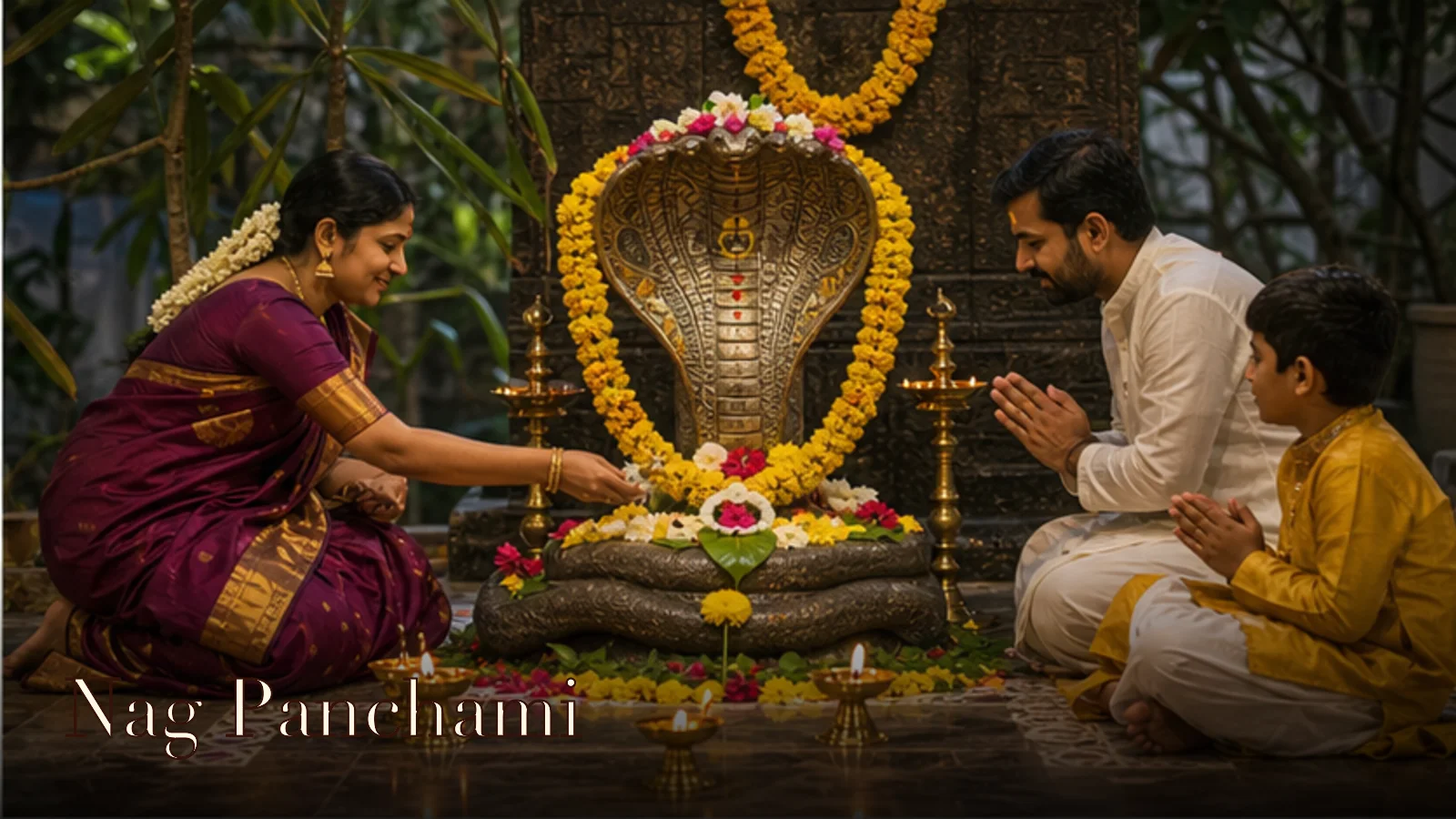
Shukla Paksha Panchami during Sawan month is observed as Nag Panchami. Usually Nag Panchami day falls two days after Hariyali Teej. Currently Nag Panchami falls in month of July and August in English calendar. Women worship Nag Devta and offer milk to snakes on this day. Women also pray for the wellness of their brothers and family. Nag Panchami is a traditional worship of serpent Gods observed by Hindus throughout . In Hindu calendar, some days are considered significant to worship serpent Gods and Panchami Tithi especially during Shravan month is considered highly auspicious to worship serpent Gods. Nag Panchami is one of those significant days and it observed on Shukla Paksha Panchami during Shravana month. It is believed that any Puja offered to snakes would reach to the serpent Gods. Hence people worship live snakes on the day as representative of serpents Gods who are revered and worshipped in Hinduism. Although there are several serpent Gods, following twelve are worshipped during Nag Panchami Puja
Deities worshipped on Nag Panchami
Follow the links to explore each deity’s mantras, stories, and temples on Temples.bio.
Lord Shiva
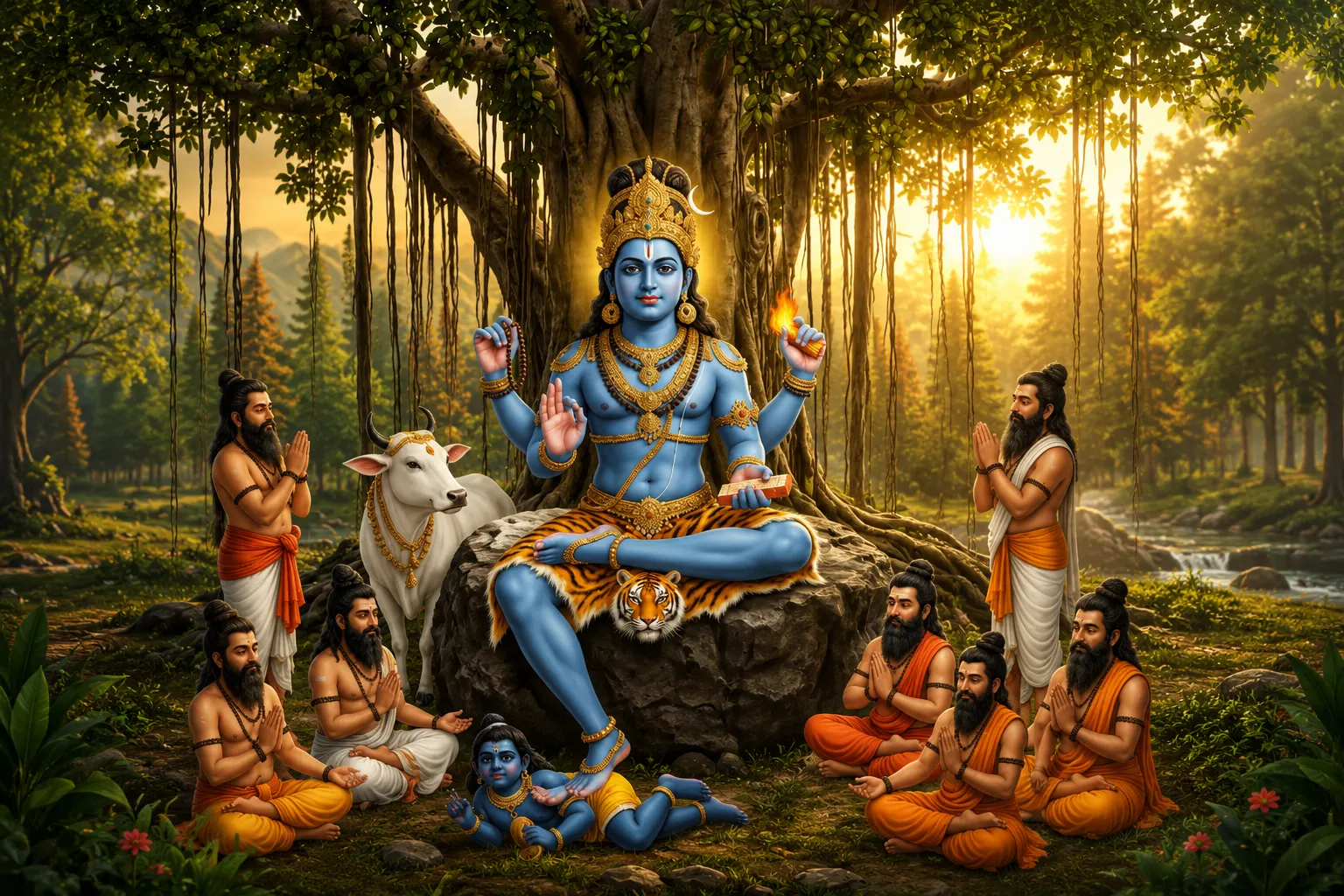
Lord of all Nagas; Vasuki the serpent king adorns Shiva's neck; Shravan is Shiva's sacred month
The Supreme Destroyer and Transformer of the Universe — The Adiyogi, Lord of Lords, and the First Yogi.
View deity →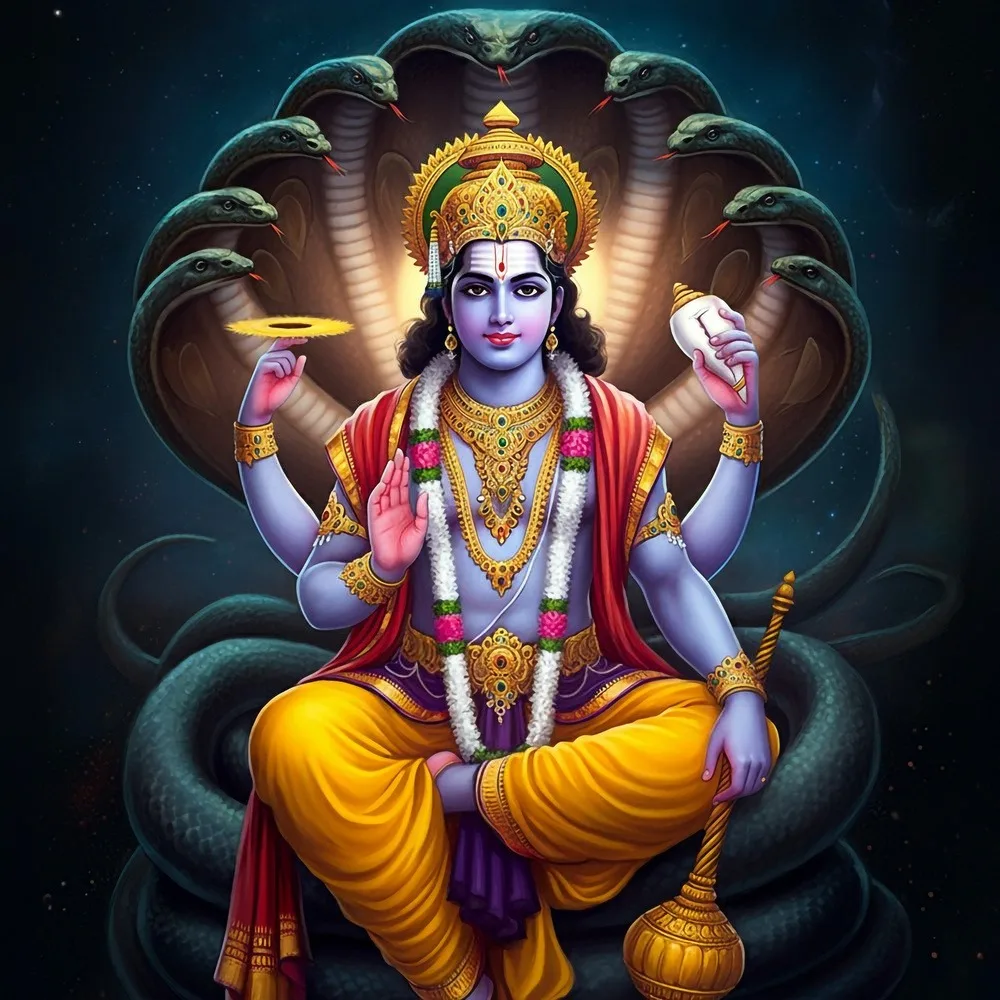
Lord Vishnu
Adi Shesha is the cosmic serpent bed of Vishnu; worshipping Nagas invokes Vishnu's protection
The Preserver of the Universe — the all-pervading Supreme Being who descends to Earth in divine avatars whenever righteousness declines and evil rises.
View deity →
Lord Krishna
Krishna's subduing of the serpent Kaliya in the Yamuna is central to Nag Panchami lore
The Preserver of the Universe — the all-pervading Supreme Being who descends to Earth in divine avatars whenever righteousness declines and evil rises.
View deity →Nag Panchami involves a divine assembly of serpent deities and major Hindu gods who have profound connections with the Naga world.
Adi Shesha (Ananta Naga), the thousand-hooded cosmic serpent, forms the divine bed of Lord Vishnu in the celestial ocean of milk (Kshira Sagara). He is also the serpent upon whom the Earth rests in Puranic cosmology. Worshipping Adi Shesha on Nag Panchami invokes Vishnu's all-pervading protection and cosmic stability.
Vasuki, the king of serpents and devotee of Lord Shiva, was used as the churning rope during the Samudra Manthan (churning of the cosmic ocean). He is worn around Shiva's neck as an ornament, symbolising the tamed primal force. Worship of Vasuki brings the blessings of both Shiva and the Naga world.
Manasa Devi, the serpent goddess, is primarily worshipped in Bengal, Jharkhand, Assam, and Bihar. Daughter of Kashyapa Rishi and sister of Vasuki, she is the goddess who controls snake bites and bestows prosperity. Her worship during Nag Panchami is especially intense in eastern India.
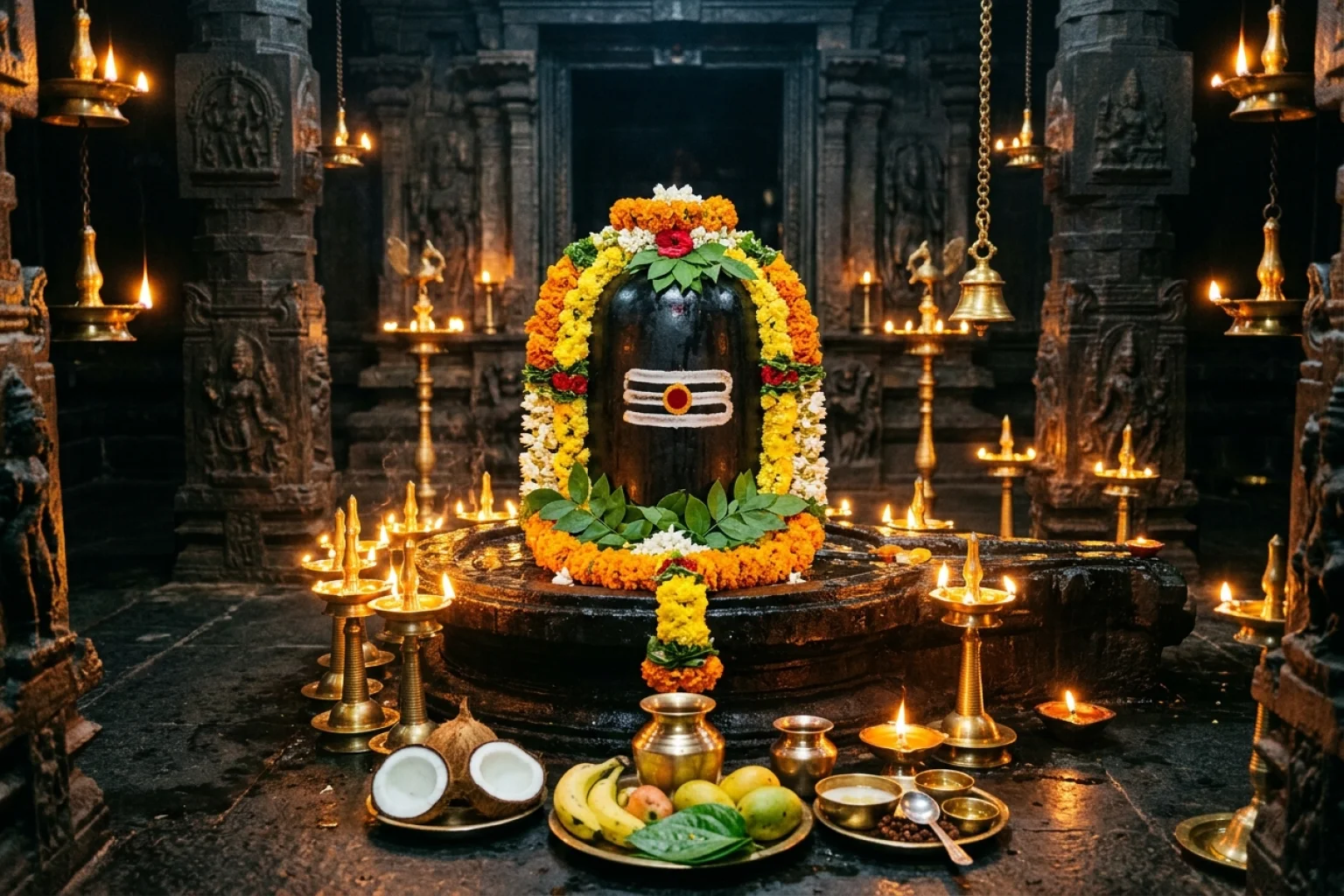
Lord Shiva is intrinsically connected to this festival as the lord of all Nagas. Abhishekam (ritual bathing) of the Shiva Linga with milk on Nag Panchami — milk that has been offered to the serpent — is considered supremely meritorious during the Shravan month.
Lord Krishna is honoured through the legend of Kaliya Daman — his conquest of the venomous Kaliya serpent — which demonstrated that the Lord transforms even poisonous forces into devoted servants.
How to celebrate Nag Panchami 2026
Nag Panchami is a traditional worship of serpent Gods observed by Hindus throughout . In Hindu calendar, some days are considered significant to worship serpent Gods and Panchami Tithi especially during Shravan month is considered highly auspicious to worship serpent Gods. Nag Panchami is one of those significant days and it observed on Shukla Paksha Panchami during Shravana month. It is believed that any Puja offered to snakes would reach to the serpent Gods. Hence people worship live snakes on the day as representative of serpents Gods who are revered and worshipped in Hinduism. Although there are several serpent Gods, following twelve are worshipped during Nag Panchami Puja सर्वे नागाः प्रीयन्तां मे ये केचित् पृथ्वीतले। ये च हेलिमरीचिस्था येऽन्तरे दिवि संस्थिताः॥ ये नदीषु महानागा ये सरस्वतिगामिनः। ये च वापीतडगेषु तेषु सर्वेषु वै नमः॥
Spiritual benefits
- Protection from snake bites and fear of serpents throughout the year for all members of the household.
- Relief from Kaal Sarp Dosha — an astrological configuration in the horoscope — through sincere Nag Panchami puja.
- Blessings of Lord Shiva and Lord Vishnu are received simultaneously, as the primary Nagas (Vasuki and Adi Shesha) are their most intimate devotees.
- Manasa Devi's blessings bring fertility, healthy children, and protection for pregnant women and newborns in eastern Indian tradition.
- The awakening of Kundalini Shakti — the serpentine primal energy — is facilitated through Nag Panchami worship, advancing the devotee's spiritual evolution.
- Ancestral curses and inherited karmic obstacles related to harm done to snakes in past lifetimes are believed to be dissolved through sincere Nag worship.
- Harmony with nature — particularly the animal kingdom — is established, reflecting the ancient Hindu principle of ahimsa towards all living beings.
- Devotees who observe the Nag Panchami fast are said to be protected from accidental deaths and unforeseen dangers throughout the year.
Mantras & sacred chants
Mantra 1 — Nag Gayatri Mantra:
Sanskrit: ॐ नवकुलाय विद्महे विषदन्ताय धीमहि तन्नो सर्पः प्रचोदयात्
Transliteration: Om Navkulaya Vidmahe Vishadantaya Dhimahi Tanno Sarpah Prachodayat
Meaning: We meditate upon the nine-fold serpent, we contemplate the one with venom-bearing fangs — may the Naga inspire and elevate our consciousness.
Mantra 2 — Vasuki Mantra (for Shiva's serpent):
Sanskrit: ॐ नमो भगवते वासुकये नमो नमः
Transliteration: Om Namo Bhagavate Vasukaye Namo Namah
Meaning: I bow repeatedly to Lord Vasuki, the divine serpent king who adorns Lord Shiva and was the churning rope of the cosmic ocean.
Mantra 3 — Adi Shesha Mantra (for Vishnu's cosmic serpent):
Sanskrit: ॐ अनन्ताय नमः
Transliteration: Om Anantaya Namah
Meaning: Salutations to Ananta (Adi Shesha), the infinite and eternal cosmic serpent who is the divine couch of Lord Vishnu and the support of all creation.
Nag Panchami 2026 — FAQs
Nag Panchami 2026 falls on Friday, August 21, 2026, on the Panchami tithi of Shravan Shukla Paksha.
Nag Panchami is celebrated to worship serpent deities (Nagas) who hold cosmic significance in Hinduism. The festival seeks protection from snake bites, removal of Kaal Sarp Dosha, and blessings from Lord Shiva and Vishnu through their sacred serpents Vasuki and Adi Shesha.
Devotees offer raw milk, honey, turmeric, sandalwood paste, white flowers, durva grass, and sweets to Naga idols, Naga stones, or ant hills. Abhishekam of Shiva Linga with milk is also performed.
Wake up early, bathe, draw a serpent image with cow dung paste, set up a puja altar with Naga image, offer milk and flowers, light a ghee lamp, chant Nag Gayatri or Vasuki mantra 108 times, visit a Naga temple, and fast through the day.
Kaal Sarp Dosha is an astrological condition where all seven planets are positioned between Rahu and Ketu in the birth chart. Performing Nag Panchami puja, especially at Trimbakeshwar or Sri Kalahasti temple, is considered a powerful remedy for this dosha.
Manasa Devi is the serpent goddess of eastern India (Bengal, Assam, Bihar, Jharkhand). She is believed to protect devotees from snake bites, cure snake venom, and bestow fertility and prosperity. Her worship is especially central to Nag Panchami in eastern India.
No, killing any snake on Nag Panchami is considered extremely inauspicious and is believed to bring misfortune to the family. Snakes should be revered and left undisturbed on this day.
Trimbakeshwar Jyotirlinga (Maharashtra) and Sri Kalahasteeswara Temple (Andhra Pradesh) are the most significant temples for Nag Panchami, especially for Kaal Sarp Dosha remedies. Naga temples in Karnataka and Kerala also draw large crowds.