About Shravan Somavar
Last updated:
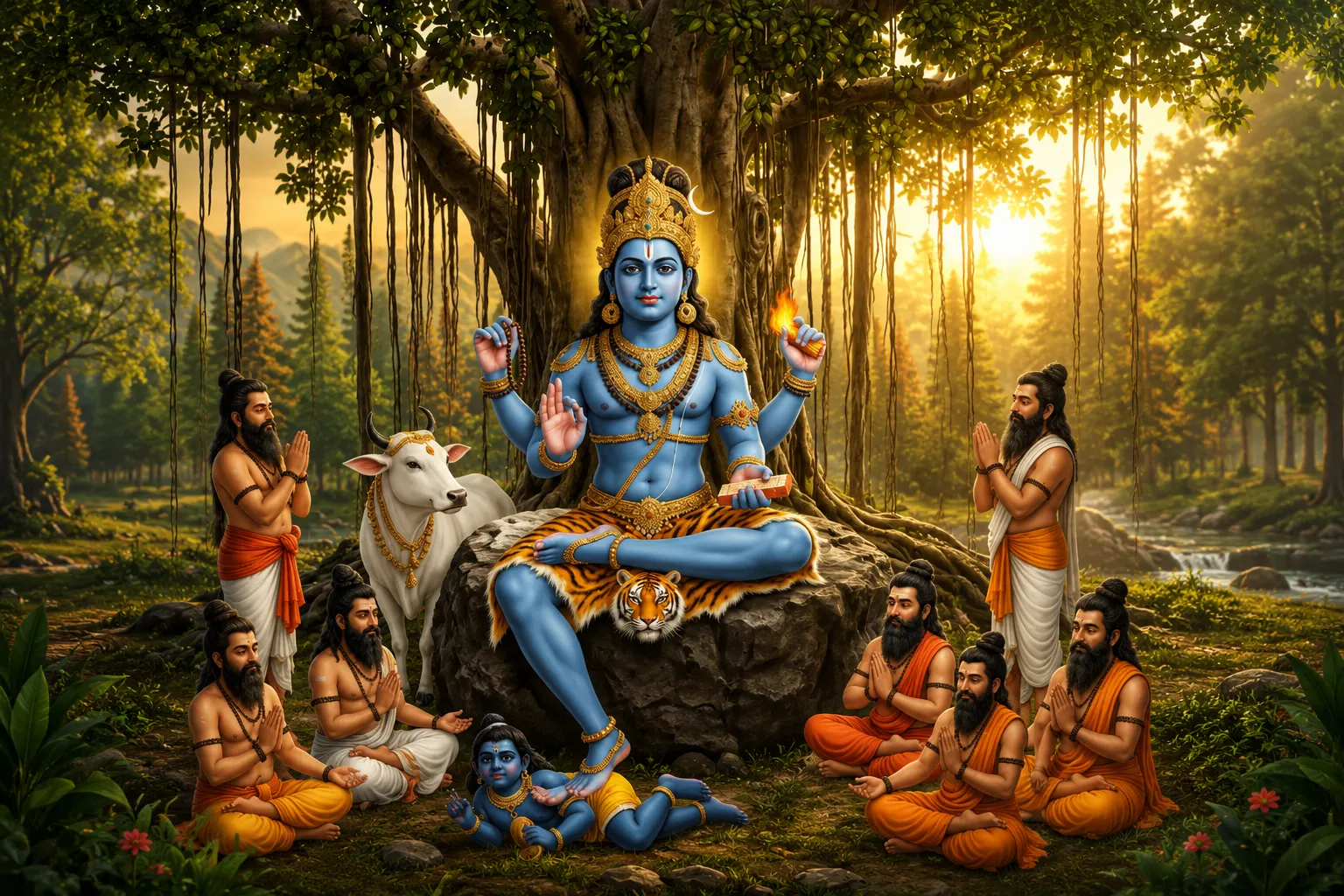
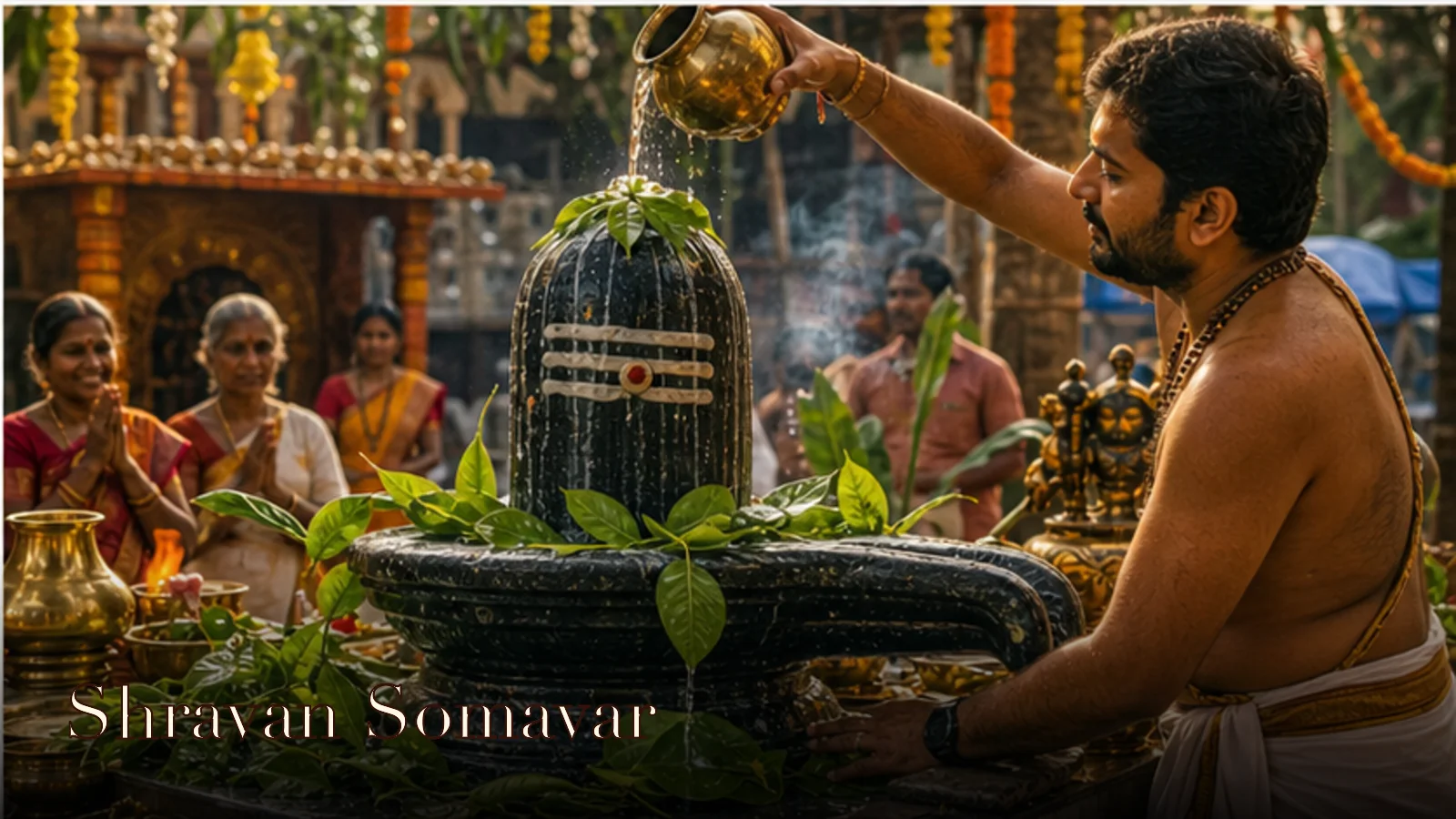
Shravan Somavar refers to the sacred Mondays falling within the Hindu month of Shravan (Shravana), which is considered the holiest month of the year for devotees of Lord Shiva. In , Shravan runs from July 12 to August 9, offering four or five Mondays of intensified spiritual practice. Millions of devotees across North , especially in Uttar Pradesh, Bihar, Rajasthan, and Uttarakhand, undertake the Kanwar Yatra — a barefoot pilgrimage to collect holy Ganga water and carry it in decorated pots called kanwars to their nearest Shiva temple for abhishek. The entire month of Shravan is sacred because it is believed that during this period, the cosmic ocean was churned (Samudra Manthan) and Lord Shiva consumed the deadly Halahala poison to protect the universe, turning his throat blue and earning the name Neelakantha. To cool and honor Shiva's sacrifice, devotees pour Ganga water over Shiva lingams throughout this month, with Mondays holding the highest significance. The Jyotirlinga temples — especially Kashi Vishwanath, Somnath, Mahakaleshwar, and Kedarnath — receive enormous crowds during Shravan Somavar. Fasting on Shravan Somavar is widely practiced, with devotees consuming only one meal or surviving on fruits and milk. Special Rudrabhishek ceremonies are conducted at temples at dawn. The spiritual atmosphere during Shravan transforms entire cities, with saffron-clad kanwariyas (Kanwar pilgrims) walking hundreds of kilometers as an act of devotion and penance. The month culminates in Shravan Purnima, also observed as Raksha Bandhan, making Shravan one of the most festival-rich months in the Hindu calendar.
Significance of Shravan Somavar
Shravan Somavar carries immense spiritual and cosmic significance in Hindu tradition: - Cosmic Significance: Shravan is the month when Lord Shiva drank the Halahala poison during Samudra Manthan. Abhishek with Ganga water during this month is believed to cool the cosmic poison and honor Shiva's supreme sacrifice for creation. - Spiritual Significance: Monday (Somavar) is Shiva's own day — the day ruled by the Moon (Soma), which adorns Shiva's matted locks. Worship on this day pleases Shiva most and accelerates liberation. - Cultural Significance: The Kanwar Yatra is one of the largest religious pilgrimages in the world, uniting millions of devotees in a shared act of devotion, discipline, and community. - Astrological Significance: The Sun transits Karka Rashi during Shravan, considered ideal for water-based worship and cooling rituals that balance solar energy. - Karmic Cleansing: Fasting and puja during Shravan Somavar is believed to wash away the accumulated sins of multiple lifetimes and free devotees from the cycle of birth and death. - Boon Granting: Unmarried women fast on all Shravan Mondays to receive blessings for a good husband, and married women pray for the longevity and well-being of their spouses. - Liberation (Moksha): Continuous Shiva worship across the Shravan Somavars is said to grant not just worldly boons but ultimate liberation from the cycle of samsara.
Deities worshipped on Shravan Somavar
Follow the links to explore each deity’s mantras, stories, and temples on Temples.bio.
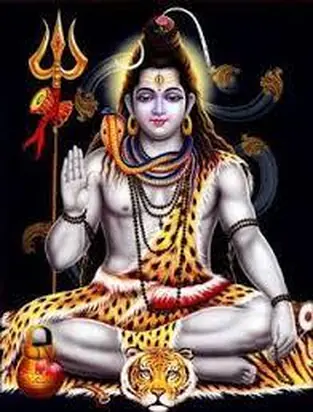
Lord Shiva is the principal deity of Shravan Somavar worship. As Mahadeva — the greatest of gods — Shiva represents the supreme consciousness, the destroyer of evil, and the liberator of souls. During Shravan, Shiva is worshipped in his Neelakantha form, honoring the moment he consumed the Halahala poison and held it in his throat to save the universe.
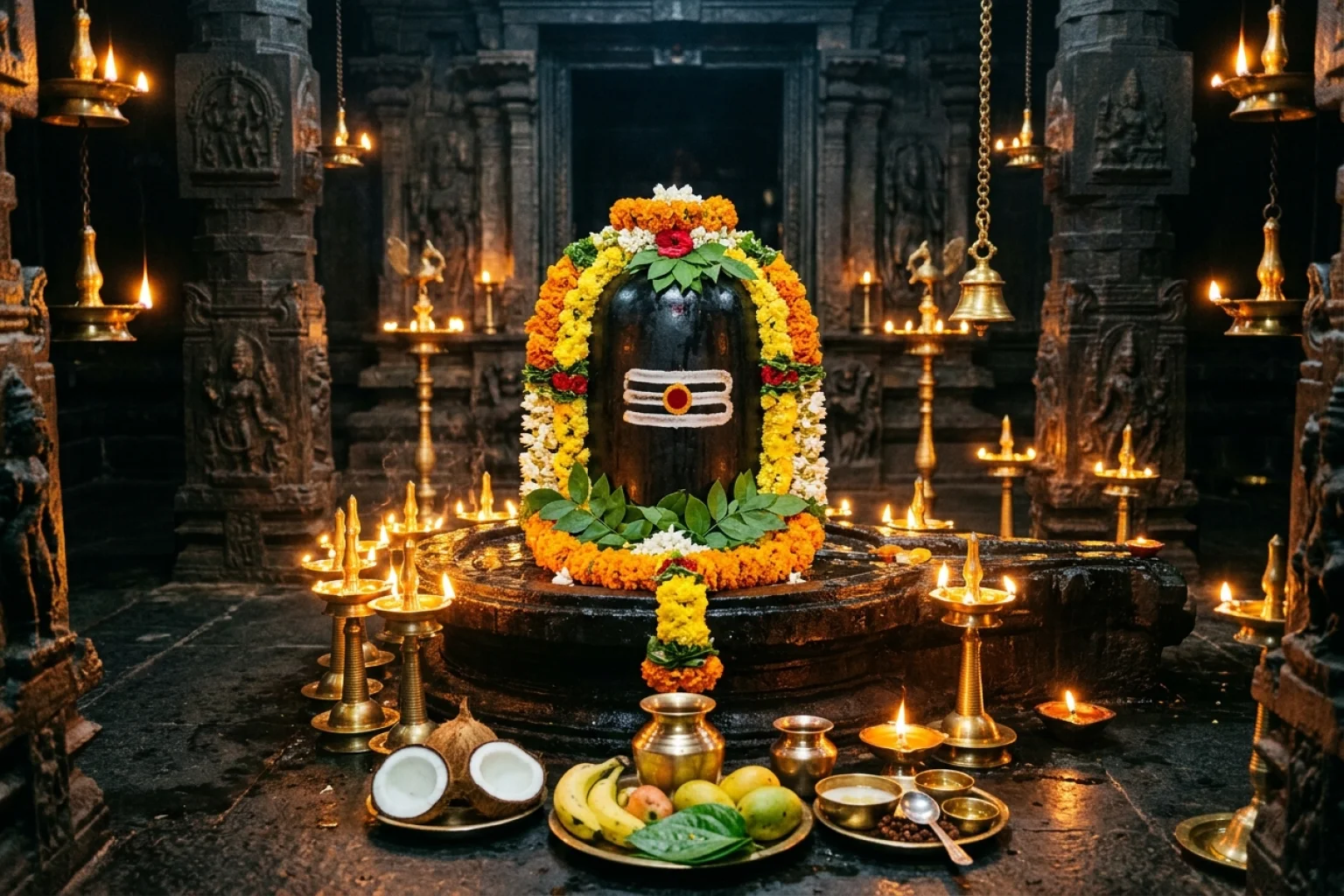
Shiva is worshipped in the form of the Shiva Lingam — the cosmic pillar of light representing infinite creative energy. The abhishek (ritual bath) of the lingam with Ganga water, milk, honey, curd, ghee, and sugarcane juice is the central act of Shravan Somavar puja. At Jyotirlinga shrines — the twelve most sacred Shiva temples — special Rudrabhishek ceremonies with Vedic chanting are performed. Goddess Parvati, Shiva's consort, is also worshipped alongside Shiva during this month, as their divine union is celebrated in the Shravan tradition. Nandi, the sacred bull and Shiva's vehicle, is honored at temple entrances. The presence of Ganga — personified as Goddess Ganga — is central to Kanwar Yatra, as her waters are the primary offering to Shiva.
How to celebrate Shravan Somavar 2026
1. Wake up before sunrise on Shravan Somavar and take a ritual bath (ideally with Ganga water or gangajal added to regular water).
2. Wear clean clothes — preferably white or light-colored attire.
3. Set up a Shiva puja altar with a Shiva lingam or Shiva image, flowers, bilva (bel) leaves, and a lamp.
4. Light a deepam (oil lamp) and incense sticks.
5. Offer bilva leaves (three-leafed bel patra) — the most sacred offering to Shiva — while chanting Om Namah Shivaya.
6. Perform abhishek with panchamrit (milk, curd, honey, ghee, sugar) followed by Ganga water or clean water.
7. Offer dhatura flowers, white flowers, and akshat (rice grains with turmeric).
8. Chant Shiva mantras: Om Namah Shivaya, Maha Mrityunjaya Mantra, or recite the Shiva Panchakshara Stotram.
9. Observe a fast — consume only milk, fruits, and sattvic food. Avoid grains, meat, alcohol, and onion-garlic.
10. Visit the nearest Shiva temple and participate in the morning abhishek ceremony.
11. If undertaking Kanwar Yatra — collect Ganga water in a kanwar (decorated pot), walk barefoot to the chosen Shiva temple, and pour the water over the Shiva lingam with devotion.
12. Break the fast in the evening after temple visit, ideally after sunset, with sattvic prasad.
Rituals & regional traditions
- Kanwar Yatra: Millions of devotees (kanwariyas) dressed in saffron walk barefoot carrying decorated bamboo poles (kanwars) with pots of Ganga water to offer abhishek at Shiva temples — one of the world's largest religious processions.
- Rudrabhishek: Special Vedic abhishek ceremony performed with 11 or 108 Shiva mantras chanted by priests at temples — elaborate version involving panchamrit, Ganga jal, and flower offerings.
- Bel Patra Offering: Bilva leaves (in groups of three) are the most auspicious offering to Shiva and are offered at every Shravan Somavar puja as they are believed to be Shiva's favorite.
- Solah Somavar Vrat: A 16-Monday fast observed from Shravan for spiritual boons — widely followed by women seeking good marriages or marital harmony.
- North India Traditions: Massive Kanwar Yatras from Haridwar, Sultanganj (Bihar), and Prayagraj; temporary camps set up along pilgrimage routes.
- South India Traditions: Abhishek with Ganga jal, milk, and turmeric; Somavara Vrat observed with full day fasting and evening puja.
- Jyotirlinga Pilgrimages: Special queues and extended puja hours at all 12 Jyotirlinga temples throughout Shravan month.
Spiritual benefits
- Receiving Shiva's direct blessings and grace (Shiva Kripa) for all worldly and spiritual desires
- Washing away accumulated sins and karmic debts from past lives
- Attainment of Moksha (liberation from the cycle of birth and death)
- Fulfillment of desires related to marriage, progeny, health, and prosperity
- Protection from untimely death and serious illness — Mrityu Bhaya Nivaran
- Strengthening of marital bonds and longevity of spouse
- Development of inner strength, discipline, and devotion through fasting and pilgrimage
- Cosmic alignment with Shiva's energy that purifies the mind, body, and soul
Mantras & sacred chants
Om Namah Shivaya — ॐ नमः शिवाय
Meaning: "I bow to Lord Shiva" — the Panchakshara (five-syllable) mantra, the most sacred Shiva mantra representing the five elements and the five acts of Shiva.
Maha Mrityunjaya Mantra — ॐ त्र्यम्बकं यजामहे सुगन्धिं पुष्टिवर्धनम् | उर्वारुकमिव बन्धनान्मृत्योर्मुक्षीय माऽमृतात् ||
Meaning: "We worship the three-eyed Lord Shiva who is fragrant and nourishes all beings. May He liberate us from the bondage of death just as a ripe cucumber is severed from its vine, and may He bestow immortality upon us."
Shiva Panchakshara Stotram — नागेन्द्रहाराय त्रिलोचनाय भस्माङ्गरागाय महेश्वराय | नित्याय शुद्धाय दिगम्बराय तस्मै न-काराय नमः शिवाय ||
Meaning: "Salutations to Shiva who wears serpents as garlands, who has three eyes, who is smeared with sacred ash, who is the great lord, eternal, pure, and clad in the directions — salutations to the syllable Na of Namah Shivaya."
Shravan Somavar 2026 — FAQs
In 2026, the holy month of Shravan runs from July 12 to August 9. The Shravan Somavar (Mondays) dates in 2026 are July 13, July 20, July 27, August 3, and August 9 (if applicable). The first Shravan Somavar in 2026 falls on July 13.
Shravan Somavar is the most auspicious day for Lord Shiva worship because Monday is Shiva's sacred day (ruled by the Moon/Soma) and Shravan is the holiest month when Shiva drank the Halahala poison during Samudra Manthan. Fasting and puja on these Mondays is believed to grant all boons and ultimately liberation.
Kanwar Yatra is a barefoot pilgrimage undertaken by millions of Shiva devotees (kanwariyas) dressed in saffron, who walk to the Ganges and carry holy water in decorated pots (kanwars) to offer abhishek at their local Shiva temple. It is one of the largest religious gatherings in the world, especially prominent in UP, Bihar, Rajasthan, and Uttarakhand.
On Shravan Somavar, devotees wake before sunrise, bathe, and visit a Shiva temple. The fast involves abstaining from grains — only fruits, milk, and sattvic food are consumed. Bel patra and Ganga jal are offered to the Shiva lingam with chanting of Om Namah Shivaya. The fast is broken in the evening after puja.
All 12 Jyotirlinga temples are most sacred during Shravan — especially Kashi Vishwanath (Varanasi), Mahakaleshwar (Ujjain), Somnath (Gujarat), and Kedarnath (Uttarakhand). Haridwar and Rishikesh temples also receive massive crowds during Kanwar Yatra season.
Solah Somavar Vrat is a 16-Monday fast beginning from the first Shravan Somavar. It is especially observed by women — unmarried women fast to receive blessings for a good husband, and married women fast for their husband's long life and marital happiness. The vrat concludes after 16 consecutive Mondays.
During Shravan Somavar fast, devotees avoid grains, non-vegetarian food, onions, garlic, and alcohol. Permitted foods include milk, curd, fruits, sabudana (tapioca), singhara flour, kuttu (buckwheat) dishes, potatoes, and rock salt. Some observe a complete nirjala (waterless) fast.
Shravan Somavar puja is believed to grant Shiva's direct blessings, wash away sins, fulfill desires for marriage, health, and prosperity, protect from untimely death, and ultimately grant Moksha. It also strengthens mental discipline and devotion through fasting and pilgrimage.