About Brahmotsavam
Last updated:
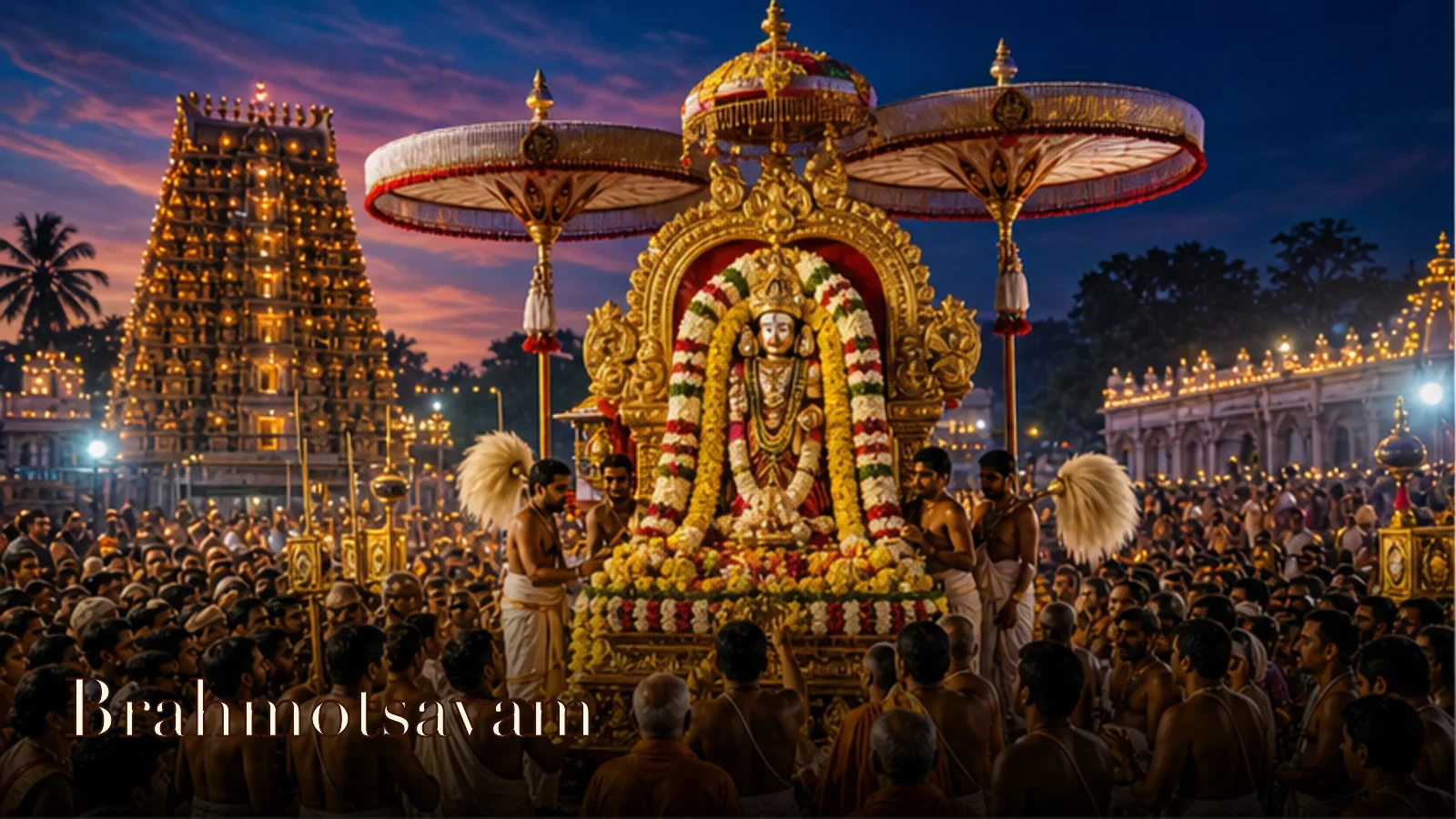
Brahmotsavam is the most magnificent and most-attended temple festival in the entire world, held annually at the sacred Tirumala Venkateswara temple in Andhra Pradesh. Stretching across nine auspicious days in the month of Kartika or Ashwija (September-October), this divine celebration draws lakhs — sometimes millions — of devotees from across India and the world to witness the spectacular processions of Lord Venkateswara on his various vahanams (divine vehicles).
The word "Brahmotsavam" means the festival ordained by Lord Brahma himself. According to the Agama shastra and temple lore, Brahma, the creator god, initiated this festival to honor Lord Venkateswara on the sacred Tirumala hills and to provide all living beings the opportunity for liberation. The festival follows strict Agamic procedures prescribed by the Vaikhanasa Agama tradition, with each of the nine days featuring a unique and spectacular vahana seva — including Pedda Sesha Vahana (serpent), Chinna Sesha Vahana, Hamsa Vahana (swan), Simha Vahana (lion), Muthyapu Pandiri Vahana (pearl canopy), Kalpavruksha Vahana (wish-fulfilling tree), Sarvabhoopala Vahana, Gaja Vahana (elephant), Hanumad Vahana, Garidaseva (Garuda), Soorya Prabha Vahana (sun chariot), Chandra Prabha Vahana (moon chariot), and the grand Rathotsavam (golden chariot procession).
The festival culminates with Chakrasnanam — a purifying shower of the Sudarshana Chakra (divine discus) during which thousands of devotees gather to receive the sacred sprinkle of consecrated water. The Tirumanjana Seva (divine bathing ceremony) is also a highlight, along with the raising of the sacred Dhwajasthambham flag at the outset. Brahmotsavam is not merely a cultural spectacle — it is a living, breathing encounter with the divine, where Lord Venkateswara himself comes forth from his sanctum to bless his devotees in full splendor.
Significance of Brahmotsavam
Brahmotsavam carries cosmic, spiritual, and cultural significance of the highest order:
- Brahma-ordained: The festival was instituted by Lord Brahma himself, making it a cosmic event that transcends ordinary religious observance — it is the universe's celebration of its own Lord.
- Universal Liberation: Brahmotsavam is believed to bestow moksha (liberation) on all who participate — even those who merely see the vahana processions are said to be freed from the cycle of birth and death.
- Vahana Symbolism: Each of the nine vahanas (divine vehicles) carries profound spiritual symbolism — Garuda represents the liberated soul, Simha represents supreme sovereignty, Gaja represents abundance, and the golden chariot represents the Lord's omnipresence.
- Agamic Continuity: The festival follows rituals codified in the Vaikhanasa Agama, one of the most ancient Vedic ritual traditions, making Brahmotsavam a living link to thousands of years of unbroken sacred tradition.
- Tirumala's Sacred Status: The seven hills of Tirumala are considered the most sacred spot on earth in the Vaishnava tradition — Brahmotsavam is the annual celebration of this sacred geography.
- Collective Blessing: The Chakrasnanam (shower from Sudarshana Chakra) is a unique ritual where the Lord's grace is literally showered upon thousands of devotees simultaneously.
Deities worshipped on Brahmotsavam
Follow the links to explore each deity’s mantras, stories, and temples on Temples.bio.
Lord Vishnu
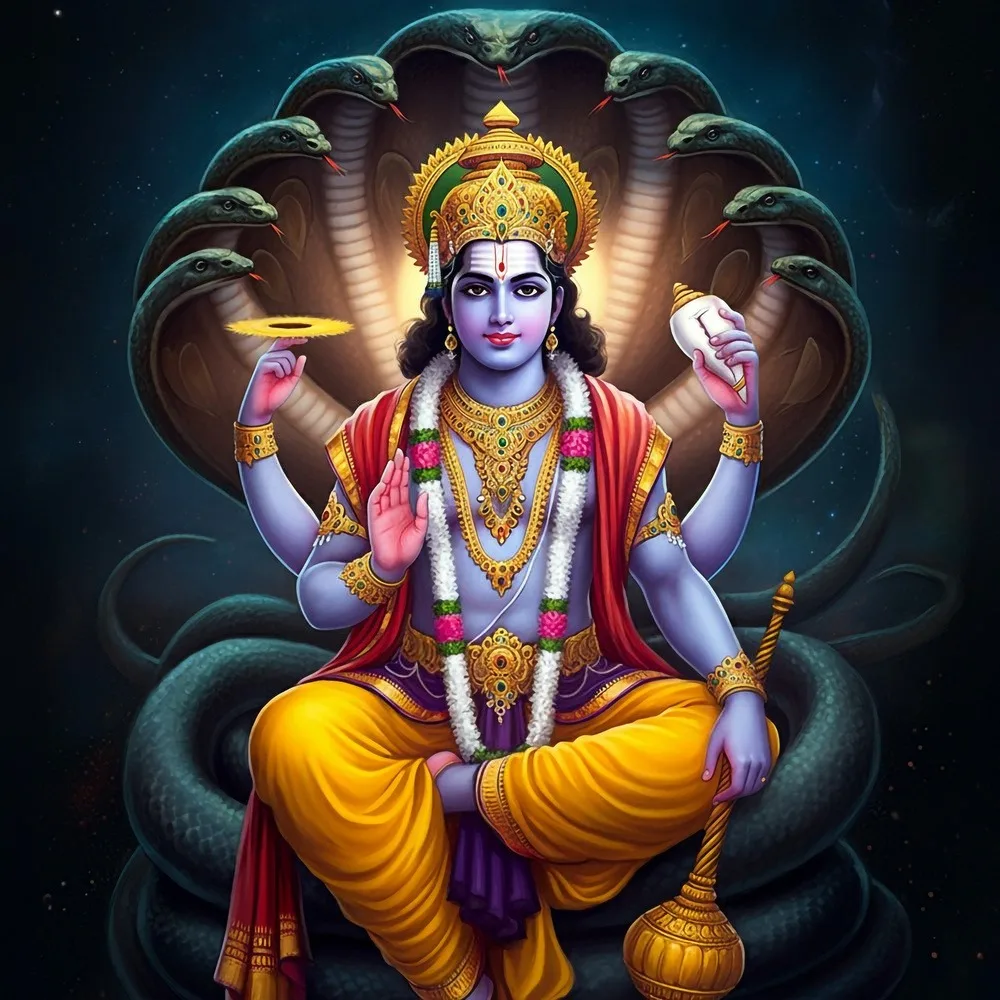
Lord Venkateswara is the principal deity — a form of Vishnu worshipped in supreme splendor during Brahmotsavam
The Preserver of the Universe — the all-pervading Supreme Being who descends to Earth in divine avatars whenever righteousness declines and evil rises.
View deity →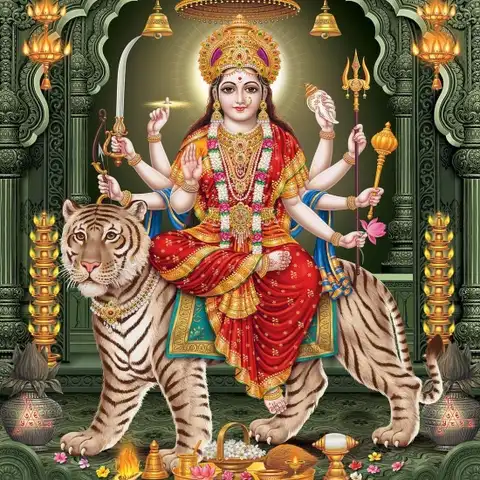
Goddess Lakshmi
Goddess Sridevi and Padmavathi (Bhudevi) accompany the Lord in vahana processions as his divine consorts
The Invincible Mother Goddess — Supreme Feminine Power who destroys evil, protects the righteous, and embodies the divine energy of the entire universe.
View deity →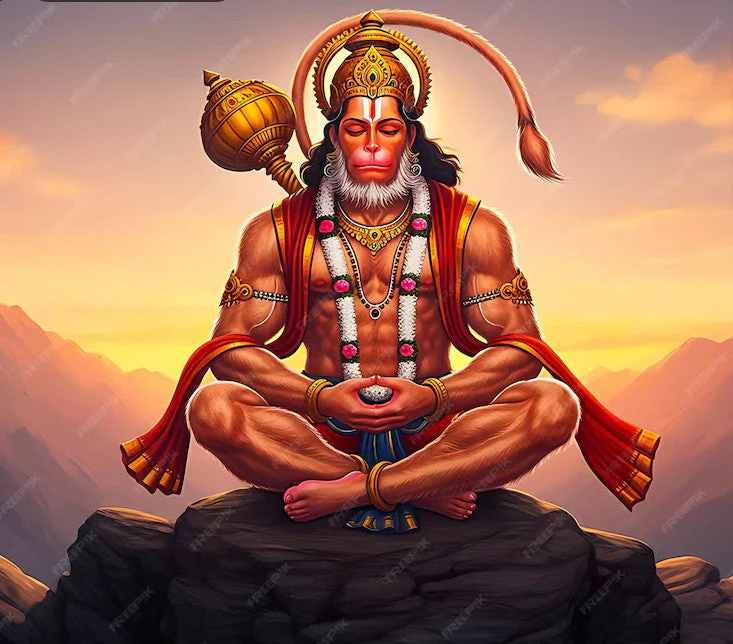
Lord Hanuman
Hanumad Vahana is one of the nine vahanas — Hanuman serves as a vahana symbolizing supreme devotion to Vishnu
The Eternal Devotee of Lord Rama — Embodiment of Strength, Courage and Selfless Service.
View deity →Lord Venkateswara (also known as Balaji, Srinivasa, Tirupati Balaji, and Govinda) is the supreme deity of Brahmotsavam. He is a form of Lord Vishnu who manifested on the seven sacred hills of Tirumala in Kaliyuga to be directly accessible to all devotees seeking liberation. Venkateswara is depicted holding the Sudarshana Chakra (discus) and Panchajanya conch, adorned with the most exquisite ornaments, with a distinctive golden crown.
During Brahmotsavam, Lord Venkateswara is accompanied by his consorts — Goddess Sridevi (Lakshmi) and Goddess Bhudevi (Earth goddess) — who are also taken in procession. The festival also honors Lord Vishvaksena (commander of Vishnu's divine army) who leads the processions. Goddess Lakshmi in her form as Padmavathi of Tiruchanur is closely associated with the Brahmotsavam celebrations. The garuda (divine eagle vehicle) is considered the most auspicious vahana day, and lakhs of devotees specifically time their visits to witness the Garuda Seva on the fifth day of Brahmotsavam.
How to celebrate Brahmotsavam 2026
How to participate in Brahmotsavam:
1. Plan well in advance: Book accommodations and darshan tickets (especially Arjita Sevas) through the TTD (Tirumala Tirupati Devasthanams) official website months ahead, as Brahmotsavam sees the highest crowd density of the year.
2. Arrive at Tirumala: Travel to Tirupati and take the TTD bus or walk the ghat road to reach Tirumala (3,000+ feet elevation). Observe the sacred protocols — take a head-tonsuring if desired.
3. Attend Dhwajasthambham: If possible, be present on the first day for the flag-hoisting ceremony that inaugurates Brahmotsavam — this is a deeply auspicious beginning.
4. Witness vahana sevas: Position yourself along the Mada streets (the four streets surrounding the temple) to witness the processions of Lord Venkateswara on his vahanams. Garuda Seva on day 5 is the most sought-after.
5. Book Tirumanjana Seva: If budget permits, book a Tirumanjana Seva ticket to witness the sacred bathing of Lord Venkateswara with panchamritha and fragrant herbs.
6. Participate in Chakrasnanam: On the final day, gather on the Chakrasnanam steps or the banks of Swami Pushkarini lake to receive the sacred shower from the Sudarshana Chakra.
7. Obtain Prasadam: Collect the famous Tirumala Laddu prasadam (Tirupati Laddu — a GI-tagged product) and other prasadams distributed during Brahmotsavam.
8. Perform Arjita Sevas: Participate in special paid sevas such as Suprabhatam, Thomala Seva, or Archana for a more intimate divine connection.
9. Chant the Govinda Nama: Throughout your time at Tirumala, continuously chant "Govinda! Govinda!" — the most auspicious call at this sacred place.
Rituals & regional traditions
- Garuda Seva: The most iconic Brahmotsavam event — Lord Venkateswara is carried on the magnificent Garuda vahana on the fifth day, drawing the largest crowds. Witnessing Garuda Seva is considered equivalent to achieving liberation.
- Rathotsavam (chariot procession): The golden chariot procession on the eighth or ninth day, when Lord Venkateswara is seated on the grand Brahma Ratham pulled by thousands of devotees through the Mada streets.
- Chakrasnanam: The closing ritual where the Sudarshana Chakra is bathed in the sacred Swami Pushkarini lake and the sanctified water is sprinkled on thousands of assembled devotees.
- Ankurarpanam: The ceremonial sowing of nine types of seeds (navadhanya) in nine pots at the outset, symbolizing cosmic fertility and the nourishment of all creation.
- Pushpa Yagam: A grand floral offering ceremony during Brahmotsavam using hundreds of kilograms of fragrant flowers.
- Dolotsavam (swing festival): Lord Venkateswara is seated on a beautifully decorated golden swing, swaying in divine play (leela).
- Teppotsavam (float festival): The Lord is taken on a decorated float across the sacred Swami Pushkarini lake in the evening, with the reflection of thousands of lamps creating a transcendent spectacle.
Spiritual benefits
- Darshan of Lord Venkateswara during Brahmotsavam is believed to grant moksha and freedom from the cycle of rebirth
- Witnessing the Garuda Seva specifically destroys accumulated sins across multiple lifetimes
- Receiving Chakrasnanam sprinkle purifies the devotee of all karmic impurities
- All prayers and wishes offered during Brahmotsavam are fulfilled with the Lord's complete attention and grace
- Participation generates enormous punya (spiritual merit) that benefits the devotee and their ancestors across generations
- Lord Venkateswara's blessings during this period are believed to accelerate spiritual evolution and grant material well-being simultaneously
- The collective devotional energy of millions of pilgrims creates a powerful spiritual field that uplifts every participant
Mantras & sacred chants
1. Venkateswara Suprabhatam (dawn hymn)
Sanskrit: कौसल्या सुप्रजा राम पूर्वासन्ध्या प्रवर्तते। उत्तिष्ठ नरशार्दूल कर्तव्यं दैवमाह्निकम्॥
Transliteration: Kausalya Supraja Rama Purvasandya Pravartate, Uttishtha Narashardula Kartavyam Daivam Ahnikam
Meaning: O Rama, son of Kausalya, the eastern dawn is breaking. Arise, O tiger among men — your daily divine duties await.
2. Venkateswara Ashtakam
Sanskrit: वेङ्कटेशो वासुदेवः प्रणतः क्लेशनाशनः। आस्तां मे शरणं नित्यं वेङ्कटेशः परायणम्॥
Transliteration: Venkatesho Vasudevah Pranatah Kleshanashanah, Astam Me Sharanam Nityam Venkateshah Parayanam
Meaning: Lord Venkateswara, son of Vasudeva, is the destroyer of suffering for those who bow to him. May Lord Venkateswara always be my eternal refuge and supreme goal.
3. Govinda Nama (pilgrims' chant)
Transliteration: Govinda! Govinda! Govinda!
Meaning: This thunderous chant of Vishnu's name as "Govinda" (protector of cows and the earth) is the all-pervading prayer at Tirumala, repeated by millions as they climb the hills and await darshan.
Brahmotsavam 2026 — FAQs
Brahmotsavam 2026 at Tirumala Venkateswara temple is expected to begin around October 8, 2026, and run for nine days. The exact TTD-confirmed dates should be verified on the official TTD website as they are announced closer to the event.
Brahmotsavam is the grand nine-day annual festival of Lord Venkateswara at Tirumala, instituted by Lord Brahma himself according to Agama tradition. It is celebrated to honor Lord Venkateswara and provide all devotees an opportunity to witness the Lord in his full divine splendor.
Garuda Seva typically falls on the fifth day of Brahmotsavam when Lord Venkateswara is carried in procession on the magnificent Garuda (divine eagle) vahana. It is the single most attended event of the festival, drawing hundreds of thousands of devotees.
The nine-day Brahmotsavam features vahanams including Pedda Sesha Vahana, Chinna Sesha Vahana, Hamsa Vahana, Simha Vahana, Muthyapu Pandiri Vahana, Kalpavruksha Vahana, Gaja Vahana, Garuda Vahana, Soorya Prabha Vahana, Chandra Prabha Vahana, and the grand Brahma Ratham (golden chariot).
Chakrasnanam is the closing ceremony of Brahmotsavam where the Sudarshana Chakra (Lord Vishnu's divine discus) is bathed in Swami Pushkarini lake and the sanctified water is sprinkled on thousands of assembled devotees, believed to grant purification and liberation.
Arjita Seva tickets for Brahmotsavam can be booked through the TTD official website (ttdsevaonline.com) usually 60-90 days in advance. Free darshan (Sarva Darshan) is always available but may involve long waiting times of 20-30 hours during peak Brahmotsavam days.
According to Vaishnava tradition, witnessing Lord Venkateswara on the Garuda vahana during Brahmotsavam is equivalent to achieving moksha (liberation). The Garuda represents the liberated soul carrying the Lord, and the darshan is believed to destroy sins accumulated over multiple lifetimes.
The grandest Brahmotsavam is at Tirumala Venkateswara temple. However, Brahmotsavam (annual temple festival) is also celebrated at other Vishnu temples across India, including Srirangam and other Divya Desam temples, each following their own Agamic traditions.