About Hanuman Puja on Diwali
Last updated:
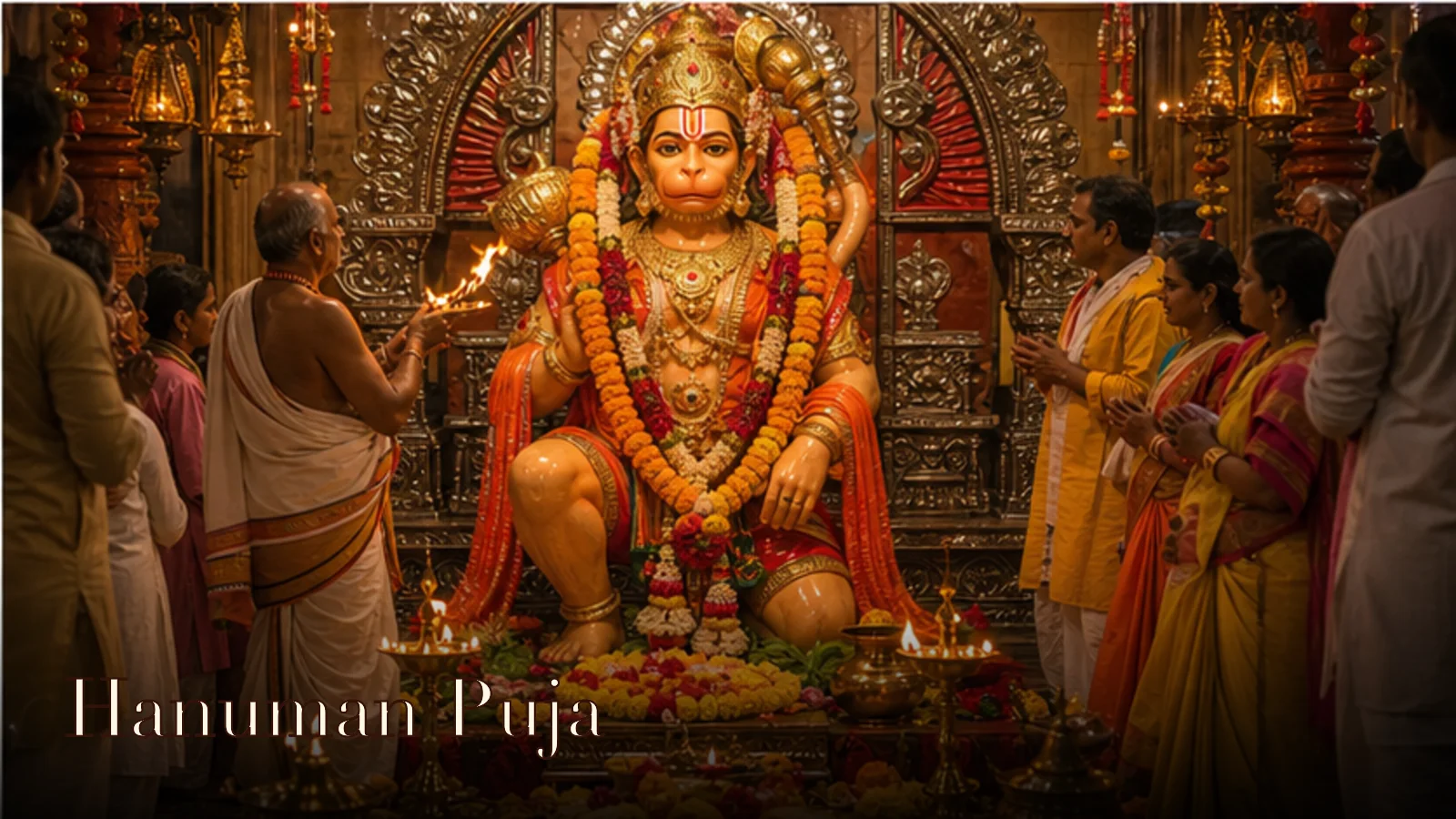
A day before Diwali Puja, Hanuman Puja is performed in some parts of especially in Gujarat. The very same day is observed as Shri Hanuman Jayanti at Hanumangarhi (हनुमानगढ़ी) temple in Ayodhya. However most of the people in North celebrate Hanuman Jayanti on Chaitra Purnima. The day of Hanuman Puja coincides with the day of Kali Chaudas. It is believed that the bad spirits are most powerful during the night of Kali Chaudas. Lord Hanuman, who gives strength to fight evil spirits, is worshipped to seek strength, power and the protection from all sorts of bad spirits. According to another legend, Diwali is celebrated to mark the return of Lord Rama to Ayodhya after defeating demon Ravana and completing His fourteen years of exile. The devotion and dedication of Hanuman pleased Shri Rama so much that He blessed Hanuman for getting worshipped before Him. Hence people worship God Hanuman a day before Diwali celebrations.
Deities worshipped on Hanuman Puja on Diwali
Follow the links to explore each deity’s mantras, stories, and temples on Temples.bio.
Lord Hanuman
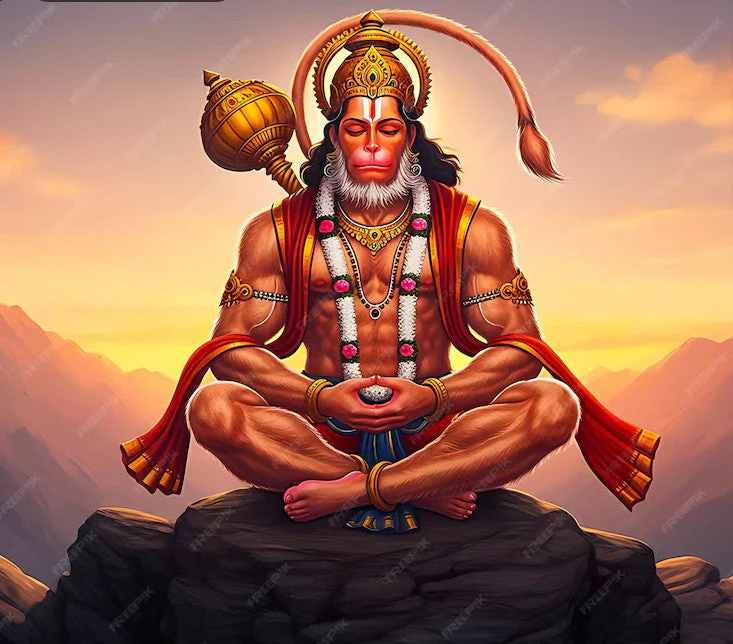
Primary deity — Hanuman (Bajrangbali, Anjaneya, Maruti, Pavansuta) is worshipped every Tuesday and Saturday for strength, protection, and removal of obstacles
The Eternal Devotee of Lord Rama — Embodiment of Strength, Courage and Selfless Service.
View deity →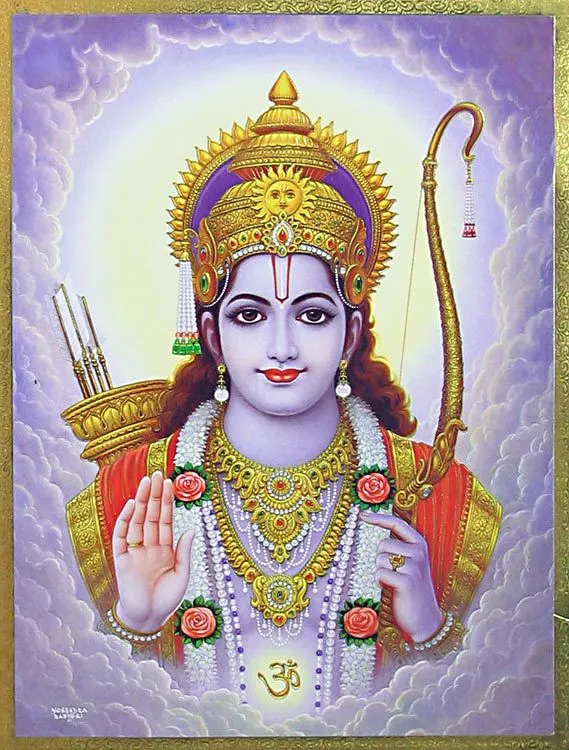
Lord Rama
Hanuman is the supreme devotee of Rama — worshipping Hanuman is believed to automatically earn Rama's grace and blessings
The Ideal Man, Perfect King, and Seventh Avatar of Vishnu — whose life is the eternal standard of righteousness, duty, and devotion to dharma.
View deity →Lord Hanuman is the son of Anjana (a celestial nymph) and Kesari (a mighty Vanara king), with the Wind god Vayu being his divine father, giving him extraordinary speed and strength. As the greatest devotee of Lord Rama, Hanuman played the most critical role in the entire Ramayana — locating the kidnapped Sita in Lanka, building the Rama Setu (bridge to Lanka) with the Vanara army, destroying Lanka's defenses, and bringing the life-saving Sanjeevani herb to revive Lakshmana.
In worship, Hanuman is depicted either in his Veera (heroic) form — standing tall with a gada (mace) and the Sanjeevani mountain — or in his Bhakta (devotee) form — kneeling before Rama with palms folded. The sindoor (vermilion) covering his entire body comes from his devotion to Rama: he once smeared sindoor all over himself after seeing Sita apply it for Rama's long life, saying he would cover his entire body for Rama's eternal life. This story is the origin of the sindoor offering to Hanuman.
Hanuman is also worshipped as Panchamukhi Hanuman (five-faced) in the Tantra tradition — his five faces protect the five directions and five cosmic planes.
How to celebrate Hanuman Puja on Diwali 2026
The day of Hanuman Puja coincides with the day of Kali Chaudas. It is believed that the bad spirits are most powerful during the night of Kali Chaudas. Lord Hanuman, who gives strength to fight evil spirits, is worshipped to seek strength, power and the protection from all sorts of bad spirits. According to another legend, Diwali is celebrated to mark the return of Lord Rama to Ayodhya after defeating demon Ravana and completing His fourteen years of exile. The devotion and dedication of Hanuman pleased Shri Rama so much that He blessed Hanuman for getting worshipped before Him. Hence people worship God Hanuman a day before Diwali celebrations. In this Vrat, the currently prevailing Ratrivyapini Tithi should be observed. If it falls on two days, then the Vrat should be observed on the second day. For observing Hanuman Jayanti Vrat, the observer should, on the night of Dhantrayodashi, remember Lord Rama, Mata Janaki, and Hanuman Ji, and sleep on the ground. Thereafter, on Chaturdashi, one should wake up before Arunoday, again remember Shri RamaJanaki and Hanuman Ji, and complete the morning ablutions and daily rituals. Then, taking water in hand, one should take the following Sankalpa
Spiritual benefits
- Protection from all forms of evil, black magic, negative energy, and malevolent spirits through Hanuman's divine presence
- Removal of fear, anxiety, and mental distress — Hanuman's name alone is considered the most powerful remedy for fear
- Grant of physical strength, stamina, and athletic excellence through the blessings of the son of Vayu
- Relief from the malefic effects of Saturn (Shani) — especially for those in Shani Sade Sati or Shani Dhaiya period
- Removal of obstacles in career, education, relationships, and spiritual progress
- Development of supreme devotion and spiritual discipline through emulating Hanuman's own devotion to Rama
- Healing of serious illness and protection from accidents through the Maha Mrityunjaya-adjacent energy of Hanuman's grace
- Attainment of Rama's grace indirectly — as Hanuman is Rama's gatekeeper, pleasing Hanuman opens the path to Rama's blessings
Mantras & sacred chants
Hanuman Chalisa Opening Doha — श्रीगुरु चरन सरोज रज निज मनु मुकुरु सुधारि | बरनऊँ रघुबर बिमल जसु जो दायकु फल चारि ||
Meaning: "Having cleansed the mirror of my mind with the dust of the lotus feet of the Guru, I describe the pure glory of Shri Rama which bestows the four fruits of life (dharma, artha, kama, moksha)."
Hanuman Moola Mantra — ॐ हनुमते नमः
Meaning: "Om, salutations to Hanuman" — the seed mantra of Hanuman worship, chanted 108 times on Tuesdays and Saturdays for protection, strength, and removal of obstacles. Simple, powerful, and universally accessible.
Hanuman Ashtaka — अष्ट सिद्धि नव निधि के दाता | अस बर दीन जानकी माता ||
Meaning: "Sita, the divine mother, has blessed you (Hanuman) with the ability to grant the eight supernatural powers (ashta siddhi) and the nine divine treasures (nava nidhi) to those who seek your blessing" — from the Hanuman Chalisa, the most widely chanted verse for invoking Hanuman's boon-granting power.
Hanuman Puja on Diwali 2026 — FAQs
Hanuman puja is most auspicious on Tuesdays (Mangalvar) and Saturdays (Shanivar). Tuesday is Hanuman's primary day associated with his strength and devotion to Rama. Saturday worship is especially significant for protection from Saturn's (Shani's) malefic effects. Full moon Tuesdays (Purnima falling on Tuesday) are exceptionally auspicious for Hanuman worship.
The most important offerings in Hanuman puja are: (1) Sindoor (red vermilion) mixed with sesame oil — the defining Hanuman offering; (2) Besan laddoos — Hanuman's favorite sweet; (3) Orange or red flowers (marigolds); (4) Sesame oil for the lamp; (5) Banana and other fruits; (6) Red cloth or flag. The Hanuman Chalisa recitation is itself considered the greatest offering.
Hanuman Chalisa can be recited any number of times — even once daily is highly meritorious. Common auspicious numbers are 7, 11, 21, and 108 times in one sitting. On Tuesdays and Saturdays at major temples, 11 or 21 recitations are common. For specific problem-solving, 40-day daily recitation (one time per day) is widely recommended. Each recitation takes approximately 8-10 minutes.
The sindoor offering to Hanuman comes from a beautiful story: when Hanuman saw Sita applying sindoor in the parting of her hair for the long life of Rama, he asked its significance. Sita explained it was for Rama's long life. Hanuman then smeared sindoor all over his entire body, saying he would apply sindoor everywhere on himself for Rama's eternal life. Touched by his devotion, Rama blessed that whoever offers sindoor to Hanuman will receive his protection and grace.
Sundar Kand is the fifth chapter (kanda) of the Ramayana — it describes Hanuman's solo journey to Lanka, his search for Sita, the burning of Lanka, and his return. It is the most devotionally charged section of the Ramayana. Sundar Kand path (recitation) is performed: on full moon Tuesdays, on Hanuman Jayanti, when facing serious problems or illness, for removing obstacles, and on special family occasions. A full Sundar Kand path takes 2-3 hours.
Top Hanuman temples in India include: Hanuman Mandir Connaught Place (New Delhi) — one of the most visited temples in India; Salasar Balaji (Rajasthan) — the famous Balaji form with beard and mustache; Hanuman Garhi (Ayodhya) — overlooking Ram Janmabhoomi; Mahavir Mandir (Patna) — largest Hanuman temple in East India; Sankat Mochan Hanuman Mandir (Varanasi) — founded by Tulsidas; and Yadadri Hanuman Temple (Telangana).
Hanuman is worshipped on Saturdays because of a legendary episode where Saturn (Shani) once tried to sit on Hanuman's shoulder (as Shani does to cause suffering) but Hanuman trapped him under his arm and released him only after Shani promised to never trouble Hanuman's devotees. This story makes Hanuman the protector against Shani's malefic effects — especially relevant for those undergoing Shani Sade Sati (7.5-year Saturn transit) or Shani Dhaiya (2.5-year).
Yes, women can and do worship Hanuman — the prohibition on women entering some specific Hanuman shrines (where Hanuman is in his Brahmachari/celibate form) exists in certain traditional temples, but is not universal. Most Hanuman temples welcome all devotees regardless of gender. The Hanuman Chalisa recitation and basic puja with sindoor offering can be performed by anyone at home without restriction. Many women regularly worship Hanuman for family protection and removal of obstacles.