Book Tomorrow Wednesday Vinayaka Abhishekam
Temples in Kanchipuram, Tamil Nadu

Tamil Nadu pilgrimage guide

Temples in Kanchipuram — Famous Temples & Complete Darshan Guide

Plan a practical Kanchipuram temple trip with 25 important temples, darshan-friendly routing, local travel tips and the best season for a peaceful pilgrimage.

25 curated temples Tamil Nadu View map & route →

Last updated July 2026 · Curated by the Temples.bio editorial team

Quick answers

Which is the most famous temple in Kanchipuram?
Veeraraghava Perumal Temple is the most prominent temple in Kanchipuram. This guide covers 25 notable temples in and around Kanchipuram with timings, distances and a darshan route.
How many days do you need to visit Kanchipuram temples?
You can cover the main temples of Kanchipuram in about 2 days. Use the 1-day essential circuit for the key shrines, or the 2-day plan to include temples within 100 km.
What is the best time to visit Kanchipuram temples?
October to March is the most comfortable season for temple visits in Kanchipuram. Summer afternoons can be tiring, so plan early morning darshan and keep a lighter second half of the day. Festival days are spiritually rewarding but busier; confirm timings, parking and local trans

Why Kanchipuram is a major temple destination

Kanchipuram is one of Tamil Nadu's useful temple bases, combining well-known shrines with smaller neighbourhood temples that locals still visit for daily worship. The guide below is arranged for real travel: start with the most important temple, then add nearby shrines in an order that keeps the route simple.

The city carries a strong pilgrimage identity, so the best temple plan should not feel like a checklist. Devotees usually come here for blessings of Lord Shiva and Lord Murugan, family welfare, ancestral prayers and a quieter connection with the region's sacred geography. The city also works well as a base for first-time visitors who want a balanced mix of famous temples and reachable local shrines.
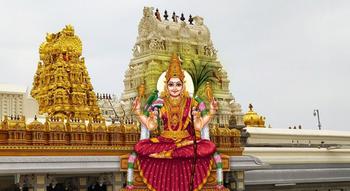
Curated pilgrimage circuit

Temples to Visit Near Kanchipuram

Ordered by pilgrimage importance and practical travel distance from Kanchipuram.

Veeraraghava Perumal Temple — Lord Veeraraghava (Vishnu) temple in Kanchipuram Same Day

Lord Veeraraghava (Vishnu)

  • Tiruvallur, Tamil Nadu
  • 33.5 km from Kanchipuram
  • 6:00 AM - 8:00 PM (Divya Desam at Tiruvallur. HR&CE manages.)

Veeraraghava Perumal Temple

Veeraraghava Perumal Temple in Tiruvallur is one of the 108 Divya Desams dedicated to Lord Veeraraghava, a powerful form of Lord Vishnu. The temple has great historical significance and is mentioned in the works of Alwar saints. Lord Veeraraghava represents courage, valor, and protection, making this temple particularly popular among devotees seeking strength and protection from enemies. The temple features beautiful Dravidian architecture and has been patronized by various South Indian dynasties. The deity is known for granting courage to face life's challenges and providing protection during difficult times. The temple also has significance in local history and culture.

Travel Tip: By Road: Connected from Chennai and surrounding areas. Courage and protection temple with suburban accessibility.

Kamakshi Amman Temple — Goddess Kamakshi (Parvati) temple in Kanchipuram Same Day

Goddess Kamakshi (Parvati)

  • Kanchipuram, Tamil Nadu
  • 40.9 km from Kanchipuram
  • 5:30 AM - 8:30 PM (Kanchipuram. One of 18 Shakti Peethas. Kamakoti Peetham manages. Two sessions.)

Kamakshi Amman Temple

Kamakshi Amman Temple in Kanchipuram, Tamil Nadu, is one of the most important Shakti Peethas and holds immense significance in South Indian spirituality. The temple is dedicated to Goddess Kamakshi, an incarnation of Goddess Parvati, who is believed to have performed penance here to marry Lord Shiva. The temple is unique as it houses both the fierce and benevolent forms of the goddess. Kanchipuram, known as the "City of Thousand Temples," has this temple as its spiritual crown jewel. The goddess is depicted in a yogic posture, which is rare among South Indian temples, and she is believed to control desire (Kama) and grant liberation.

Travel Tip: By Road: Well connected from Chennai via GST Road. By Train: Direct trains from Chennai and other major cities. Regular bus services available.

Ekambareswarar Temple — Lord Ekambareswarar (Shiva) temple in Kanchipuram Same Day

Lord Ekambareswarar (Shiva)

  • Kanchipuram, Tamil Nadu
  • 42.7 km from Kanchipuram
  • 6:00 AM - 8:30 PM (Kanchipuram. Pancha Bhuta Sthalams — Earth element. Massive 11-storey gopuram. HR&CE manages.)

Ekambareswarar Temple

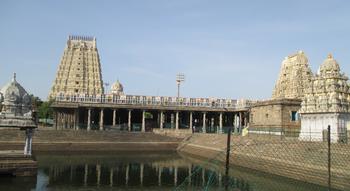
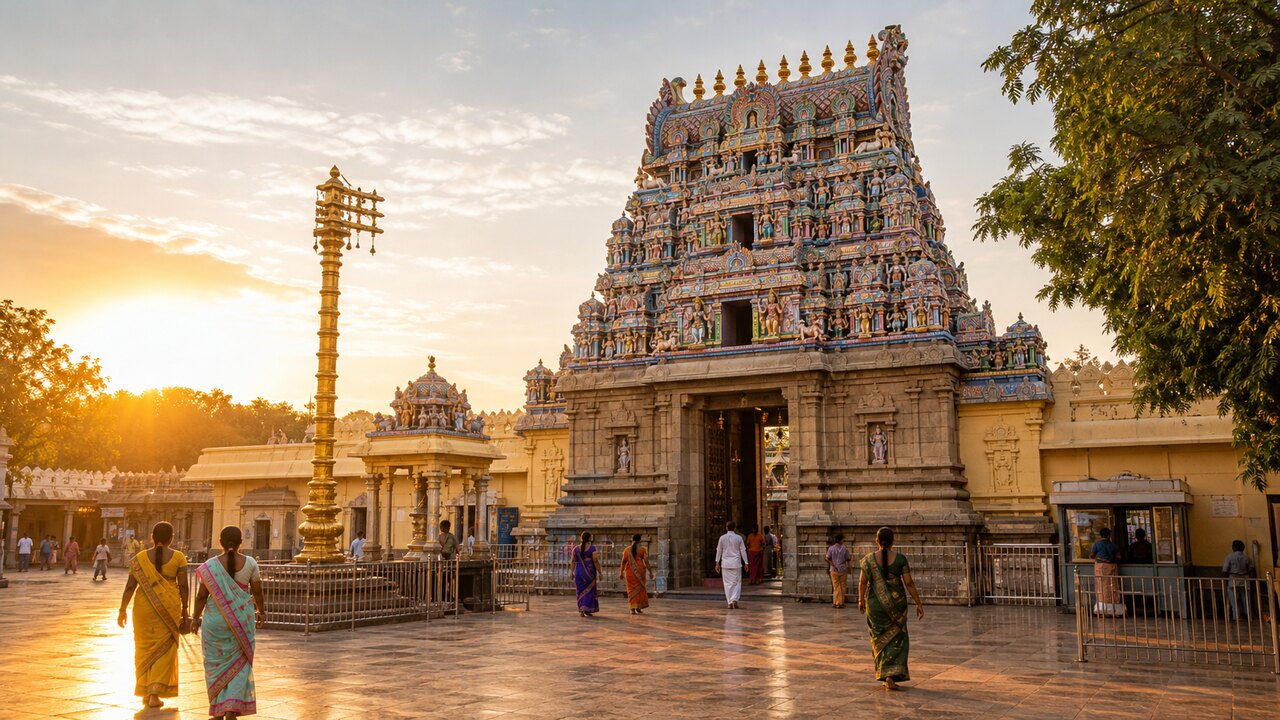
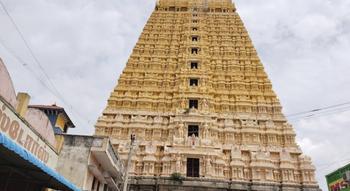
Ekambareswarar Temple in Kanchipuram, Tamil Nadu, is one of the five Pancha Bhoota Stalams representing the Prithvi (Earth) element. The temple is renowned for its ancient sacred mango tree (Ekamra tree) that is believed to be over 3,500 years old and has four different varieties of mangoes growing on its four branches. The temple houses one of the largest Shiva lingams in India, created from earth by Goddess Parvati herself. The temple features one of the tallest gopurams in South India at 59 meters. According to legend, Parvati worshipped Shiva here under the mango tree, making a lingam from earth, which is why this represents the earth element.

Travel Tip: By Road: Well connected from Chennai via GST Road. By Train: Direct trains from Chennai and major cities. Regular bus services.

Varadaraja Perumal Temple Kanchipuram — Lord Varadaraja Perumal (Vishnu) temple in Kanchipuram Same Day

Lord Varadaraja Perumal (Vishnu)

  • Kanchipuram, Tamil Nadu
  • 47.9 km from Kanchipuram
  • 6:00 AM - 8:00 PM (Kanchipuram. One of 108 Divya Desams. Ancient Pallava and Chola era temple. HR&CE manages. Famous for Atthi Varadar (Fig-wood deity) festival every 40 years.)

Varadaraja Perumal Temple Kanchipuram

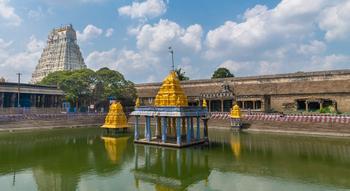
Varadaraja Perumal Temple in Kanchipuram, Tamil Nadu, is one of the 108 Divya Desams and holds special significance in the "City of Thousand Temples." The temple is dedicated to Lord Varadaraja (Vishnu), who is believed to have granted boons here, hence the name "Varada" (giver of boons). The temple is famous for its unique legends including the golden and silver lizards on the ceiling that are believed to be cursed Gandharvas, and touching them is said to bring good fortune. The temple is most renowned for the Atthi Varadar festival held once every 40 years when a special deity submerged in water is brought out for darshan.

Travel Tip: By Road: Well connected from Chennai. By Train: Regular trains from Chennai and major cities. Temple city with multiple attractions.

Thiruthani Murugan Temple — Lord Subramanya (Murugan) temple in Kanchipuram Same Day

Lord Subramanya (Murugan)

  • Thiruthani, Tamil Nadu
  • 73.6 km from Kanchipuram
  • 5:30 AM - 8:30 PM (Thiruthani, Tiruvallur district, Tamil Nadu. Temple on hill — 365 steps (one for each day of the year). Accessible by steps.)

Thiruthani Murugan Temple

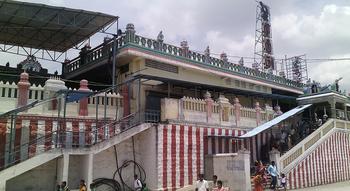
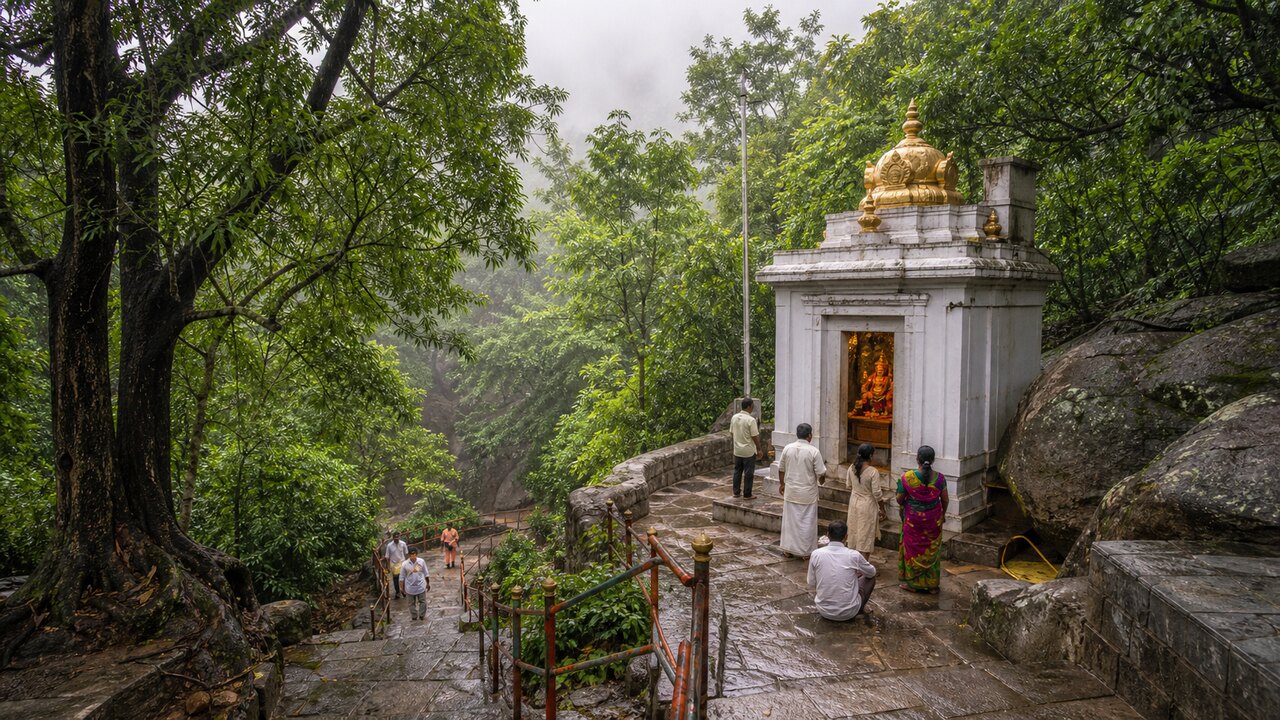
Thiruthani Murugan Temple, located on the border of Tamil Nadu and Andhra Pradesh, is one of the six main abodes of Lord Murugan and represents the place where the deity rested after his various victories. The temple is situated on a hill and requires climbing 365 steps, symbolizing the days of the year and representing a year-long dedication to the divine. The temple is unique as it serves devotees from both Tamil Nadu and Andhra Pradesh, representing the universal appeal of Lord Murugan across linguistic boundaries. The hilltop location provides panoramic views and the temple is known for its peaceful atmosphere and the transformative experience of the step-climbing meditation.

Travel Tip: By Road: Border location between Tamil Nadu and Andhra Pradesh. Hill route with step climbing. Cross-state accessibility.

Sri Kalyana Venkateswara Swamy Temple (Narayanavanam) — Lord Kalyana Venkateswara temple in Kanchipuram Same Day

Lord Kalyana Venkateswara

  • Narayanavanam, Tirupati District, Andhra Pradesh
  • 96.7 km from Kanchipuram
  • 6:00 AM - 8:00 PM (Afternoon break 1:00 PM to 4:00 PM.)

Sri Kalyana Venkateswara Swamy Temple (Narayanavanam)

Narayanavanam carries a very specific weight in the Tirupati pilgrimage geography — this is the place where, according to tradition, Lord Venkateswara actually married Goddess Padmavathi, making it the original site of that celestial union rather than simply a commemorative one. Managed by TTD and far less visited than Tirumala or Tiruchanur, the temple has the unhurried atmosphere of a place that knows its own significance without needing to announce it. The surrounding village is quiet, the priests are accessible, and the darshan feels personal in a way that the larger temples in the circuit rarely do.

Travel Tip: November–February during wedding season when the town comes alive with pilgrims seeking marital blessings. Combine with Kailasakona Waterfalls nearby for a full day out. Local buses from Tirupati are frequent and inexpensive.

Chengalamma Parameshwari Temple — Goddess Chengalamma Parameshwari temple in Kanchipuram Same Day

Goddess Chengalamma Parameshwari

  • Chengalamma Temple Location, Andhra Pradesh
  • 106.4 km from Kanchipuram
  • 5:00 AM - 9:00 PM (Chengalamma Parameshwari at Sullurpeta, SPSR Nellore. Powerful Goddess temple. Located en-route to Sriharikota (ISRO). ISRO scientists visit for blessings.)

Chengalamma Parameshwari Temple

Chengalamma Parameshwari Temple, located in Andhra Pradesh, is a significant Goddess temple dedicated to Chengalamma Parameshwari, a powerful form of the Divine Mother. The temple is particularly renowned for its protective powers and is considered highly effective for devotees seeking protection from evil influences, family welfare, and fertility blessings. The goddess is believed to be especially responsive to the prayers of women and mothers, providing protection for children and family harmony. The temple attracts devotees from various communities who come seeking the Mother's blessings for health, prosperity, and overall well-being. The annual festivals are celebrated with great fervor, featuring traditional rituals, cultural programs, and community participation that showcase the rich heritage of Goddess worship in Andhra Pradesh.

Travel Tip: By Road: Connected from major cities. Traditional Goddess temple with family protection significance.

Sri Kalahasteeswara Temple — Lord Sri Kalahasteeswara (Shiva) temple in Kanchipuram Same Day

Lord Sri Kalahasteeswara (Shiva)

  • Srikalahasti, Andhra Pradesh
  • 118.8 km from Kanchipuram
  • 6:00 AM - 9:00 PM (Sri Kalahasti, Andhra Pradesh. Pancha Bhuta Sthalams — Vayu (Air) element. Famous for Rahu-Ketu puja.)

Sri Kalahasteeswara Temple

Srikalahasti is one of the Panchabhoota Stalas — the five Shiva temples representing the five elements — and this one represents Vayu, the wind. The proof is visible: the flame in the inner sanctum flickers constantly even on the calmest days, moved by an unseen air current inside the closed rock chamber. The temple is also famous for Rahu-Ketu pooja, which draws enormous crowds of devotees seeking relief from astrological afflictions. The gopuram, rising 36 metres, is one of the finest in Andhra Pradesh.

Travel Tip: By Road: Well connected from Tirupati and Chennai. Regular bus services. By Train: Renigunta is nearest major station.

Vellore Golden Temple (Sripuram) — Goddess Mahalakshmi temple in Kanchipuram Same Day

Goddess Mahalakshmi

  • Vellore, Tamil Nadu
  • 115.7 km from Kanchipuram
  • 6:00 AM - 8:00 PM (Vellore. Private temple covered with 1,500 kg of gold. Sripuram Spiritual Park. Peaceful meditation environment.)

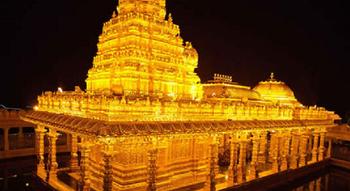
Vellore Golden Temple (Sripuram)

Vellore Golden Temple, officially known as Sripuram, is a spectacular modern temple dedicated to Goddess Mahalakshmi, completely covered in pure gold foil. Built by the spiritual organization Vellore, this temple is one of the most magnificent examples of contemporary temple architecture. The temple is covered with 1500 kg of gold and features intricate carvings and beautiful golden domes. The temple complex includes meditation halls, prayer areas, and beautiful gardens. The temple follows strict spiritual discipline and promotes divine consciousness. Visitors experience profound peace and spiritual elevation in this golden spiritual environment. The temple represents modern devotional architecture and contemporary spiritual practice.

Travel Tip: By Road: Well connected from Chennai and Bangalore. Modern temple with excellent visitor facilities and parking.

Sri Prasanna Venkateswara Swamy Temple — Lord Prasanna Venkateswara temple in Kanchipuram Same Day

Lord Prasanna Venkateswara

  • Appalayagunta, Tirupati District, Andhra Pradesh
  • 117.9 km from Kanchipuram
  • 6:00 AM - 8:00 PM (Open all days. TTD managed. Afternoon break approximately 1:30 PM to 3:30 PM.)

Sri Prasanna Venkateswara Swamy Temple

The name Prasanna means gracious or pleased, and the deity here is specifically worshipped in the form in which Venkateswara appeared in a state of blessing — the posture and expression of the idol reflect a particular quality of benevolence that devotees distinguish from the more majestic presentation at Tirumala. The temple at Appalayagunta is associated with the story of Venkateswara blessing Anjaneya after the marriage, and draws pilgrims who come specifically seeking relief from hereditary diseases and long-standing family afflictions. It is quiet, genuinely old, and largely off the tourist circuit.

Travel Tip: Any weekday morning for a darshan that lets you actually see the idol from close distance — an experience nearly impossible at Tirumala. Friday mornings for the special Abhishekam. Hire a dedicated auto from Tirupati town for a convenient round trip.

Padmavathi Ammavari Temple — Goddess Padmavathi (Alamelu Manga) temple in Kanchipuram Same Day

Goddess Padmavathi (Alamelu Manga)

  • Tiruchanur, Tirupati District, Andhra Pradesh
  • 130.5 km from Kanchipuram
  • 5:00 AM - 9:00 PM (Extremely busy on Fridays — arrive before 6 AM or after 7 PM for shorter waits.)

Padmavathi Ammavari Temple

The standard Tirupati pilgrimage circuit includes Tiruchanur as a mandatory stop — devotees visit Padmavathi first, before ascending to Tirumala, because she is considered the consort of Venkateswara and seeking her blessings first is considered auspicious. The temple is compact but always busy, the presiding deity is dressed in elaborate silk and gold, and the whole atmosphere is one of intense feminine devotion that feels quite distinct from the more austere mood on the hill above.

Travel Tip: Tuesday or Wednesday mornings for the shortest queues and an unhurried darshan. Avoid Fridays unless you arrive before 5:30 AM. Always collect the Padma Sarovaram Theertham before leaving — it is considered especially sacred.

Govindaraja Swamy Temple — Lord Govindaraja Swamy (Reclining Vishnu) temple in Kanchipuram Same Day

Lord Govindaraja Swamy (Reclining Vishnu)

  • Tirupati Town, Tirupati District, Andhra Pradesh
  • 137.4 km from Kanchipuram
  • 6:00 AM - 8:30 PM (Busiest on Saturdays and during Brahmotsavam season. Weekday mornings offer the most peaceful darshan.)

Govindaraja Swamy Temple

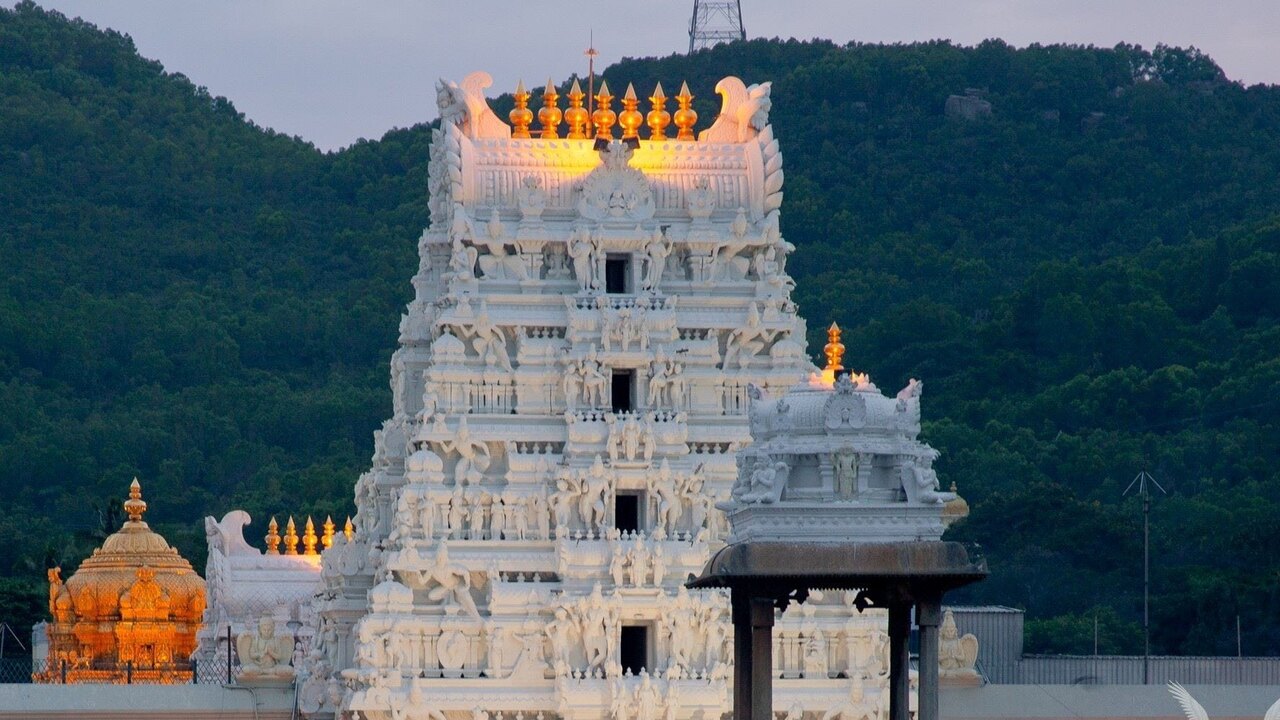
Most pilgrims come to Tirupati for Tirumala and completely overlook the Govindaraja Swamy Temple at the base of the hill — which is a shame because this is one of the finest Dravidian temple complexes in Andhra Pradesh. The towering white gopuram is visible from most of the city and the inner sanctum, dedicated to the reclining Vishnu, has a depth of atmosphere that the more famous temple on the hill actually makes harder to find. The temple tank and the surrounding prakaram are worth an hour of quiet exploration.

Travel Tip: Tuesday or Thursday mornings for the calmest darshan. The temple is on Car Street — autorickshaws from the railway station drop you directly at the gopuram entrance. Combine with Kapila Theertham (4 km) and Tiruchanur (7 km) to complete the full Tirupati Kshetra circuit in a single day. Collect the Pulihora prasadam — it is unique to this temple and not available at Tirumala.

Kodandarama Swamy Temple — Lord Kodanda Rama temple in Kanchipuram Same Day

Lord Kodanda Rama

  • Tirupati Town, Andhra Pradesh
  • 138.1 km from Kanchipuram
  • 5:00 AM - 9:00 PM (Afternoon break 1:30 PM to 4:00 PM.)

Kodandarama Swamy Temple

The Kodandarama Swamy Temple in the heart of Tirupati town is one of those places where the daily rhythms of temple life are still very much intact. The morning and evening aartis draw regular crowds of local devotees rather than out-of-town pilgrims, which gives visits here a different texture — less formal, more neighbourly. The main deity, Rama with his bow, is depicted in a posture of absolute calm, and the smaller shrines around the prakaram are worth exploring slowly.

Travel Tip: Early mornings on weekdays for an intimate darshan with the hereditary musicians playing — a rare combination of classical music and devotion. Rama Navami for the chariot procession through town.

Kapila Theertham Temple — Lord Kapileshwara (Shiva) temple in Kanchipuram Same Day

Lord Kapileshwara (Shiva)

  • Tirupati, Andhra Pradesh
  • 137.4 km from Kanchipuram
  • 5:00 AM - 9:00 PM (Open all days. Most active between 5 AM and 9 AM.)

Kapila Theertham Temple

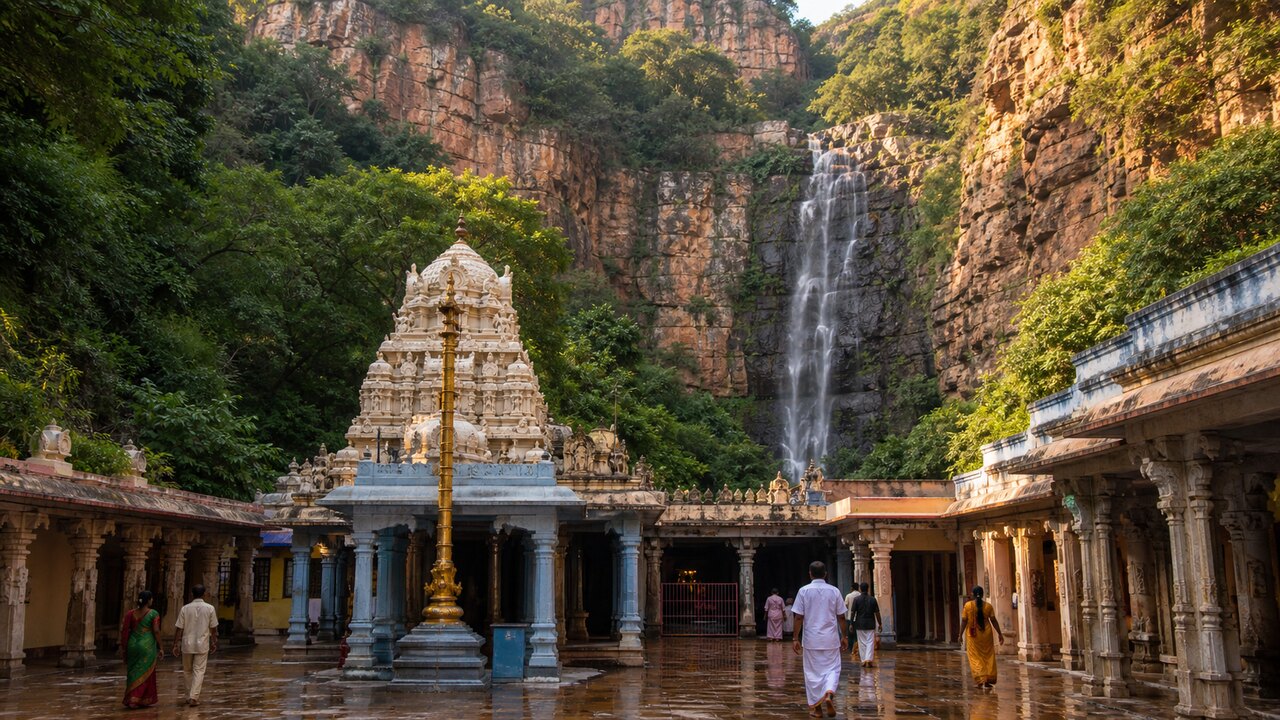
Kapila Theertham sits at the foot of the Tirumala hills where a waterfall tumbles directly onto the Shiva Linga below — the only natural waterfall in the entire Tirumala hill range. The setting is genuinely dramatic: rock walls rise on three sides, the water falls year-round, and the sound of it fills the small mandapam. Pilgrims who come to Tirupati for Venkateswara often skip this temple entirely, which means you can have it almost to yourself even on busy days.

Travel Tip: Monsoon season (July–October) for the waterfall at full power. For pilgrimage, visit at 5–6 AM before the Tirumala-bound crowds swell. Beware of slippery tank-side stones — use the designated steps.

ISKCON Tirupati Temple — Sri Sri Radha Govinda (Krishna and Radha) temple in Kanchipuram Same Day

Sri Sri Radha Govinda (Krishna and Radha)

  • Tirupati, Chittoor, Andhra Pradesh
  • 138.5 km from Kanchipuram
  • 4:15 AM - 8:30 PM (Tirupati, Andhra Pradesh. ISKCON temple with Radha Govinda Madhava as presiding deities. Located in Tirupati city (not on Tirumala hill). Serves lakhs of Tirupati pilgrims who also visit ISKCON for a complete Vaishnava experience.)

ISKCON Tirupati Temple

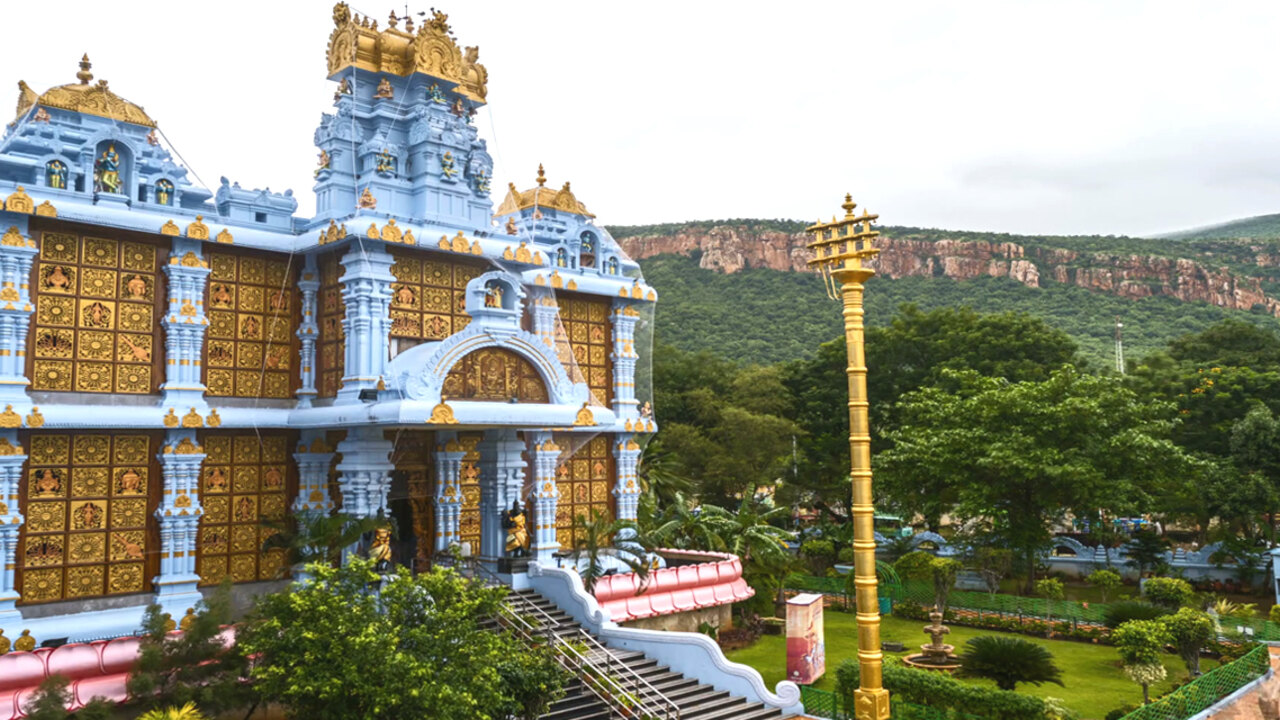
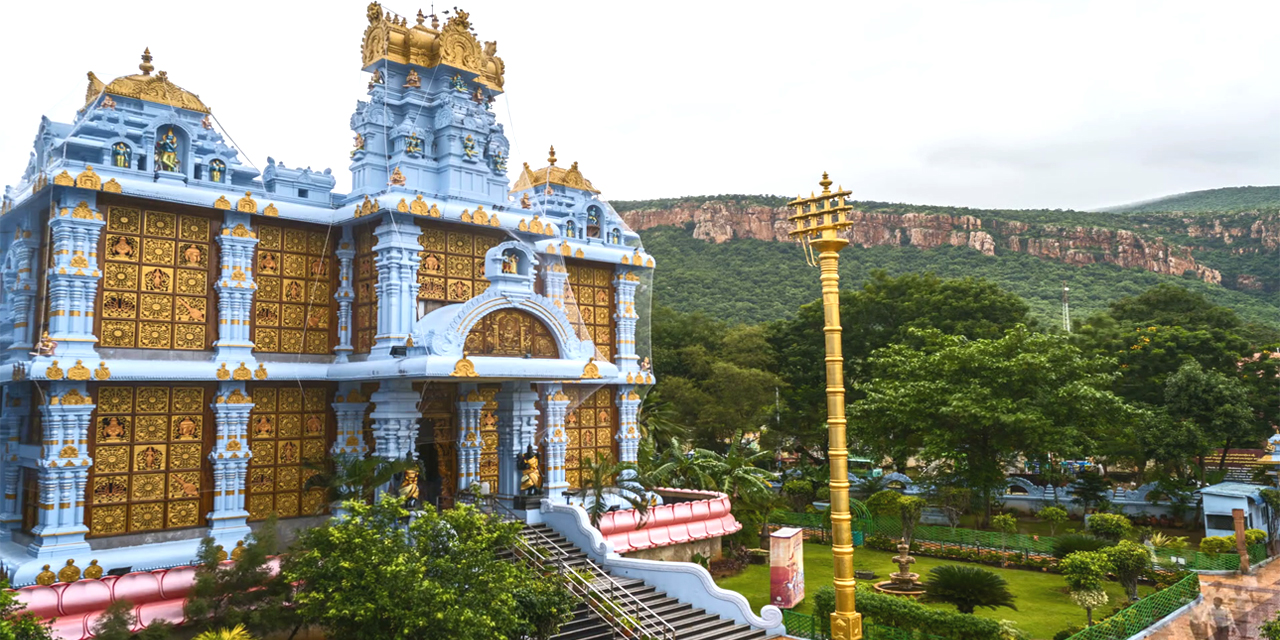
The ISKCON temple in Tirupati occupies an interesting position in a city almost entirely defined by Vaishnava Shaiva devotion — it brings the Hare Krishna movement's particular flavour of bhakti into a landscape already saturated with temple culture, and somehow finds its own distinct audience. The kirtans here are the draw: full-throated, percussion-heavy, and led by monks who clearly regard the practice as serious rather than performative. Bhagavad-Gita classes run through the day, prasadam is distributed freely, and the campus has a vitality that contrasts pleasantly with the more formal atmosphere of the older temples nearby.

Travel Tip: By Road: Well connected from Chennai, Bangalore, and Hyderabad. By Train: Direct railway station. Near Tirumala Hills.

ISKCON Gokulam — Sri Sri Radha Govinda (Krishna and Radha) temple in Kanchipuram Same Day

Sri Sri Radha Govinda (Krishna and Radha)

  • Gokulam, Guntur District
  • 138.5 km from Kanchipuram
  • 4:15 AM - 8:30 PM (Tirupati, Andhra Pradesh. ISKCON temple with Radha Govinda Madhava as presiding deities. Located in Tirupati city (not on Tirumala hill). Serves lakhs of Tirupati pilgrims who also visit ISKCON for a complete Vaishnava experience.)

ISKCON Gokulam

The ISKCON temple in Tirupati occupies an interesting position in a city almost entirely defined by Vaishnava Shaiva devotion — it brings the Hare Krishna movement's particular flavour of bhakti into a landscape already saturated with temple culture, and somehow finds its own distinct audience. The kirtans here are the draw: full-throated, percussion-heavy, and led by monks who clearly regard the practice as serious rather than performative. Bhagavad-Gita classes run through the day, prasadam is distributed freely, and the campus has a vitality that contrasts pleasantly with the more formal atmosphere of the older temples nearby.

Travel Tip: By Road: Well connected from Chennai, Bangalore, and Hyderabad. By Train: Direct railway station. Near Tirumala Hills.

Sri Kalyana Venkateswara Temple — Lord Kalyana Venkateswara temple in Kanchipuram Same Day

Lord Kalyana Venkateswara

  • Srinivasa Mangapuram, Tirupati District, Andhra Pradesh
  • 144.3 km from Kanchipuram
  • 5:30 AM - 8:30 PM (Afternoon break approximately 1:30 PM to 3:30 PM. Managed by TTD.)

Sri Kalyana Venkateswara Temple

The Kalyana Venkateswara Temple at Srinivasa Mangapuram is where, according to tradition, the marriage of Lord Venkateswara and Padmavathi was celebrated — which makes it a natural pilgrimage complement to both Tirumala and Tiruchanur. The temple is substantially less crowded than either, the architecture is beautifully maintained, and the rituals here have a celebratory quality that reflects the wedding mythology. Newlyweds and couples seeking blessings make up a large part of the pilgrimage.

Travel Tip: Any weekday morning for close, unhurried darshan — far less crowded than Tirumala while offering the same divine connection. Wedding season (November–February) if seeking marriage blessings.

Kanipakam Vinayaka Temple — Lord Varasiddhi Vinayaka (Ganesha) temple in Kanchipuram Same Day

Lord Varasiddhi Vinayaka (Ganesha)

  • Kanipakam, Chittoor, Andhra Pradesh
  • 135.7 km from Kanchipuram
  • 4:00 AM - 10:00 PM (Kanipakam Vinayaka at Irala, Chittoor. Self-manifested Ganesha idol that is said to grow in size. Famous wish-fulfilling temple.)

Kanipakam Vinayaka Temple

The Kanipakam Vinayaka Temple has one of the more arresting origin stories in South Indian temple tradition: the idol is said to have been discovered growing out of a well, and is believed to still be growing — the ornaments placed on it centuries ago are said to have been absorbed into the expanding stone. Whether one accepts the literal miracle or not, the temple has an extraordinary atmosphere of concentrated devotion, and the Brahmotsavam here draws pilgrims from across Andhra Pradesh and Tamil Nadu.

Travel Tip: By Road: Connected from Tirupati and Chennai. By Train: Chittoor junction. Famous growing deity temple.

Tirumala Venkateswara Temple — Lord Vishnu temple in Kanchipuram Same Day

Lord Vishnu

  • Tirumala, Tirupati, Andhra Pradesh
  • 158.3 km from Kanchipuram
  • 2:30 AM - 1:00 AM (next day) (Tirumala, Tirupati, Andhra Pradesh. Richest and most visited temple in the world — 50,000–100,000 pilgrims daily. TTD manages. Proper darshan 2:30 AM to 1 AM next day.)

Tirumala Venkateswara Temple

Tirumala operates on a scale that is hard to comprehend until you are inside it — a temple that receives more daily visitors than almost any religious site on earth, running 24 hours with a logistical precision that would impress an airport. The darshan itself lasts only seconds, but the approach up the Tirumala hills in the early morning, the chanting that fills the air around the sanctum, and the overwhelming collective devotion of the crowd create an experience with no real parallel.

Travel Tip: By Road: Ghat road from Tirupati city to Tirumala hills. By Train: Tirupati is major station. Advance booking recommended for accommodation.

Sri Bhu Varahaswamy Temple — Lord Bhu Varahaswamy (Varaha — Boar incarnation of Vishnu) temple in Kanchipuram Same Day

Lord Bhu Varahaswamy (Varaha — Boar incarnation of Vishnu)

  • Tirumala, Tirupati, Andhra Pradesh
  • 158.8 km from Kanchipuram
  • 5:30 AM - 9:00 PM (TTD managed. Follows Tirumala queue and schedule system.)

Sri Bhu Varahaswamy Temple

On Tirumala hill, before approaching Venkateswara, tradition requires that devotees first seek the blessings of Varahaswamy — Lord Vishnu in his boar incarnation, who is considered the original owner of the Tirumala land and the deity who gave TTD permission, in a sense, to administer the temple above. This is not folklore that pilgrims treat casually: the Varahaswamy temple receives its own dedicated stream of devotees who come specifically for this prior blessing, and the prasadam — a particular type of tamarind rice — is different from anything offered elsewhere on the hill. The temple is ancient, compact, and carries a weight of tradition that the main temple complex, for all its scale, cannot quite replicate.

Travel Tip: Visit immediately upon arriving at Tirumala — before joining any queue for the main temple. Varaha Jayanti (September–October) is the one day the full spotlight falls on this shrine rather than its famous neighbour. The Pushkarini tank beside the temple is sacred for a morning bath.

Japali Anjaneya Swamy Temple — Lord Hanuman (Sri Anjaneya Swamy) temple in Kanchipuram Same Day

Lord Hanuman (Sri Anjaneya Swamy)

  • Near Akasha Ganga Road, Tirumala, Tirupati, Andhra Pradesh
  • 160.3 km from Kanchipuram
  • 6:00 AM - 7:00 PM (Timings may vary on festival and peak yatra days.)

Japali Anjaneya Swamy Temple

Japali Anjaneya Swamy Temple is a spiritually significant Hanuman temple located in the serene forest zone near Tirumala, close to the famous Akasha Ganga route. The temple is associated with legends of Sri Anjaneya meditating in this region and is regarded as a powerful kshetram for devotees praying for courage, health, protection from obstacles, and successful completion of vows. Because of its location near Tirumala, many pilgrims include Japali temple in their Tirupati-Tirumala itinerary along with Sri Venkateswara Swamy darshan. The calm natural surroundings, devotional atmosphere, and traditional worship practices make it one of the most meaningful nearby temple visits for families, first-time pilgrims, and Hanuman devotees.

Travel Tip: Plan Japali visit during early morning or late afternoon to avoid peak traffic. Pair this temple with Akasha Ganga and main Tirumala darshan for an efficient route.

Arunachaleswarar Temple — Lord Arunachaleswarar (Shiva) temple in Kanchipuram Same Day

Lord Arunachaleswarar (Shiva)

  • Tiruvannamalai, Tamil Nadu
  • 172.2 km from Kanchipuram
  • 5:30 AM - 9:00 PM (Tiruvannamalai. Pancha Bhuta Sthalams — Fire element. Massive 66,000 sq. metre temple complex. HR&CE manages.)

Arunachaleswarar Temple

Arunachaleswarar Temple in Tiruvannamalai, Tamil Nadu, is one of the most revered among the Pancha Bhoota Stalams, representing the Agni (Fire) element. The temple is located at the base of the sacred Arunachala Hill, which itself is considered a manifestation of Lord Shiva as an infinite column of fire. According to legend, this is where Shiva appeared as Jyotirlinga to settle a dispute between Brahma and Vishnu. The temple is famous for the Karthigai Deepam festival when a massive fire is lit on the hilltop, visible for miles around. The entire Arunachala Hill is considered sacred, and devotees perform Girivalam (circumambulation) around the 14-kilometer hill path.

Travel Tip: By Road: Well connected by NH-66 from Chennai, Bangalore. By Train: Regular trains from major cities. Hill location with spiritual significance.

Sri Ramanasramam Tiruvannamalai — Bhagavan Ramana Maharshi temple in Kanchipuram Same Day

Bhagavan Ramana Maharshi

  • Tiruvannamalai, Tamil Nadu
  • 174.3 km from Kanchipuram
  • 5:30 AM - 8:00 PM (Tiruvannamalai, Tamil Nadu. Ashram of Bhagavan Sri Ramana Maharshi — one of the greatest sages of 20th century. The samadhi (shrine) of Ramana Maharshi and his mother are the main places of worship. Arunachala Hill (Shiva as hill) is the backdrop. Silence and self-inquiry are the spiritual practices here.)

Sri Ramanasramam Tiruvannamalai

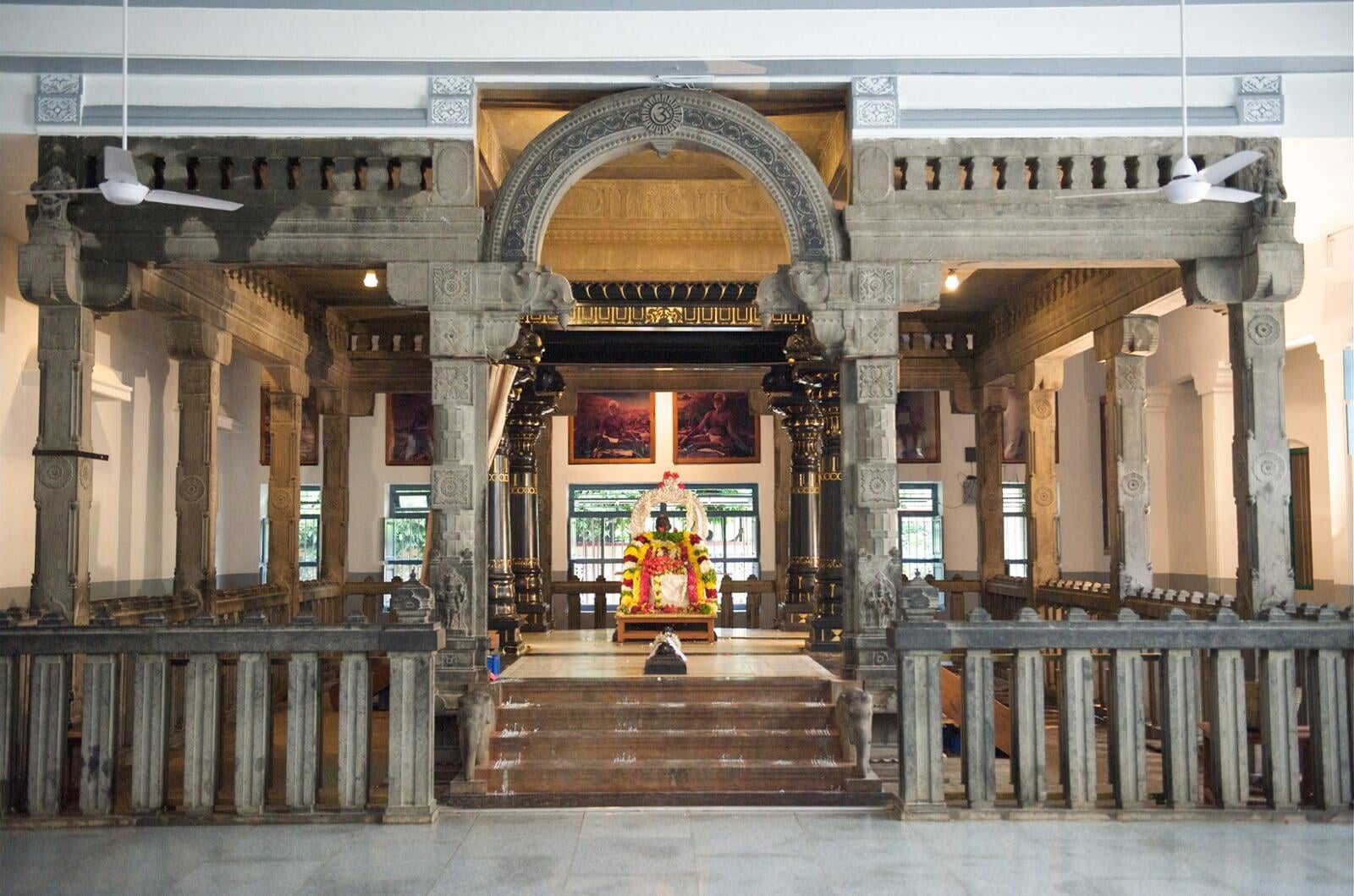
Sri Ramanasramam is the sacred ashram of Bhagavan Ramana Maharshi (1879-1950), one of the most revered sages of modern India. Located at the foot of the sacred Arunachala Hill in Tiruvannamalai, this ashram was established around the saint who attained self-realization through the practice of self-inquiry (Atma Vichara). The ashram houses the samadhi shrine of Ramana Maharshi and continues to be a center of spiritual practice and meditation. Thousands of seekers from around the world visit to experience the powerful spiritual atmosphere and practice self-inquiry meditation. The ashram maintains the simple, peaceful environment that Ramana Maharshi himself lived in, with the sacred Arunachala Hill providing a powerful backdrop for spiritual practice.

Travel Tip: By Road: Connected from Chennai, Bangalore, and Pondicherry. Sacred ashram at the foot of Arunachala Hill with peaceful spiritual atmosphere.

Ulagalantha Perumal Temple — Lord Ulagalantha Perumal (Trivikrama) temple in Kanchipuram Same Day

Lord Ulagalantha Perumal (Trivikrama)

  • Tirukovalur, Tamil Nadu
  • 187.0 km from Kanchipuram
  • 6:00 AM - 8:00 PM (Divya Desam at Tirukoyilur, Villupuram. HR&CE manages.)

Ulagalantha Perumal Temple

Ulagalantha Perumal Temple in Tirukovalur is one of the 108 Divya Desams dedicated to Lord Ulagalantha Perumal, representing Lord Vishnu in his Trivikrama (Vamana) avatar. This temple is significant for commemorating the cosmic form of Vishnu who measured the entire universe in three steps to defeat King Mahabali. The temple features a unique representation of the cosmic form of Vishnu and is particularly powerful for devotees seeking expansion in life, cosmic consciousness, and universal blessings. The temple has been praised by Alwar saints and holds an important place in Vaishnavite tradition. The deity is known for granting expansive thinking, universal success, and cosmic-level achievements.

Travel Tip: By Road: Connected from Kumbakonam and Thanjavur. Cosmic consciousness temple with universal worship significance.

Pandava Thoothar Perumal Temple (Rohini Star) — Lord Pandava Thoothar Perumal / Pandava Dhootha Perumal (Krishna, a form of Vishnu) temple in Kanchipuram Same Day

Lord Pandava Thoothar Perumal / Pandava Dhootha Perumal (Krishna, a form of Vishnu)

  • Kanchipuram, Tamil Nadu
  • 43.2 km from Kanchipuram
  • 7:00 AM - 8:30 PM (7:00 AM - 12:00 PM, 4:30 PM - 8:30 PM)

Pandava Thoothar Perumal Temple (Rohini Star)

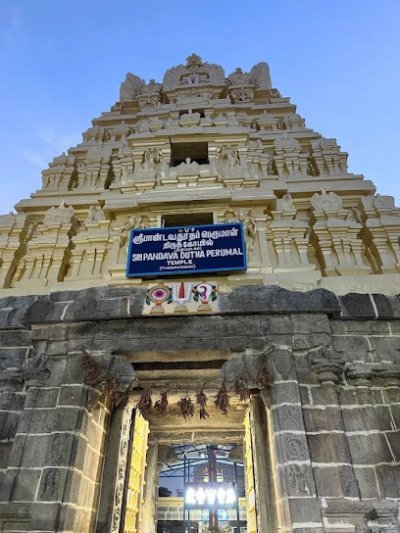
Sri Pandava Thoothar Perumal Temple, also known as Thirupadagam or Tiruppadagam, stands in Kanchipuram, Tamil Nadu, very close to the Ekambaranathar Temple. It is one of the 108 Divya Desams sacred to Sri Vaishnavas and is considered one of the three oldest temples in Kanchipuram, believed to have origins under the Pallavas of the late 8th century CE, with later additions by the Medieval Cholas and Vijayanagara rulers. Inscriptions on the sanctum's north and south walls record donations from Kulothunga Chola I and Rajadhiraja II (dated to 1167 CE), including a gift of 32 cows for temple lamps.The temple faces east and is fronted by a five-tier Rajagopuram built during the Vijayanagara period, with the Dwajasthambam, Balipeedam, and an image of Garudalwar positioned before the main sanctum. Its most distinctive feature is the moolavar: a rare, roughly 25-foot-tall stucco image of Lord Krishna seated with his left leg down and right leg folded, hands in abhaya and varada hastam, housed under a Bhadra Vimana - considered the tallest seated Perumal deity of its kind. The goddess Rukmini (with Satyabhama also mentioned as consort) is enshrined separately facing south, and the complex also houses shrines to Chakarathazhwar, Lord Narasimha, and Arulala Perumal Emperumanar. The temple tank is known as Matsya Theertham, located to the northeast. The shrine is praised in the Nalayira Divya Prabandham by the Azhwar saints Bhoothathazhwar, Peyazhwar, Thirumazhisai Azhwar, and Thirumangai Azhwar, who refer to the site as Paadagam.

Travel Tip: The temple is located on Pandava Dhoodha Perumal Koil Street in Periya Kanchi, very close to the Ekambaranathar Temple; autos are available from the Kanchipuram bus stand. Chennai is roughly 65-70 km away.

How to Reach Kanchipuram

Reach Kanchipuram by the nearest major railway station or state highway links, then keep the temple circuit local for the first day. For families and senior citizens, a hired cab or auto-rickshaw is easier than changing transport repeatedly. Start with the main temple before the crowd builds, pause for lunch near the city centre, and keep outer temples for the afternoon.

Best Time to Visit Kanchipuram Temples

October to March is the most comfortable season for temple visits in Kanchipuram. Summer afternoons can be tiring, so plan early morning darshan and keep a lighter second half of the day. Festival days are spiritually rewarding but busier; confirm timings, parking and local transport before starting.

Suggested trip plan

Kanchipuram Temple Darshan Itinerary

A curated day-wise route designed for optimal travel times and darshan timings. Adjust around your bookings.

Kanchipuram Temple FAQs

How many temples can I visit in Kanchipuram in one day?
Most visitors can cover 4 to 6 temples in one day if they start early and keep the route within the city or nearby areas.
What is the best time to visit Kanchipuram temples?
The cooler months from October to March are best. For daily darshan, early morning and evening are usually more comfortable than afternoon.
Is Kanchipuram suitable for a family temple trip?
Yes. Keep the first day focused on the main city temples, use local transport, and avoid packing too many distant temples into one day.

Interactive Route Planner

Kanchipuram Temple Locations

Tap any temple to center the map, view driving routes, and get key details.

1

Veeraraghava Perumal Temple

Day 1 · 33 km

2

Kamakshi Amman Temple

Day 1 · 40 km

3

Ekambareswarar Temple

Day 1 · 42 km

4

Varadaraja Perumal Temple Kanchipuram

Day 2 · 47 km

5

Thiruthani Murugan Temple

Day 2 · 73 km

6

Sri Kalyana Venkateswara Swamy Temple (Narayanavanam)

Day 2 · 96 km

7

Chengalamma Parameshwari Temple

Day 2 · 106 km

8

Sri Kalahasteeswara Temple

Day 3 · 118 km

9

Vellore Golden Temple (Sripuram)

Day 3 · 115 km

10

Sri Prasanna Venkateswara Swamy Temple

Day 3 · 117 km

11

Padmavathi Ammavari Temple

Day 4 · 130 km

12

Govindaraja Swamy Temple

Day 4 · 137 km

13

Kodandarama Swamy Temple

Day 5 · 138 km

14

Kapila Theertham Temple

Day 5 · 137 km

15

ISKCON Tirupati Temple

Day 5 · 138 km

16

ISKCON Gokulam

Day 5 · 138 km

17

Sri Kalyana Venkateswara Temple

Day 6 · 144 km

18

Kanipakam Vinayaka Temple

Day 6 · 135 km

19

Tirumala Venkateswara Temple

Day 7 · 158 km

20

Sri Bhu Varahaswamy Temple

Day 7 · 158 km

21

Japali Anjaneya Swamy Temple

Day 8 · 160 km

22

Arunachaleswarar Temple

Day 8 · 172 km

23

Sri Ramanasramam Tiruvannamalai

Day 8 · 174 km

24

Ulagalantha Perumal Temple

Day 9 · 187 km

25

Pandava Thoothar Perumal Temple (Rohini Star)

Day 1 · 43 km

Day 1 Day 2 Day 3