Book Tomorrow Thursday Dakshina Murthy Abhishekam
Temples in Kumbakonam, Tamil Nadu

Tamil Nadu pilgrimage guide

Temples in Kumbakonam — Famous Temples & Complete Darshan Guide

Plan a practical Kumbakonam temple trip with 30 important temples, darshan-friendly routing, local travel tips and the best season for a peaceful pilgrimage.

30 curated temples Tamil Nadu View map & route →

Last updated July 2026 · Curated by the Temples.bio editorial team

Quick answers

Which is the most famous temple in Kumbakonam?
Sarangapani Temple is the most prominent temple in Kumbakonam. This guide covers 30 notable temples in and around Kumbakonam with timings, distances and a darshan route.
How many days do you need to visit Kumbakonam temples?
You can cover the main temples of Kumbakonam in about 2 days. Use the 1-day essential circuit for the key shrines, or the 2-day plan to include temples within 100 km.
What is the best time to visit Kumbakonam temples?
October to March is the most comfortable season for temple visits in Kumbakonam. Summer afternoons can be tiring, so plan early morning darshan and keep a lighter second half of the day. Festival days are spiritually rewarding but busier; confirm timings, parking and local transp

Why Kumbakonam is a major temple destination

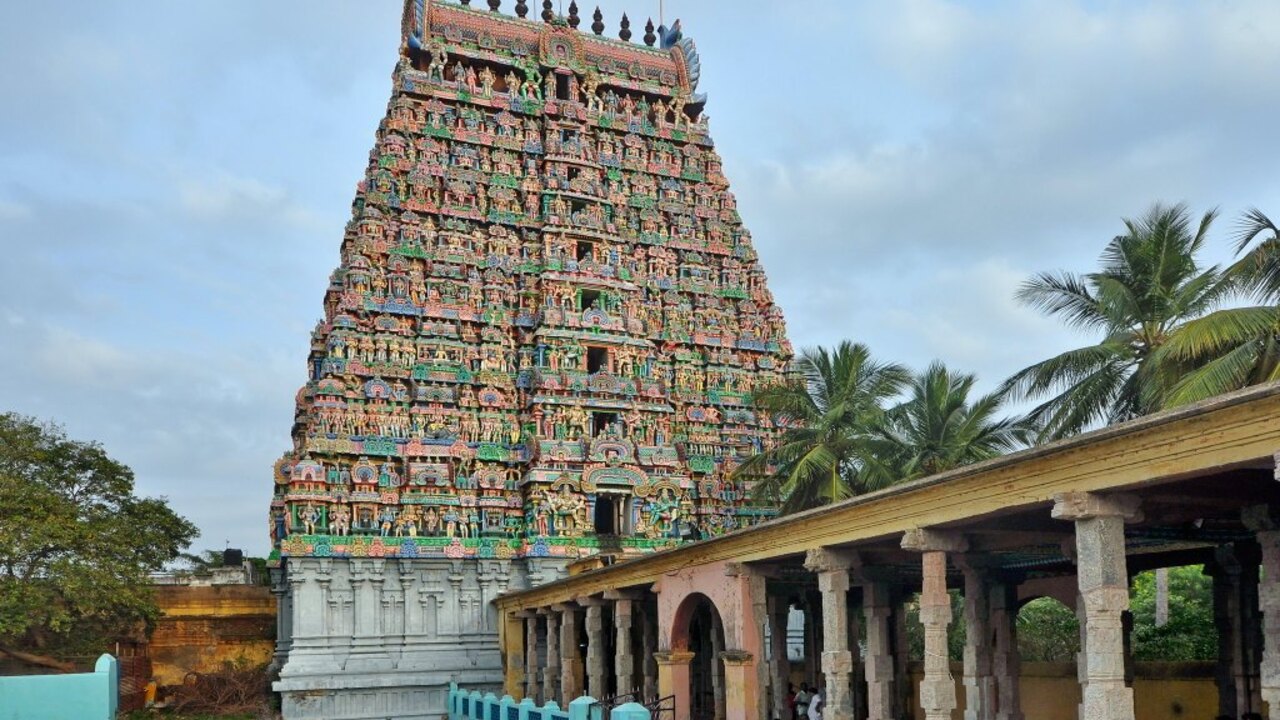
Kumbakonam is one of Tamil Nadu's useful temple bases, combining well-known shrines with smaller neighbourhood temples that locals still visit for daily worship. The guide below is arranged for real travel: start with the most important temple, then add nearby shrines in an order that keeps the route simple.

Even when a city is not marketed only as a pilgrimage destination, its temples often hold the memory of older neighbourhoods, local festivals and family vows. Devotees usually come here for blessings of Lord Shiva and Lord Murugan, family welfare, ancestral prayers and a quieter connection with the region's sacred geography. The city also works well as a base for first-time visitors who want a balanced mix of famous temples and reachable local shrines.
Curated pilgrimage circuit

Temples to Visit Near Kumbakonam

Ordered by pilgrimage importance and practical travel distance from Kumbakonam.

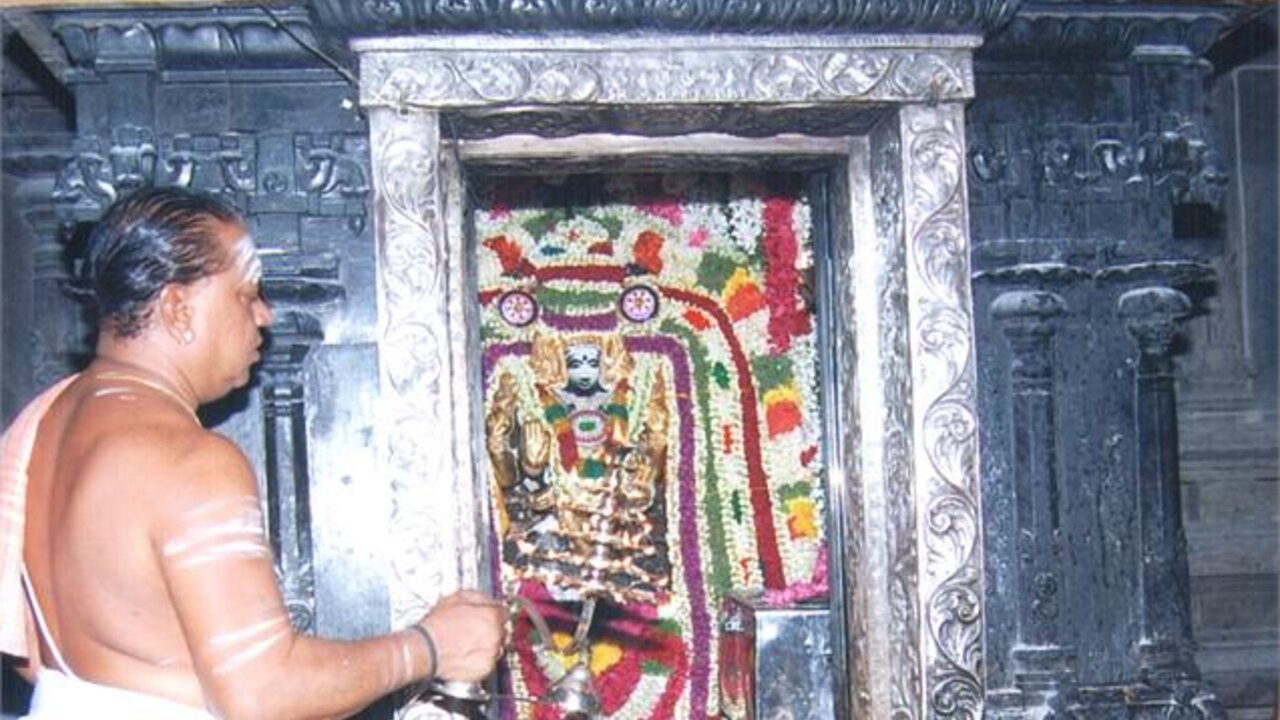
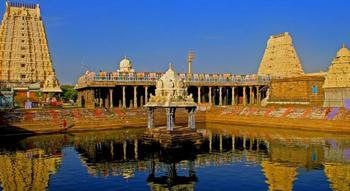
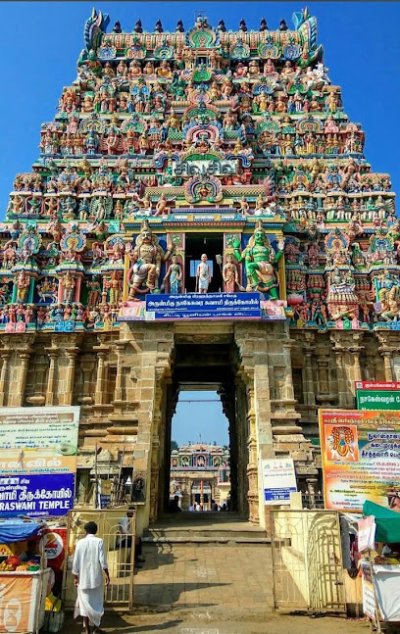
Sarangapani Temple — Lord Sarangapani (Vishnu) temple in Kumbakonam Within City

Lord Sarangapani (Vishnu)

  • Kumbakonam, Tamil Nadu
  • Within Kumbakonam (Kumbakonam, Tamil Nadu)
  • 6:00 AM - 8:00 PM (Divya Desam at Kumbakonam. HR&CE manages.)

Sarangapani Temple

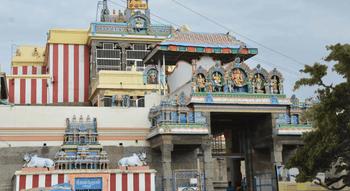
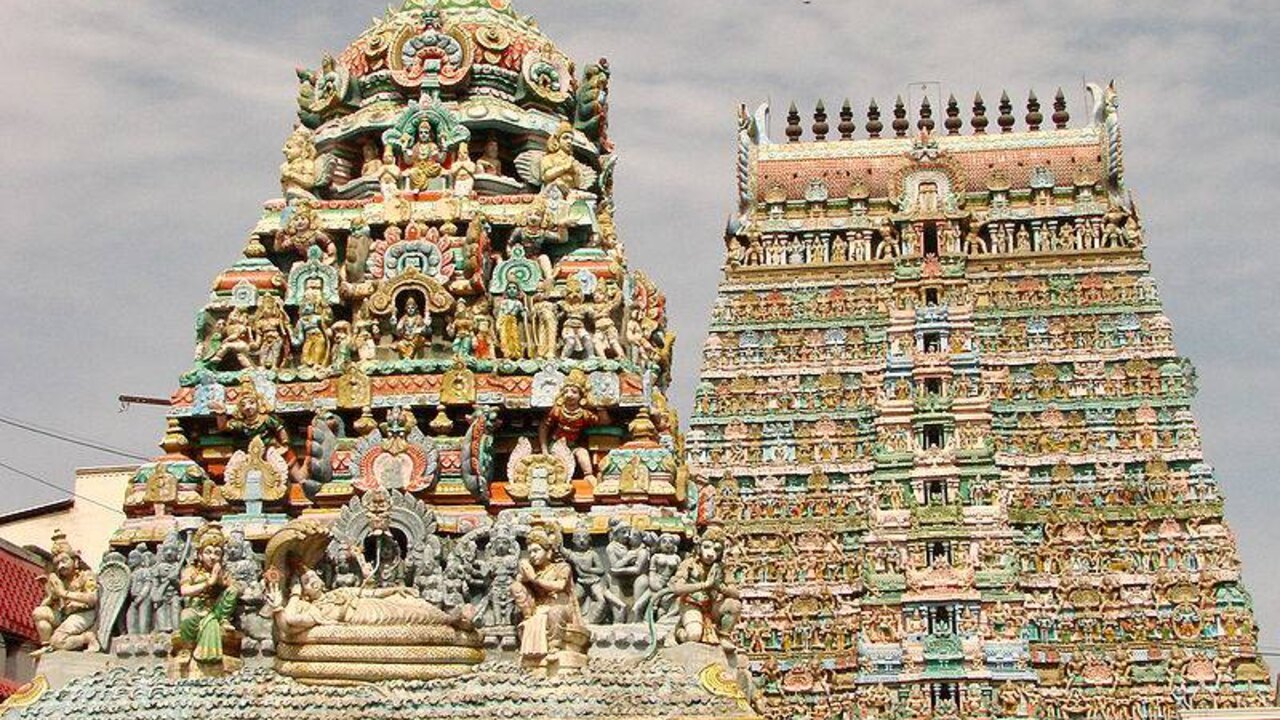
Sarangapani Temple in Kumbakonam is one of the largest and most magnificent Vishnu temples in Tamil Nadu and is among the 108 Divya Desams. The temple is dedicated to Lord Sarangapani (Vishnu) and is famous for its unique chariot-shaped (ratha) sanctum sanctorum. The temple features impressive Dravidian architecture with towering gopurams and intricate sculptures. Built during the Chola period and later expanded by the Nayaks, the temple showcases the evolution of South Indian temple architecture. The temple is particularly significant for its connection to the Alwar saints and Vaishnavite tradition. The deity is known for granting prosperity, protection, and spiritual fulfillment.

Travel Tip: By Road: Central Kumbakonam temple town location. Major Divya Desam with excellent temple circuit connectivity.

Adi Kumbeswarar Temple — Lord Adi Kumbeswarar (Shiva) temple in Kumbakonam Within City

Lord Adi Kumbeswarar (Shiva)

  • Kumbakonam, Tamil Nadu
  • Within Kumbakonam (Kumbakonam, Tamil Nadu)
  • 5:30 AM - 9:00 PM (Kumbakonam. Most important Shiva temple in Kumbakonam. HR&CE manages. Famous Mahamaham tank adjacent.)

Adi Kumbeswarar Temple

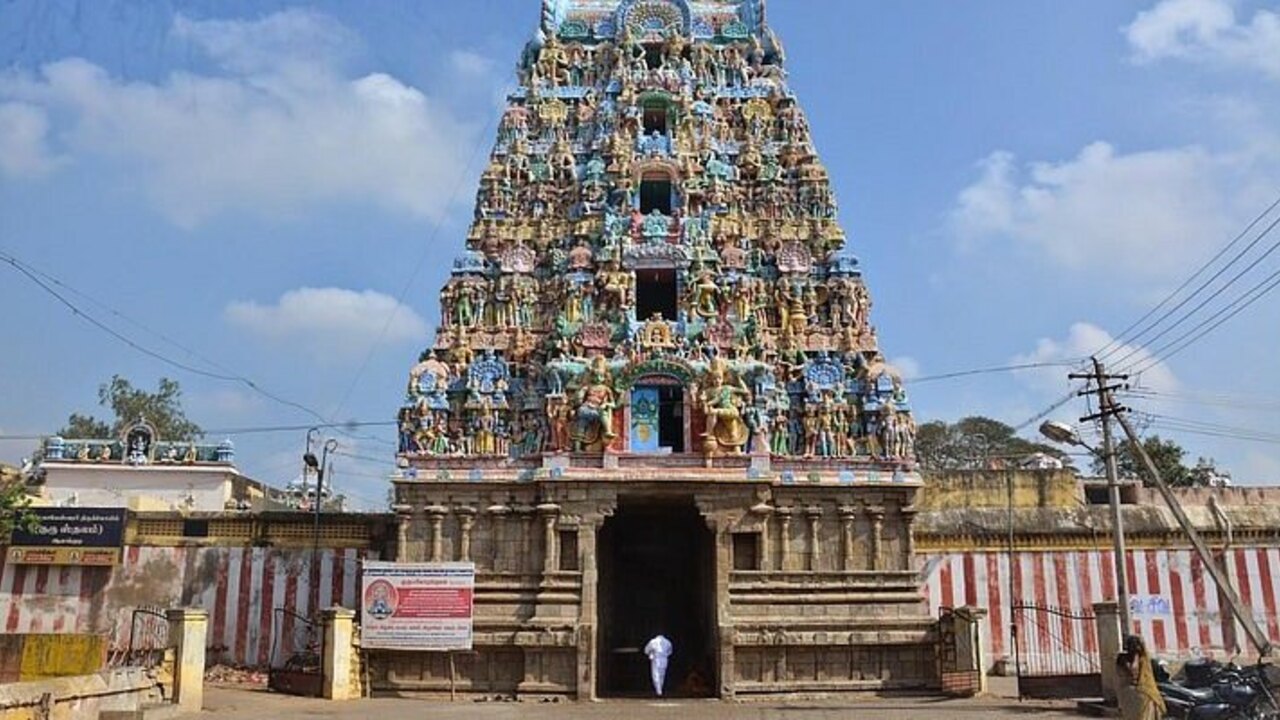
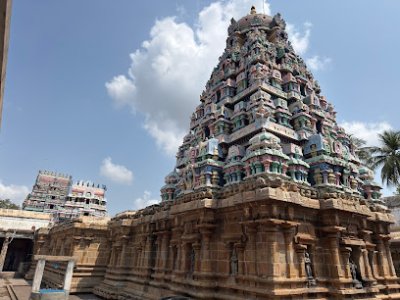
Adi Kumbeswarar Temple, located in the temple town of Kumbakonam, is one of the most important Shiva temples in Tamil Nadu and the primary temple of the city. The temple is dedicated to Lord Adi Kumbeswarar (Shiva) and is intimately connected with the sacred Mahamaham tank and the grand Mahamaham festival held every 12 years. According to legend, this is where Lord Shiva broke the celestial pot (Kumbha) containing the nectar of immortality, giving Kumbakonam its name. The temple features impressive Dravidian architecture with beautiful gopurams and intricate sculptures. The temple is particularly significant during the Mahamaham festival when millions of devotees gather to take holy dips in the sacred tank, making it one of the largest religious gatherings in South India.

Travel Tip: By Road: Central Tamil Nadu temple town. Major pilgrimage destination with excellent connectivity. Mahamaham festival headquarters.

Swamimalai Murugan Temple — Lord Swaminatha (Murugan) temple in Kumbakonam Within City

Lord Swaminatha (Murugan)

  • Swamimalai, Tamil Nadu
  • Within Kumbakonam (Swamimalai, Tamil Nadu)
  • 5:30 AM - 9:00 PM (Swamimalai, Kumbakonam, Tamil Nadu. Lord Murugan taught his own father (Shiva) the Pranava mantra here. HR&CE manages.)

Swamimalai Murugan Temple

Swamimalai Murugan Temple, located in Kumbakonam, Tamil Nadu, is one of the most spiritually significant among the six abodes of Murugan. This is where young Murugan (Bala Murugan) taught the sacred meaning of Pranava mantra (OM) to his father Lord Shiva, earning the title "Swaminatha" (Lord Teacher). The temple represents the reversal of the traditional guru-disciple relationship, where the son becomes the teacher of the father. Swamimalai is also famous for its traditional bronze sculpture making, and the temple houses exquisite bronze idols. The 60 steps leading to the temple represent the 60-year Tamil calendar cycle.

Travel Tip: By Road: Connected from Kumbakonam and Thanjavur. By Train: Kumbakonam is nearest major station. Bronze sculpture town.

Naganathaswamy Temple (Rahu) — Lord Naganathaswamy (Rahu) temple in Kumbakonam Within City

Lord Naganathaswamy (Rahu)

  • Thirunageswaram, Tamil Nadu
  • Within Kumbakonam (Thirunageswaram, Tamil Nadu)
  • 6:00 AM - 8:00 PM (Navagraha temple dedicated to Lord Rahu (North Node). Located at Thirunageswaram, Kumbakonam. HR&CE manages. Rahu Kala is most auspicious.)

Naganathaswamy Temple (Rahu)

Naganathaswamy Temple at Thirunageswaram is the Navagraha temple dedicated to Rahu, the North Node of the Moon, representing the serpent head in Hindu astronomy. The temple is particularly significant for Rahu worship and is believed to provide protection from Rahu-related astrological afflictions. According to Hindu astrology, Rahu represents illusion, materialism, foreign influences, and sudden changes. The temple is famous for its power to overcome fears related to serpents, remove hidden obstacles, and provide protection from unseen enemies. The deity is also known for granting success in foreign ventures, technology-related fields, and modern innovations. The temple has a unique tradition of Rahu Kala worship.

Travel Tip: By Road: Connected from Kumbakonam and Thanjavur. Rahu worship and protection-focused Navagraha temple.

Sooriyanar Temple (Surya) — Surya Deva temple in Kumbakonam Within City

Surya Deva

  • Sooriyanar Kovil, Tamil Nadu
  • Within Kumbakonam (Sooriyanar Kovil, Tamil Nadu)
  • 6:00 AM - 8:00 PM (Navagraha temple dedicated to Lord Surya (Sun). Located at Suryanar Koil, Kumbakonam. HR&CE manages. Sunday is most auspicious.)

Sooriyanar Temple (Surya)

Sooriyanar Temple, located near Kumbakonam in Tamil Nadu, is the most significant temple in the Navagraha circuit and is dedicated to Lord Surya (Sun God). This temple is considered the primary temple among the nine planetary temples and is believed to have the most powerful influence on health, vitality, and life force. The temple features a unique east-facing deity, which is ideal for sunrise worship. According to Hindu astrology, Surya is the king among the planets and represents the soul, father, authority, and government. The temple is particularly famous for healing various health ailments, especially those related to bones, heart, eyes, and overall vitality. The temple architecture showcases beautiful carvings depicting solar motifs and the seven horses of Surya's chariot.

Travel Tip: By Road: Connected from Kumbakonam and Thanjavur. Primary temple in Navagraha circuit. Start point for planetary pilgrimage.

Agneeswarar Temple (Shukra) — Lord Agneeswarar (Shukra) temple in Kumbakonam Within City

Lord Agneeswarar (Shukra)

  • Kanjanur, Tamil Nadu
  • Within Kumbakonam (Kanjanur, Tamil Nadu)
  • 6:00 AM - 8:00 PM (Navagraha temple dedicated to Lord Shukra (Venus). Located at Kanjanur, Papanasam. HR&CE manages. Friday is most auspicious.)

Agneeswarar Temple (Shukra)

Agneeswarar Temple at Kanjanur is the Navagraha temple dedicated to Lord Shukra (Venus), representing love, beauty, wealth, and artistic talents. The temple name "Agneeswarar" refers to the Lord of Fire, symbolizing the passionate and creative energy of Venus. According to Hindu astrology, Venus governs love, marriage, relationships, beauty, arts, luxury, and material prosperity. The temple is particularly popular among unmarried individuals seeking suitable partners, couples wanting marital harmony, artists seeking creative inspiration, and people desiring wealth and luxury. The deity is believed to enhance physical beauty, artistic abilities, and bring prosperity through refined tastes and aesthetic pursuits.

Travel Tip: By Road: Connected from Kumbakonam and Thanjavur. Love, beauty, and artistic talent-focused Navagraha temple.

Apatsahayeswarar Temple (Brihaspati) — Lord Apatsahayeswarar (Brihaspati) temple in Kumbakonam Within City

Lord Apatsahayeswarar (Brihaspati)

  • Alangudi, Tamil Nadu
  • Within Kumbakonam (Alangudi, Tamil Nadu)
  • 6:00 AM - 8:00 PM (Navagraha temple dedicated to Lord Brihaspati (Jupiter). Located at Alangudi, Papanasam. HR&CE manages. Thursday is most auspicious.)

Apatsahayeswarar Temple (Brihaspati)

Apatsahayeswarar Temple at Alangudi is the Navagraha temple dedicated to Lord Brihaspati (Jupiter), the guru of the gods and the most benefic planet in Hindu astrology. The temple name "Apatsahayeswarar" means "Lord who helps in times of distress," perfectly reflecting Jupiter's protective and beneficial nature. According to Hindu astrology, Jupiter represents wisdom, knowledge, spirituality, teaching, and divine grace. The temple is particularly popular among those seeking higher education, spiritual growth, guru's blessings, and protection during difficult periods. The deity is believed to bestow wisdom, knowledge, and spiritual insight while providing relief from various problems and obstacles.

Travel Tip: By Road: Connected from Thanjavur and Kumbakonam. Wisdom and spiritual growth-focused Navagraha temple.

Rajagopalaswamy Temple Mannargudi — Lord Rajagopalaswamy (Krishna) temple in Kumbakonam Same Day

Lord Rajagopalaswamy (Krishna)

  • Mannargudi, Tamil Nadu
  • 37.7 km from Kumbakonam
  • 6:00 AM - 9:00 PM (Mannargudi, Tiruvarur, Tamil Nadu. One of the largest temple complexes in Tamil Nadu (23 acres). Lord Rajagopala (Krishna) with Rukmini and Satyabhama. 16 mandapams, 9 towers. Called Dakshina Dwarka (Dwarka of the South). HR&CE manages.)

Rajagopalaswamy Temple Mannargudi

Rajagopalaswamy Temple, located in Mannargudi town in Thiruvarur district of Tamil Nadu, is one of the 108 Divya Desams praised by the Alwar saints. The temple is dedicated to Lord Rajagopalaswamy, a form of Lord Krishna depicted as the divine king (Raja Gopala means "King of Cowherds"). The temple has a rich history dating back to the Chola period, with significant contributions from the Chola kings, particularly Kulothunga Chola III in the 12th-13th century. The temple complex is one of the largest in Tamil Nadu, covering about 23 acres, and is renowned for its magnificent Dravidian architecture. The temple's main deity is a standing form of Krishna holding a conch (shankh) and discus (chakra), with his consort Rukmini Devi by his side. The temple is famous for the legend where Lord Krishna appeared as a cowherd boy and saved the town from a raging fire by swallowing it. The temple houses one of the largest temple chariots (ratham) in India, made of gold-plated wood and measuring about 96 feet in height. The temple has five prakarams (enclosures) and features stunning gopurams (tower gateways), intricate sculptures, and beautiful mandapams. The temple tank, called Haridra Nadhi, is believed to have healing properties. Mannargudi is considered the "Dwarka of the South" and holds special significance for Krishna devotees in Tamil Nadu. The temple follows strict Vaishnavite traditions and rituals prescribed in the Pancharatra Agama.

Travel Tip: By Road: Well connected via state highways from Thanjavur (47 km), Kumbakonam (35 km), Tiruchirappalli (110 km), and Chennai (300 km). By Train: Mannargudi railway station connects to major Tamil Nadu cities. By Air: Trichy airport is the nearest. Best time to visit: October to March. Visit during Brahmotsavam in March-April for golden chariot procession. Combine with other Divya Desams in the region - Kumbakonam, Thanjavur. Plan 2-3 hours for temple visit. Take bath in Haridra Nadhi tank before darshan. Photography allowed in outer areas only.

Kailasanathar Temple (Chandra) — Lord Kailasanathar (Chandra) temple in Kumbakonam Same Day

Lord Kailasanathar (Chandra)

  • Thingalur, Tamil Nadu
  • 33.2 km from Kumbakonam
  • 6:00 AM - 8:00 PM (Navagraha temple dedicated to Lord Chandra (Moon). Located at Thingalur, Kumbakonam. HR&CE manages. Monday and Full Moon is most auspicious.)

Kailasanathar Temple (Chandra)

Kailasanathar Temple at Thingalur, near Kumbakonam, is the sacred Navagraha temple dedicated to Lord Chandra (Moon God). The temple is particularly significant for devotees seeking mental peace, emotional stability, and fertility blessings. According to Hindu astrology, Chandra represents the mind, emotions, mother, and fertility. The temple is especially popular among women seeking motherhood and individuals suffering from mental stress or emotional disturbances. The deity is known as Kailasanathar (Lord of Kailash) and is believed to have the power to calm the mind and provide emotional healing. The temple architecture features beautiful lunar motifs and the sanctum is designed to receive moonlight during certain lunar phases.

Travel Tip: By Road: Connected from Kumbakonam. Second temple in Navagraha circuit. Peaceful lunar worship location.

Brihadeeswarar Temple (Big Temple) — Lord Brihadeeswarar (Shiva) temple in Kumbakonam Same Day

Lord Brihadeeswarar (Shiva)

  • Thanjavur, Tamil Nadu
  • 39.9 km from Kumbakonam
  • 6:00 AM - 8:30 PM (Thanjavur. UNESCO World Heritage Site. Chola-built 1,000-year-old granite temple. HR&CE manages. Entry free for heritage visits.)

Brihadeeswarar Temple (Big Temple)

Brihadeeswarar Temple, popularly known as the Big Temple, is a UNESCO World Heritage Site located in Thanjavur, Tamil Nadu. Built by the great Chola king Raja Raja Chola I in 1010 CE, this temple represents the pinnacle of Chola architecture and engineering. The temple is dedicated to Lord Brihadeeswarar (Shiva) and features a massive 216-foot tall vimana (tower) topped with an 80-ton granite capstone. The temple complex showcases extraordinary architectural innovations, including the shadowless tower at noon, massive Nandi sculpture, and intricate stone carvings. The temple also houses magnificent Chola period frescoes and inscriptions that provide valuable historical information. This architectural masterpiece demonstrates the advanced engineering skills and artistic excellence of the Chola period.

Travel Tip: By Road: Connected from all major Tamil Nadu cities. UNESCO World Heritage Site with heritage tourism facilities.

Thiruvarur Thyagaraja Temple — Lord Thyagaraja (Shiva) temple in Kumbakonam Same Day

Lord Thyagaraja (Shiva)

  • Thiruvarur, Tamil Nadu
  • 40.9 km from Kumbakonam
  • 5:30 AM - 9:00 PM (Thiruvarur. Largest temple chariot in Tamil Nadu. Lord Thyagaraja. HR&CE manages.)

Thiruvarur Thyagaraja Temple

Thiruvarur Thyagaraja Temple, located in Thiruvarur district, is one of the most significant Shiva temples in Tamil Nadu and holds immense importance in Carnatic music tradition. The temple is dedicated to Lord Thyagaraja (Shiva) and is renowned as the birthplace of the great Carnatic music composer Saint Thyagaraja. The temple features one of the largest temple chariots in Tamil Nadu and hosts a magnificent annual chariot festival. The temple has deep connections with classical music, and many music festivals and concerts are held here. The deity is considered particularly powerful for musicians, artists, and those seeking creative inspiration. The temple complex showcases beautiful Chola and later period architecture with intricate musical motifs.

Travel Tip: By Road: Connected from Thanjavur and Nagapattinam. Classical music heritage center with cultural tourism facilities.

Dharbaranyeswarar Temple (Shani) — Shani Dev temple in Kumbakonam Same Day

Shani Dev

  • Thirunallar, Tamil Nadu
  • 52.9 km from Kumbakonam
  • 5:00 AM - 9:00 PM (Navagraha temple dedicated to Lord Shani (Saturn). Located at Thirunallar, Karaikal. HR&CE manages. Saturday is most auspicious.)

Dharbaranyeswarar Temple (Shani)

Dharbaranyeswarar Temple at Thirunallar is the most important and powerful temple in the Navagraha circuit for Lord Shani (Saturn) worship. The temple is renowned for its ability to relieve the malefic effects of Saturn, particularly the feared Sade Sati (7.5 year period) and other Saturn-related astrological afflictions. According to Hindu astrology, Saturn represents justice, discipline, hard work, and karmic lessons. The temple is believed to have the power to transform Saturn's challenging influences into positive outcomes through sincere worship and devotion. Millions of devotees visit this temple seeking relief from Saturn-related problems, and many report significant improvements in their lives after worship here.

Travel Tip: By Road: Connected from Karaikal and Nagapattinam. Most powerful Saturn temple for problem resolution.

Naganathaswamy Temple (Ketu) — Lord Naganathaswamy (Ketu) temple in Kumbakonam Same Day

Lord Naganathaswamy (Ketu)

  • Keezhaperumpallam, Tamil Nadu
  • 58.7 km from Kumbakonam
  • 6:00 AM - 8:00 PM (Navagraha temple dedicated to Lord Ketu (South Node). Located at Keezhperumpallam, Papanasam. HR&CE manages. Ketu Puja days is most auspicious.)

Naganathaswamy Temple (Ketu)

Naganathaswamy Temple at Keezhaperumpallam is the Navagraha temple dedicated to Ketu, the South Node of the Moon, representing the serpent tail in Hindu astronomy. The temple completes the Navagraha circuit and is particularly significant for Ketu worship and spiritual liberation. According to Hindu astrology, Ketu represents spirituality, moksha, detachment, and liberation from material bonds. The temple is famous for its power to remove past life karmas, provide spiritual insights, and grant detachment from worldly desires. The deity is also known for enhancing intuitive abilities, psychic powers, and philosophical understanding. The temple is especially beneficial for those seeking spiritual growth and liberation.

Travel Tip: By Road: Connected from Kumbakonam and Thanjavur. Final temple in Navagraha circuit focused on spiritual liberation.

Swetharanyeswarar Temple (Budha) — Lord Swetharanyeswarar (Budha) temple in Kumbakonam Same Day

Lord Swetharanyeswarar (Budha)

  • Thiruvenkadu, Tamil Nadu
  • 59.1 km from Kumbakonam
  • 6:00 AM - 8:00 PM (Navagraha temple dedicated to Lord Budha (Mercury). Located at Thiruvenkadu, Sirkazhi. HR&CE manages. Wednesday is most auspicious.)

Swetharanyeswarar Temple (Budha)

Swetharanyeswarar Temple at Thiruvenkadu is the Navagraha temple dedicated to Lord Budha (Mercury), representing intelligence, communication, and learning. The temple name "Swetharanyeswarar" means "Lord of the White Forest," referring to the sacred grove surrounding the temple. According to Hindu astrology, Mercury governs intelligence, speech, education, business acumen, and communication skills. The temple is particularly popular among students, teachers, writers, businesspeople, and those in communication-related professions. The deity is believed to enhance memory, analytical thinking, and eloquence. The temple is also known for its peaceful environment conducive to learning and meditation.

Travel Tip: By Road: Connected from Kumbakonam and Thanjavur. Intelligence and education-focused Navagraha temple.

Vaitheeswaran Koil (Mangala) — Lord Vaitheeswaran (Mangala) temple in Kumbakonam Same Day

Lord Vaitheeswaran (Mangala)

  • Vaitheeswaran Kovil, Tamil Nadu
  • 71.8 km from Kumbakonam
  • 5:30 AM - 9:00 PM (Navagraha temple dedicated to Lord Mangala (Mars). Located at Vaitheeswaran Koil, Mayiladuthurai. HR&CE manages. Tuesday is most auspicious.)

Vaitheeswaran Koil (Mangala)

Vaitheeswaran Koil, located in Nagapattinam district, is one of the most famous temples in the Navagraha circuit, dedicated to Lord Vaitheeswaran (Divine Physician) with Mars (Mangala) prominence. The temple is unique as it combines healing powers with the martial energy of Mars. Lord Vaitheeswaran is believed to cure all diseases, especially those related to blood, wounds, and infections. According to Hindu astrology, Mars represents energy, courage, strength, and the immune system. The temple is famous for its healing powers and is visited by people seeking cure from chronic diseases. The temple also houses sacred wells with healing water and is known for traditional palm leaf astrology readings.

Travel Tip: By Road: Connected from Chidambaram and Kumbakonam. Famous healing temple in Navagraha circuit.

Nataraja Temple Chidambaram — Lord Nataraja (Shiva) temple in Kumbakonam Same Day

Lord Nataraja (Shiva)

  • Chidambaram, Tamil Nadu
  • 69.2 km from Kumbakonam
  • 6:00 AM - 10:00 PM (Chidambaram. Pancha Bhuta Sthalams — Akasha (Space) element. Ancient Chola-era temple. HR&CE manages. Famous Chidambara Rahasyam (secret behind the curtain).)

Nataraja Temple Chidambaram

Nataraja Temple in Chidambaram, Tamil Nadu, is the most sacred among the Pancha Bhoota Stalams, representing the Akasha (Space) element. This is where Lord Shiva is believed to perform his cosmic dance (Ananda Tandava) in the form of Nataraja, the king of dance. The temple is unique as it represents the formless aspect of Shiva in the Chidakasha (space of consciousness). The famous Chidambaram Rahasya (secret) refers to the space behind the curtain in the sanctum, representing the formless nature of the divine. The temple is also renowned for its magnificent architecture, ancient inscriptions, and the annual Natyanjali dance festival that attracts dancers from around the world.

Travel Tip: By Road: Well connected from Chennai, Pondicherry. By Train: Direct trains from major cities. Cultural heritage city.

Jambukeswarar Temple — Lord Jambukeswarar (Shiva) temple in Kumbakonam Same Day

Lord Jambukeswarar (Shiva)

  • Thiruvanaikaval, Trichy, Tamil Nadu
  • 83.0 km from Kumbakonam
  • 6:00 AM - 8:30 PM (Srirangam island, Tiruchirappalli. Pancha Bhuta Sthalams — Water element. Underground spring inside sanctum. HR&CE manages.)

Jambukeswarar Temple

Jambukeswarar Temple, also known as Thiruvanaikaval Temple, located in Trichy, Tamil Nadu, is one of the five Pancha Bhoota Stalams representing the Appu (Water) element. The temple is famous for its underground natural spring that continuously supplies water to the sanctum, making the lingam partially submerged in water throughout the year. The temple gets its name from Jambu (rose apple tree) and the legend of the white elephant Airavata who worshipped Shiva here. The temple is unique as it houses both male and female forms of Shiva, with Akilandeswari as the presiding goddess who is considered more powerful than the male deity.

Travel Tip: By Road: Well connected from Trichy city. By Train: Trichy is major junction. Local buses available to temple.

Samayapuram Mariamman Temple — Goddess Mariamman temple in Kumbakonam Same Day

Goddess Mariamman

  • Samayapuram, Tiruchirappalli, Tamil Nadu
  • 85.3 km from Kumbakonam
  • 4:00 AM - 10:00 PM (Samayapuram, Tiruchirappalli. Powerful Mariamman temple. Annual festival draws millions. HR&CE manages.)

Samayapuram Mariamman Temple

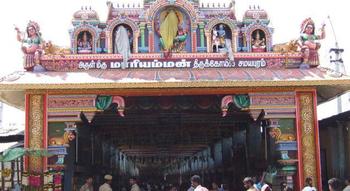
Samayapuram Mariamman Temple, located near Tiruchirappalli, is one of the most powerful and revered temples dedicated to Goddess Mariamman, the protector against diseases and epidemics. The temple is particularly famous for its healing powers and is visited by millions of devotees seeking protection from diseases, especially smallpox, chicken pox, and other epidemics. The temple hosts one of the largest annual festivals in Tamil Nadu, attracting over a million devotees. Goddess Mariamman is considered the divine physician and protector of public health. The temple has a rich tradition of miraculous healings and disease protection. The annual festival features elaborate processions, cultural programs, and mass healing ceremonies.

Travel Tip: By Road: Connected from Tiruchirappalli and surrounding areas. Major festival destination with crowd management facilities.

Srirangam Ranganathaswamy Temple — Lord Ranganatha (Vishnu) temple in Kumbakonam Same Day

Lord Ranganatha (Vishnu)

  • Srirangam, Trichy, Tamil Nadu
  • 85.0 km from Kumbakonam
  • 6:00 AM - 9:00 PM (Srirangam, Tiruchirappalli. Largest functioning temple complex in the world (156 hectares). HR&CE manages. 7 concentric prakarams (walls).)

Srirangam Ranganathaswamy Temple

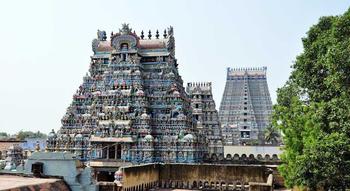
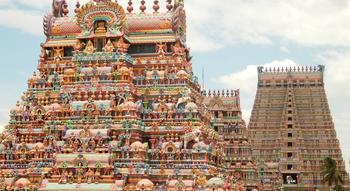
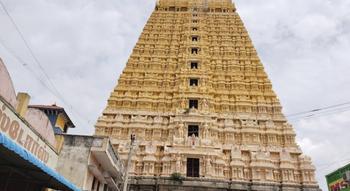
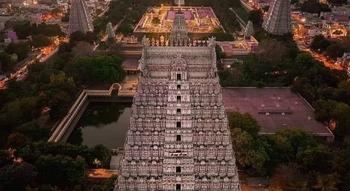
Srirangam Ranganathaswamy Temple in Trichy, Tamil Nadu, is the largest functioning Hindu temple complex in the world and holds the supreme position among the 108 Divya Desams. The temple is dedicated to Lord Ranganatha, a reclining form of Lord Vishnu lying on the cosmic serpent Adisesha. Located on an island formed by the rivers Kaveri and Kollidam, the temple spans 156 acres with seven concentric enclosures (prakarams). The temple is considered the "Bhuloka Vaikunta" - Vaikunta on Earth. The presiding deity faces south, which is unique among Vishnu temples, symbolizing his grace towards all beings. The temple has been praised by all 12 Alvars and is central to Sri Vaishnava tradition.

Travel Tip: By Road: Well connected from all major South Indian cities. By Train: Trichy is major junction. Island location with bridge access.

Ulagalantha Perumal Temple — Lord Ulagalantha Perumal (Trivikrama) temple in Kumbakonam Same Day

Lord Ulagalantha Perumal (Trivikrama)

  • Tirukovalur, Tamil Nadu
  • 131.0 km from Kumbakonam
  • 6:00 AM - 8:00 PM (Divya Desam at Tirukoyilur, Villupuram. HR&CE manages.)

Ulagalantha Perumal Temple

Ulagalantha Perumal Temple in Tirukovalur is one of the 108 Divya Desams dedicated to Lord Ulagalantha Perumal, representing Lord Vishnu in his Trivikrama (Vamana) avatar. This temple is significant for commemorating the cosmic form of Vishnu who measured the entire universe in three steps to defeat King Mahabali. The temple features a unique representation of the cosmic form of Vishnu and is particularly powerful for devotees seeking expansion in life, cosmic consciousness, and universal blessings. The temple has been praised by Alwar saints and holds an important place in Vaishnavite tradition. The deity is known for granting expansive thinking, universal success, and cosmic-level achievements.

Travel Tip: By Road: Connected from Kumbakonam and Thanjavur. Cosmic consciousness temple with universal worship significance.

Arunachaleswarar Temple — Lord Arunachaleswarar (Shiva) temple in Kumbakonam Same Day

Lord Arunachaleswarar (Shiva)

  • Tiruvannamalai, Tamil Nadu
  • 164.3 km from Kumbakonam
  • 5:30 AM - 9:00 PM (Tiruvannamalai. Pancha Bhuta Sthalams — Fire element. Massive 66,000 sq. metre temple complex. HR&CE manages.)

Arunachaleswarar Temple

Arunachaleswarar Temple in Tiruvannamalai, Tamil Nadu, is one of the most revered among the Pancha Bhoota Stalams, representing the Agni (Fire) element. The temple is located at the base of the sacred Arunachala Hill, which itself is considered a manifestation of Lord Shiva as an infinite column of fire. According to legend, this is where Shiva appeared as Jyotirlinga to settle a dispute between Brahma and Vishnu. The temple is famous for the Karthigai Deepam festival when a massive fire is lit on the hilltop, visible for miles around. The entire Arunachala Hill is considered sacred, and devotees perform Girivalam (circumambulation) around the 14-kilometer hill path.

Travel Tip: By Road: Well connected by NH-66 from Chennai, Bangalore. By Train: Regular trains from major cities. Hill location with spiritual significance.

Sri Ramanasramam Tiruvannamalai — Bhagavan Ramana Maharshi temple in Kumbakonam Same Day

Bhagavan Ramana Maharshi

  • Tiruvannamalai, Tamil Nadu
  • 165.6 km from Kumbakonam
  • 5:30 AM - 8:00 PM (Tiruvannamalai, Tamil Nadu. Ashram of Bhagavan Sri Ramana Maharshi — one of the greatest sages of 20th century. The samadhi (shrine) of Ramana Maharshi and his mother are the main places of worship. Arunachala Hill (Shiva as hill) is the backdrop. Silence and self-inquiry are the spiritual practices here.)

Sri Ramanasramam Tiruvannamalai

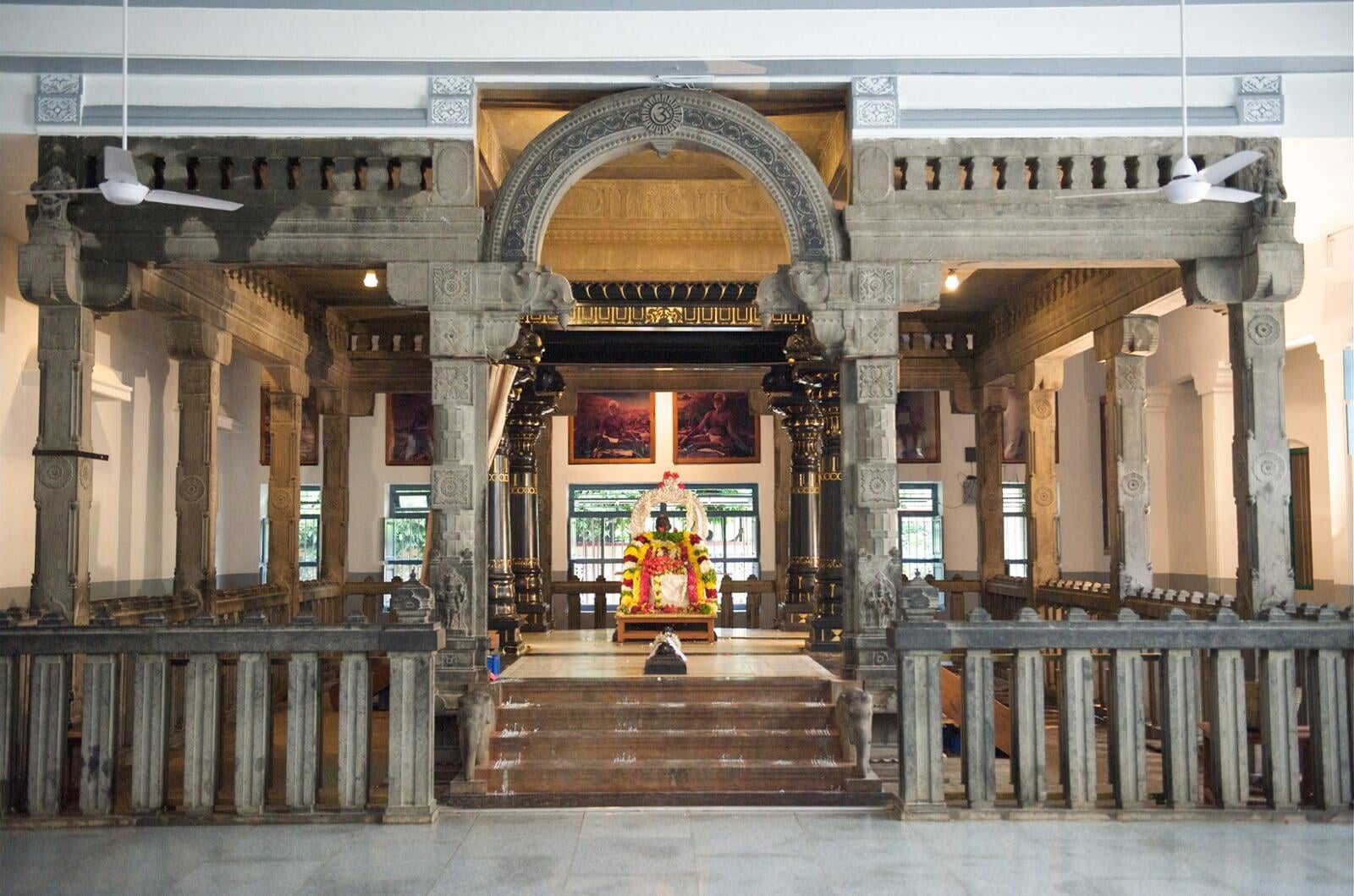
Sri Ramanasramam is the sacred ashram of Bhagavan Ramana Maharshi (1879-1950), one of the most revered sages of modern India. Located at the foot of the sacred Arunachala Hill in Tiruvannamalai, this ashram was established around the saint who attained self-realization through the practice of self-inquiry (Atma Vichara). The ashram houses the samadhi shrine of Ramana Maharshi and continues to be a center of spiritual practice and meditation. Thousands of seekers from around the world visit to experience the powerful spiritual atmosphere and practice self-inquiry meditation. The ashram maintains the simple, peaceful environment that Ramana Maharshi himself lived in, with the sacred Arunachala Hill providing a powerful backdrop for spiritual practice.

Travel Tip: By Road: Connected from Chennai, Bangalore, and Pondicherry. Sacred ashram at the foot of Arunachala Hill with peaceful spiritual atmosphere.

Arulmigu Thiru Arthanareeswarar Temple — Lord Arthanareeswarar (Shiva–Parvati) temple in Kumbakonam Same Day

Lord Arthanareeswarar (Shiva–Parvati)

  • Tiruchengode, Tamil Nadu
  • 197.4 km from Kumbakonam
  • 6:00 AM - 8:00 PM (Tiruchengode, Namakkal, Tamil Nadu. Lord Arthanareeswarar — the unique half-male half-female form of Shiva (left half) and Parvati (right half). Ancient Dravidian architecture on a rocky hill. Panguni Uthiram and Girivalam are major events. HR&CE manages.)

Arulmigu Thiru Arthanareeswarar Temple

Arulmigu Thiru Arthanareeswarar Temple, located on the Tiruchengode hill in Tamil Nadu, is a renowned Shaivite temple dedicated to Lord Arthanareeswarar, the unique form of Lord Shiva symbolizing the union of Shiva and Parvati. The temple is one of the most significant spiritual centers in the region and attracts devotees seeking marital harmony, fertility, and spiritual balance. Perched atop a hill, the temple offers a divine atmosphere along with panoramic views of the surrounding landscape. The temple has strong connections with ancient Tamil Shaivism and is praised in devotional hymns. Daily pujas and special festivals draw large numbers of devotees throughout the year.

Nageswaran Temple — Lord Nageswarar (Shiva) temple in Kumbakonam Within City

Lord Nageswarar (Shiva)

  • Kumbakonam, Tamil Nadu
  • Within Kumbakonam (Kumbakonam, Tamil Nadu)
  • 6:00 AM - 9:00 PM

Nageswaran Temple

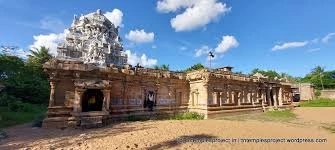
Overview: Nageswaraswamy Temple, locally celebrated as Kudanthai Keezhakottam, is an architectural landmark situated in the heart of Kumbakonam, Tamil Nadu. Constructed primarily during the 9th century by the early Chola monarch Aditya Chola I, it stands as one of the oldest and most magnificent examples of early Chola architecture and stone sculpture in India. Classified as a Paadal Petra Sthalam (the 27th shrine on the southern bank of the Cauvery), the temple is dedicated to Lord Shiva and is universally famous for its incredible mathematical and astronomical layout. Legends and History: The foundational legend of the temple centers around Nagaraja, the Serpent King. According to cosmic texts, the serpent gods Rahu and Kethu were suffering from a severe curse that depleted their strength, leading Nagaraja to perform rigorous penance at this spot beneath a Bilva forest and install a Shivalingam. Pleased with his devotion, Lord Shiva appeared and broke the curse, restoring the vital energies of the holy serpents. Additionally, mythical legends state that King Nala washed away his persistent misfortunes after bathing in the temple's sacred tank and praying to the deity here. Unique Architectural Marvels: The temple is renowned for the Surya Kottam Marvel, where during three specific consecutive days in the Tamil month of Panguni (March–April), the natural rays of the morning sun travel directly through the dynamic entrance pathways to illuminate the main Shivalingam. Furthermore, the sacred Nataraja Sabha is meticulously structured to mimic an ornamental, stone-carved celestial chariot pulled by majestic galloping horses, with a grand stone wheel featuring 12 detailed spokes representing the zodiac signs. The outer walls also feature delicate life-sized stone carvings of royal patrons, sages, and divine damsels that are considered masterpieces of Chola art.

Travel Tip: Start early, check local darshan timings and combine this temple with nearby shrines in Kumbakonam.

Arulmigu Ramaswamy Temple — Lord Rama temple in Kumbakonam Within City

Lord Rama

  • Near Kumbakonam, Tamil Nadu
  • Within Kumbakonam (Near Kumbakonam, Tamil Nadu)
  • 6:00 AM - 9:00 PM

Arulmigu Ramaswamy Temple

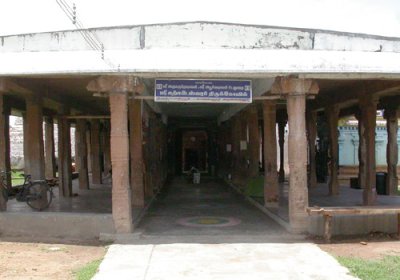
Overview: The Ramaswamy Temple is a spectacular 16th-century Hindu shrine located in the center of the temple town of Kumbakonam, Tamil Nadu. Built entirely in the majestic South Indian architectural style during the reign of the Thanjavur Nayak dynasty, it is an active, vibrant center of Vaishnavite worship. Ramaswamy Temple in Kumbakonam is often called a living gallery of the Ramayana, with beautiful wall paintings and detailed sculptures that narrate scenes from Lord Rama’s life. The walls are filled with colorful paintings showing important scenes from Lord Rama’s life, making devotees feel like they are walking through the epic itself. Legends and History: The history of this temple is entirely unique. During the early 17th century, King Raghunatha Nayak was excavating a massive water tank in nearby Darasuram. During the dig, his workers unearthed exceptionally beautiful, intact stone idols of Lord Rama and Sita Devi. Overjoyed by this divine discovery, the king and his prime minister, Govinda Dikshita, immediately halted other projects to construct this grand temple to house the recovered deities. Architectural & Spiritual Marvels: The sanctum houses a monolithic Saligrama sculpture showing the entire coronation assembly (Pattabhishekam) where Lord Rama, Sita, Lakshmana, Bharata, and Shatrughna are all depicted together, alongside a unique musical Hanuman holding a Veena. The temple pillars are filled with intricate stone carvings, and every corner reflects the artistic brilliance of ancient craftsmen. The peaceful atmosphere, combined with the majestic idols of Rama, Sita, Lakshmana, and Hanuman, makes the temple spiritually uplifting and visually stunning. A perfect place where devotion, history, storytelling, and architecture come together beautifully. “A temple where the walls speak the Ramayana and every sculpture tells a timeless story.”

Travel Tip: Start early, check local darshan timings and combine this temple with nearby shrines in Kumbakonam.

Brahma Gnana Pureeswarar Temple (Avittam Star) — Lord Brahma Gnana Pureeswarar (Shiva) temple in Kumbakonam Within City

Lord Brahma Gnana Pureeswarar (Shiva)

  • Korukkai, Tamil Nadu
  • Within Kumbakonam (Korukkai, Tamil Nadu)
  • 6:00 AM - 8:00 PM (Typical village temple hours; confirm locally. Special worship on Avittam star day.)

Brahma Gnana Pureeswarar Temple (Avittam Star)

Sri Brahma Gnana Pureeswarar Temple at Korukkai, about 5 km from Kumbakonam on the Patteeswaram-Muzhaiyur route, is the traditional star temple for Avittam (Dhanishta), a nakshatra linked with rhythm and fame. It is one of the 27 Nakshatra (Natchathira) Star Temples of Tamil Nadu, each linked to a specific birth star.Lord Shiva is worshipped here as Brahma Gnana Pureeswarar, the bestower of knowledge (gnana), with Goddess Pushpavalli, the Avittam star deities. It is a Kumbakonam-belt Shiva temple of Brahma Gnana Pureeswarar with Goddess Pushpavalli. Its sacred focus includes Brahma Gnana Pureeswarar lingam, Pushpavalli Ambal and Nandi.Avittam (Dhanishta) is the star of rhythm, wealth, music and material fulfilment, ruled by Mars (Chevvai) and presided over by the eight Vasus. Dhanishta relates to rhythm and fame, and devotees believe Brahma Gnana Pureeswarar opens channels of wisdom, music and material fulfilment.Devotees seek wisdom, music, fame, material fulfilment and Avittam / Dhanishta blessings. Devotees visit on the Avittam star day, offer bilva and light lamps, and pray with Pushpavalli for wisdom and artistic fame. The name points to Brahma's knowledge, so Avittam-born seekers of wisdom and the rhythmic arts especially visit.Reaching the temple: Brahma Gnana Pureeswarar Temple, Korukkai, near Kumbakonam, Thanjavur District, Tamil Nadu, India. It is very close to Kumbakonam (about 5 km) and is an ideal quick add-on to the Kumbakonam temple day. Nearby you can also visit Patteeswaram, Adi Kumbeswarar, Sarangapani and the Navagraha temples.

Travel Tip: It is very close to Kumbakonam (about 5 km) and is an ideal quick add-on to the Kumbakonam temple day.

Karkadeswarar Temple (Ayilyam Star) — Lord Karkadeswarar (Shiva) temple in Kumbakonam Within City

Lord Karkadeswarar (Shiva)

  • Thirunandudevankudi, Tamil Nadu
  • Within Kumbakonam (Thirunandudevankudi, Tamil Nadu)
  • 6:00 AM - 8:00 PM (Typical village temple hours; confirm locally. Special worship on Ayilyam star day.)

Karkadeswarar Temple (Ayilyam Star)

Sri Karkadeswarar Temple at Thirunandudevankudi, about 11 km from Kumbakonam, is the traditional star temple for Ayilyam (Ashlesha). Temple lore tells of a crab that once worshipped Shiva here, giving the Lord his name. It is one of the 27 Nakshatra (Natchathira) Star Temples of Tamil Nadu, each linked to a specific birth star.Lord Shiva is worshipped here as Karkadeswarar, a name drawn from the legend of a crab (karkata) that once worshipped the Lord at this spot. It is a Chola-region village shrine, known as Nandaangovil, with the Karkadeswarar sanctum tied to the crab legend. Its sacred focus includes Karkadeswarar lingam, the Ambal shrine, Nandi and the honoured legend of the crab devotee.Ayilyam (Ashlesha) is the serpent star of intuition, subtlety and healing of hidden fears, ruled by Mercury (Budhan) and presided over by the Nagas, the serpent deities. Owing to the famous crab-devotee legend, Ayilyam / Ashlesha devotees believe that star-day milk abhishekam here calms health troubles and the subtle fears often linked with this serpent star.Devotees seek health, clarity of speech, protection from subtle fears and Ayilyam / Ashlesha remedies. Devotees visit on the Ayilyam star day, offer milk abhishekam and bilva, and pray for health and clarity of speech. Known as Nandaangovil, the temple's crab-worship legend is central to its identity for Ashlesha-born devotees.Reaching the temple: Karkadeswarar Temple, Thirunandudevankudi, near Kumbakonam, Thanjavur District, Tamil Nadu, India. It is an easy trip from Kumbakonam (about 11 km); combine it with the Kumbakonam Navagraha and Divya Desam circuit. Nearby you can also visit Kumbakonam temples, Suriyanar Kovil, Thiruvisanallur and Adi Kumbeswarar.

Travel Tip: It is an easy trip from Kumbakonam (about 11 km); combine it with the Kumbakonam Navagraha and Divya Desam circuit.

Sri Garbharakshambigai Amman Temple — Goddess Garbharakshambigai (Parvati), alongside Lord Shiva as Mullaivananathar temple in Kumbakonam Within City

Goddess Garbharakshambigai (Parvati), alongside Lord Shiva as Mullaivananathar

  • Thirukarukavur, Tamil Nadu
  • Within Kumbakonam (Thirukarukavur, Tamil Nadu)
  • 5:30 AM - 8:00 PM

Sri Garbharakshambigai Amman Temple

The temple is dedicated to Lord Shiva as Mullaivananathar and his consort Parvati as Garbharakshambigai, set within Mullai Vanam ("jasmine forest"), traditionally a site of penance for sages including Gautama and Markandeya. According to legend, a devotee named Vedikai was blessed by the Goddess to safely carry and deliver her child despite grave danger; grateful, she asked the Goddess to remain and protect all women and unborn children — the Goddess agreed, taking the name Garbharakshambigai. The place came to be called Thirukarukavur, "where pregnancy is protected." A related legend tells of the divine cow Kamadhenu creating a milk tank (Ksheerakundam) here to feed Vedikai's child when she had no milk of her own; the tank still exists. The temple is one of the 275 Paadal Petra Sthalams glorified by the Nayanar saints Appar, Sundarar, and Sambandar, and features a five-tiered Rajagopuram, 31 Chola-era inscriptions, and a Swayambhu Lingam.

Travel Tip: Best visited September–March for pleasant weather (20–30°C); plan for limited advance online booking — arrive early for on-the-day seva bookings

Varadaraja Perumal Temple (Ketai Star) — Lord Varadaraja Perumal (Vishnu) temple in Kumbakonam Same Day

Lord Varadaraja Perumal (Vishnu)

  • Pasupathi Koil, Tamil Nadu
  • 25.3 km from Kumbakonam
  • 6:00 AM - 8:00 PM (Typical village temple hours; confirm locally. Special worship on Ketai star day.)

Varadaraja Perumal Temple (Ketai Star)

Sri Varadaraja Perumal Temple at Pasupathi Koil, about 12 km from Thanjavur, is the traditional star temple for Ketai (Jyeshtha), a nakshatra connected with eldership and responsibility. It is one of the 27 Nakshatra (Natchathira) Star Temples of Tamil Nadu, each linked to a specific birth star.Lord Vishnu is worshipped here as Varadaraja, the boon-giving protector, the Ketai star deity who safeguards families and those who carry responsibility. It is a Thanjavur-region Varadaraja Perumal shrine at Pasupathi Koil with a Goddess Lakshmi shrine and Garuda. Its sacred focus includes Varadaraja Perumal murti, the Goddess Lakshmi shrine and Garuda.Ketai (Jyeshtha) is the elder star of seniority, responsibility and protective authority, ruled by Mercury (Budhan) and presided over by Indra, king of the gods. Jyeshtha relates to eldership and responsibility, and Ketai devotees believe Varadaraja grants family protection and helps them overcome mid-life obstacles.Devotees seek family protection, responsible authority, obstacle removal and Ketai / Jyeshtha blessings. Devotees visit on the Ketai star day, offer tulasi and light lamps, and pray for family protection and for authority handled with dharma. It is the primary Ketai (Jyeshtha) star temple in the Thanjavur belt, visited for protection and seniority blessings.Reaching the temple: Varadaraja Perumal Temple, Pasupathi Koil, Thanjavur District, Tamil Nadu, India. It is an easy taxi trip from Thanjavur (about 12 km); combine it with the Big Temple and nearby delta shrines. Nearby you can also visit Brihadeeswarar Temple, Thanjavur Palace and nearby Navagraha temples.
Travel Tip: It is an easy taxi trip from Thanjavur (about 12 km); combine it with the Big Temple and nearby delta shrines.

Adi Narayana Perumal Temple (Mirugasesam Star) — Lord Adi Narayana (Vishnu) temple in Kumbakonam Same Day

Lord Adi Narayana (Vishnu)

  • Enkan, Tamil Nadu
  • 29.9 km from Kumbakonam
  • 6:00 AM - 8:00 PM (Typical village temple hours; confirm locally. Special worship on Mrigasirisha star day.)

Adi Narayana Perumal Temple (Mirugasesam Star)

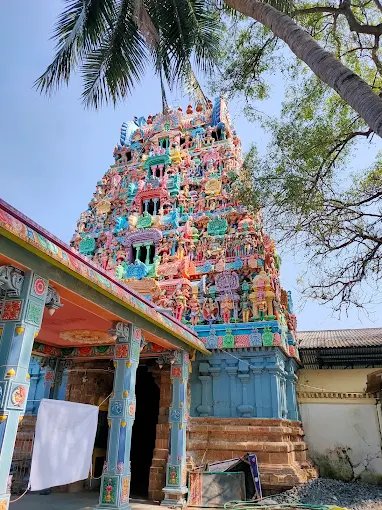
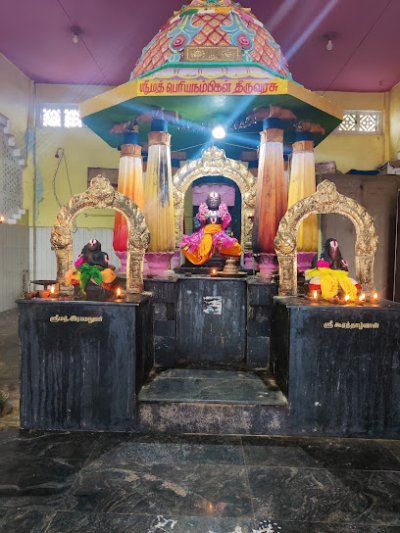
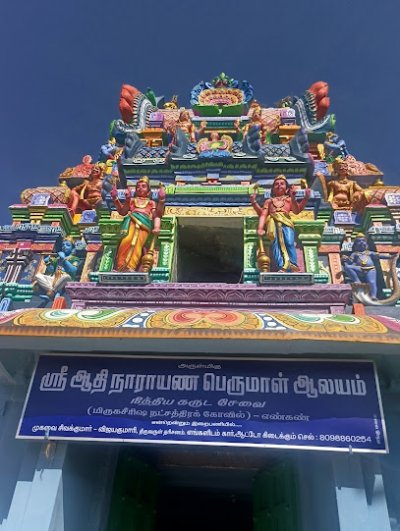
Sri Adi Narayana Perumal Temple at Enkan, on the Thanjavur-Tiruvarur route about 13 km from Koradacheri, is the traditional parihara sthalam for those born under the Mirugasesam (Mrigashira) star. It is one of the 27 Nakshatra (Natchathira) Star Temples of Tamil Nadu, each linked to a specific birth star.Lord Vishnu is worshipped here as Adi Narayana Perumal, the primordial protector, appearing in the sanctum mounted upon Garuda — a rare and striking form among Vishnu temples. The temple has a distinctive sanctum featuring Adi Narayana on Garuda with Sridevi and Boodevi, an uncommon composition among Vishnu temples. Its sacred focus includes Adi Narayana with Sridevi-Boodevi and the Garuda form enshrined in the garbhagriha.Mrigasirisha (Mrigashira) is the seeking, gentle explorer star of curiosity and creative search, ruled by Mars (Chevvai) and presided over by Soma (Chandra, the Moon). This is a rare shrine where Vishnu appears seated on Garuda within the sanctum every day, so devotees consider each darshan the equivalent of a special Garuda Seva. Mirugasesam-born devotees especially seek clarity of mind and success in creative and communicative pursuits.Devotees seek clarity of thought, communication, creative success, Mirugasesam dosha remedies and the protective grace of Garuda. Devotees visit on the Mirugasesam star day, offer tulasi, light ghee lamps and pray for mental clarity, eloquent speech and creative accomplishment. It is regarded as a must-visit for Mrigashira-born devotees, for whom the daily Garuda Seva experience is considered available every day of the year.Reaching the temple: Adi Narayana Perumal Temple, Enkan, Tiruvarur District, Tamil Nadu, India. The temple is on the Thanjavur-Tiruvarur route, about 13 km from Koradacheri. Combine the visit with the Tiruvarur Thyagaraja Temple. Nearby you can also visit Tiruvarur Thyagaraja Temple, Thanjavur Big Temple and nearby Cauvery-delta shrines.

Travel Tip: The temple is on the Thanjavur-Tiruvarur route, about 13 km from Koradacheri. Combine the visit with the Tiruvarur Thyagaraja Temple.

How to Reach Kumbakonam

Reach Kumbakonam by the nearest major railway station or state highway links, then keep the temple circuit local for the first day. For families and senior citizens, a hired cab or auto-rickshaw is easier than changing transport repeatedly. Start with the main temple before the crowd builds, pause for lunch near the city centre, and keep outer temples for the afternoon.

Best Time to Visit Kumbakonam Temples

October to March is the most comfortable season for temple visits in Kumbakonam. Summer afternoons can be tiring, so plan early morning darshan and keep a lighter second half of the day. Festival days are spiritually rewarding but busier; confirm timings, parking and local transport before starting.

Suggested trip plan

Kumbakonam Temple Darshan Itinerary

A curated day-wise route designed for optimal travel times and darshan timings. Adjust around your bookings.

Day 1 Darshan Route

9 shrines

Kumbakonam Temple FAQs

How many temples can I visit in Kumbakonam in one day?
Most visitors can cover 4 to 6 temples in one day if they start early and keep the route within the city or nearby areas.
What is the best time to visit Kumbakonam temples?
The cooler months from October to March are best. For daily darshan, early morning and evening are usually more comfortable than afternoon.
Is Kumbakonam suitable for a family temple trip?
Yes. Keep the first day focused on the main city temples, use local transport, and avoid packing too many distant temples into one day.

Interactive Route Planner

Kumbakonam Temple Locations

Tap any temple to center the map, view driving routes, and get key details.

1

Sarangapani Temple

Day 1 · Within city

2

Adi Kumbeswarar Temple

Day 1 · 1 km

3

Swamimalai Murugan Temple

Day 2 · 7 km

4

Naganathaswamy Temple (Rahu)

Day 2 · 6 km

5

Sooriyanar Temple (Surya)

Day 2 · 15 km

6

Agneeswarar Temple (Shukra)

Day 3 · 17 km

7

Apatsahayeswarar Temple (Brihaspati)

Day 3 · 18 km

8

Rajagopalaswamy Temple Mannargudi

Day 3 · 37 km

9

Kailasanathar Temple (Chandra)

Day 3 · 33 km

10

Brihadeeswarar Temple (Big Temple)

Day 4 · 39 km

11

Thiruvarur Thyagaraja Temple

Day 4 · 40 km

12

Dharbaranyeswarar Temple (Shani)

Day 5 · 52 km

13

Naganathaswamy Temple (Ketu)

Day 5 · 58 km

14

Swetharanyeswarar Temple (Budha)

Day 5 · 59 km

15

Vaitheeswaran Koil (Mangala)

Day 6 · 71 km

16

Nataraja Temple Chidambaram

Day 6 · 69 km

17

Jambukeswarar Temple

Day 7 · 83 km

18

Samayapuram Mariamman Temple

Day 7 · 85 km

19

Srirangam Ranganathaswamy Temple

Day 8 · 85 km

20

Ulagalantha Perumal Temple

Day 8 · 131 km

21

Arunachaleswarar Temple

Day 9 · 164 km

22

Sri Ramanasramam Tiruvannamalai

Day 9 · 165 km

23

Arulmigu Thiru Arthanareeswarar Temple

Day 13 · 197 km

24

Nageswaran Temple

Day 1 · Within city

25

Arulmigu Ramaswamy Temple

Day 1 · 1 km

26

Brahma Gnana Pureeswarar Temple (Avittam Star)

Day 1 · 4 km

27

Karkadeswarar Temple (Ayilyam Star)

Day 1 · 9 km

28

Sri Garbharakshambigai Amman Temple

Day 1 · 19 km

29

Varadaraja Perumal Temple (Ketai Star)

Day 1 · 25 km

30

Adi Narayana Perumal Temple (Mirugasesam Star)

Day 1 · 29 km

Day 1 Day 2 Day 3